Uncover Eddie Peake’s Sexy, Emotionally Charged Return: ‘The Pervert’
Written by CIRCA
25 June, 2025
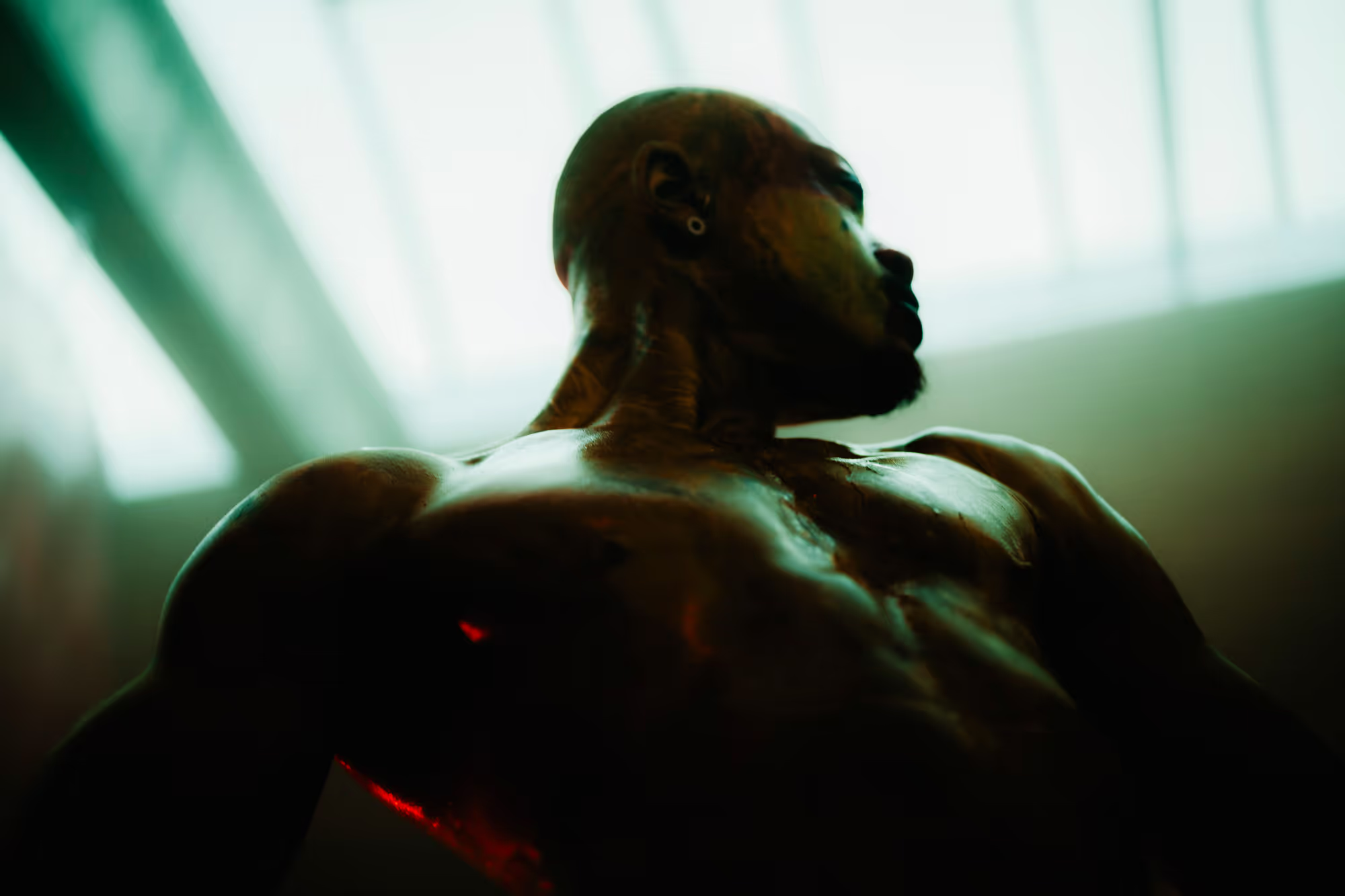
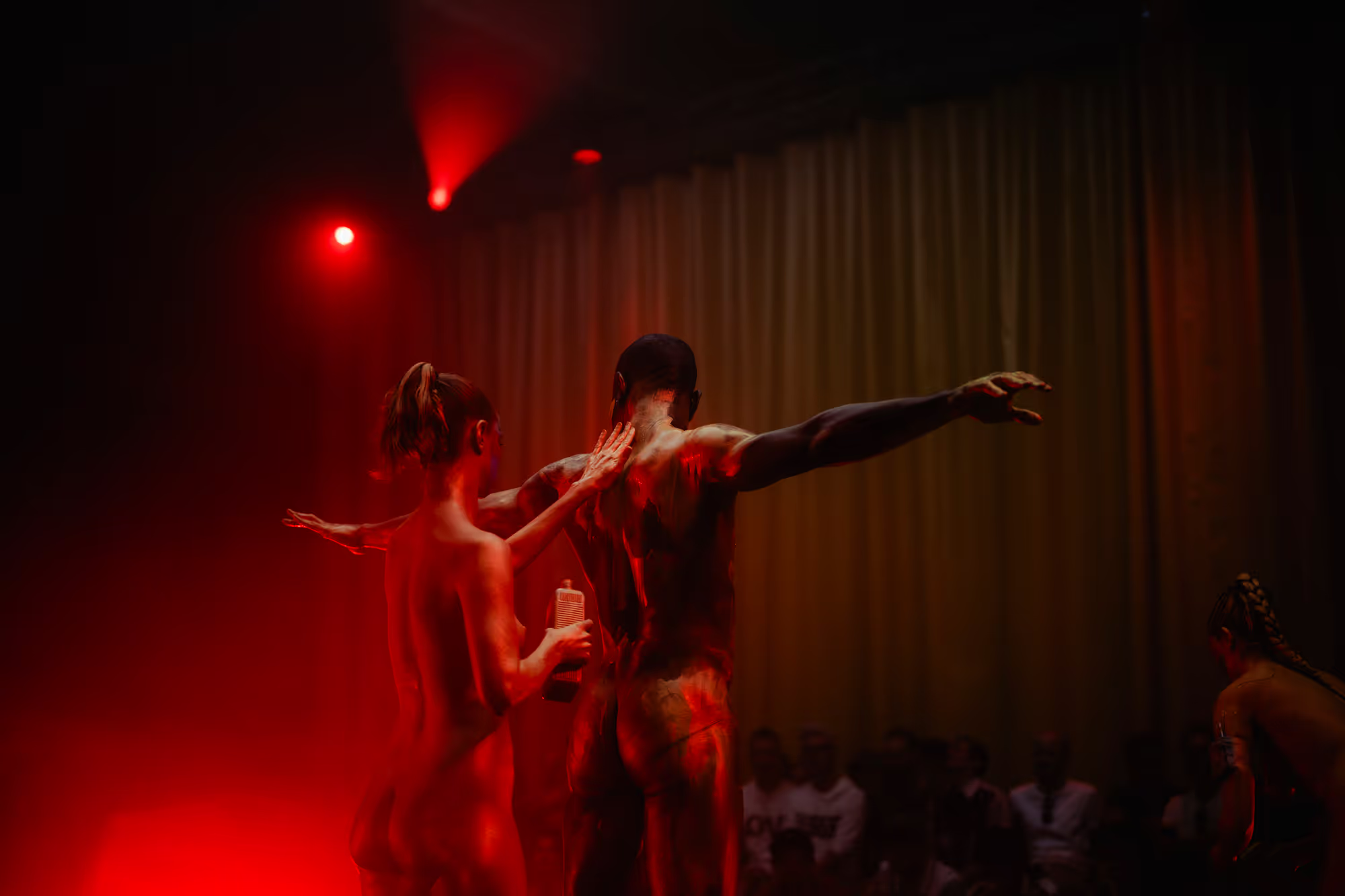
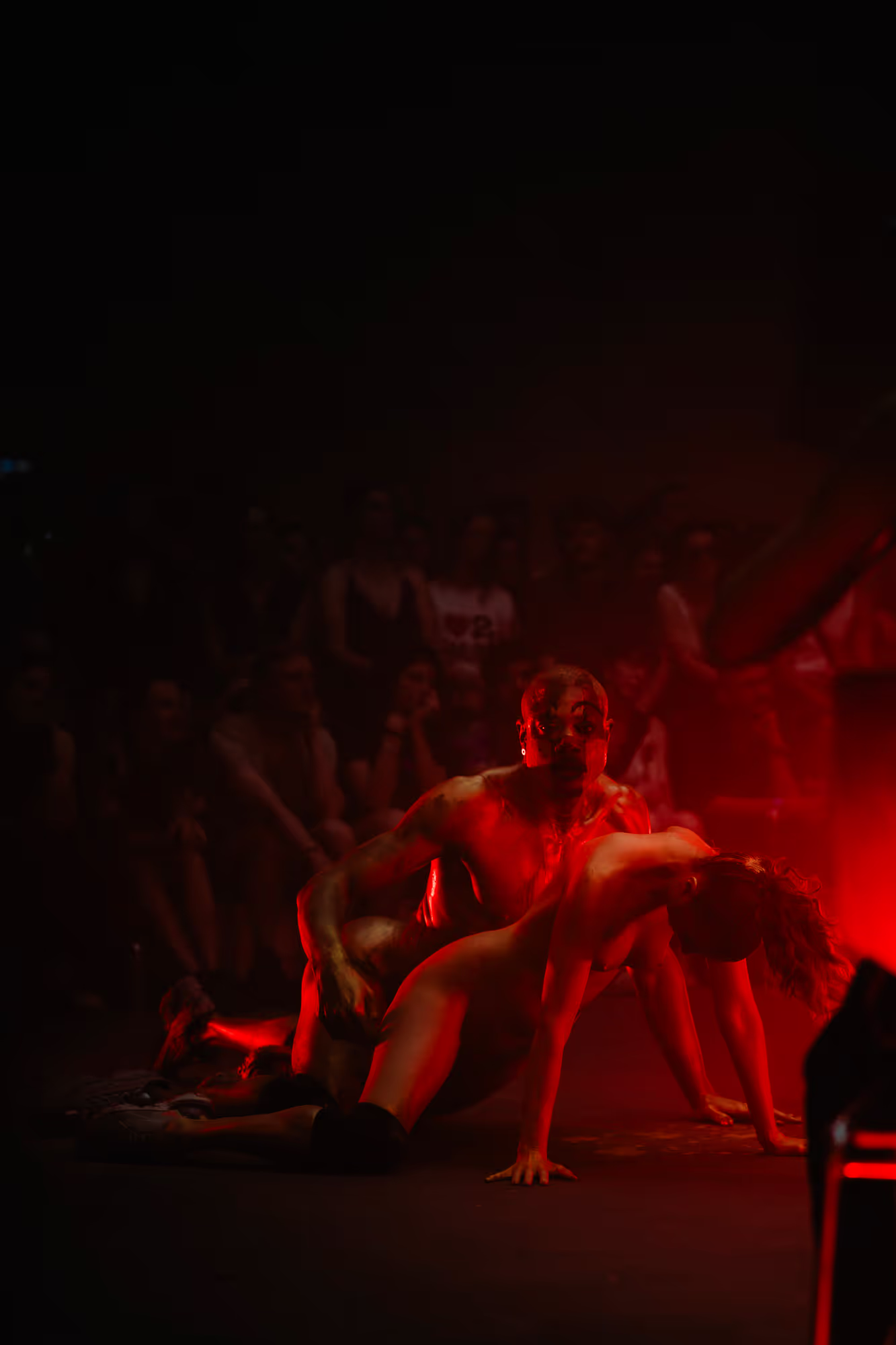
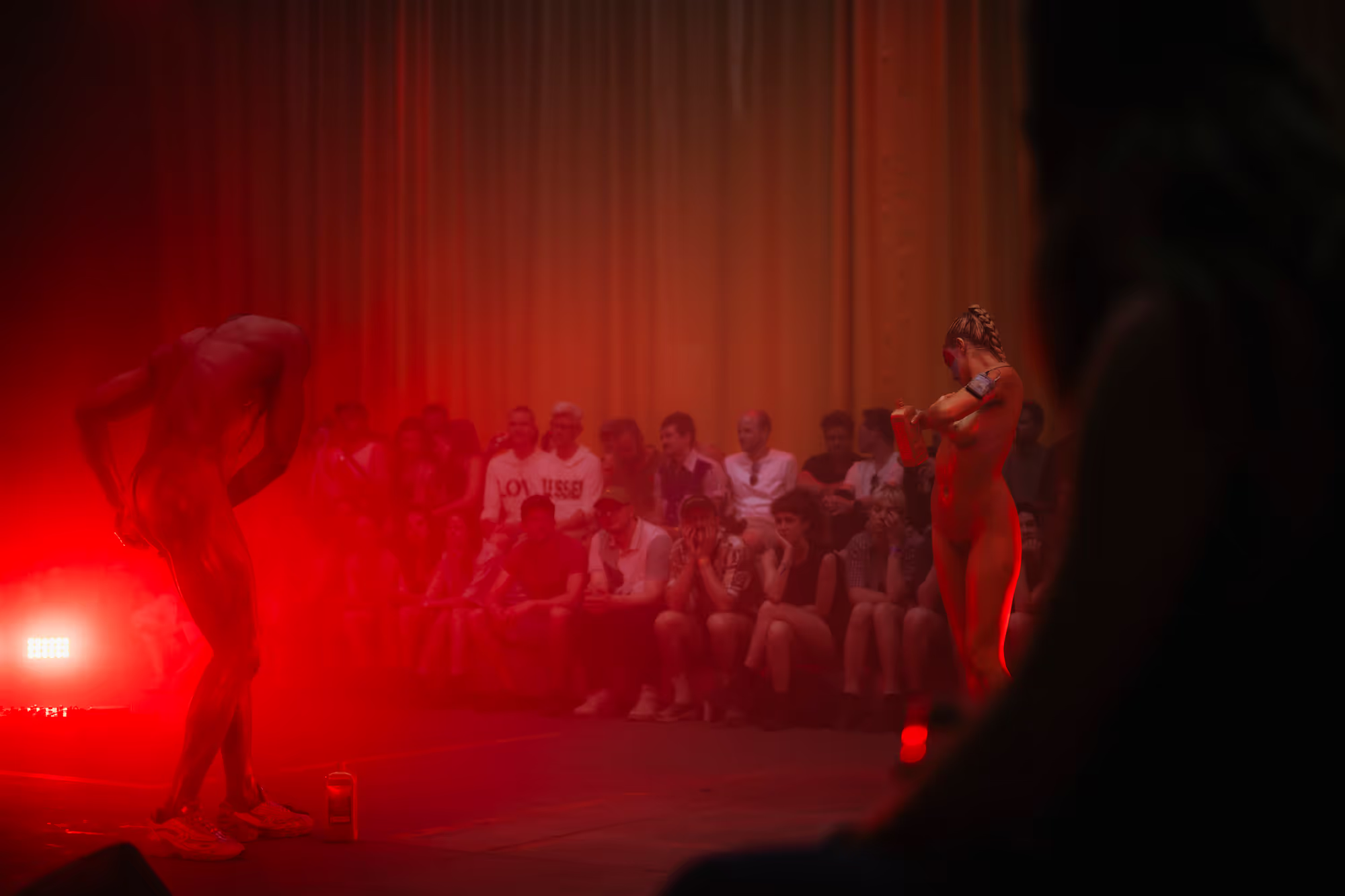
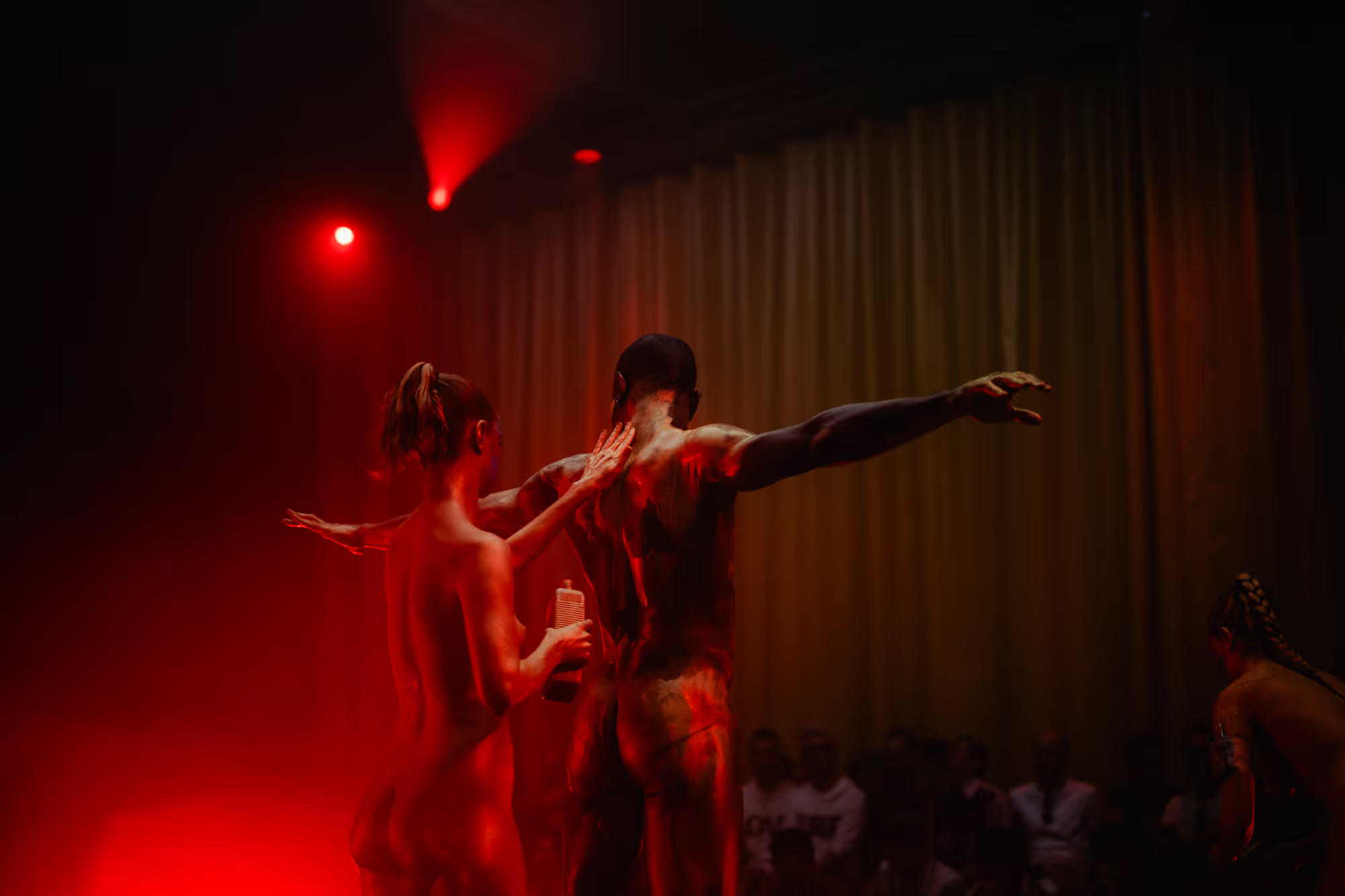
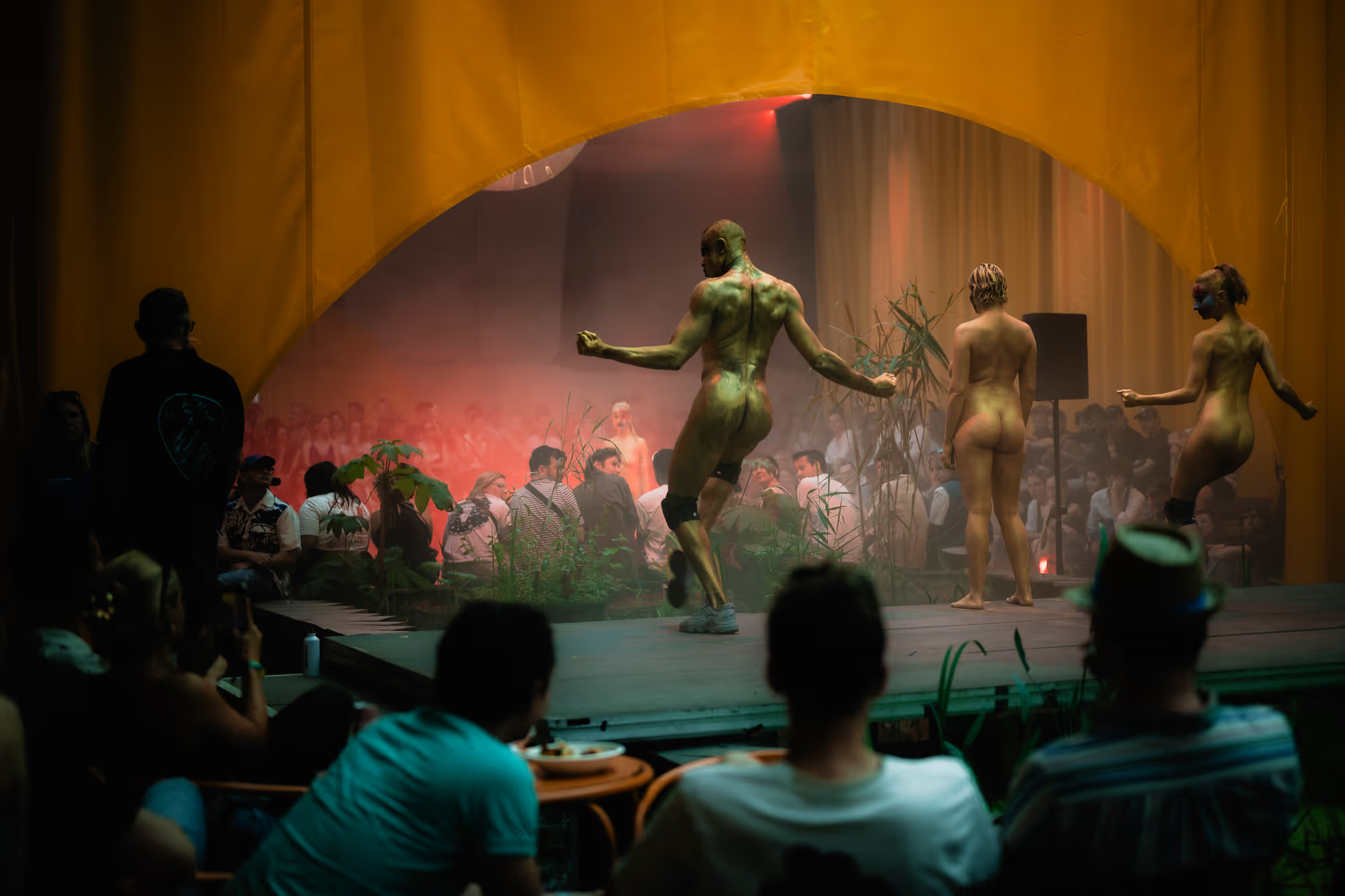
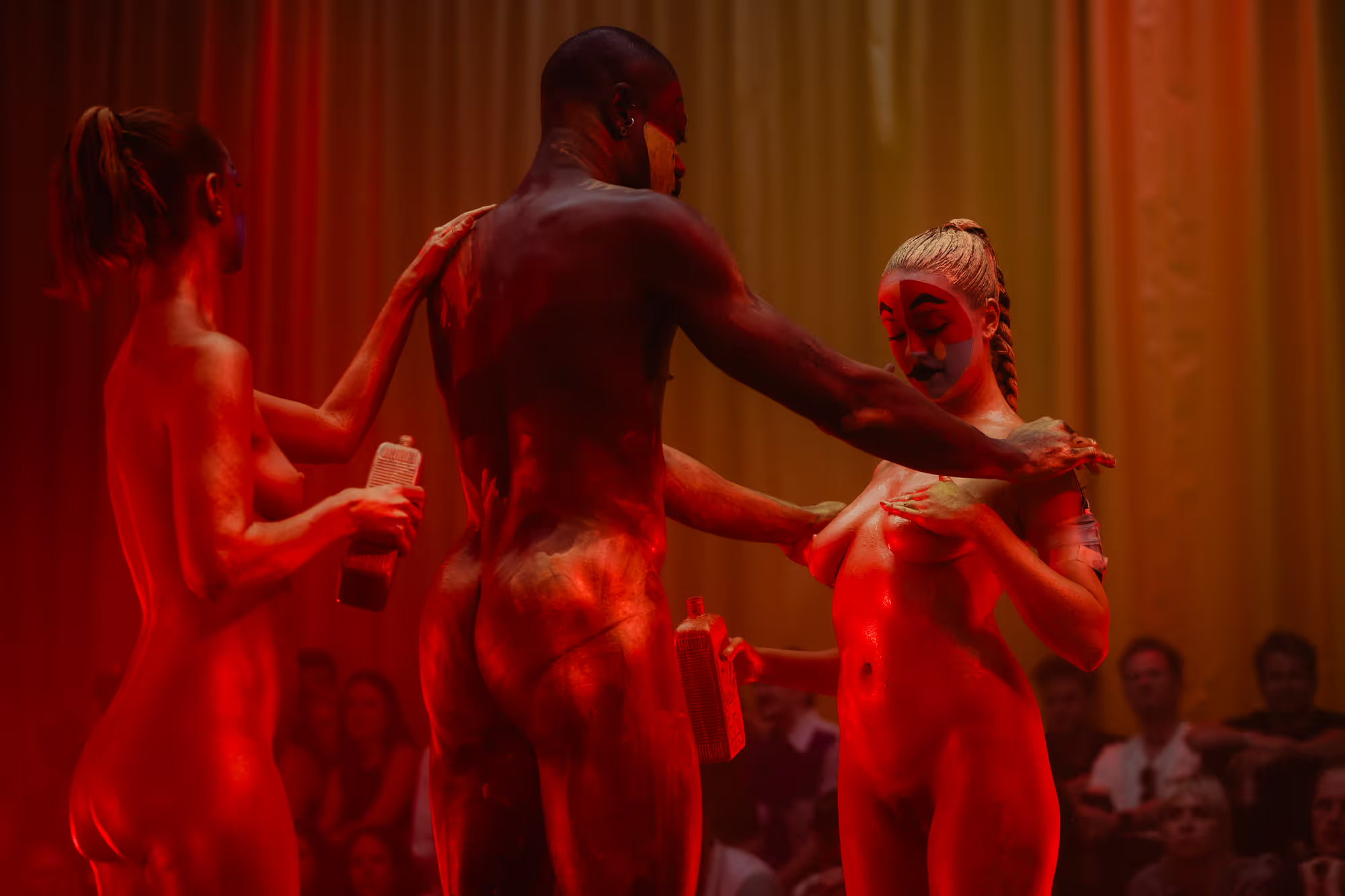
Eddie Peake’s new performance The Pervert recently received a rapturous response at Horst Arts & Music festival, at the end of a three-night stint amid the unpredictable ebb-and-flow of an electronic music festival. In his first public work since his 62-minute CIRCA commission, A Dream Of A Real Memory (2020), key dancers return in The Pervert, along with Peake’s ever-present fascinations – including with desire, the body and memory.
With his signature raw and magnetic energy, Peake (b. 1981) explores identity, sexuality, and relationships, probing the dynamic interplay between words and physical expression. This personal work was devised with an ensemble of dancers and musicians during five days of experimentation in Portugal, that bridges emotions and movement.
Known for his provocative and often autobiographical works that blend performance, music, and dance, Peake has just opened a new solo exhibition, ‘Fourth Wall Death Rattle’, at Tick Tack, Antwerp, Belgium, which continues until 12th July 2025. He discusses the challenges of creating a work in a museum that captures a 10,000-strong audience of hedonists “off their heads” at an electronic music festival.
CIRCA: Let’s talk about the Pervert. This been performed at Horst Arts & Music festival [in a former military site near Brussels, Belgium] and Futur.Shock [a multi-disciplinary not-for-profit embedded within East London’s FOLD nightclub].
Eddie Peake: It actually debuted at a museum – Galeria Municipal do Porto – and there was quite a lot of pressure on. It was a completely new piece and it was devised in the rehearsals. There’s a lot riding on it because it could have gone terribly – a legitimate possibility with those works – and I needed it to be good for the subsequent three iterations, too, including the upcoming performance in Bordeaux.
C: How do you handle that process of creating something in a museum setting that was going to go on to clubs and music festivals?
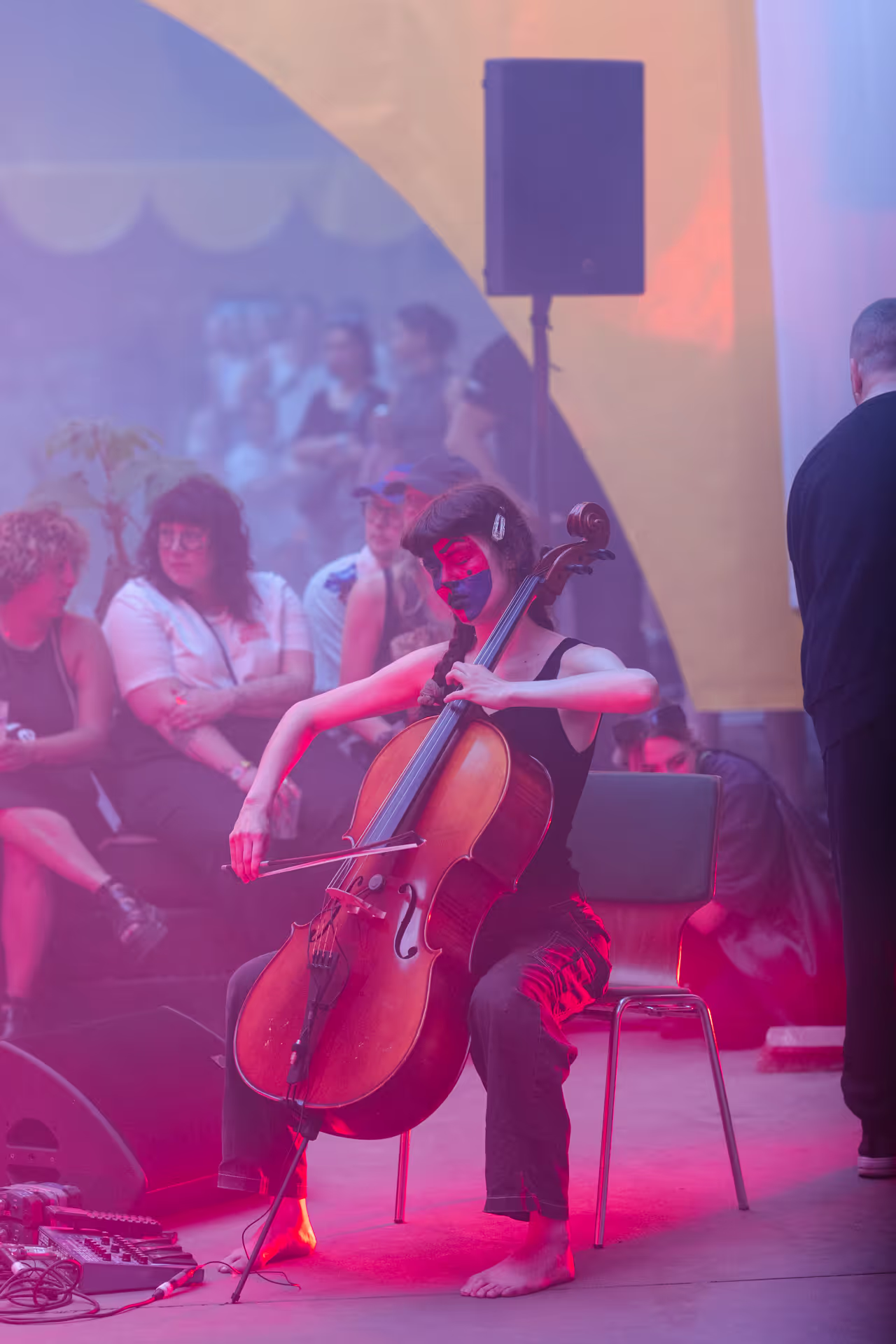
EP: It was devised in the gallery itself in the week running up to the performance, which is typical of how I work. I usually have anywhere between two and five days to devise them. I show up with the ensemble – usually a group of dancers, a group of live musicians, and sometimes actors.
This particular piece, The Pervert, features the actress Jaya Twill performing a very focal role. She’s playing the character of Eddie Peake and she delivers a soliloquy. The soliloquy was actually the only bit that was pre-written. It wasn’t completely finalised – we chopped bits out and added bits in and moved stuff around – but I had her words, her delivery, and her blocking and how she fitted into the mise en scène at large.
C: So you had the soliloquy ready, and the rest is worked out in relation to this.
EP: The dancers’ choreography is devised in the rehearsals and the score is devised. We get to that through long improvisation sessions, basically, and long work-shopping sessions. And then I go: ‘Yeah I like that bit.’ ‘I don’t like that bit.’ ‘Let’s put this here’ and then sort of Tetris it around a bit until the work has found itself.
[C] Was there a moment where it felt like it was really clicking, in terms of the relations between the different parts?
EP: That’s the critical challenge — to get everything to fit together and sing from the same hymn sheet. It’s completely intuitive – it’s just been 20 years, now, of making these works. I feel like that’s something I’ve got a bit of a sixth sense within my work.
C: Does that evolve through the performances?
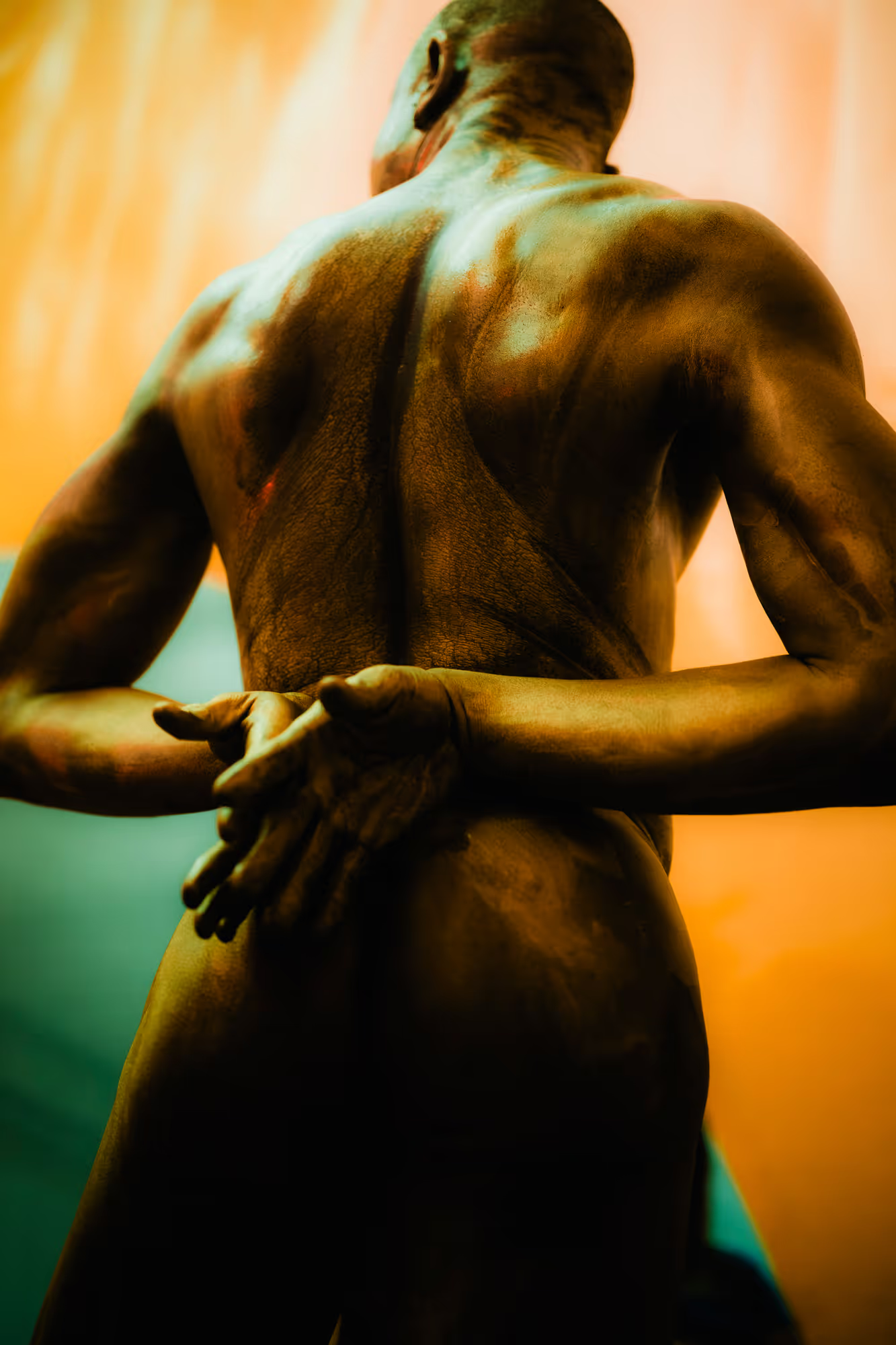
EP: Every iteration so far has had idiosyncrasies that are totally unique to that location. For the Porto iteration of the work, the space was absolutely enormous. Then when we brought it to Fold for Future Shock, the space was probably about an eighth of the size. That required changing the piece just to fit it into a totally different physical location.
[C] What about adapting to spaces of electronic music?
EP: It was completely different. I actually reached out to Carolina Magnuson Murray, the curator of Futur.Shock. She’s programming that night right in the middle of the Venn diagram of clubbing, electronic music, contemporary art, performance – that’s exactly where I situate myself as well. It felt like: ‘Oh that night is made for me, made for my work.’ Though it is a nightclub, that particular night, it’s still within the conceptual framework of quote-unquote “the gallery”.
C: So Horst [a three-day festival] was different?
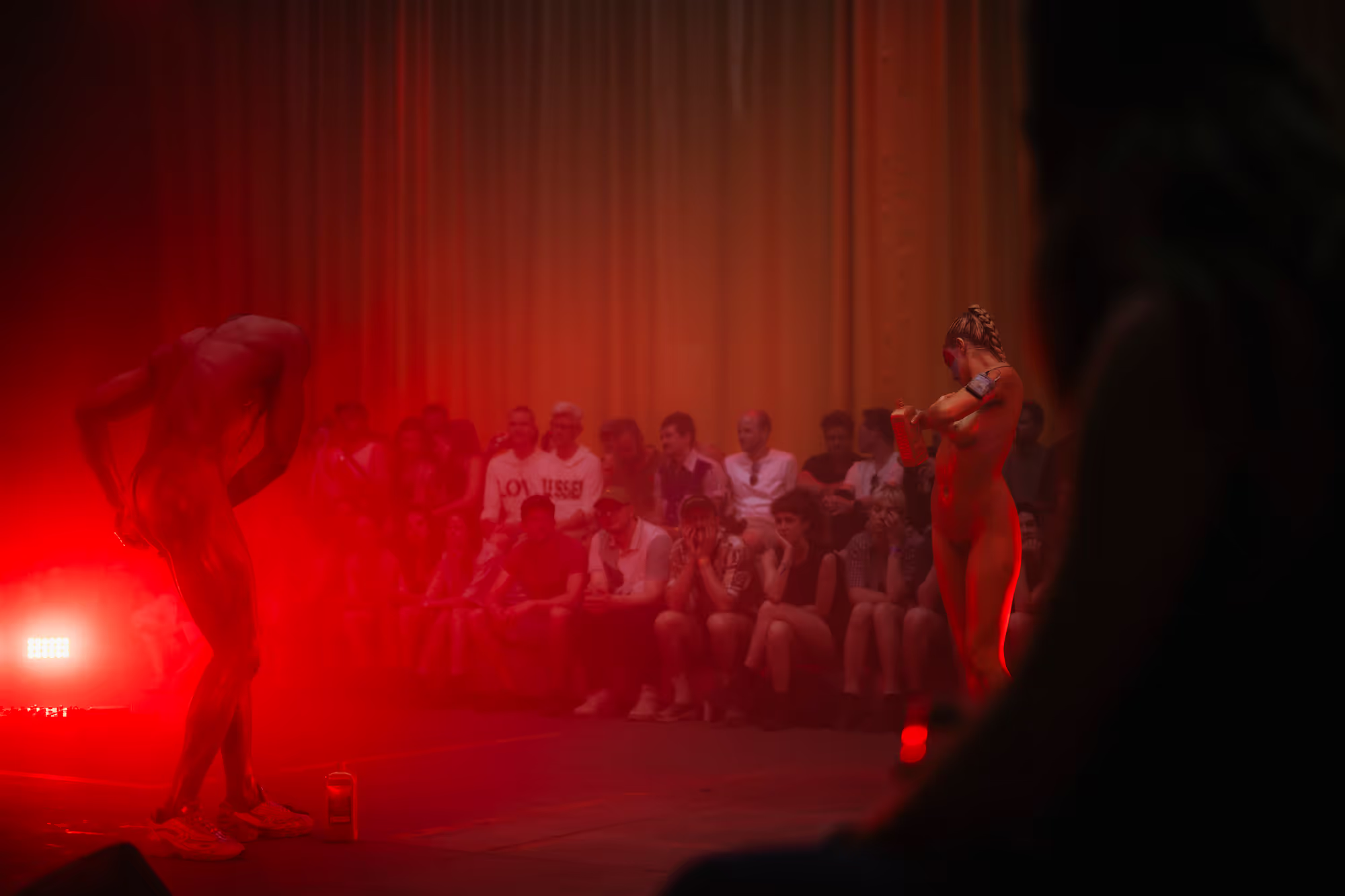
EP: Horst was different again. That was a first for me, as an electronic music festival. Compared to a gallery, where there’s anywhere between a hundred and a thousand people there, it’s actually 10,000 people and they’re all there off their heads. At any given point in time, there’s 20 different things the crowd can be doing and so their tolerance threshold for boredom is very low.
C: Did they respond well?
EP: Well, in Horst it was presented on three nights. My performance has four main acts. And the third act is quite slow-paced, reflective, contemplative, and quiet. On each of those three nights, during that third act, there’d be a big exodus of bleary-eyed, drunk-looking people. But that was a really interesting challenge, actually, to have this work be able to stand up for itself within that context. I feel like it did actually. I say that there was a big exodus of people but constantly throughout the 45-ish minutes of the performance it’d be people joining as well — such as the nature of an audience at a festival.
C: Did you enjoy that three-night progression – was it interesting to rerun it or re-iterate it?
EP: Yes, absolutely. And we did make little changes on each night and there was a different feeling each night. The last night in particular, it felt like a climax. There was a very notable standing ovation — I’m not saying this as a brag or whatever! – it’s more like: ‘Wow — I don’t normally experience that.’ It was a very rapturous response — people crying and stuff like that. It is a very sentimental and emotional work actually. There are bits that are moving. I think in that context in particular — music festivals — people are more willing to fully submit themselves to their emotional response to something, whether that is crying or shouting or just getting up and leaving. That’s a bit different to an art context where people have their critical faculties fully switched on.
C: In that moment, were you sitting there with a sense of what people we’re tapping into?
EP: No – the whole piece is constructed to have lots of different elements that impact one’s sense of self and I tend to think of the works as acting like a mirror. They’re very much about my experience in the world but I’m a firm believer that you get to the universal via the personal. Although the works are diaristic in a way, I want them to function like a mirror that bounces the viewer’s emotional and psychological and memory-oriented gaze back upon itself. I want the different aesthetic elements — the sounds, the way it looks, every sort of sentient experience of the work — to impact on the viewers’ different senses. The soliloquy in particular is constantly bouncing between memories of childhood and reconciling that with the experience of being alive today as an adult. I think there are a lot of elements of that that resonate with people’s own experiences. If the specific memories of childhood are unique to me, there might be aspects of them that make viewers go ‘Oh this really speaks to my memories of childhood.’ Different as they are to mine, it still resonates.
C: What are you looking forward to with the final performance?
EP: That’s taking place at CAPC Museum in Bordeaux. These are the four planned iterations of the piece. I don’t know why — there’s nothing planned yet — but I have the feeling it’s not going to be the end of the work. I’d like to develop it in some way, shape or form. It doesn’t feel like the end of the work to be honest.
C: Is there something driving that feeling?
EP: I feel I have more to say with it. Because of various circumstances in my personal life, I haven’t been able to make or show much work in the last five years. The last thing I showed publicly funnily enough was my CIRCA commission at Piccadilly Circus. And this work, The Pervert, features the two dancers who are in that film, Kieram Corrin Mitchell and Emma Fisher, who have both been integral to my work for the last 10 to 15 years. So there’s a lot that has gone into this new work — five years of un-vented artistic energy. It feels like it’s too soon for this work to be done. And, plus, it feels really good as an artwork, if one can say that about one’s own work. I feel like there’s a lot more that it can give to the world in a way.
C: You’ll keep making new iterations?
EP: Maybe, if possible. Or maybe, by the end of this fourth iteration, it will have served its purpose in the world. But at the moment I still feel like I want it to live on. Maybe it’ll live on in another form — as a film, a book or something. I don’t know.
Eddie Peake (b. 1981, London) is a British artist whose work spans painting, performance, sculpture, installation and music. Living and working in London, his exhibitions and performances have been presented internationally, exploring themes of intimacy, desire and the politics of the body. Alongside his artistic practice, Peake DJs under a pseudonym and runs the independent record label Hymn.