
fbpx Eddie Peake | CIRCA

Eddie Peake is a British artist whose multidisciplinary practice spans performance, video, painting, sculpture, sound and installation. Renowned for creating immersive environments that blur the boundaries between physical and psychological space, his work explores desire, intimacy, power and the complexities of human relationships. Through a distinctive visual language that combines theatricality, humour and emotional intensity, Peake investigates the ways people communicate, connect and misunderstand one another.

Working across multiple mediums simultaneously, Peake often constructs exhibitions as interconnected networks of images, objects, sounds and performances. His practice is characterised by an interest in repetition, non-verbal communication and the limitations of language, examining how emotions, desires and psychological states frequently resist straightforward representation. Whether through choreography, moving image or sculptural intervention, his works reveal the often-unspoken tensions that shape social, romantic and personal encounters.

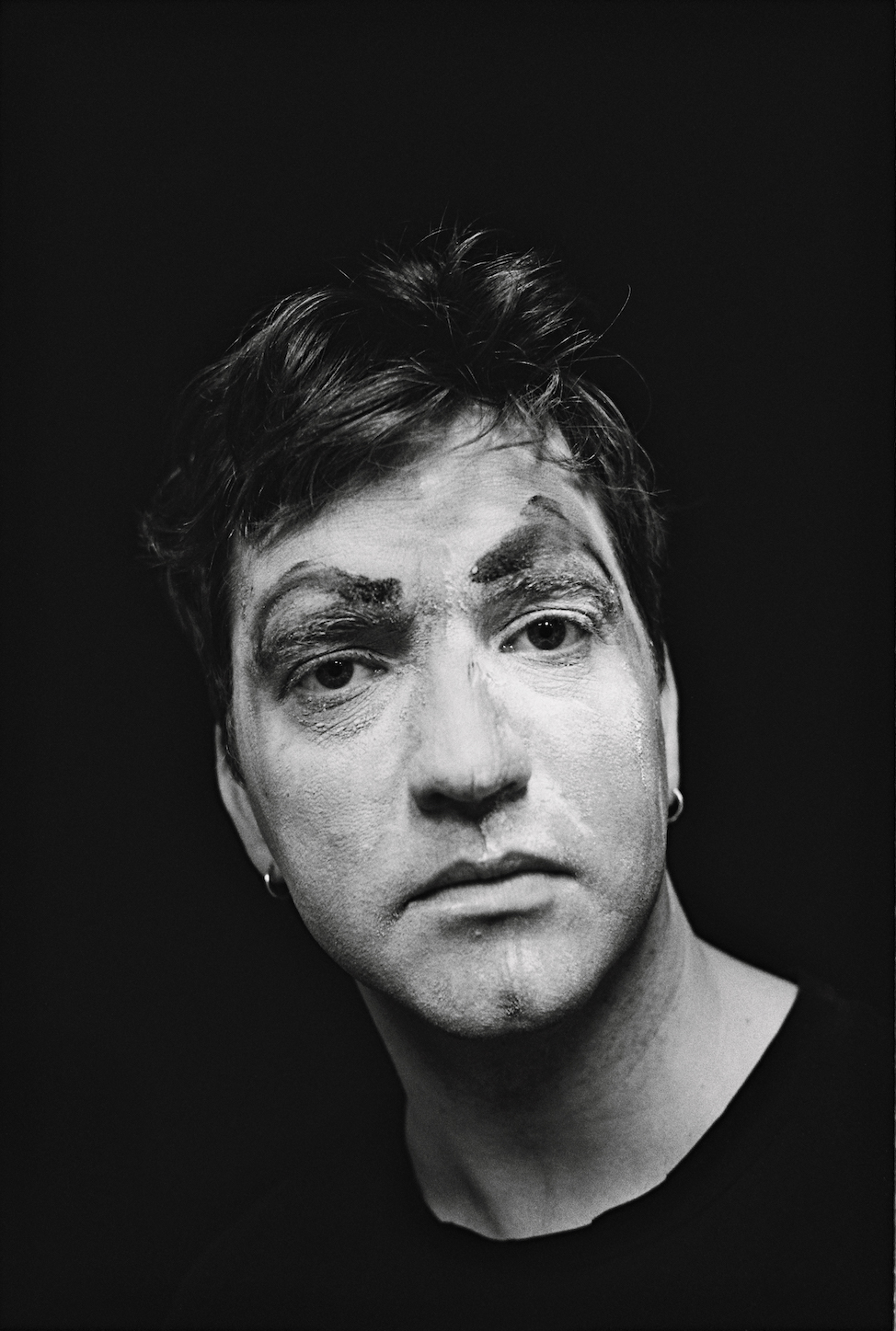
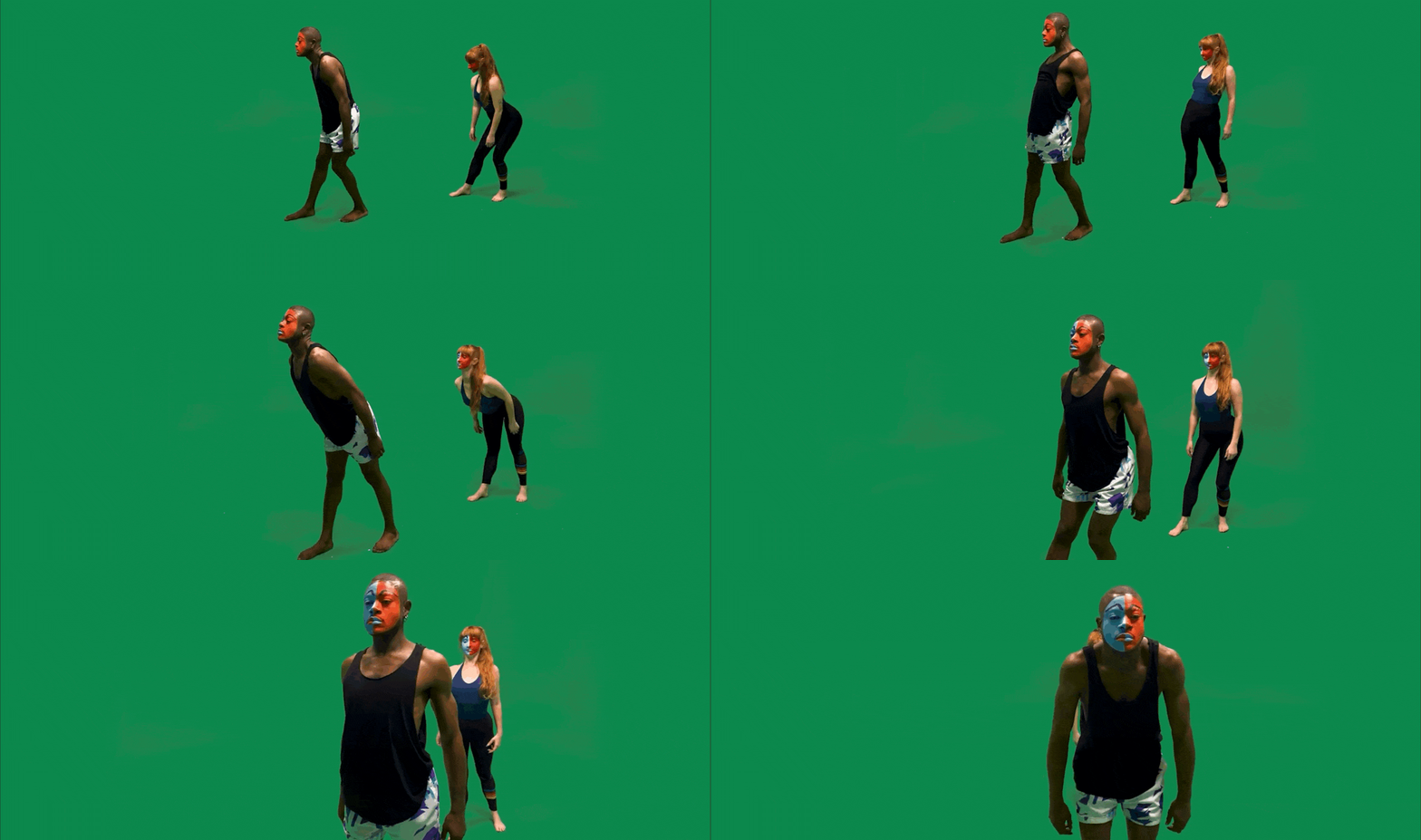
In 2020, Peake collaborated with CIRCA on A Dream Of A Real Memory, one of the platform’s earliest commissions following its launch in Piccadilly Circus. Presented nightly throughout December on London’s iconic Piccadilly Lights, the work transformed the vast advertising screen into an immersive green void occupied by three performers navigating a shifting landscape of attraction, conflict and self-discovery. Screened in reverse over thirty-one consecutive days, the sixty-two-minute work unfolded backwards from exhaustion to anticipation, mirroring the unstable logic of dreams and memories where chronology dissolves and reality becomes uncertain. By exposing the mechanics of image-making through the visible presence of a green screen, Peake challenged the conventions of cinema, advertising and public spectacle while transforming Piccadilly Circus into a site for collective reflection at the close of a year defined by uncertainty and isolation.

Presented during London’s emergence from lockdown, A Dream Of A Real Memory exemplified CIRCA’s founding ambition to reclaim public screens as spaces for artistic experimentation and shared experience. Accompanied by a fundraising campaign supporting refugees through Choose Love, the project connected artistic imagination with wider questions of care, solidarity and human connection during a moment of profound social change.

Peake’s work has been exhibited internationally at institutions including Tate Britain, Whitechapel Gallery, Barbican Centre, ICA London, Palais de Tokyo and Kunsthalle Zürich. Through a practice that consistently pushes the boundaries of performance and visual art, he has established himself as one of the most distinctive voices of his generation, creating works that reveal the fragile, absurd and deeply human dynamics that underpin contemporary life.


Circa Commissions

Eddie Peake, A Dream Of A Real Memory

For CIRCA’s December 2020 commission, Eddie Peake presents A Dream of a Real Memory, a sixty-two-minute devised drama unfolding across Piccadilly Lights in daily two-minute episodes throughout the final month of the year. Set within an immersive green-screen cyclorama, the work follows three characters through a sequence of choreographed movements, gestures and encounters that hover between intimacy, performance and psychological projection. The film unfolds backwards. Beginning at what appears to be its conclusion, with exhausted performers, smudged make-up and the visible traces of exertion, the work gradually moves towards its own beginning. As the month progresses, bodies become less fatigued,…

View more

ESSAY

Eddie Peake: Rehearsal, Reversal and Carnival by Gertrude Gibbons
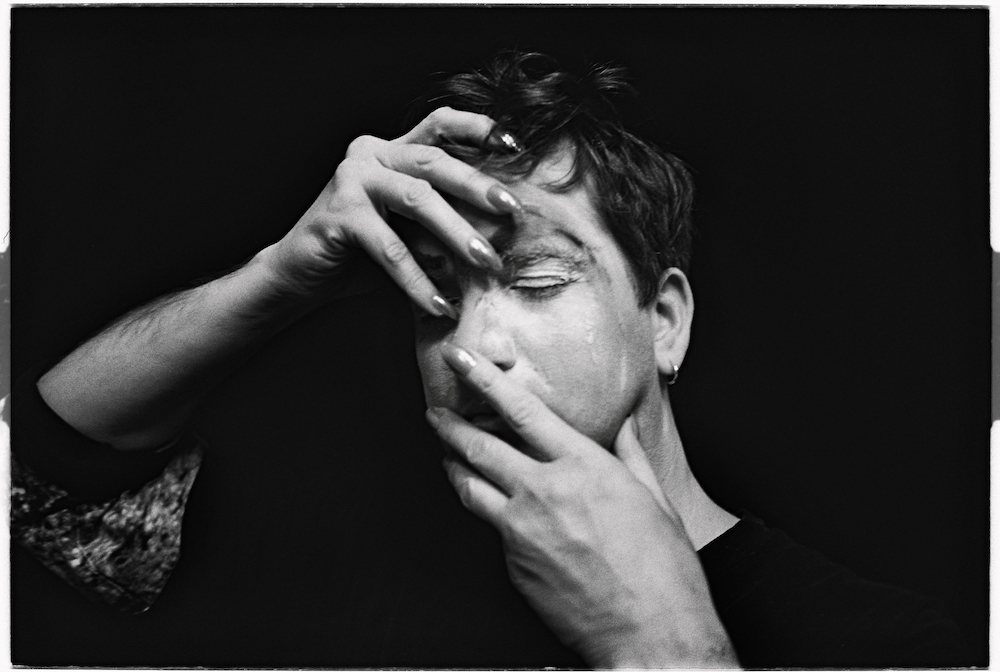
Framed in a space of making, Eddie Peake’s A Dream of a Real Memory appears a rehearsal awaiting future performance. It seems as something not yet finished, anticipating conclusion, solution or closure; yet here at the Piccadilly Lights it is presented as complete in this suspended way. This sense of suspense perhaps draws upon its manner of presentation across thirty-one nights, which means that each episode, fragment of film, is stopped after two minutes, and interrupted by a full night and day, before the next fragment is played. Such interruptions to this seductive screen generally used for advertisement, feels as might sometimes be felt when, waking during a dream, there is an urge to force oneself back into sleep to finish the dream, either simply to continue it, or to solve it; to return to the place the dream left off, and glide over the disruption caused by waking.

There is a strangeness to the movements of the dancers, highlighted by the hypnotic and inescapable green, that works to alienate as well as seduce. Supposedly, narratives seduce through a promise of future closure, of reaching some kind of ending.[i] Since the strangeness of the movements, however, is created by the episodes running in reverse, its possible future closure is really in the past: the conclusion of the dance is always already done from the instant these screenings began on the first of December. In its inversion, it might suggest that in order to move forward with a work, and bring it into being, it is also necessary to look back. There is an aspect of ritual to this public exposition, a symbolic emphasis given to the digital time at which the episodes play running backwards: at 20:20 each day of the final month of 2020. This ritual feels all the more pertinent with December the month of the winter solstice; the day where the Earth tilts at its furthest from the Sun, and in some traditions represents the moment of the death and rebirth of light. It is a transitory moment of inversion: perhaps the world has turned upside down, back to front, mad. The sudden drop of a smile, laugh abruptly stopped, movement sharply stilled; the unpredictable irregularity of motion here edges on hysteria.


Subscribe to our newsletter

Subscription successful

An error occurred