fbpx Yoko Ono, Imagine Peace | CIRCA 20:22

CIRCA 2022

Yoko Ono, Imagine Peace

1-31 March, 2022

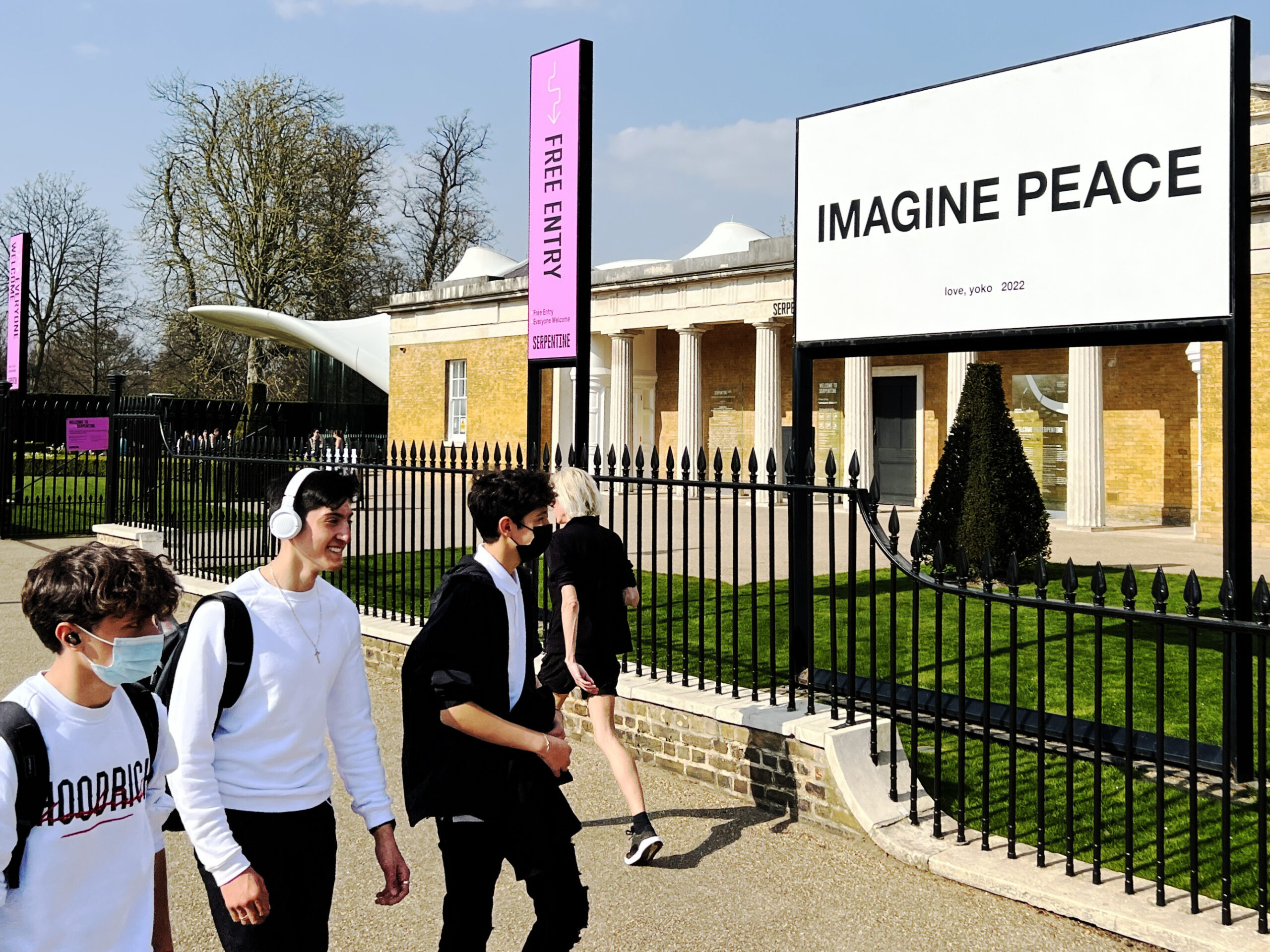
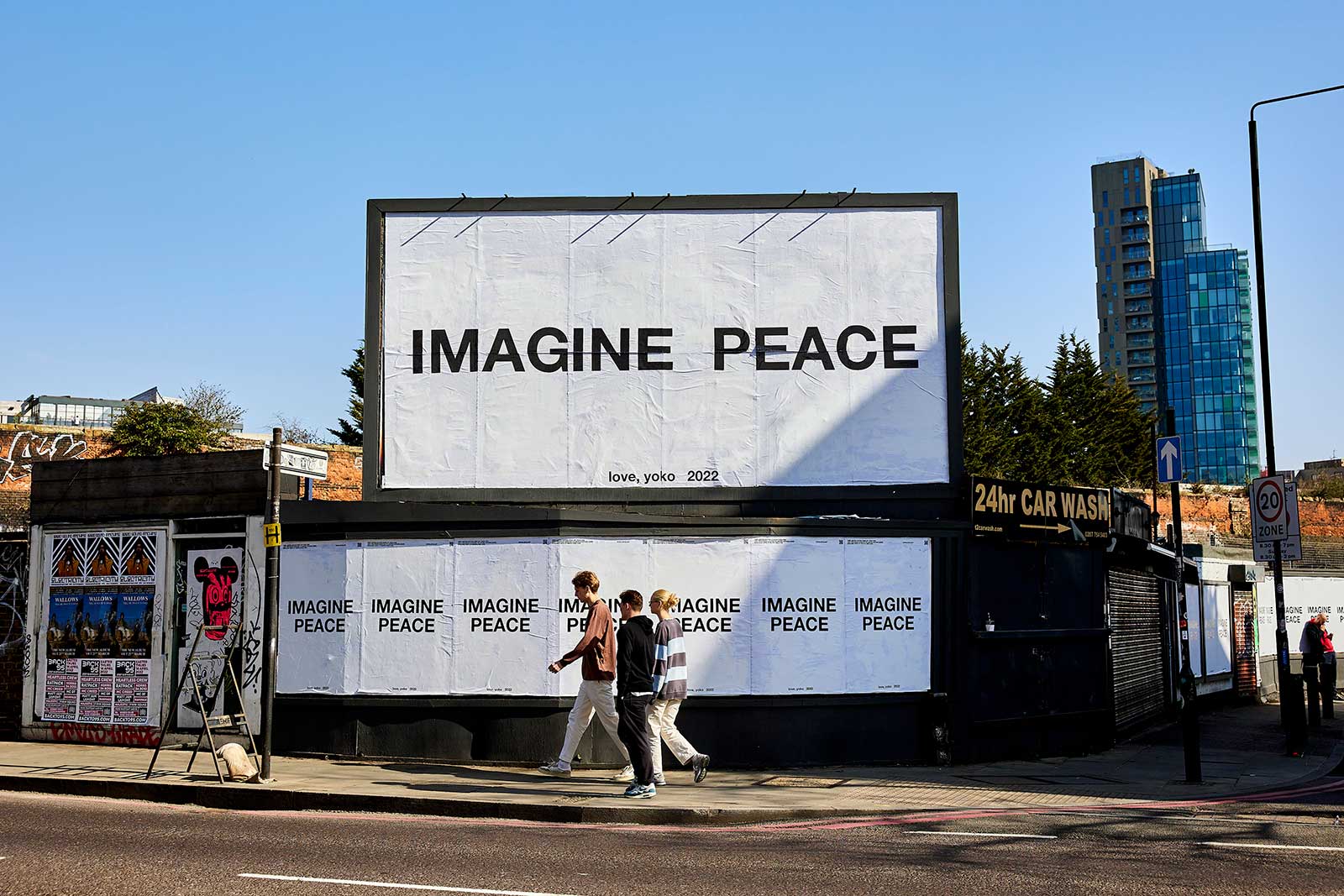
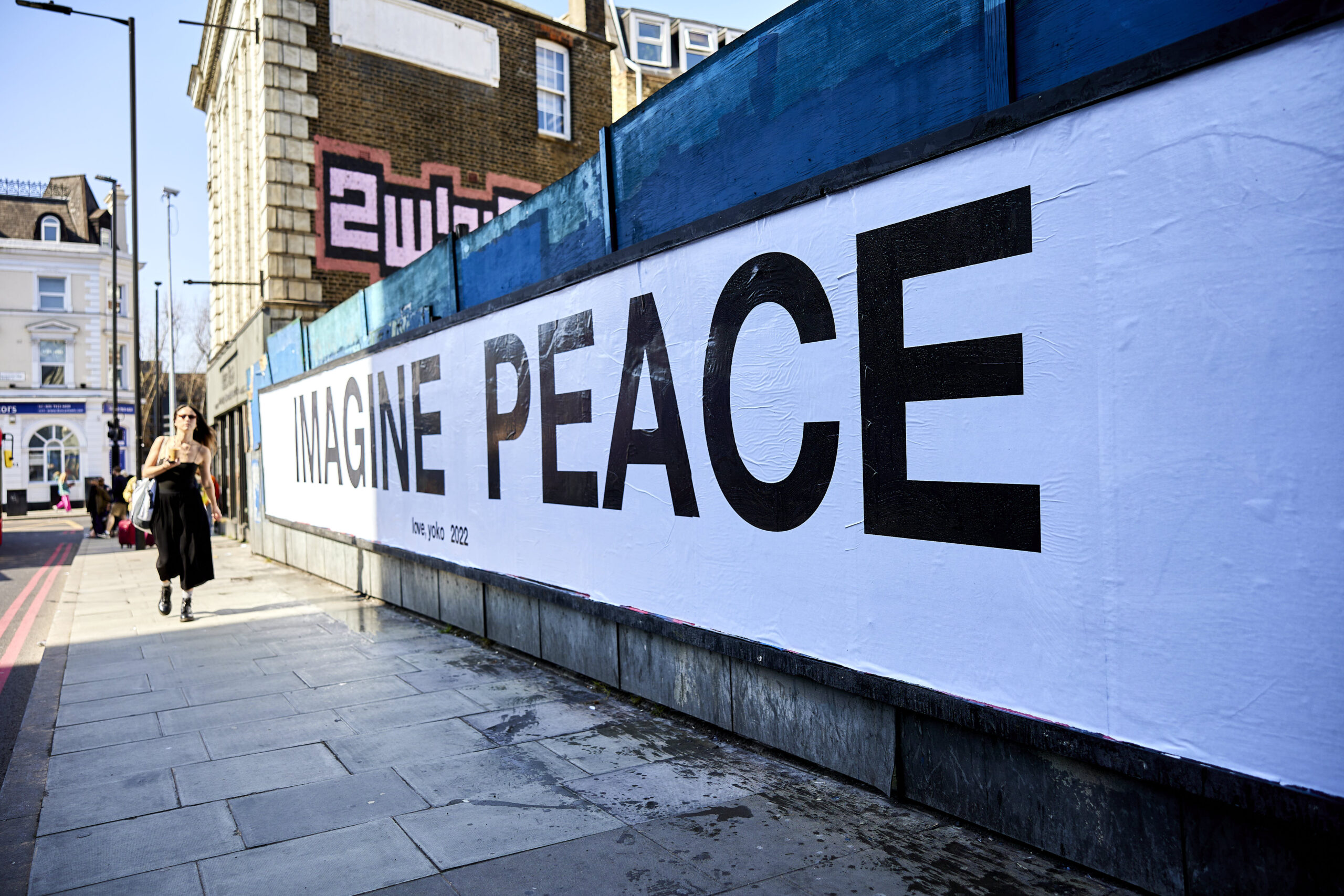
For more than half a century, Yoko Ono has understood that a few words, placed in the right location at the right moment, can alter the atmosphere of a city.

Long before artists routinely occupied billboards, screens and public advertising infrastructure, Ono recognised the street as a site of collective imagination. Throughout her practice, language has functioned not as description but as instruction. Emerging from the conceptual propositions of Grapefruit (1964), her sentences do not tell us what to think. Instead, they invite participation. They ask us to complete the work ourselves.

Among the most enduring of these instructions is Imagine Peace. Appearing on billboards, posters, newspaper advertisements, public monuments, stickers, postcards, projections and digital platforms across the world, the phrase has become one of the most sustained artistic interventions in contemporary culture. Neither slogan nor manifesto, it operates as a proposition. Peace is not presented as an achievement but as an act of imagination. Before it can be built politically, it must first be conceived collectively.


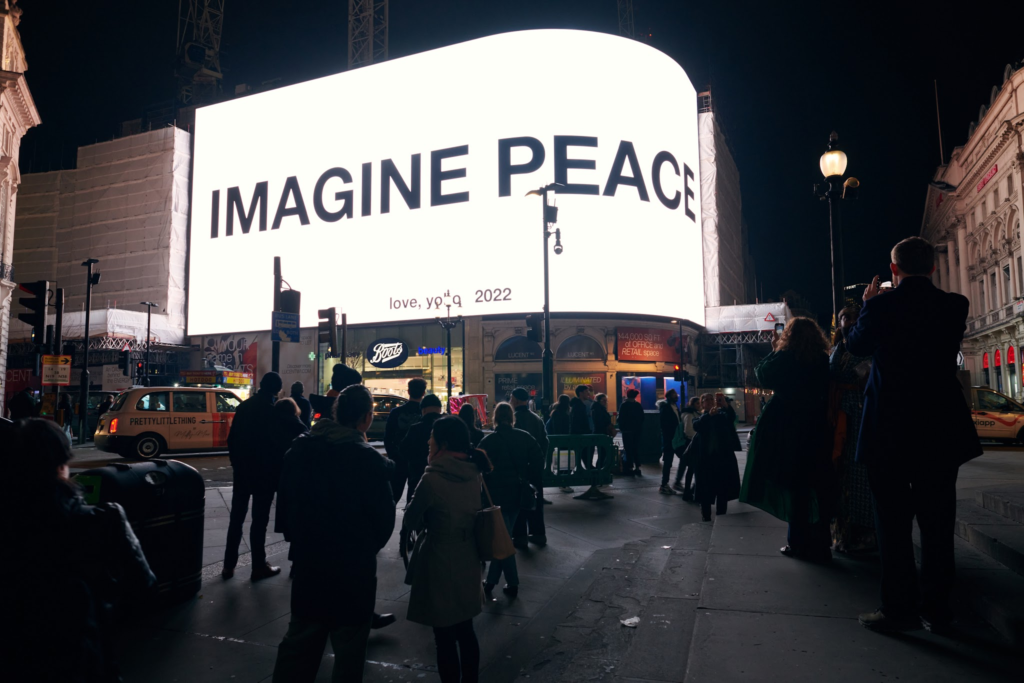
The history of the work is inseparable from the history of public space itself. In March 2002, Yoko Ono returned to Piccadilly Circus with a monumental billboard carrying a fragment from Imagine: “Imagine all the people living life in peace.” Suspended above one of the busiest intersections in Europe, the intervention transformed a site synonymous with commerce into a temporary space for reflection. Twenty years later, the artist returns to the same location with an even more distilled proposition.

The circumstances surrounding this commission are impossible to separate from its meaning.

On 24 February 2022, Russia launched its full-scale invasion of Ukraine. Across Europe and beyond, a profound sense of disbelief took hold. Images of war once again entered daily life. The assumptions that had underpinned the post-Cold War era suddenly appeared fragile. As political leaders struggled to respond and the scale of the unfolding humanitarian catastrophe became clear, a question emerged: what role could culture play in such a moment?

Within days, conversations between Ono, CIRCA and Serpentine gave rise to an extraordinary intervention. Rather than producing a new artwork, Ono returned to a message she had been carrying into the world for decades. Its urgency had changed. Its meaning had not.

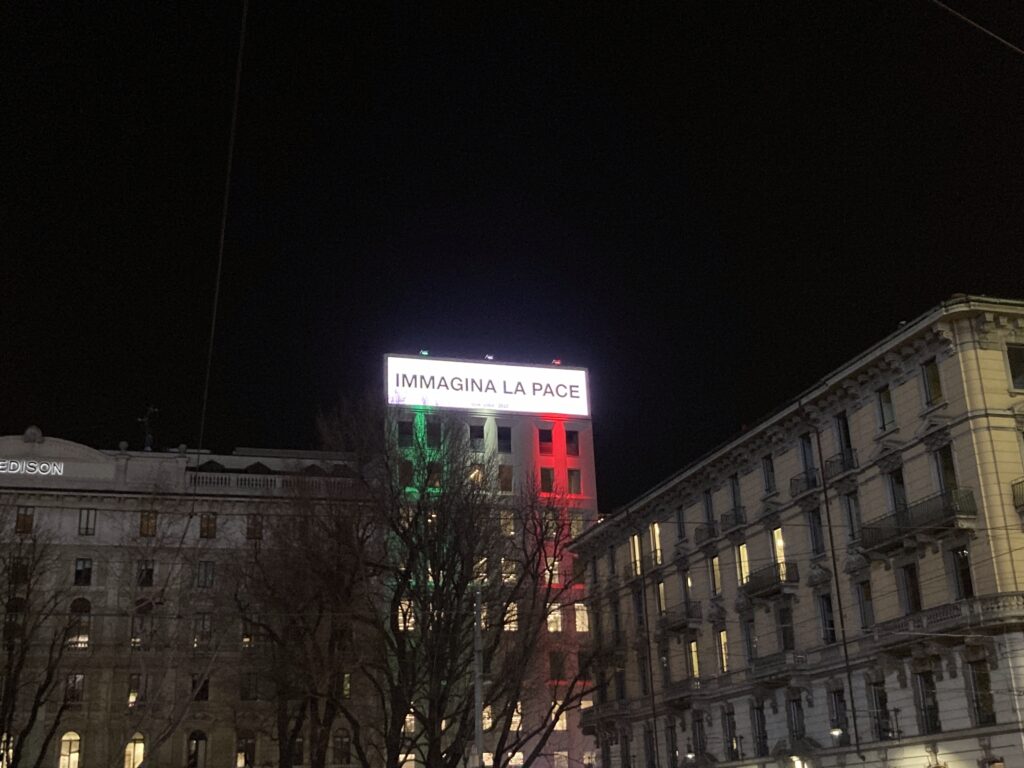
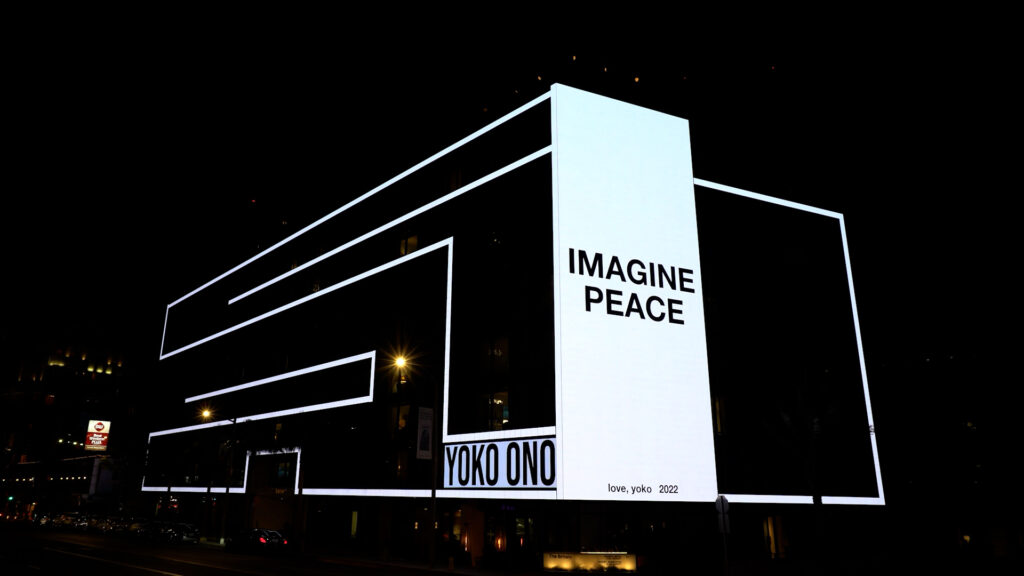
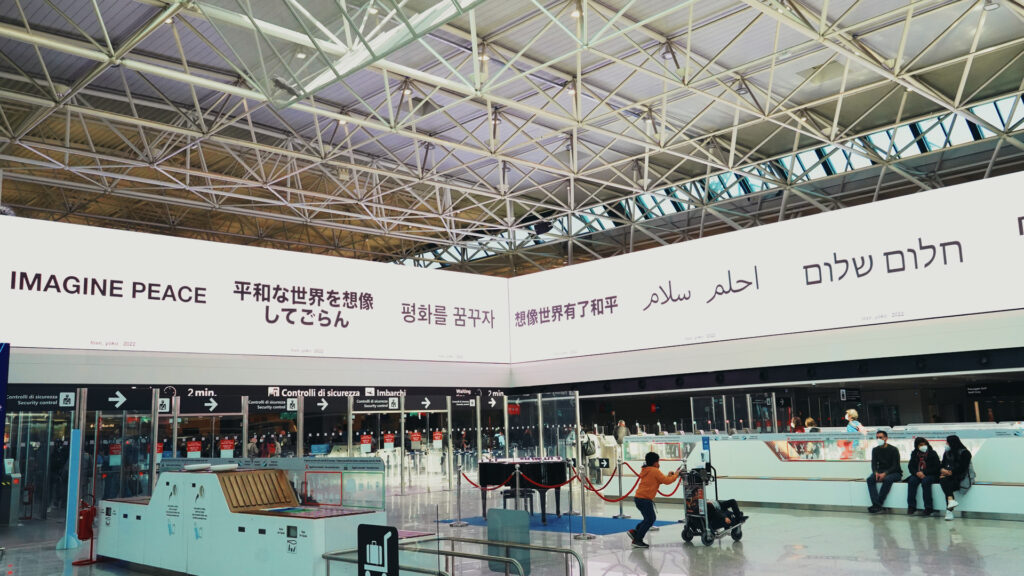
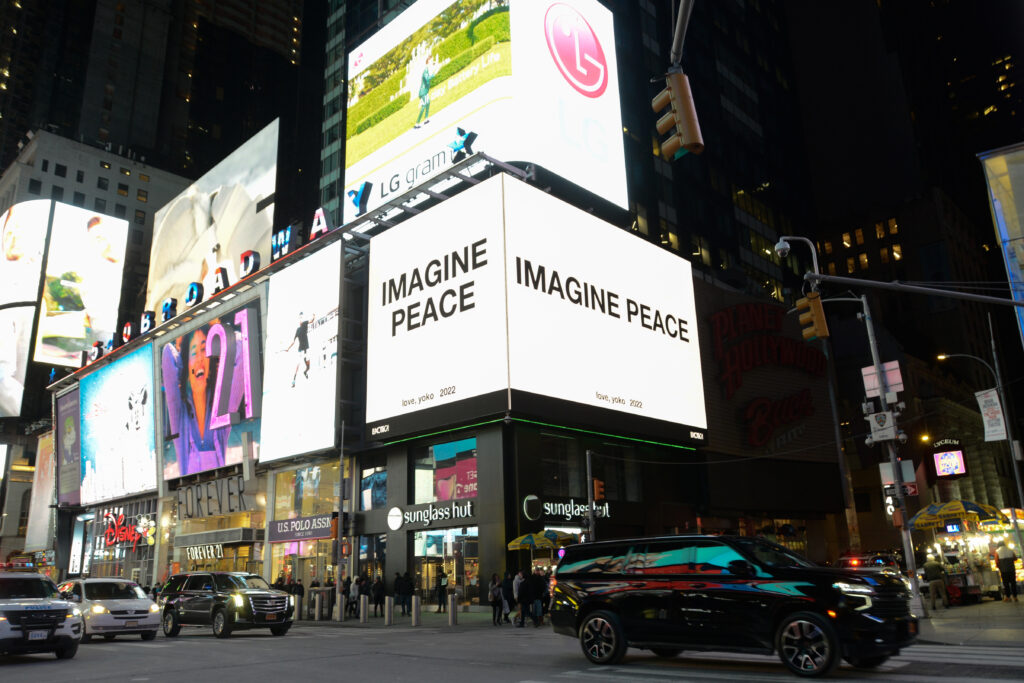
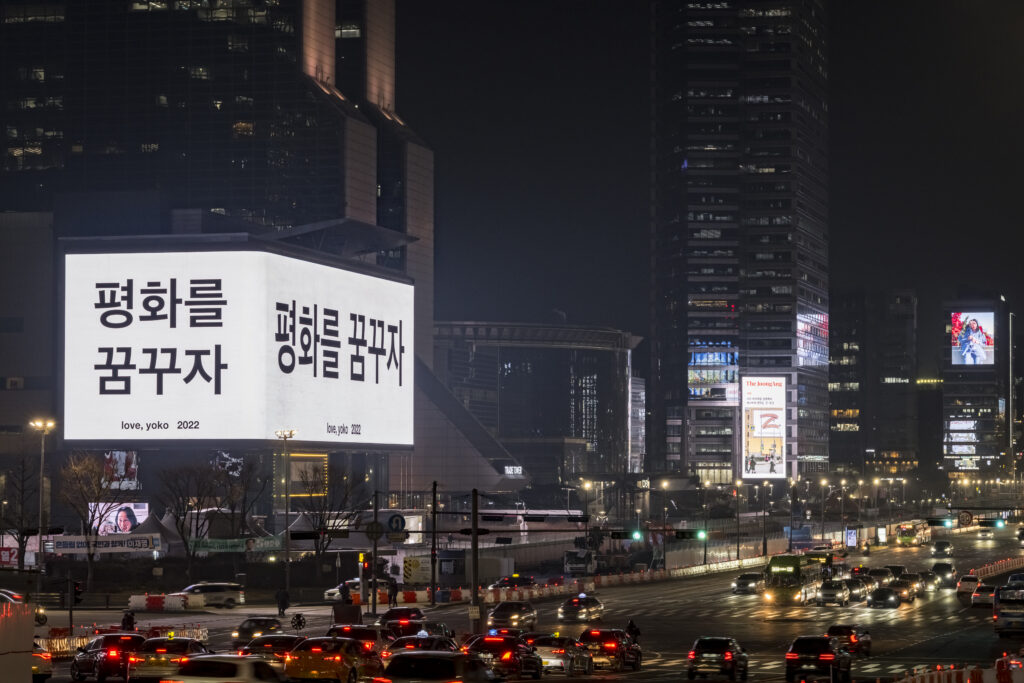
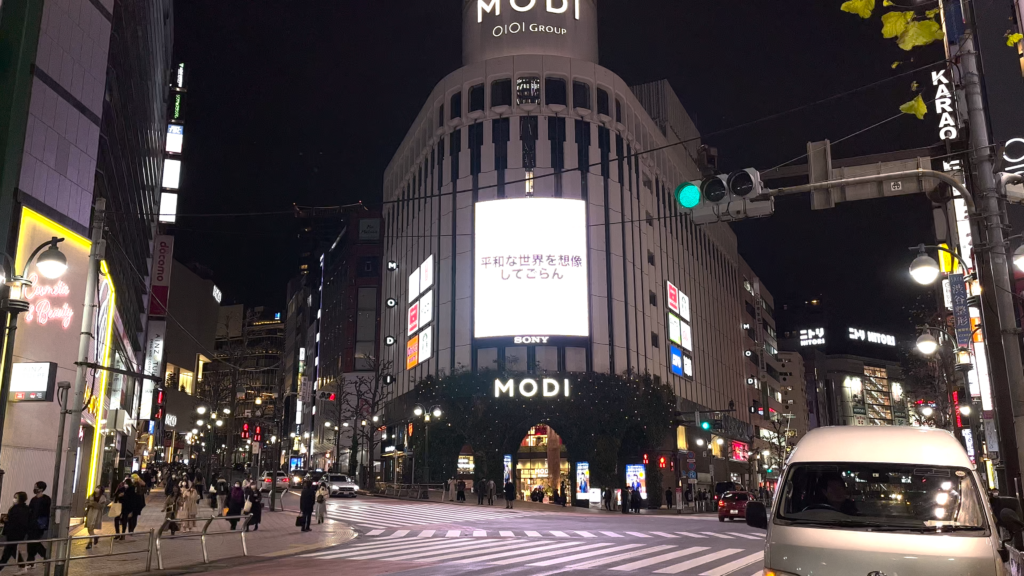
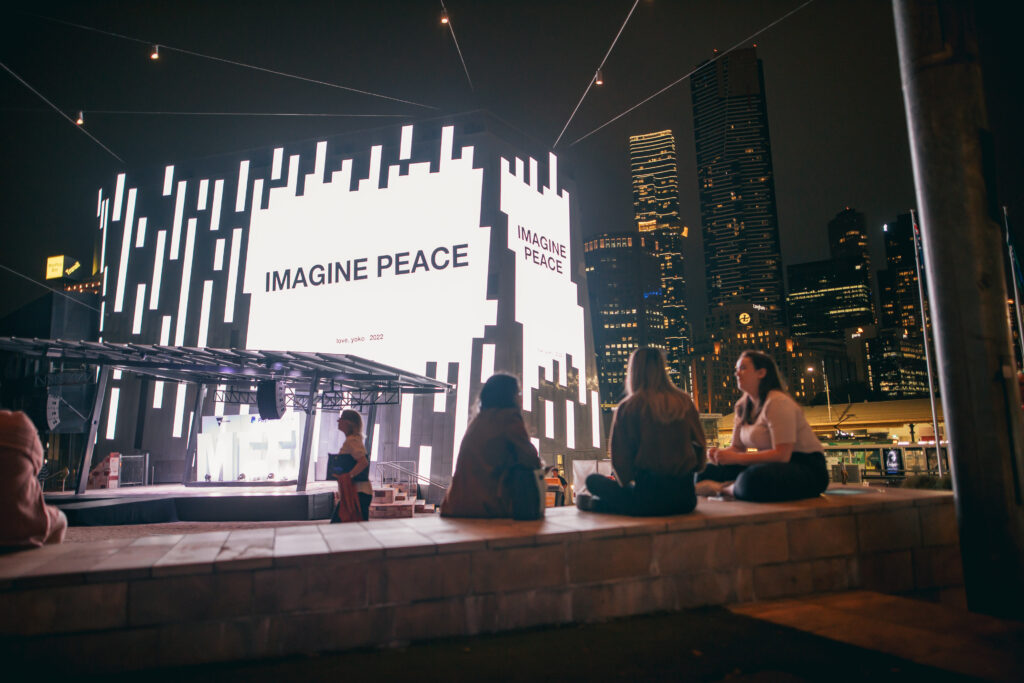
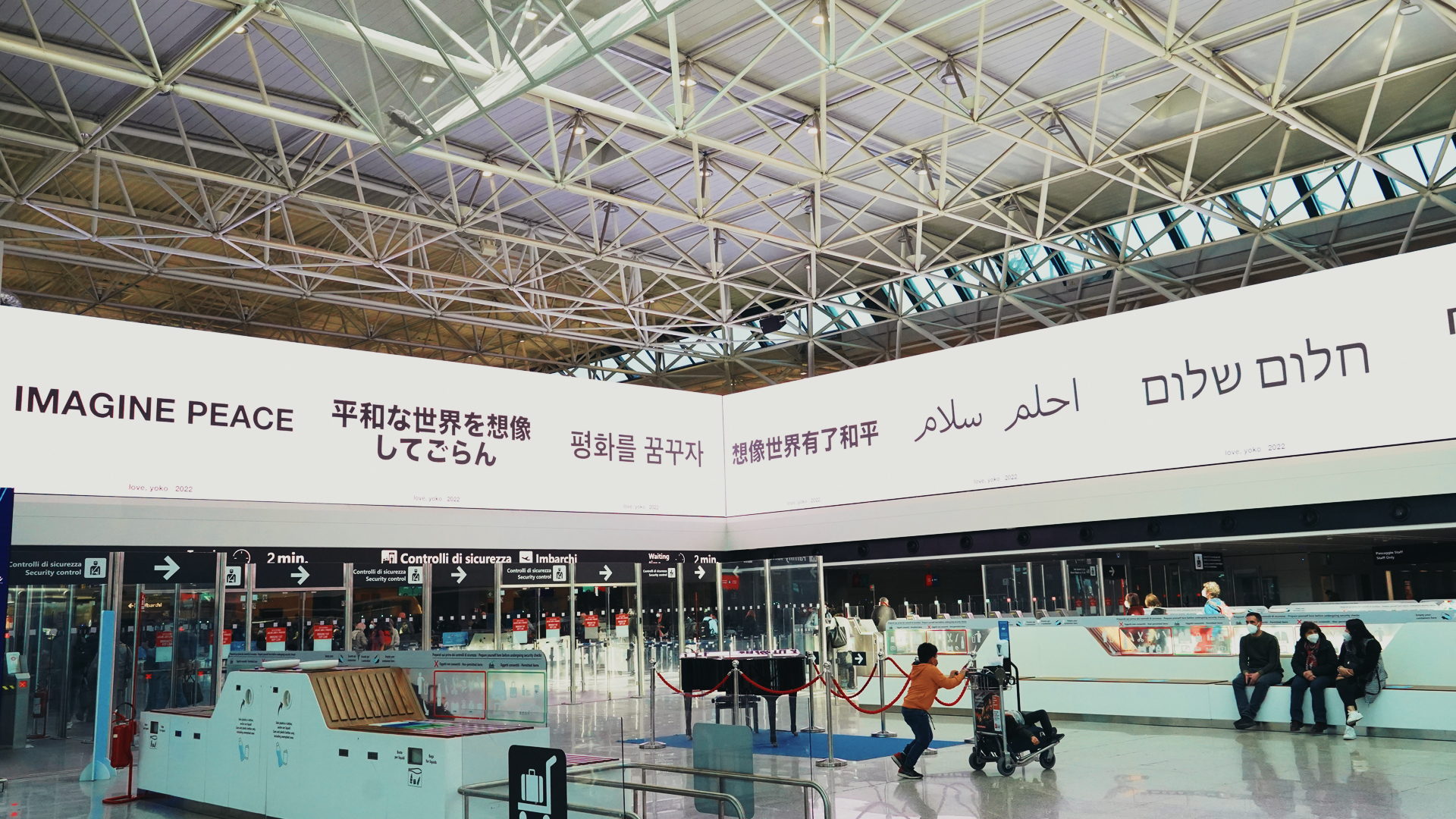
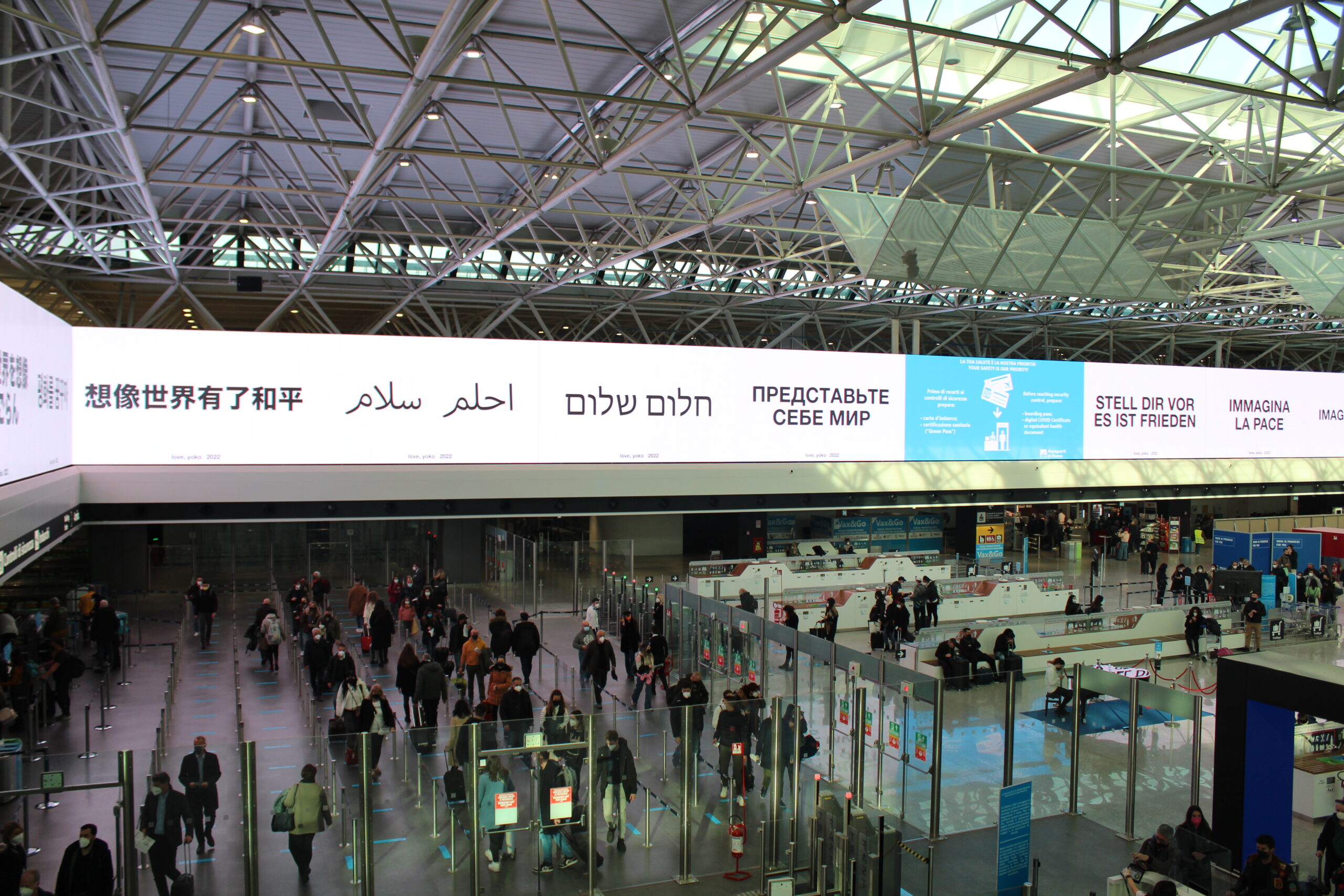
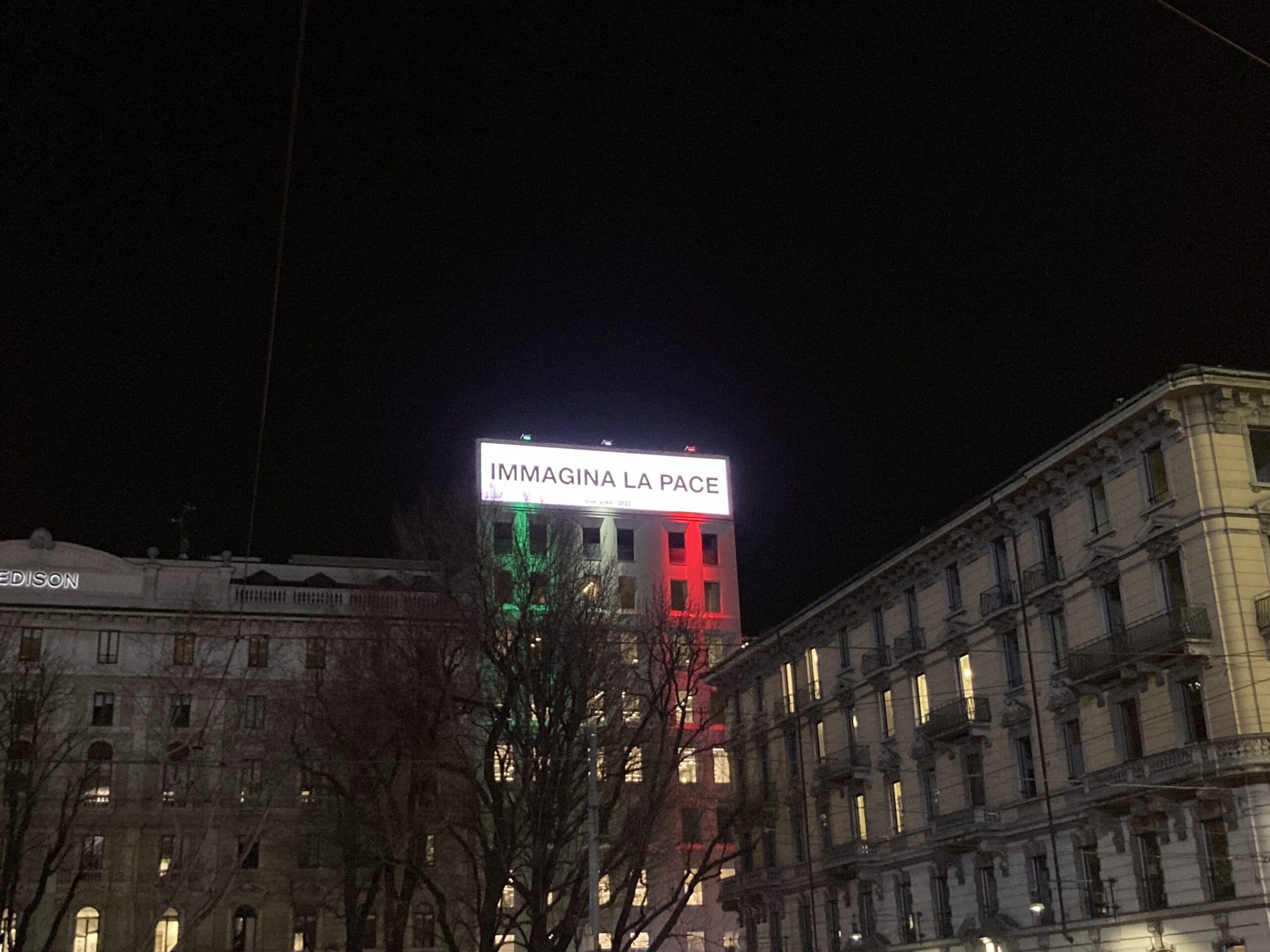
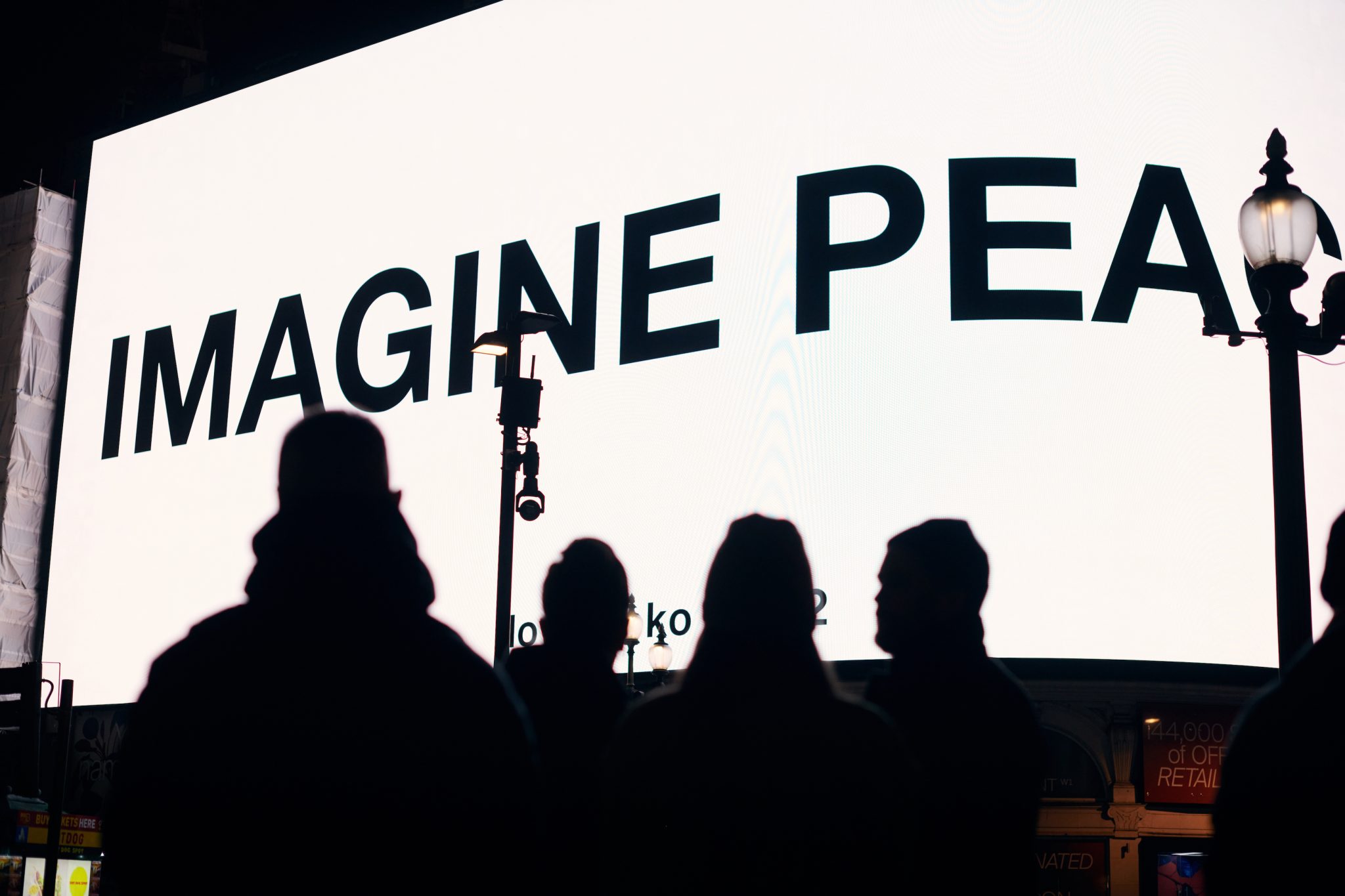
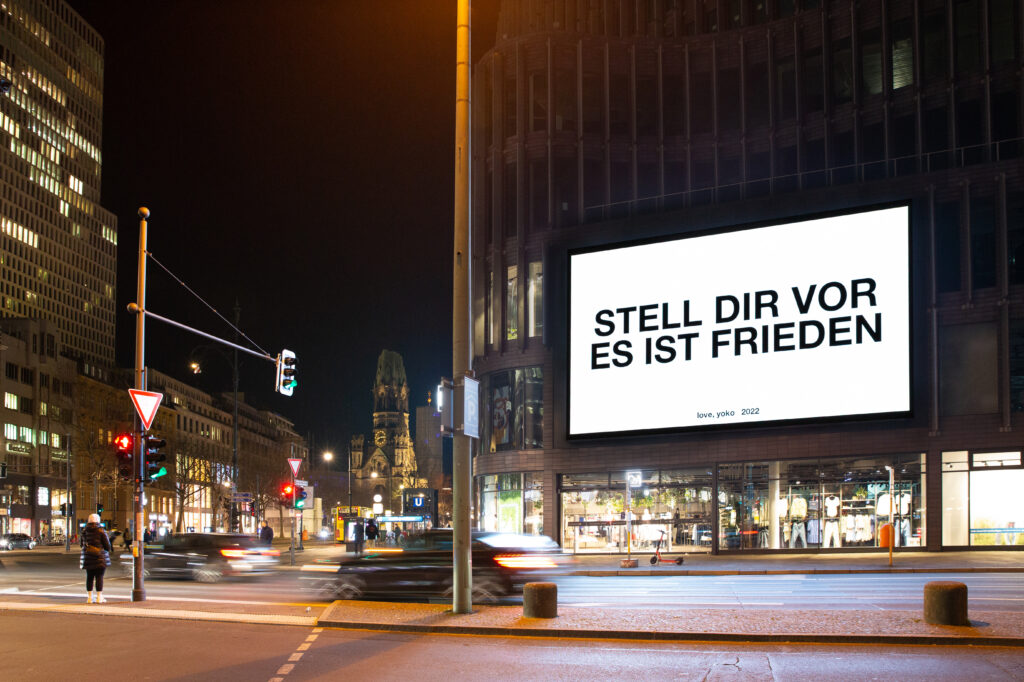
Each evening at 20:22, some of the world’s most visible advertising screens cease selling products and begin transmitting a simple instruction. Across London, New York, Los Angeles, Seoul, Tokyo, Milan and Melbourne, the phrase appears simultaneously in multiple languages, momentarily transforming a global network of commercial infrastructure into a network of collective contemplation.

The gesture recalls the optimism that has animated Ono’s practice since the late 1960s. Yet it also speaks to something deeper. Robert Rauschenberg once described artists as operating on frequencies that cannot always be explained rationally, guided by forces larger than themselves and by an instinctive awareness of what a particular historical moment demands. Looking back, there is something uncanny about the timing of Imagine Peace. The project seemed less planned than summoned. As events accelerated across Europe, the work emerged almost instinctively, as though the message had been waiting for the moment that required it.

This has always been central to Ono’s understanding of art. Rather than producing fixed objects, she creates frameworks through which people can imagine alternative realities. The artwork remains incomplete until it is activated by others. The responsibility is shared.

That principle connects Imagine Peace directly to the Bed-Ins staged by Ono and John Lennon in 1969. Often remembered through photographs and media spectacle, the Bed-Ins were fundamentally acts of conceptual art. Their medium was attention itself. They transformed visibility into a form of resistance and demonstrated that public imagination could become a political force.

More than 50 years later, the challenge remains remarkably similar.

Faced with violence, uncertainty and division, Ono offers neither explanation nor solution. Instead, she returns to the same proposition that has guided her work for decades: that imagination is not escapism but the first condition of change. Every political reality begins as a thought. Every future begins as an idea.

In this sense, Imagine Peace is not merely a message broadcast across the world. It is a work completed individually, millions of times over, each time someone pauses beneath a screen and accepts the invitation.


Shop

Loading products...

Films

Michelangelo Pistoletto’s Three Mirrors is presented daily across CIRCA’s global network of public screens. Each evening at 20:26 (local time), the work appears simultaneously across the following locations, entering the flow of the city and inviting a shared moment of reflection. Select a location below to view directions and find your nearest screen on Google Maps.

London, Piccadilly Lights

Experience  IMAGINE PEACE by Yoko Ono every evening at 20:22 GMT (3-31 March 2022) on the iconic Piccadilly Lights screen.

View screen locations

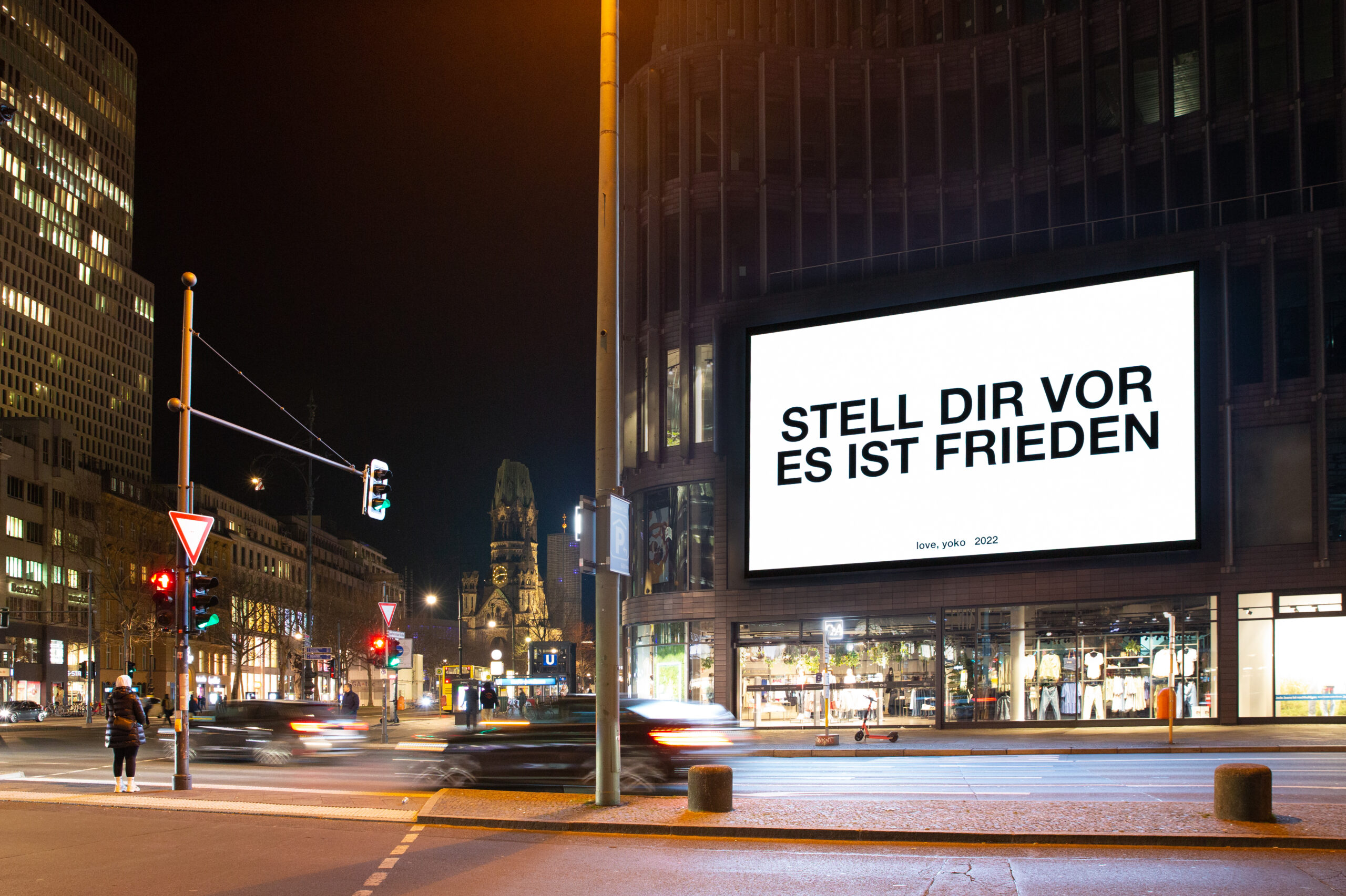
Berlin, Kurfürstendamm

Experience  IMAGINE PEACE by Yoko Ono every evening at 20:22 CET (3-31 March 2022) on Berlin’s Limes Kurfürstendamm screen.

View screen locations

Milan, Cadorna Square

Experience  IMAGINE PEACE by Yoko Ono every evening at 20:22 CET (3-31 March 2022) on Milan’s EssilorLuxottica screen.

View screen locations

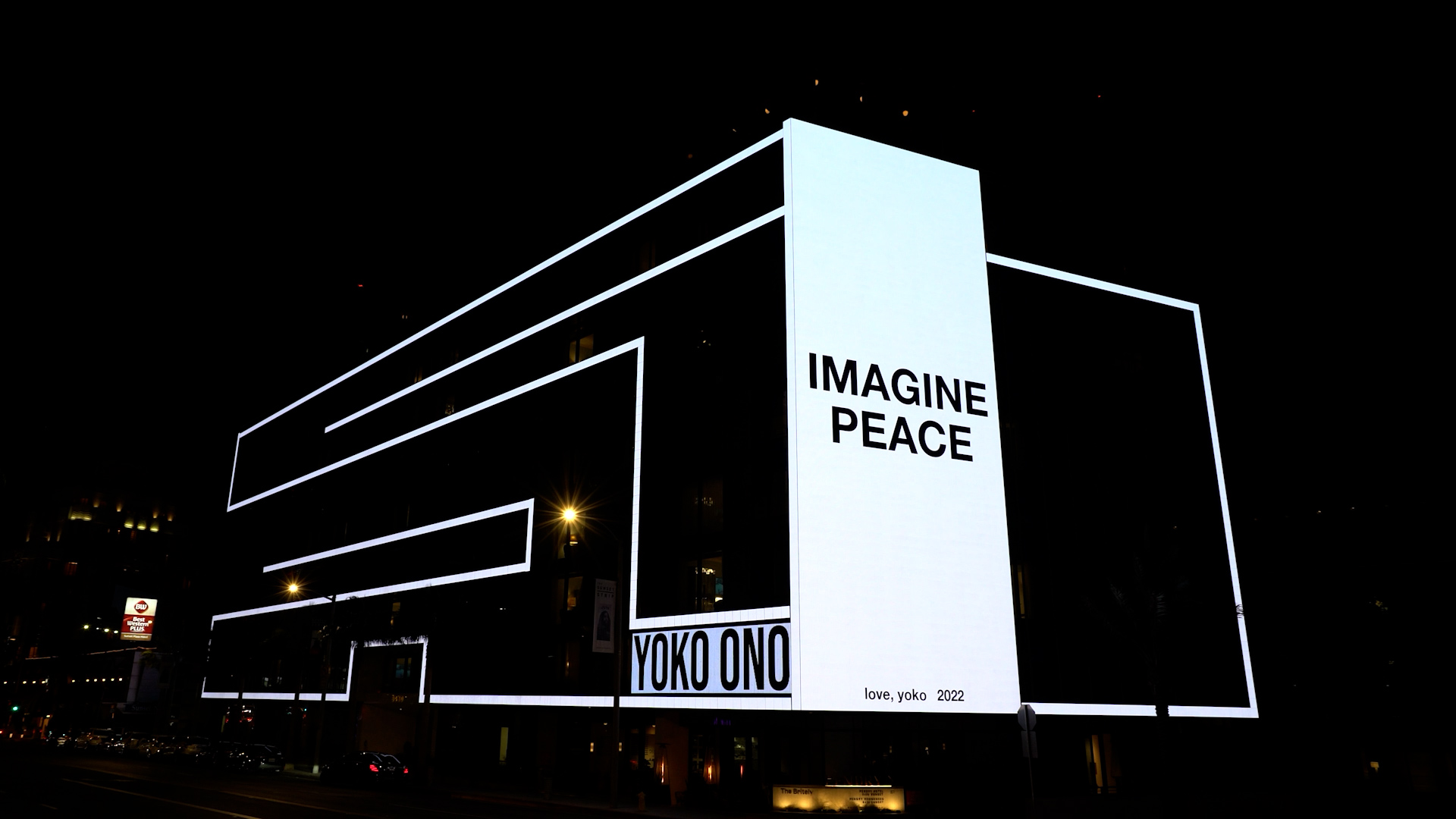
Los Angeles, Pendry West Hollywood

Experience  IMAGINE PEACE by Yoko Ono every evening at 20:22 PST (3-31 March 2022) on the Los Angeles Pendry West Hollywood screen.

View screen locations

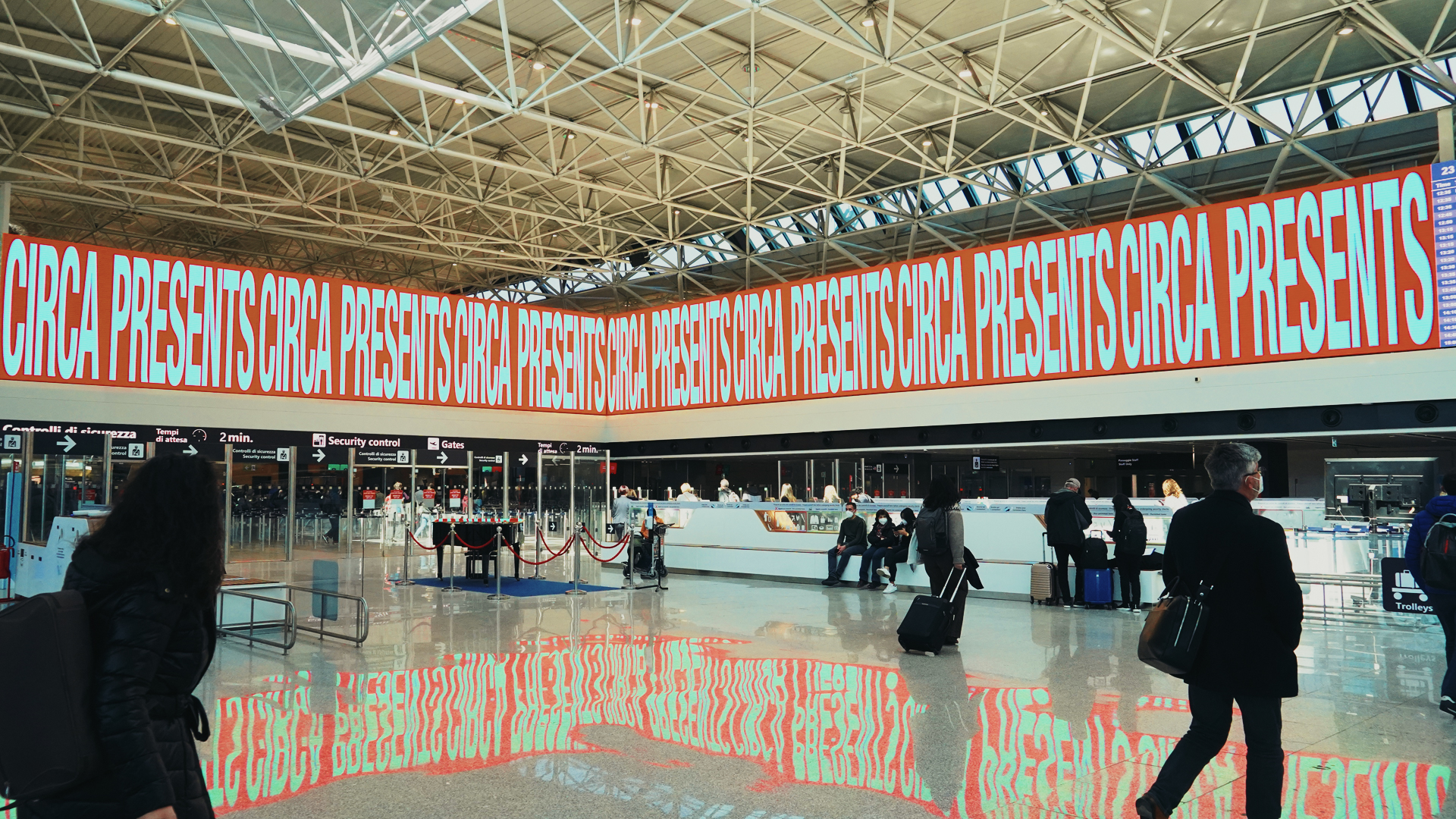
Rome, Fiumicino Airport

Experience  IMAGINE PEACE by Yoko Ono every evening at 20:22 CET (3-31 March 2022) on Rome’s Fiumicino Airport Terminal 1 screens.

View screen locations

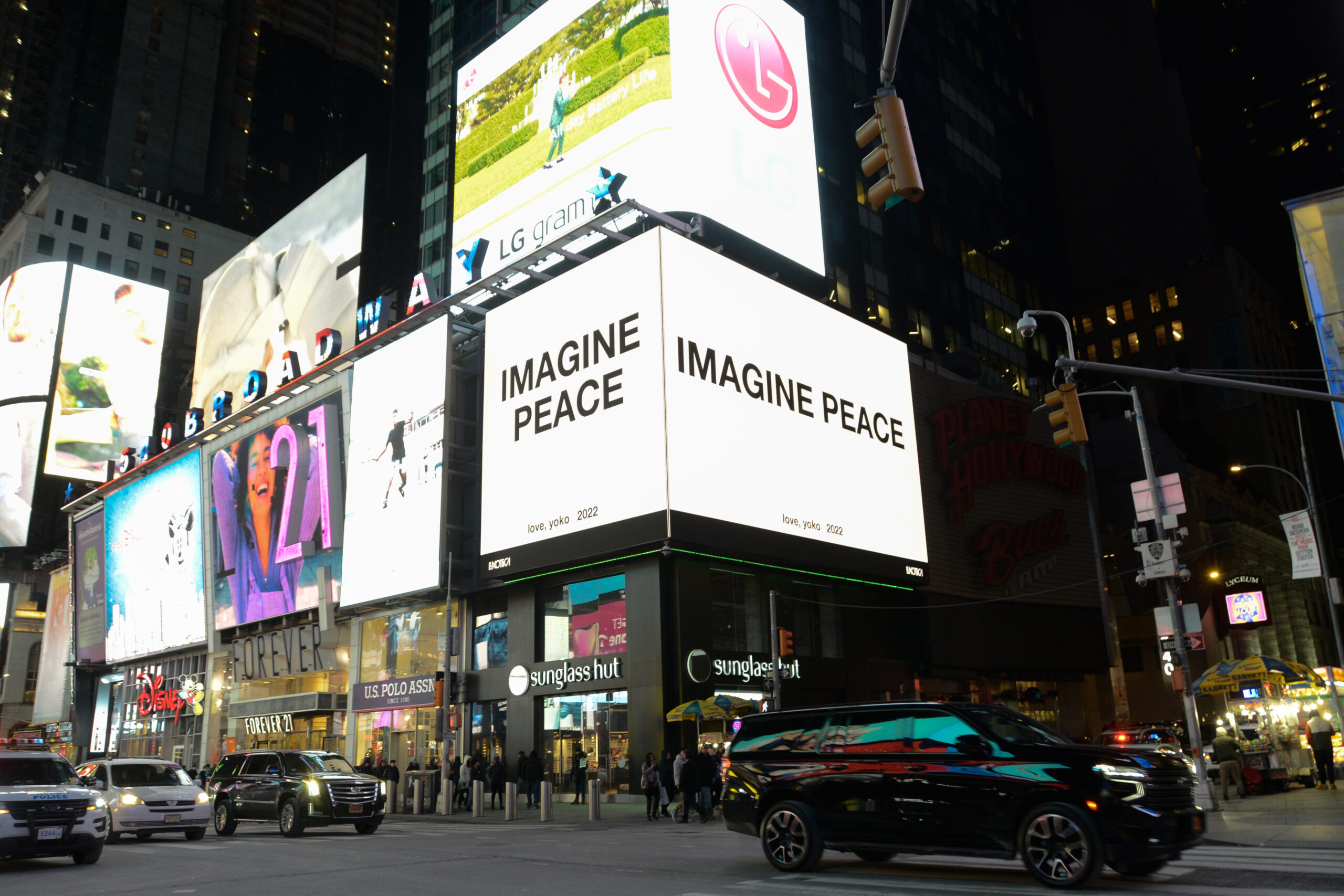
New York, Times Square

Experience  IMAGINE PEACE by Yoko Ono every evening at 20:22 EST (3-31 March 2022) on Times Square’s EssilorLuxottica screen.

View screen locations


Seoul, COEX K-Pop Square

Experience  IMAGINE PEACE by Yoko Ono every evening at 20:22 KST (3-31 March 2022) on Seoul’s COEX K-Pop Square screen.

View screen locations

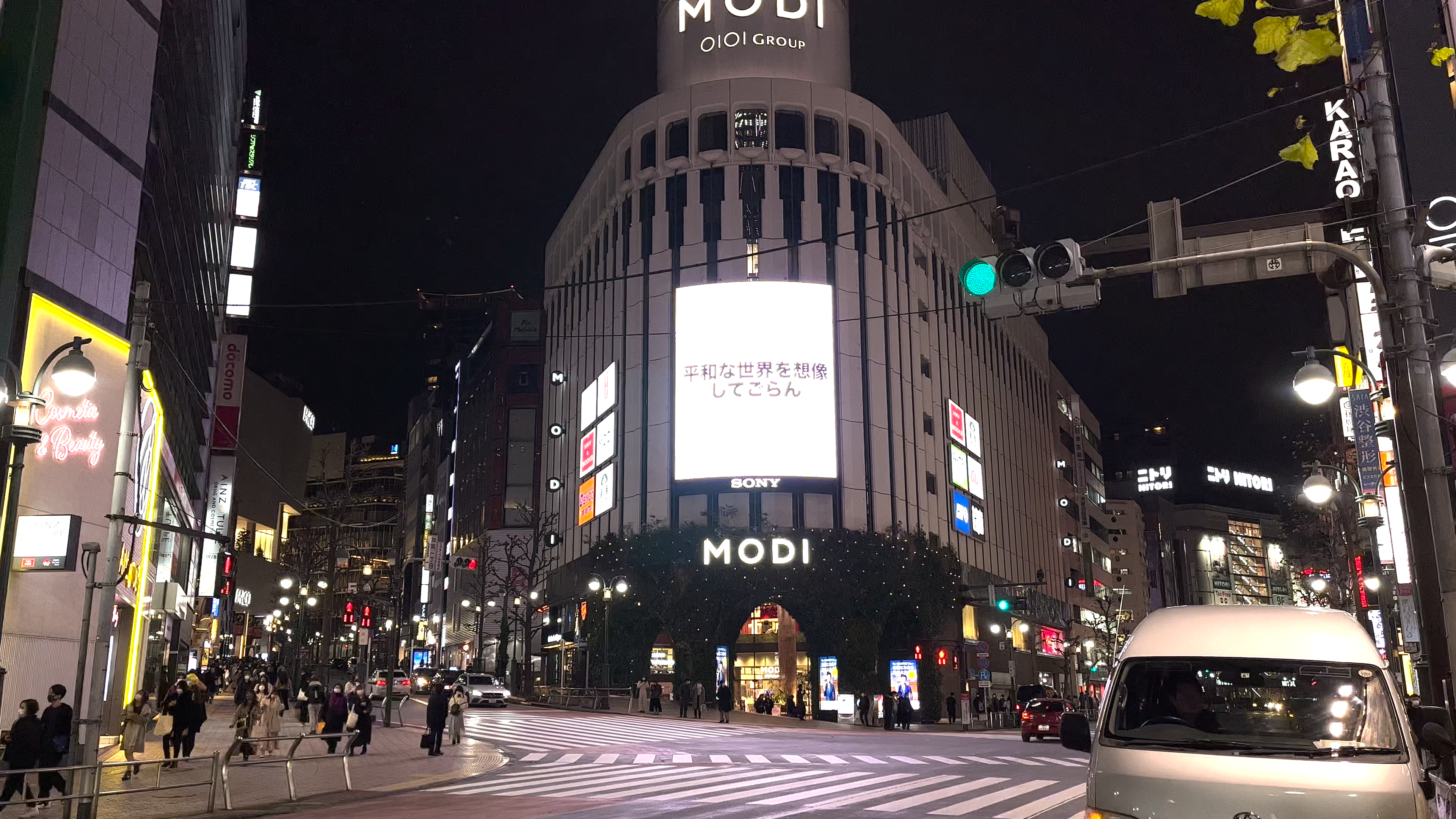
Tokyo, Neo Shibuya TV

Experience  IMAGINE PEACE by Yoko Ono hourly throughout the day (3-31 March 2022) on the NeoShibuya screens in Shibuya Crossing.

View screen locations

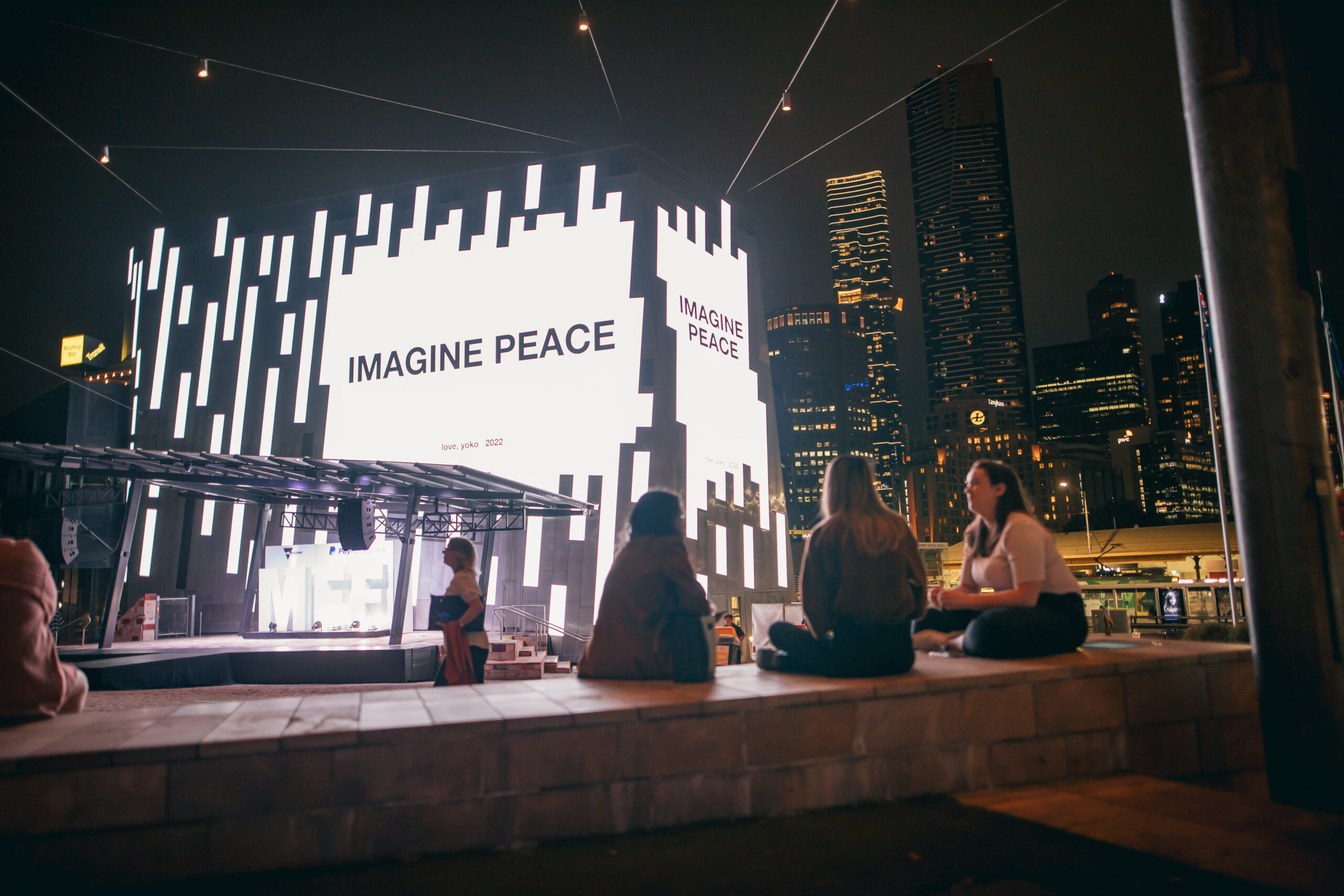
Melbourne, FedSquare

Experience  IMAGINE PEACE by Yoko Ono every evening at 20:22 ACT (3-31 March 2022) on Melbourne’s FedSquare screen.

View screen locations

ESSAY

Yoko Ono, CIRCA and the United Nations By Barney Pau
The art sector’s benefits are often intangible and can go unseen by contemporary society. CIRCA (Cultural Institute of Radical Contemporary Arts) challenges this by helping to give back through funds generated by their #CIRCAECONOMY initiative.

This is an incredibly challenging time for the arts, with public funds being divested away from institutions and public faith. The #CIRCAECONOMY endeavours to lead by example and show how art can affect change. In light of this, today marks a milestone in CIRCA history as their founder, Josef O’Connor, takes to the stage at the United Nations (UN) headquarters in New York to speak at the High-Level Pledging Event (HLPE) for the Central Emergency Response Fund (CERF) of 2023. This invitation to speak comes after CIRCA donated £300,000 to UN CERF following their collaboration with Yoko Ono and Serpentine back in March 2022, making them the second largest private donor after TikTok.
Press

Yoko Ono Website
Partner Mayor of London
Serpentine
Flyposting Build Hollywood
CNN
Creative Boom
Design Boom
Washington Post
Independent
Yahoo
The Evening Standard
NME Japan
Press release

Biography

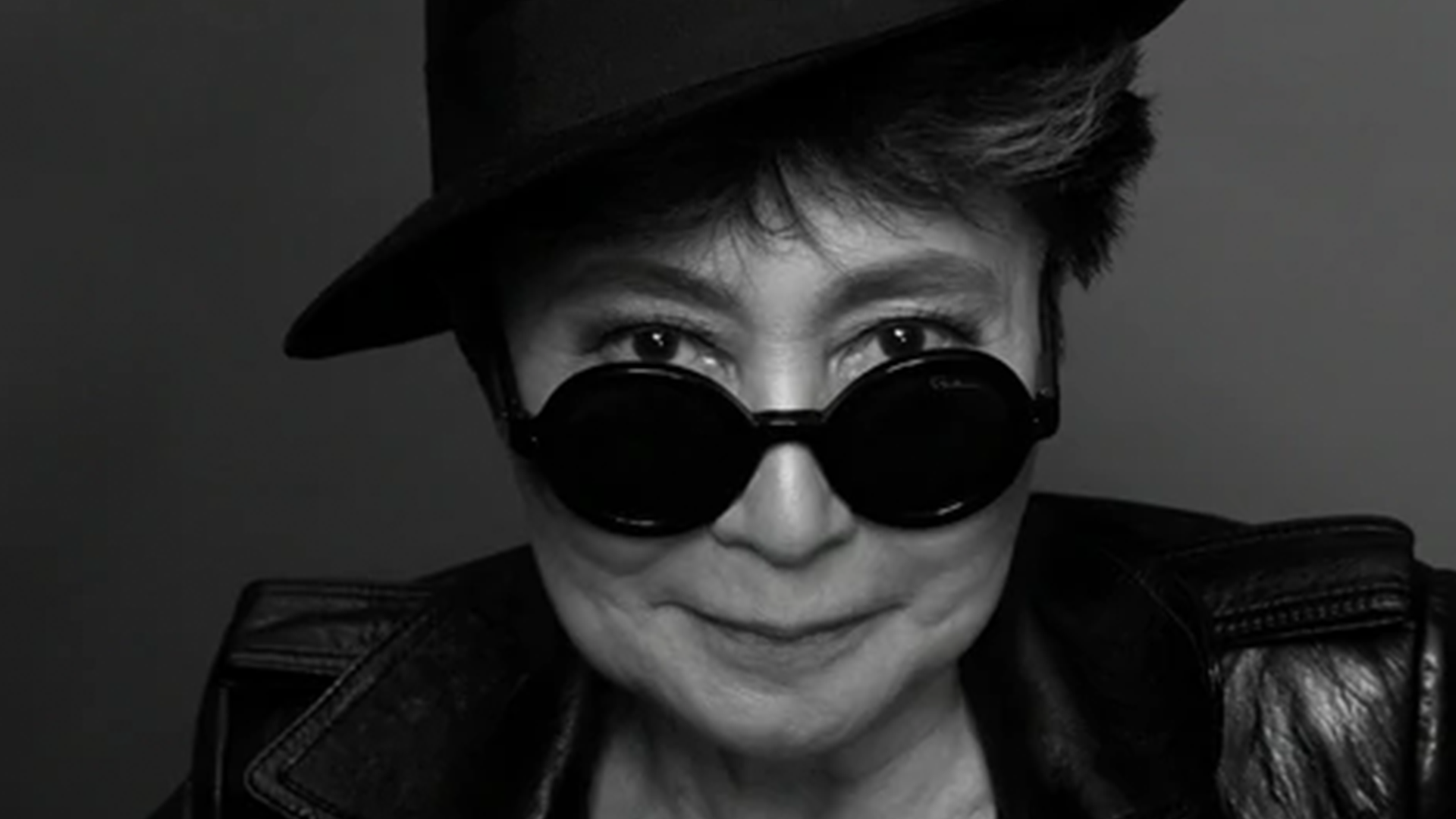
Yoko Ono

Yoko Ono is one of the most influential and pioneering artists of the past century. Spanning conceptual art, performance, music, film, writing and activism, her work has consistently challenged conventional ways of thinking, inviting audiences to become active participants in the creation of meaning. For more than six decades, she has demonstrated how simple ideas can inspire profound acts of imagination, empathy and social change.

Born in Tokyo in 1933 and later moving to New York, Ono emerged as a central figure within the international avant-garde and Fluxus movements of the 1960s. Her groundbreaking works, including Cut Piece (1964) and Grapefruit (1964), helped define conceptual and participatory art, while her collaborations with John Lennon transformed art and peace activism into a global cultural force. Throughout her career, Ono has returned to a recurring proposition: that imagining a different world is the first step towards creating one.

Yoko Ono’s relationship with CIRCA has centred on the enduring power of public art as a vehicle for collective action. In 2022, she presented IMAGINE PEACE, a global intervention that paused commercial advertising screens across multiple cities to share a simple yet urgent message of hope. Presented in partnership with Serpentine, the project extended a concept that has appeared throughout Ono’s work for decades, from billboards and posters to the Imagine Peace Tower in Iceland. Accompanied by a time-limited edition that raised $430,320 for the United Nations Central Emergency Response Fund (CERF), the commission demonstrated how art can mobilise audiences worldwide in support of humanitarian relief.

Awarded the Golden Lion for Lifetime Achievement at the Venice Biennale and celebrated internationally for her contributions to contemporary art, music and peace activism, Ono continues to inspire generations of artists, thinkers and changemakers. Through works that unite imagination with action, she remains a powerful reminder that art can be both a personal gesture and a catalyst for global transformation.


Subscribe to our newsletter

Subscription successful

An error occurred