fbpx Nikita Gale, Some Weather | CIRCA 20:21

CIRCA 2021

Nikita Gale, Some Weather

1-30 June, 2021

Weather is often described as background. It is the condition through which life unfolds rather than the subject of attention itself. We notice it when it becomes extreme, when rain interrupts a journey or heat alters the body, yet for the most part it remains atmospheric, shaping experience while rarely occupying the centre of perception.

Nikita Gale’s Some Weather begins from a similar proposition. What if the forces that most profoundly shape culture are often those that remain in the background? What if certain forms of labour become so deeply woven into collective experience that they disappear from view altogether?

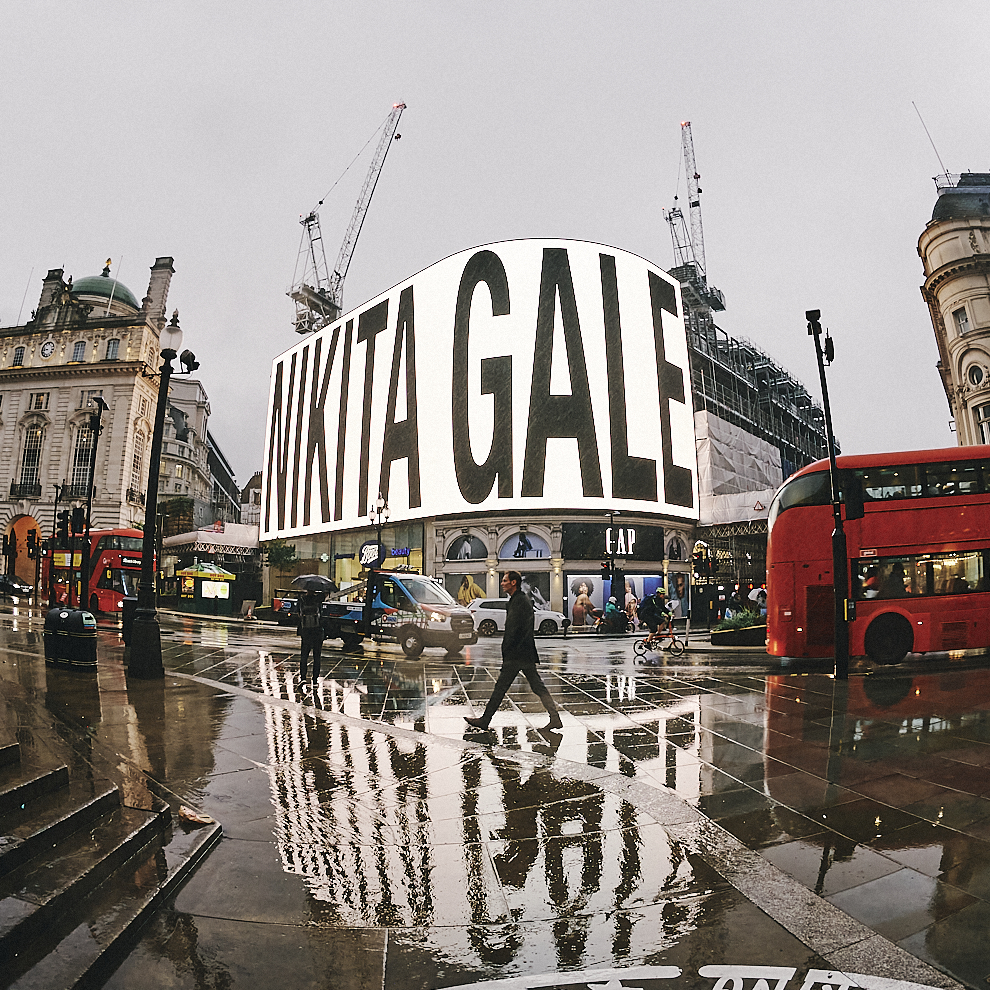
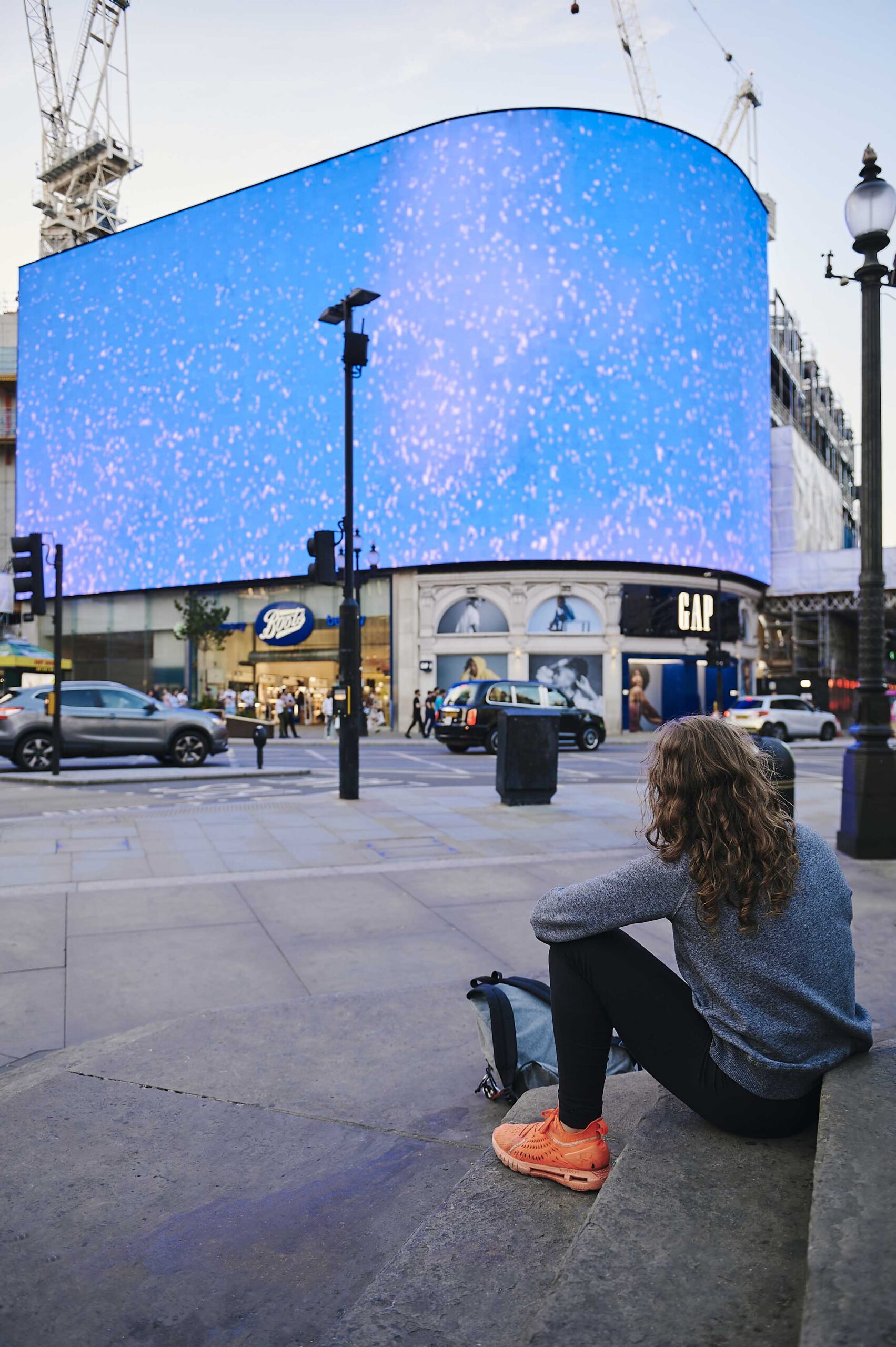
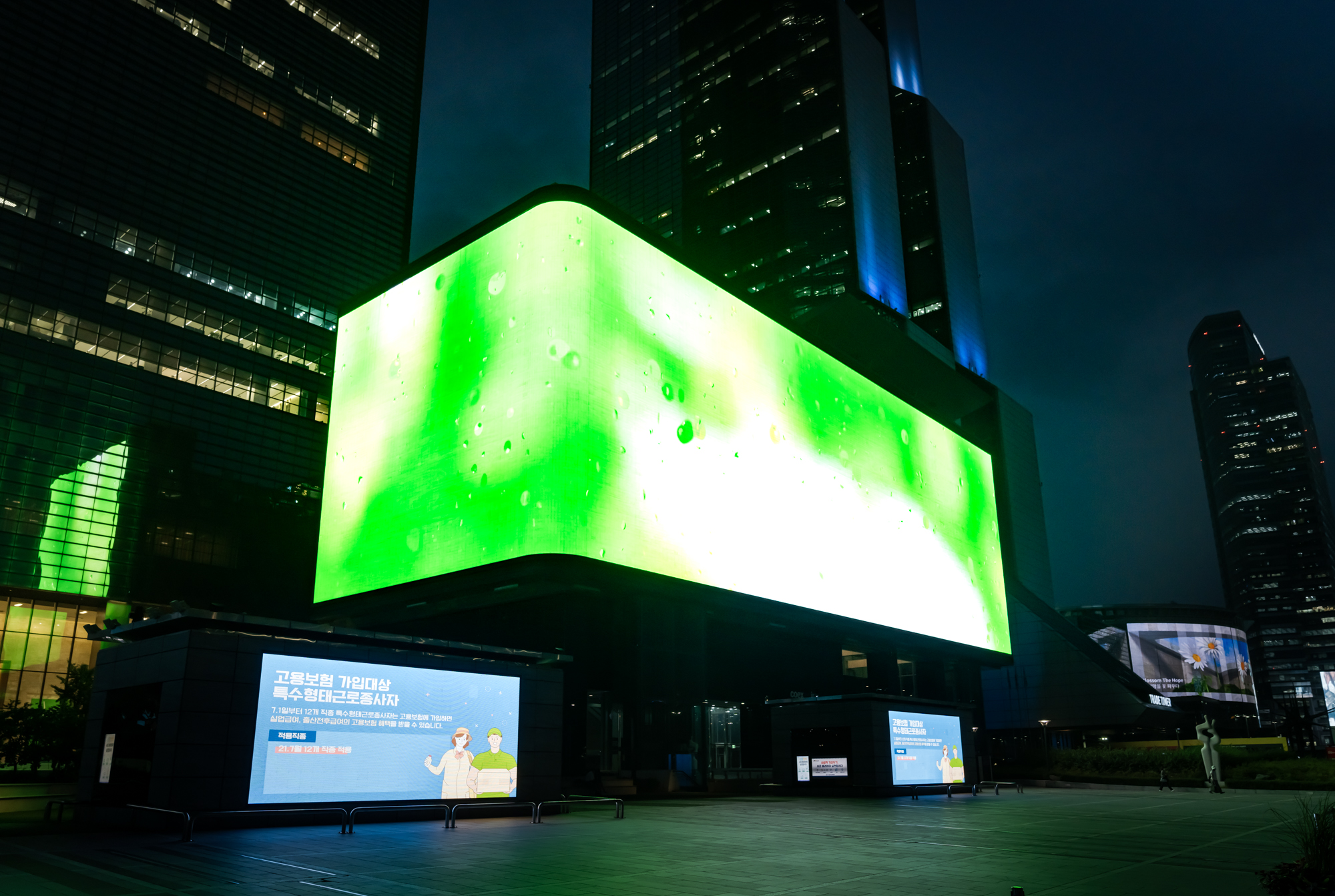
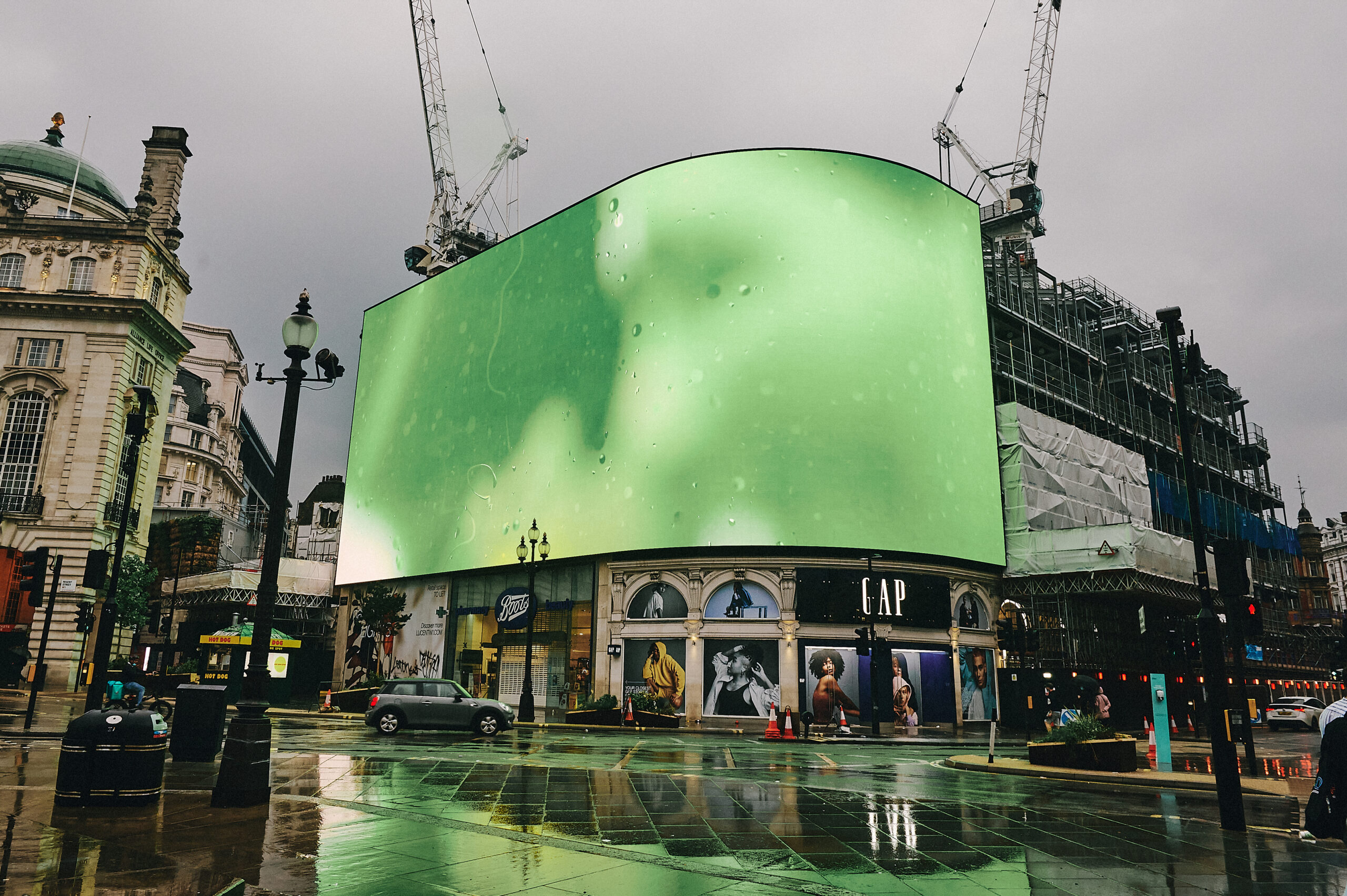
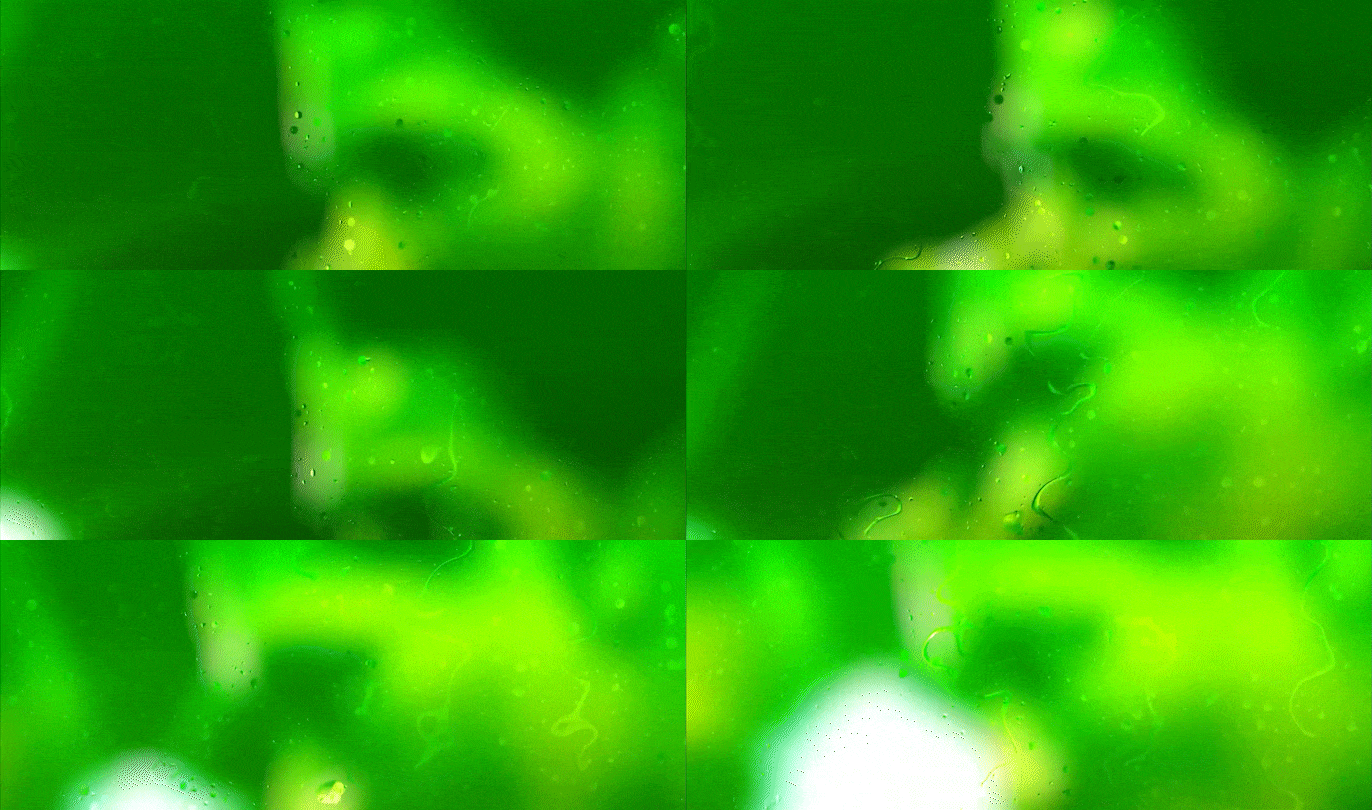
Created in collaboration with Chisenhale Gallery and presented across London, Seoul and Tokyo, Some Weather transforms some of the largest advertising screens in the world into shifting fields of colour, sound and memory. Appearing throughout June 2021 according to no fixed sequence, the four films, Heat, Fog, Rain and Blizzard, arrive and dissolve like meteorological events, altering the atmosphere of each city while refusing the stability usually associated with public images.

At the centre of the work are the voices of Black women whose contributions inhabit some of the most celebrated recordings in popular music. Their voices can be heard throughout the history of rock and roll, lending emotional force, texture and depth to songs that have entered the cultural canon, yet their presence frequently remains peripheral to the narratives through which that history is told. Gale is not interested in simply correcting this omission through visibility. Instead, she asks a more complicated question: what forms of power emerge precisely through occupying the space between presence and disappearance?

The archival footage used throughout Some Weather is manipulated beyond easy recognition. Figures blur, dissolve and expand until they exceed the conditions of straightforward representation. Rather than restoring legibility, Gale pushes the image towards abstraction, creating forms that resist immediate consumption. The singers remain present but never fully accessible, visible but not entirely knowable.

This tension between visibility and opacity runs throughout Gale’s practice. Drawing upon sound studies, Black cultural theory and material culture, her work repeatedly examines the conditions through which individuals become audible, visible and historically recognised. Recognition, however, is never treated as an uncomplicated good. To become legible is also to become available for categorisation, interpretation and consumption. Some Weather therefore occupies an unstable territory between revelation and concealment, allowing these performers to haunt the image without becoming reducible to it.

The title draws upon Toni Morrison’s use of the word “weather” in Beloved, where atmosphere becomes a way of thinking about memory, presence and the traces left behind by lives that official histories struggle to account for. Gale extends this understanding through the writings of Christina Sharpe, for whom weather becomes a condition that exceeds the individual, operating as a total environment through which bodies move and are shaped. Weather is not simply what surrounds us. It is what we inhabit and what, collectively, we produce.

This idea resonates powerfully with the history of popular music. Background singers function much like weather itself. They shape emotional climates. They create mood, texture and atmosphere. Their labour permeates the recording while remaining structurally secondary to the figures positioned at the centre of the frame. They are indispensable yet frequently unnamed.

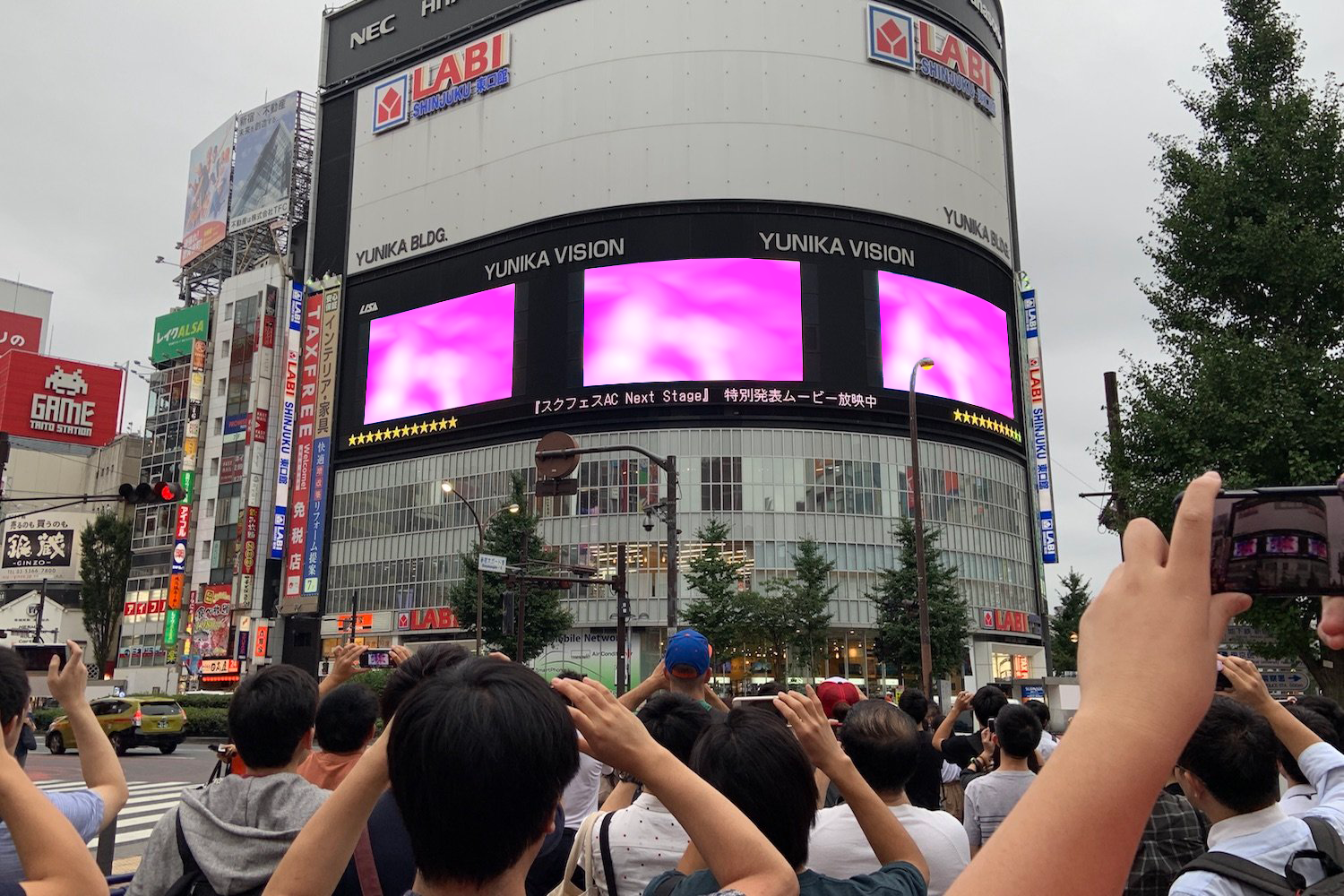
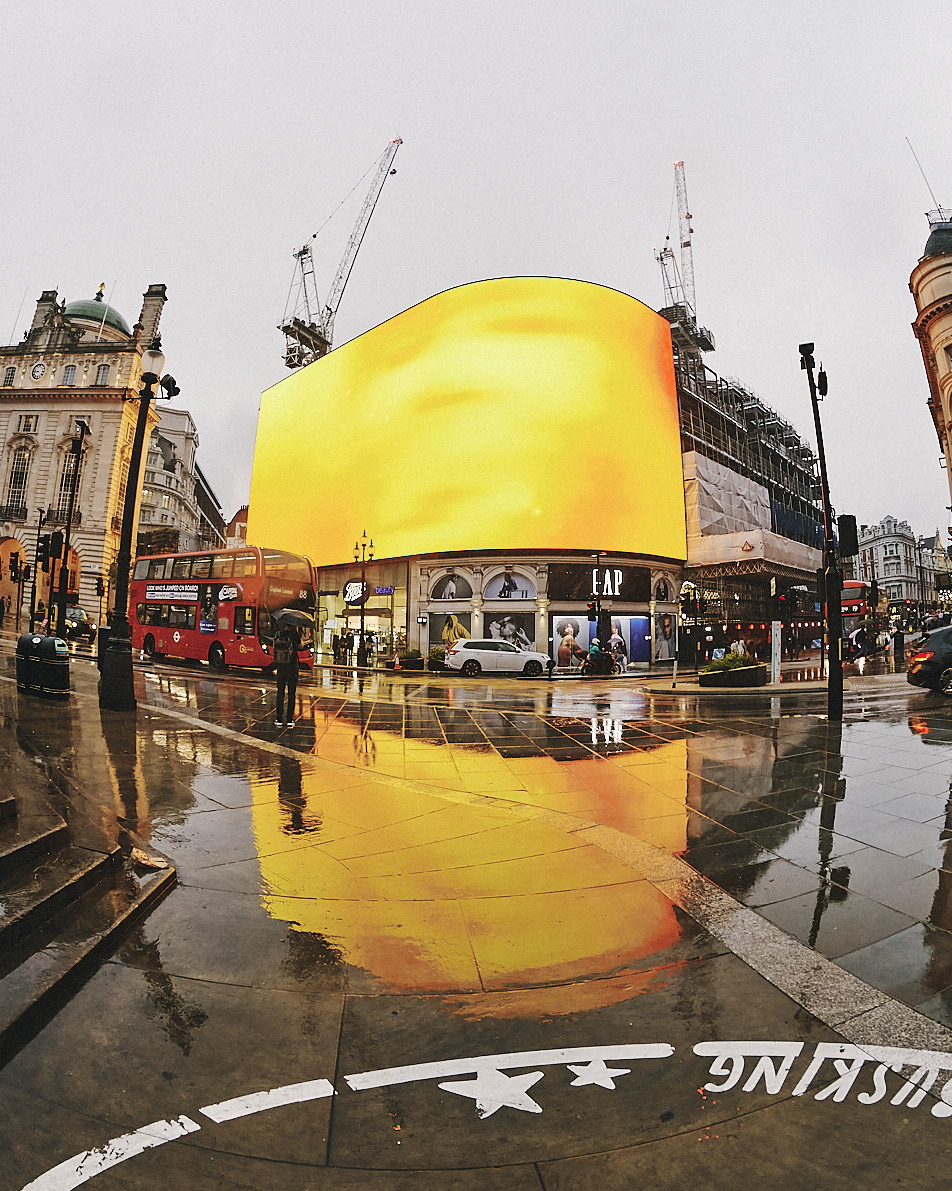
Projected onto monumental screens in Piccadilly Circus, Shinjuku and Gangnam, these questions acquire another dimension. Public screens are typically designed to command attention through clarity, certainty and repetition. Advertising depends upon immediate recognition. Gale proposes the opposite. The screens become atmospheric instruments rather than informational surfaces. Colour spills across architecture. Light transforms public space. Images hover at the threshold of recognition. The city itself appears to enter a different climatic condition.

The commission also marks a significant moment within CIRCA’s own evolution. As the programme expands beyond London for the first time, connecting audiences in Seoul and Tokyo, Gale responds by creating a work concerned with transmission itself: how voices travel, how histories circulate, how influence moves across geographies while remaining unevenly distributed. The result is less an exhibition than a system of conditions unfolding simultaneously across multiple cities.

Like weather, the work cannot be possessed. It can only be experienced while passing through.

For a brief moment, the atmosphere changes. The air feels different. The city appears altered. Something previously consigned to the background enters perception, not as a fixed image, but as a force that was always there.

Films

SCREEN LOCATIONS

Experience Some Weather by Nikita Gale every evening at 20:21 (local time) across public billboard screens in London, Seoul and Tokyo.

London, Piccadilly Lights

Experience  SOME WEATHER by Nikita Gale every evening at 20:21 BST/GMT (1-30 June 2021) on the iconic Piccadilly Lights screen.

View screen locations

Seoul, COEX K-Pop Square

Experience  SOME WEATHER by Nikita Gale every evening at 20:21 KST (1-30 June 2021) on Seoul’s COEX K-Pop Square screen.

View screen locations

Tokyo, Yunika Vision

Experience  SOME WEATHER by Nikita Gale every evening at 20:21 JST (1-30 June 2021) on Tokyo’s Yunika Vision screen.

View screen locations

INTERVIEW

Zoé Whitley In Conversation With Nikita Gale
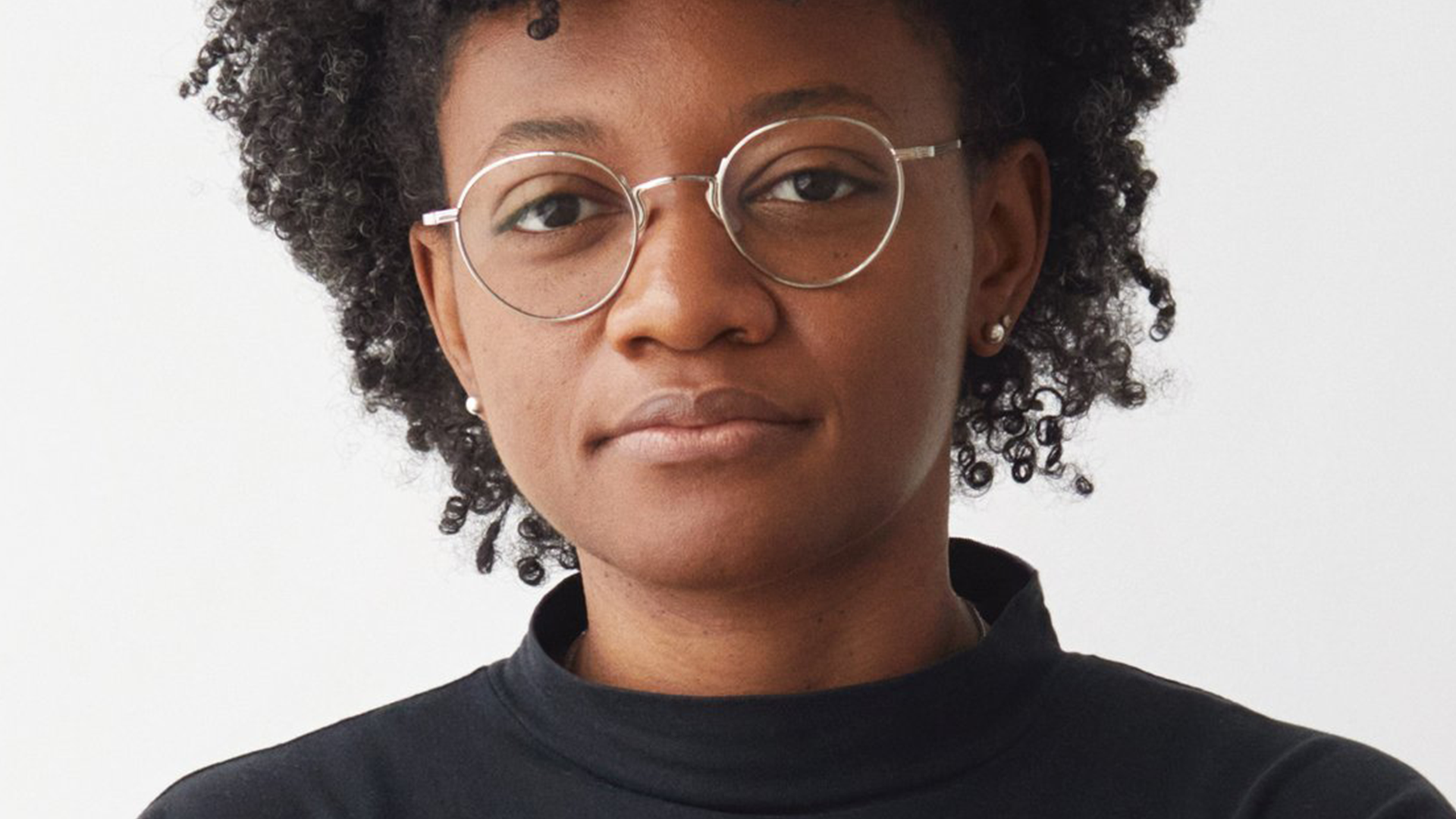
Zoé Whitley: Before we’d met, I’d already encountered your writings about listening as a political act. Drawing on the research of Prof Kate Lacey, you’ve focused on how the freedom to listen is not just about freedom of speech, but is fundamental to ensuring many voices are heard. How did sound come to play such an important role for you as a visual artist?

Nikita Gale: It’s nice to know that the research and writing is finding its way around. It’s always a bit difficult to track how things are resonating with others since digital interactions often feel like projecting into a void. My interest in sound emerged from a more specific interest and exposure to music from an early age. My mother was a music teacher when I was growing up, so there was always a piano in the house; there was always music playing from whatever the most recent stereo system was that my father had brought into the house. My father began his military career as a civil engineer in the Air Force, so there were always little models and drawings of buildings and bridges and other kinds of infrastructures floating around the house. As I entered high school and college, I began recording my own music, mostly very loopy electric guitar compositions that became much more pop-y after college. I was a bedroom musician. I never performed but I had a small following on Myspace and got a little radio play in the mid-00s, haha. After college, I started working in advertising in the buying and planning side, so my job was essentially to make sense of behavioral data and find ways to make that data profitable. So I was working in advertising by day, and started shooting music shows at night, literally. At this point, I was living in Atlanta and was photographing a lot of my friends who were musicians, shooting album covers, press photos; I’d also started a music blog where I’d review singles I was really into. I eventually began experimenting with other mediums but sound always found a way into whatever I was doing.

Biography

Nikita Gale

Nikita Gale is an artist whose work examines the systems, infrastructures and forms of labour that shape contemporary culture. Working across sculpture, installation, video, sound and text, Gale investigates how power is produced and maintained through architecture, technology, performance and media, often drawing attention to the people, voices and structures that remain hidden from view.

Based in Los Angeles, Gale brings together perspectives from material culture, sound studies and social history to explore questions of authorship, visibility and value. Rather than focusing on singular narratives or individuals, the artist is interested in the networks of labour that underpin cultural production, revealing how recognition is distributed and how certain contributions are elevated while others are obscured. Through carefully constructed works that move between the physical and immaterial, Gale invites audiences to consider the systems that shape what we see, hear and remember.

In 2021, Gale collaborated with CIRCA and Chisenhale Gallery on SOME WEATHER, a major public commission presented across London, Seoul and Tokyo. Comprising four films, Heat, Fog, Blizzard and Rain, the project reflected on the often-uncredited labour of Black women whose voices helped define some of rock music’s most celebrated recordings. Drawing on archival footage transformed beyond easy recognition, Gale used monumental public screens to create atmospheric interventions that shifted the visual climate of each city while foregrounding questions of authorship, performance and cultural memory. Presented in collaboration with Chisenhale Gallery under the direction of Zoé Whitley, the commission marked an important early international partnership within CIRCA’s programme and introduced Gale’s work to audiences across multiple continents.

Gale’s work has been exhibited internationally at institutions including MoMA PS1, the Studio Museum in Harlem, Hammer Museum, Nottingham Contemporary and Cubitt. Through a practice that combines intellectual rigour with formal innovation, Gale continues to challenge how histories are constructed, how labour is valued and how power circulates through the cultural systems that shape contemporary life.


Subscribe to our newsletter

Subscription successful

An error occurred