
fbpx Agnes Denes | CIRCA

Agnes Denes is one of the most influential and visionary artists of the past century, widely recognised as a pioneer of environmental art, conceptual art and ecological thinking. For more than six decades, she has created works that unite art, science, philosophy, mathematics and ecology, challenging audiences to consider humanity’s relationship with the natural world and the long-term consequences of our actions.

Born in Budapest in 1931, raised in Sweden and later educated in the United States, Denes emerged in the 1960s as one of the first artists to address environmental and planetary concerns through contemporary art. Long before climate change, sustainability and ecological collapse entered mainstream discourse, her work explored questions of resource management, population growth, environmental degradation and humanity’s responsibility to future generations. Moving fluidly between drawing, sculpture, installation, land art, writing and public interventions, she developed a uniquely interdisciplinary practice that continues to shape contemporary discussions around art and ecology today.

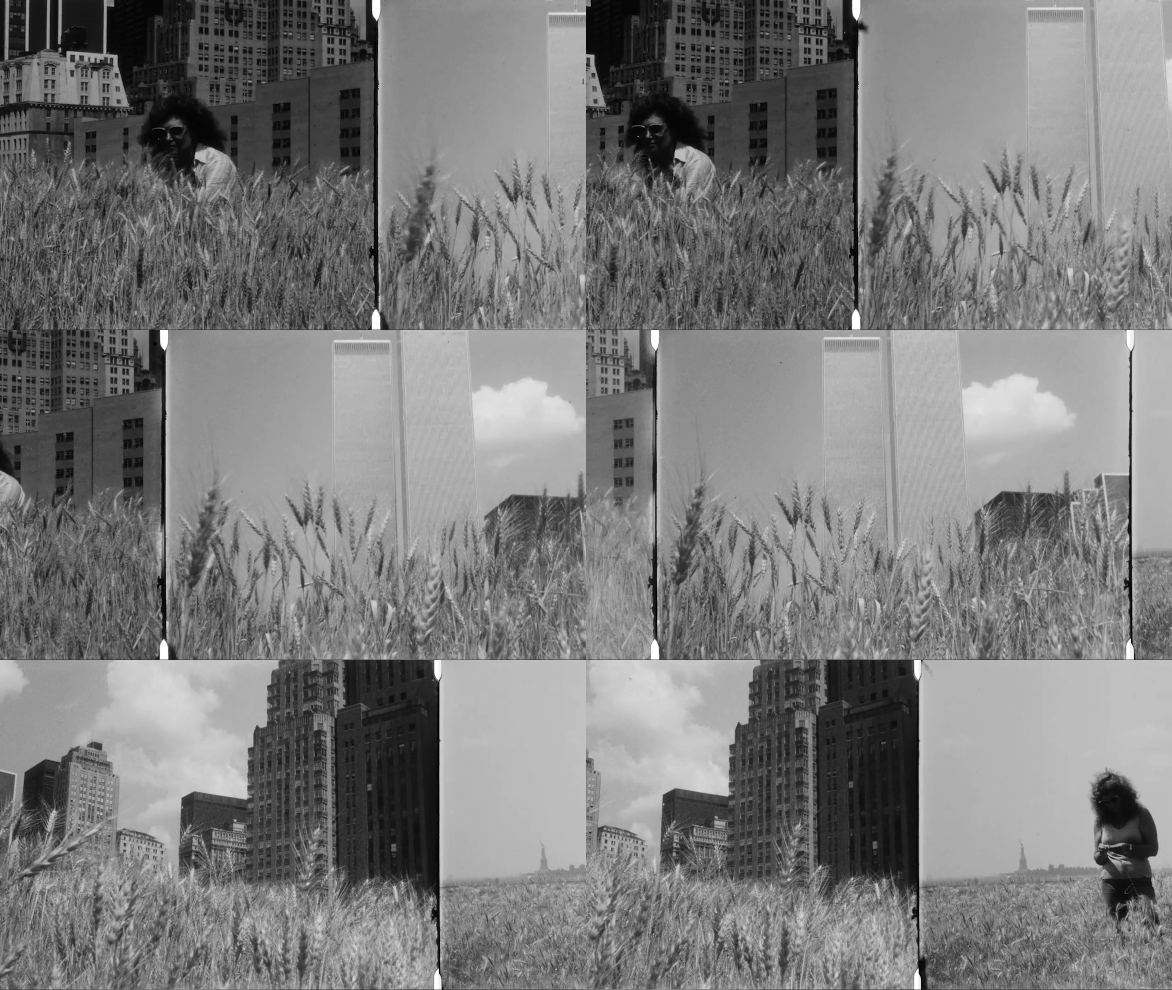
In 2022, Denes collaborated with CIRCA on Another Confrontation, a major public commission marking the fortieth anniversary of her landmark work Wheatfield – A Confrontation (1982). Presented across CIRCA’s international network of screens in London, Berlin, Los Angeles, Melbourne, Milan, New York and Seoul, the project revisited her prophetic concerns through a trilogy of moving-image works spanning past, present and future. Accompanied by an augmented reality wheat field in Piccadilly Circus and a global questionnaire designed to be opened in the year 3022, the commission introduced Denes’s extraordinary vision to a new generation while reaffirming the urgency of her message. Through the recurring call to “Plant Hope – Harvest Peace”, the project demonstrated the artist’s enduring belief that imagination, responsibility and collective action remain essential tools for shaping a more sustainable future.

Denes’s works are held in the collections of The Museum of Modern Art, The Metropolitan Museum of Art, the Whitney Museum of American Art, the National Gallery of Art, the San Francisco Museum of Modern Art and numerous major institutions worldwide. Her projects, from Wheatfield – A Confrontation in lower Manhattan to Tree Mountain – A Living Time Capsule in Finland, are now regarded as defining works in the history of environmental art. Through a practice that continues to inspire artists, scientists and activists alike, Agnes Denes has shown that art can do more than reflect the world. It can help imagine, question and transform it.


Circa Commissions

Agnes Denes, Another Confrontation

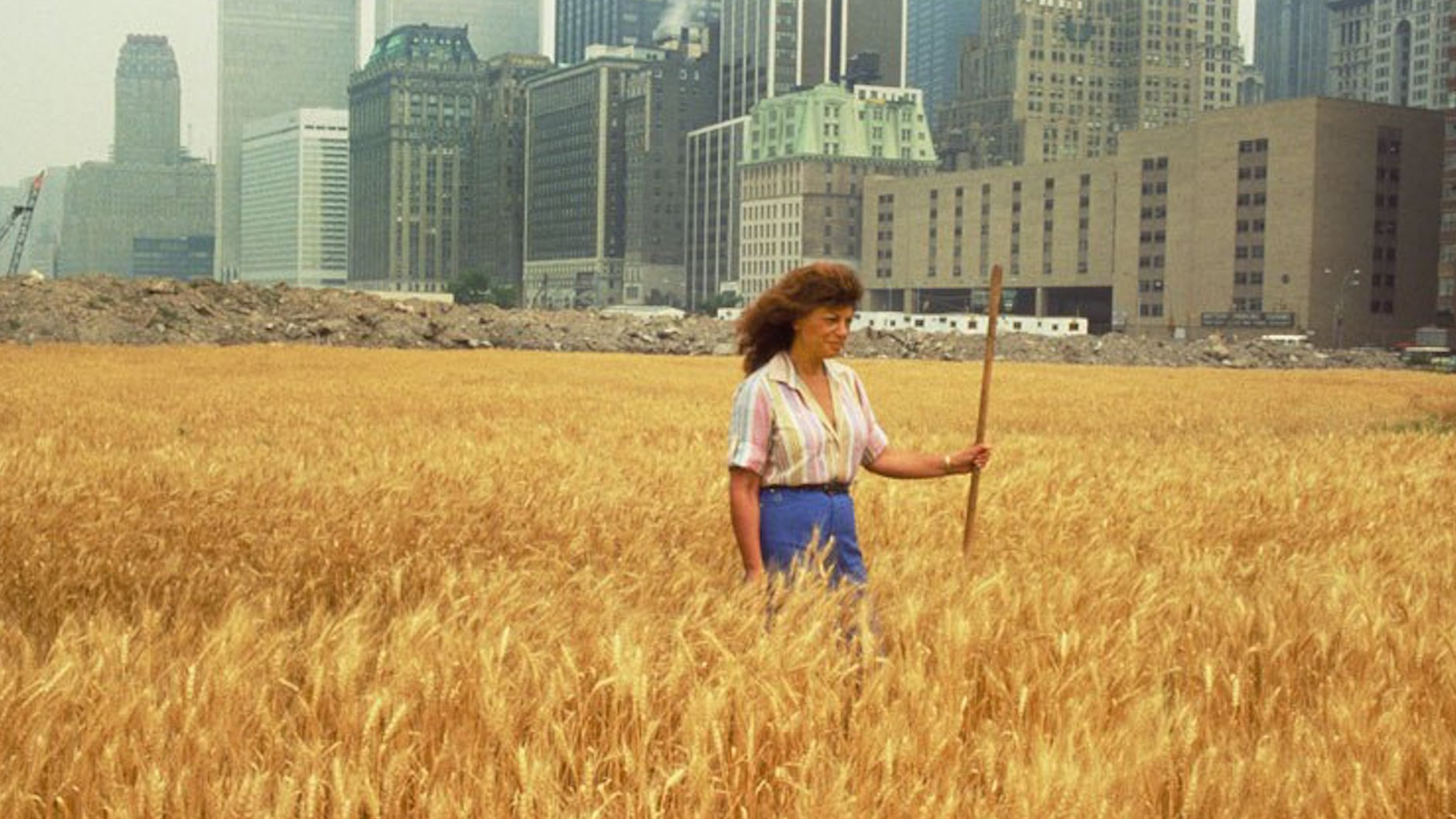
In May 1982, Agnes Denes planted a wheat field in the shadow of Wall Street. Stretching across two acres of landfill in lower Manhattan, Wheatfield – A Confrontation appeared where it seemingly had no right to exist. Surrounded by the towers of global finance, facing the Statue of Liberty and standing only blocks from the World Trade Center, the field introduced an ancient agricultural cycle into the symbolic centre of late twentieth-century capitalism. Over four months, wheat was sown, tended and harvested on land valued in the billions of dollars, exposing the contradictions between economic value and human necessity.

View more

Films

ESSAY

Agnes Denes: Wheatfield–A Confrontation And Its Monumental Legacy by Barney Pau
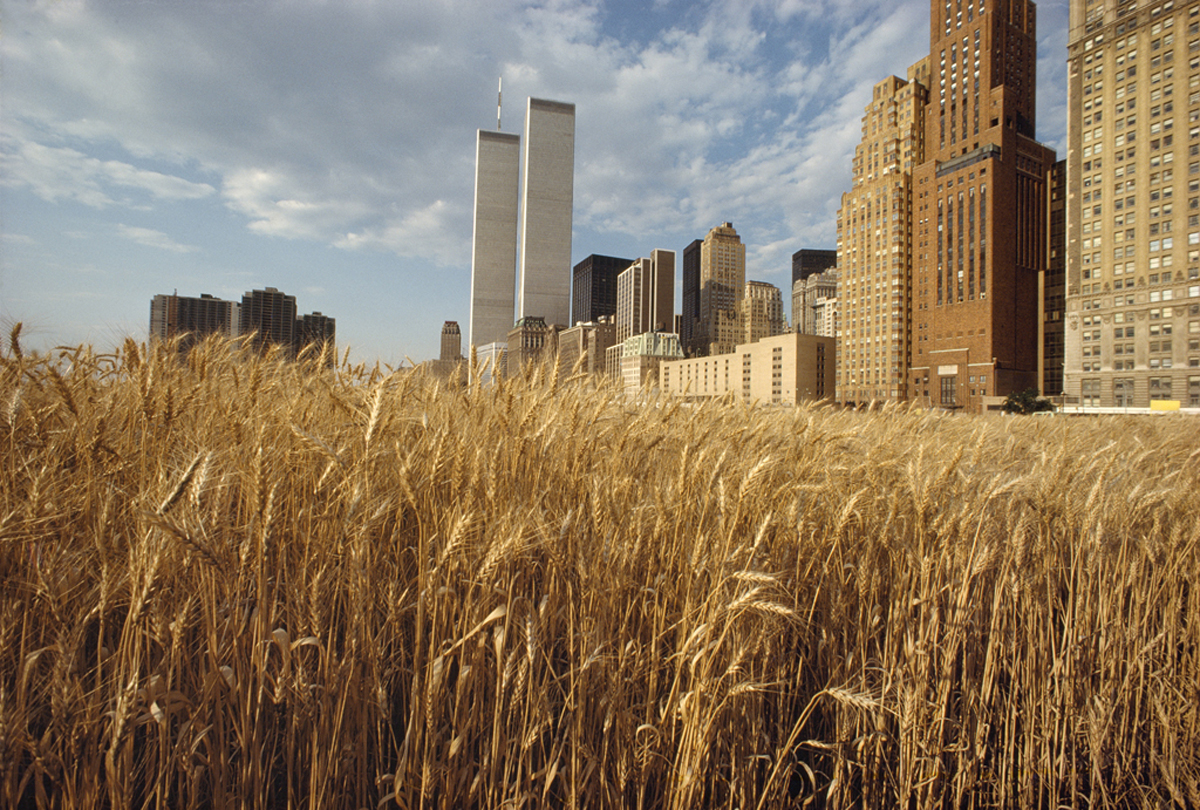
Despite the permanence of her practice—raising hills; planting woodland; burying time-capsules—Agnes Denes’s most enduring legacy might be her most ephemeral work: Wheatfield – A Confrontation (1982). The installation took place in New York’s downtown, in the shadow of a skyline synonymous with success. Such monumentalism is so immutably infallible that we cannot conceive of its demise. A shrine to hegemony; it represents the pinnacle of human progress. Yet, by planting an innocuous field of wheat at the feet of the World Trade Centre, Denes reminded us of the fragility upon which this world is built. The installation lasted a mere four months, from its planting in May to its harvest in August, yet its legacy still resonates four decades later.

Wheatfield was a call to action; in Denes’s words, an invitation for people to “rethink their priorities and realize that unless human values were reassessed, the quality of life, even life itself, was in danger” (agnesdenesstudio.com: n/d). At the time, the 2 acre plot on which the field was sown was valued at $4.5bn. This meant that, upon harvest, each wheat berry had the value of $351.56—the costliest grain ever grown. For comparison, on 16th August 1982—the day of harvest—the US market value of a bushel of wheat was $3.41; or 3 grains to a cent. Denes’s Wheatfield highlighted the vast disproportionality of human value systems; “[i]t called attention to our misplaced priorities” (agnesdenesstudio.com: 1982).


Shop

Loading products...

Subscribe to our newsletter

Subscription successful

An error occurred