fbpx Ai Weiwei, A Tree | CIRCA

CIRCA 2026

Ai Weiwei, A Tree

9 July - 9 September, 2026

Throughout his career, Ai Weiwei has returned repeatedly to objects that outlive the worlds that produced them. Ancient architecture, archaeological artefacts, twisted steel recovered from the aftermath of the 2008 Sichuan earthquake, industrial buttons, refugee vessels and fragments of cultural history all occupy a central place within his practice. Rather than functioning as symbols, they become witnesses, carrying within them the traces of political upheaval, displacement, memory and survival. His work asks how history is preserved, not only through archives and institutions, but through the material things that endure.

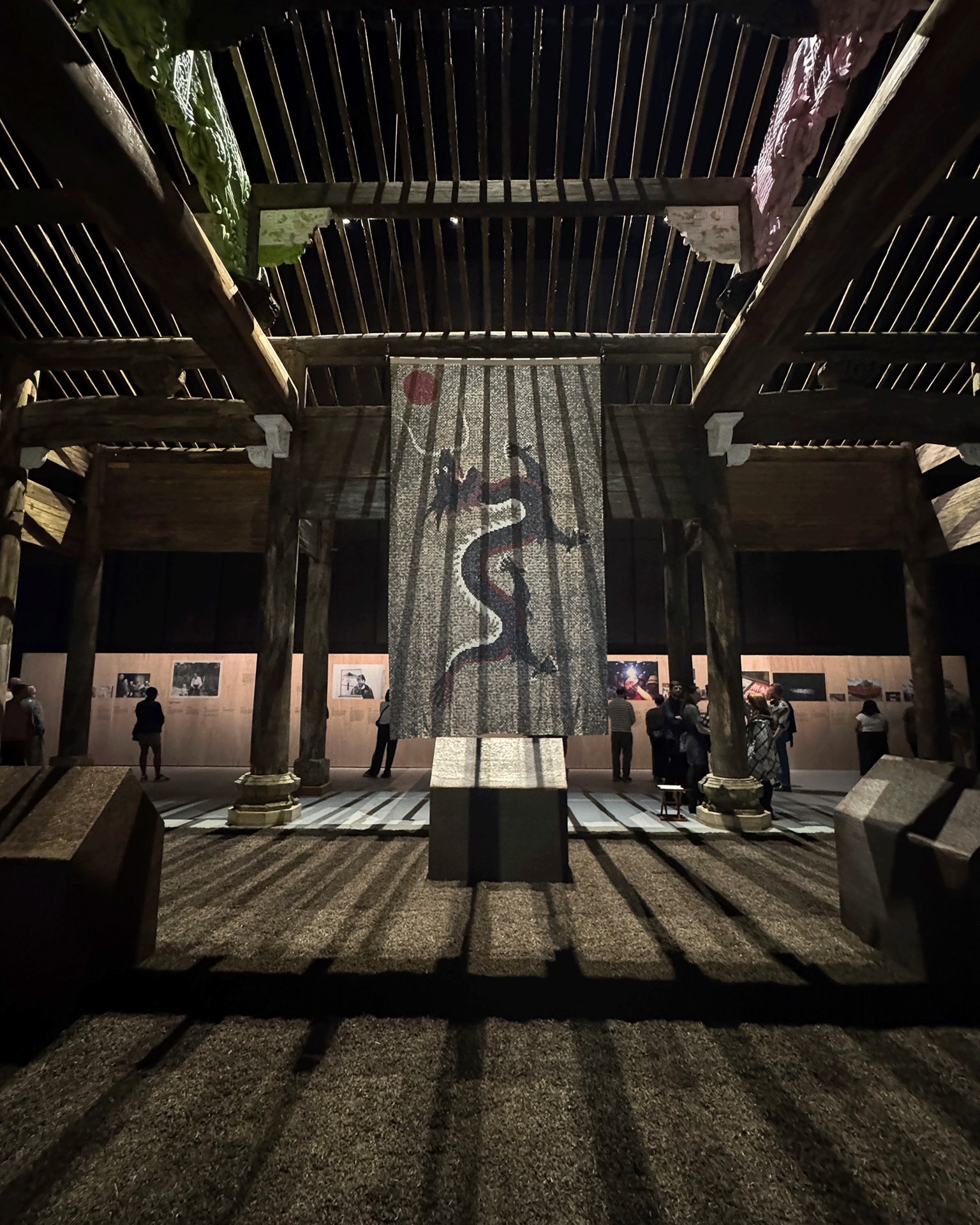
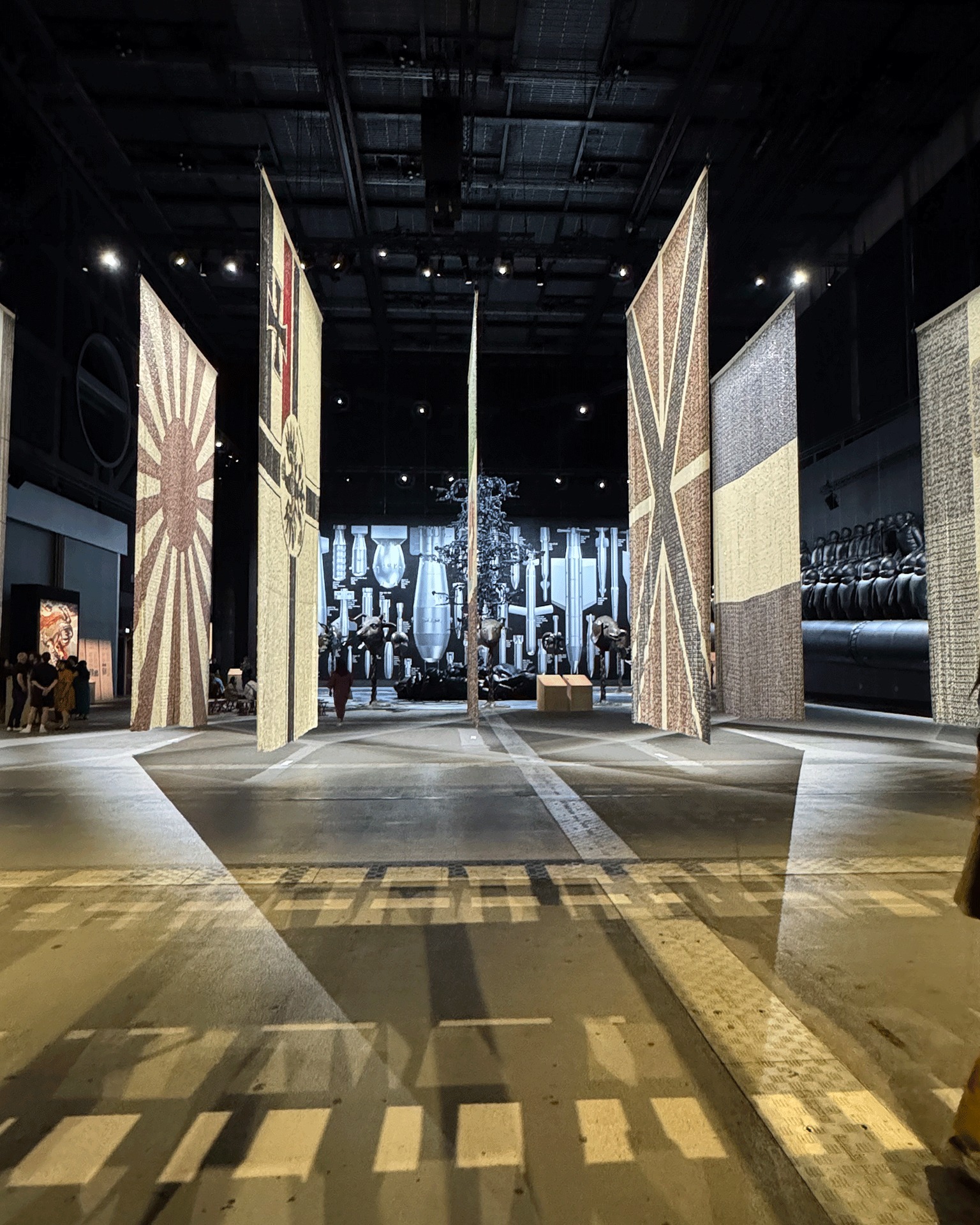
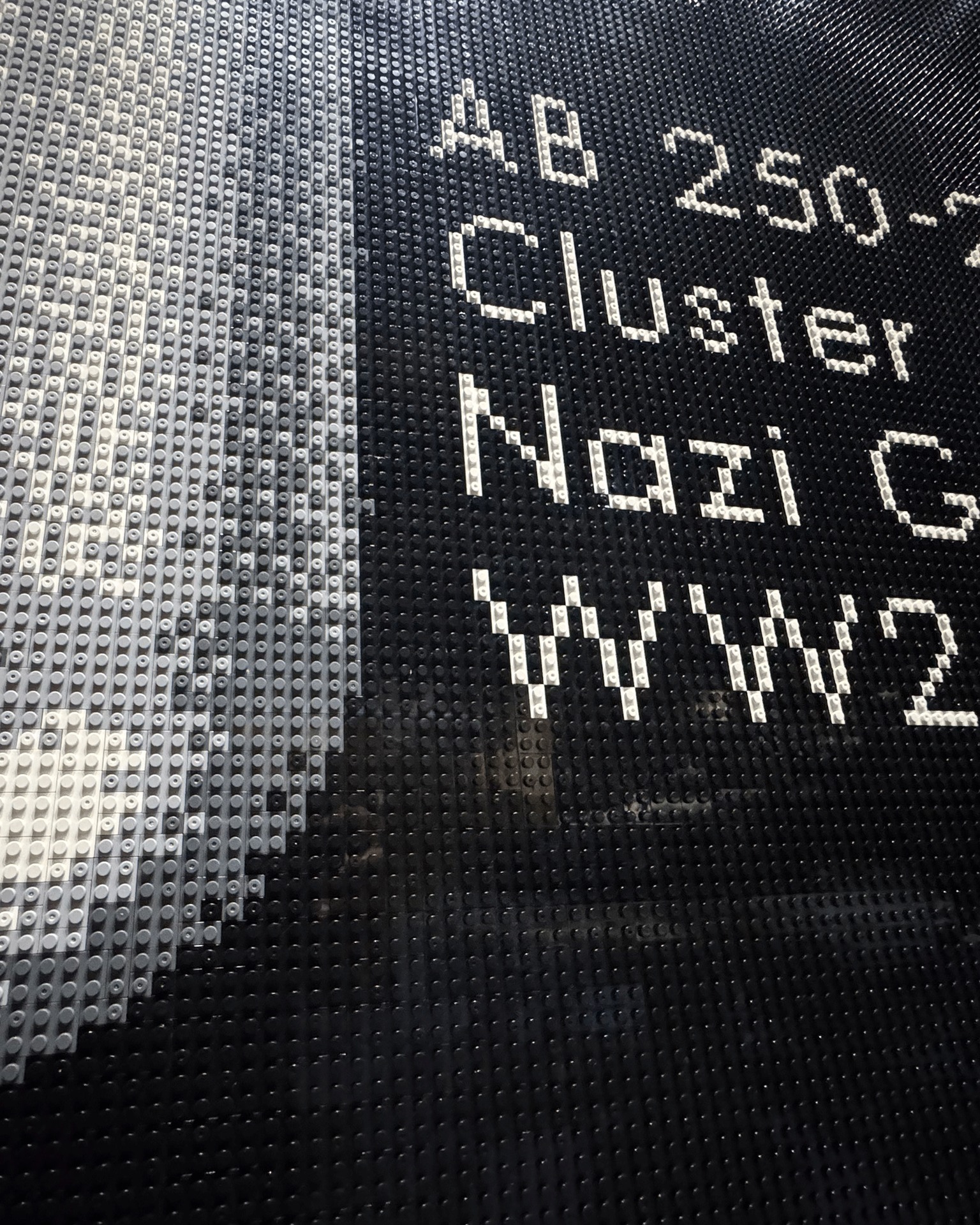
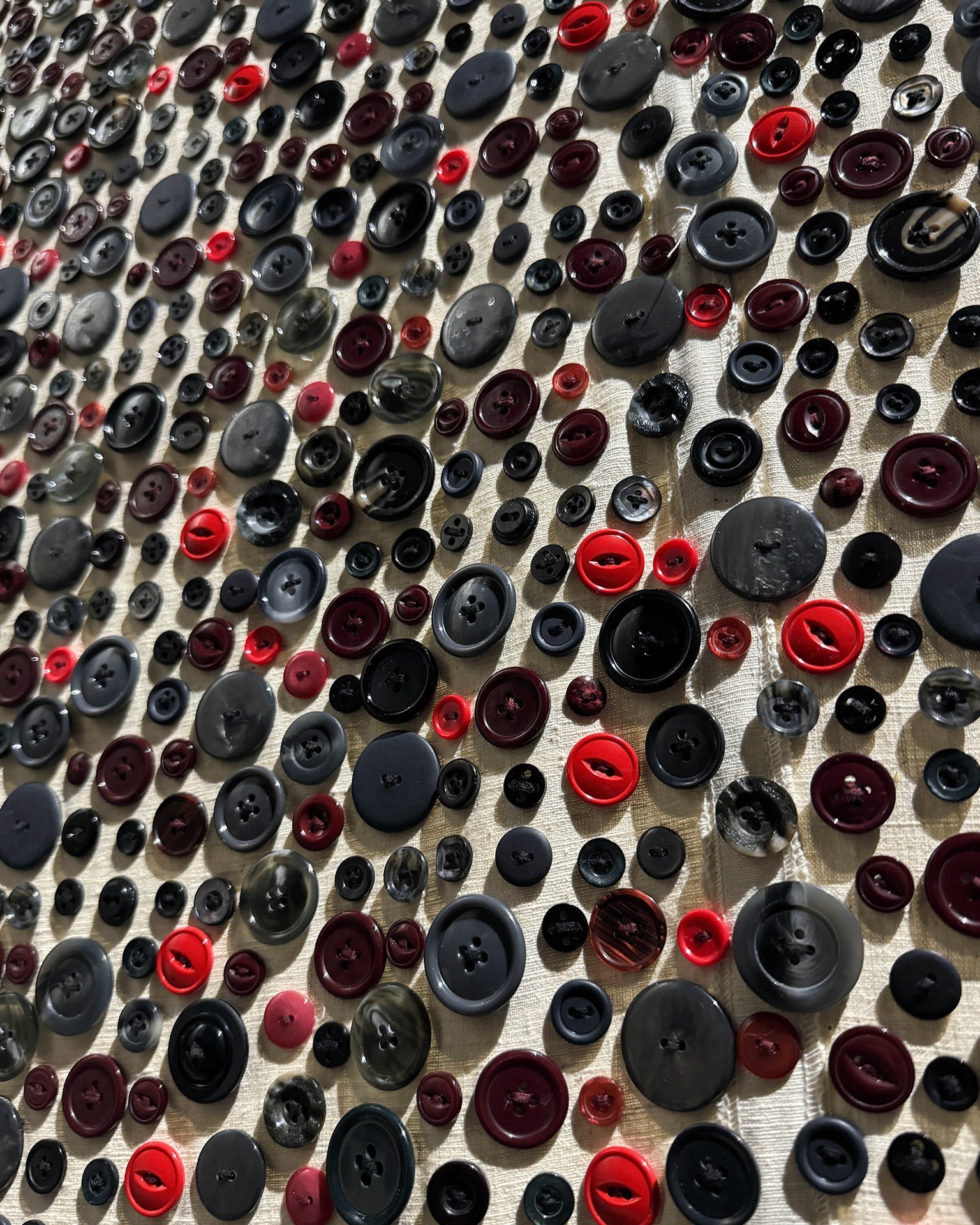
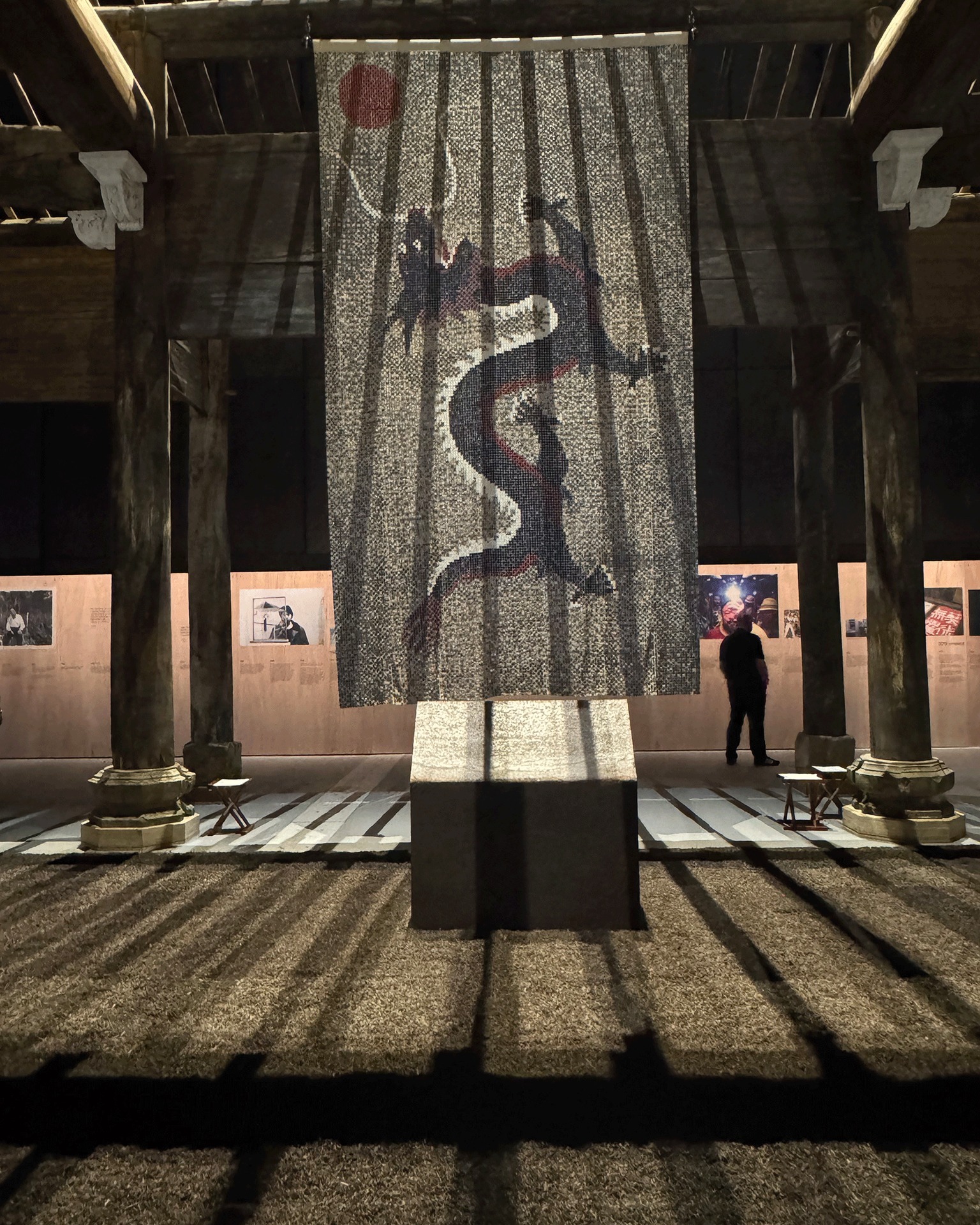
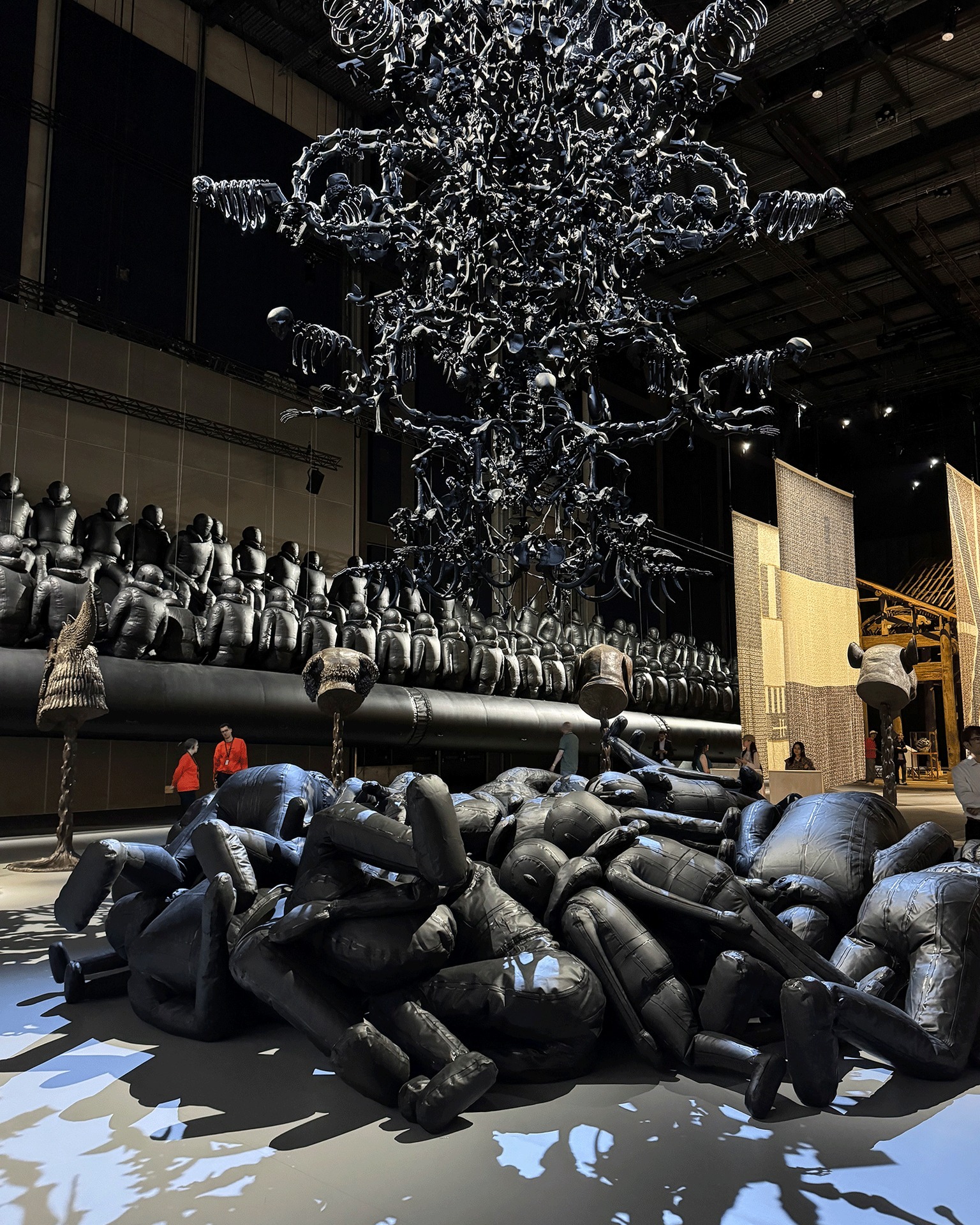
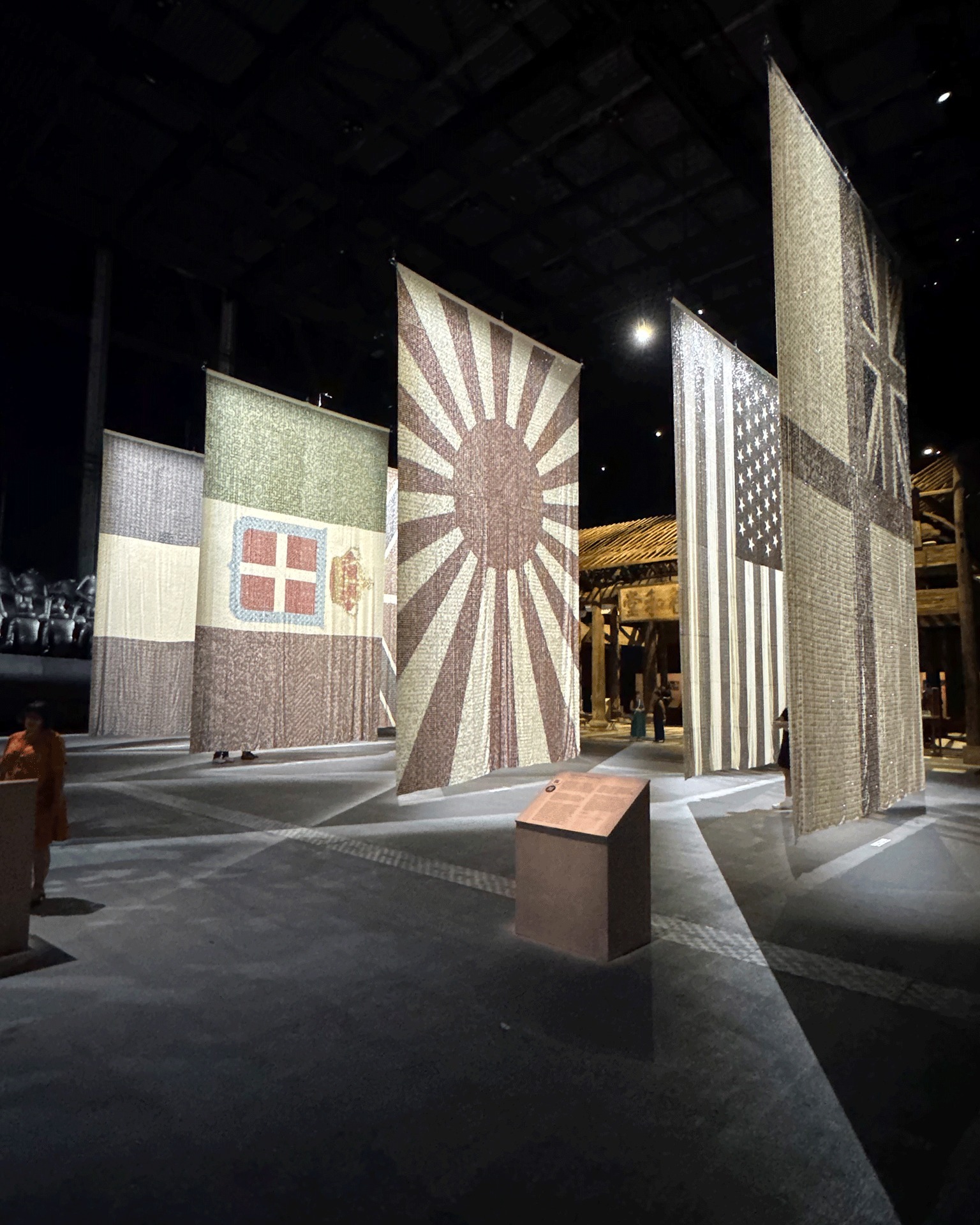
These ideas converge in Button Up!, Ai Weiwei’s major exhibition commissioned by Factory International in Manchester. Spanning centuries of history, the exhibition brings together works that reflect on continuity in the face of profound social and political change. At its centre stands the reconstruction of the 500-year-old Wang Family Ancestral Hall, painstakingly rebuilt by Chinese craftspeople using traditional techniques. Elsewhere, monumental sculptures examine migration, conflict and mortality, while thousands of salvaged buttons, once ordinary objects of industry, become carriers of personal and collective memory. Throughout the exhibition, Weiwei reveals how objects continue to bear witness long after the circumstances that created them have disappeared.

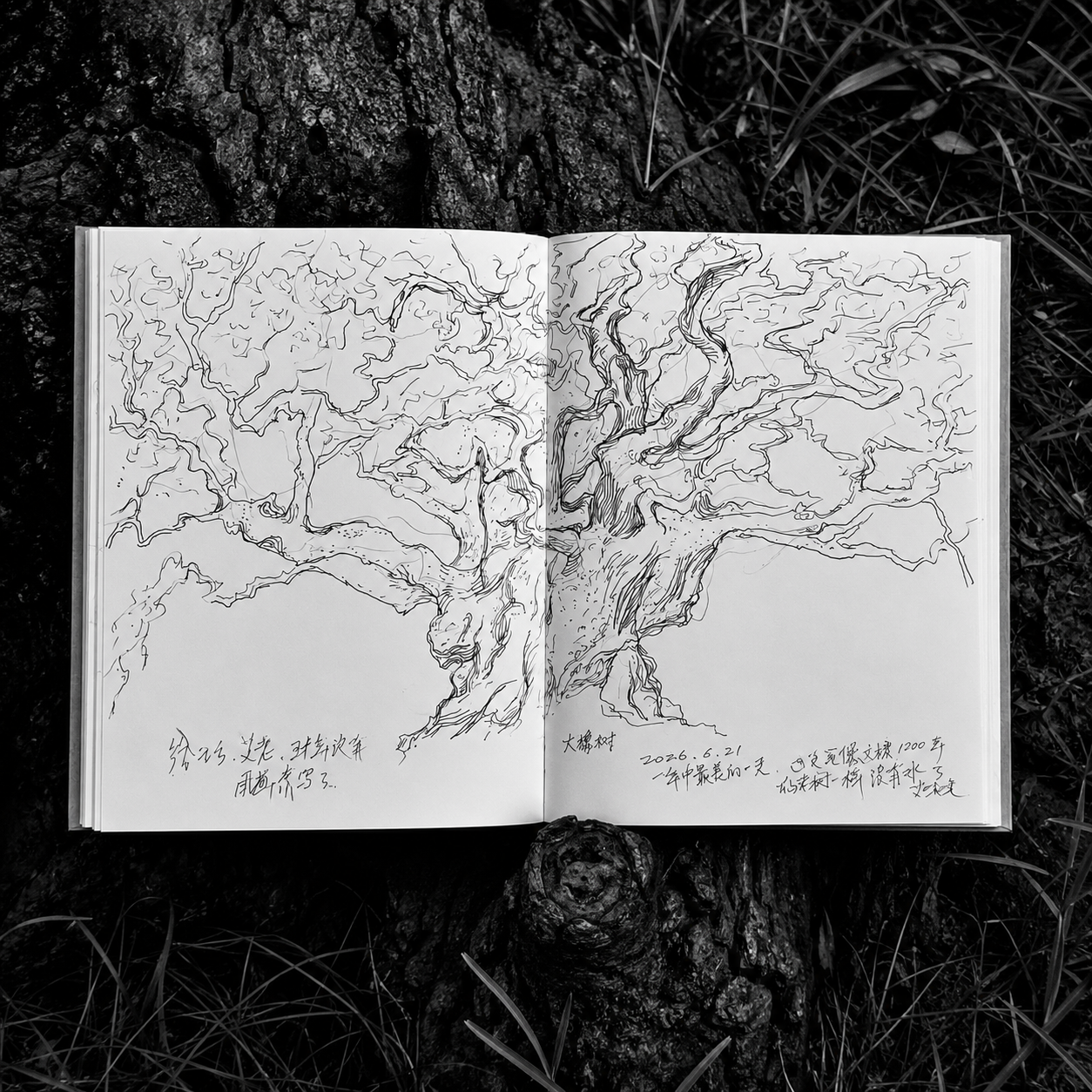
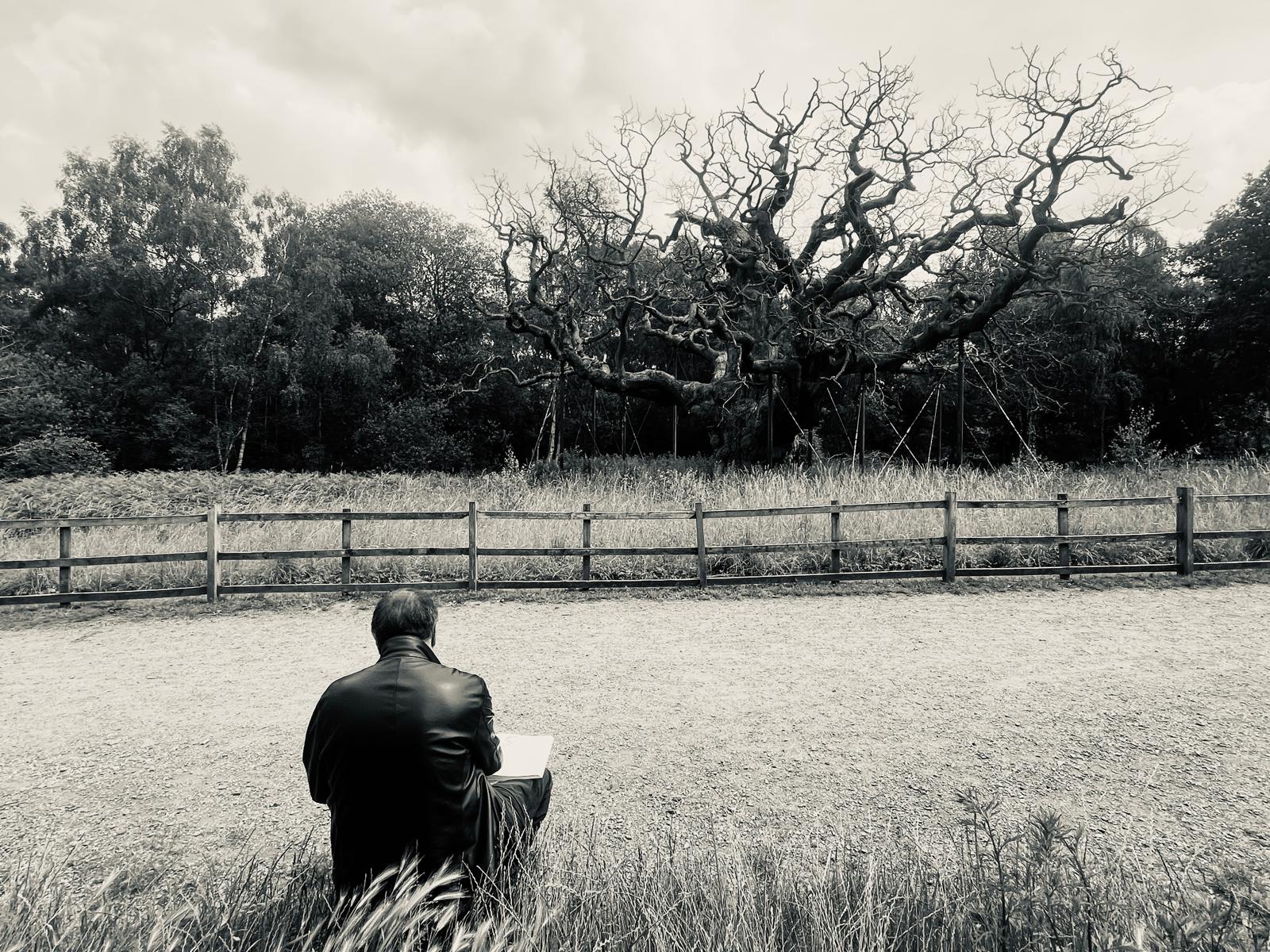
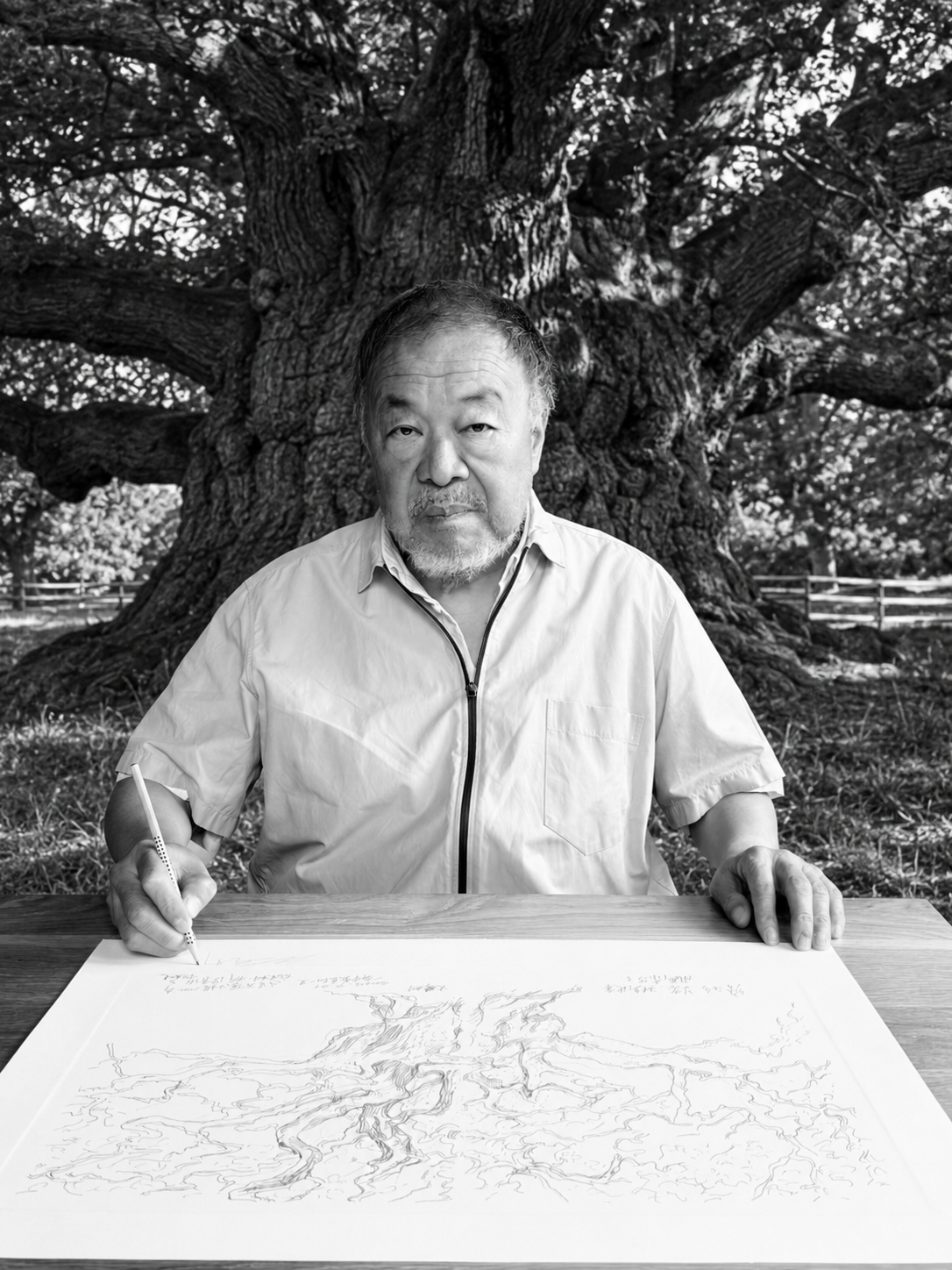
Just days before the exhibition opened, news broke that the Major Oak in Sherwood Forest, believed to be approximately 1,200 years old, had been declared dead. On the Summer Solstice, Ai Weiwei travelled to the ancient tree, where he sat beneath its branches and produced his first drawing in fifty years.

The moment represents a remarkable return to one of the artist’s earliest forms of expression. Yet it also extends a lifelong dialogue with history, memory and survival. Older than the legend of Robin Hood itself, the Major Oak has endured kingdoms, wars, industrialisation and immense social change. Like the ancestral hall, it stands as a living witness whose significance lies not only in its age, but in everything it has silently observed.

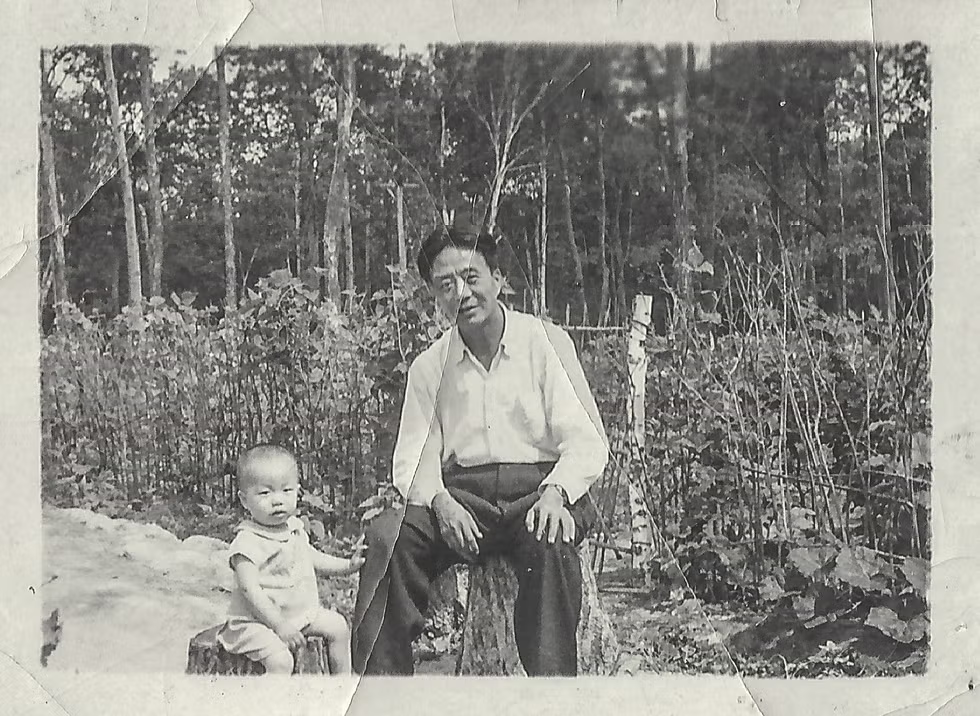
The work also echoes the legacy of Weiwei’s father, the acclaimed poet Ai Qing. In 1940, during the Second Sino-Japanese War, Ai Qing wrote Trees, imagining individual trees standing apart while their roots remain invisibly connected beneath the earth, a powerful meditation on solidarity, resilience and shared humanity in times of conflict. More than eight decades later, those same ideas resonate throughout Sewing a Button, where objects separated by centuries and continents reveal unexpected relationships beneath the surface.

Presented by CIRCA in collaboration with Factory International, A Tree transforms Weiwei’s drawing into a moving image for public space. The animation extends the encounter beyond Sherwood Forest, carrying it from one of Britain’s oldest living monuments to audiences around the world. Emerging from a single drawing, the work becomes a meditation on endurance, remembrance and our relationship to the histories embedded within the landscapes, objects and lives that surround us.

In an age increasingly defined by impermanence, A Tree reminds us that witnessing is itself an act of survival. Some histories are written in books, others in monuments. Some remain rooted quietly beneath our feet, waiting to be seen.

Shop

Loading products...

SCREEN LOCATIONS

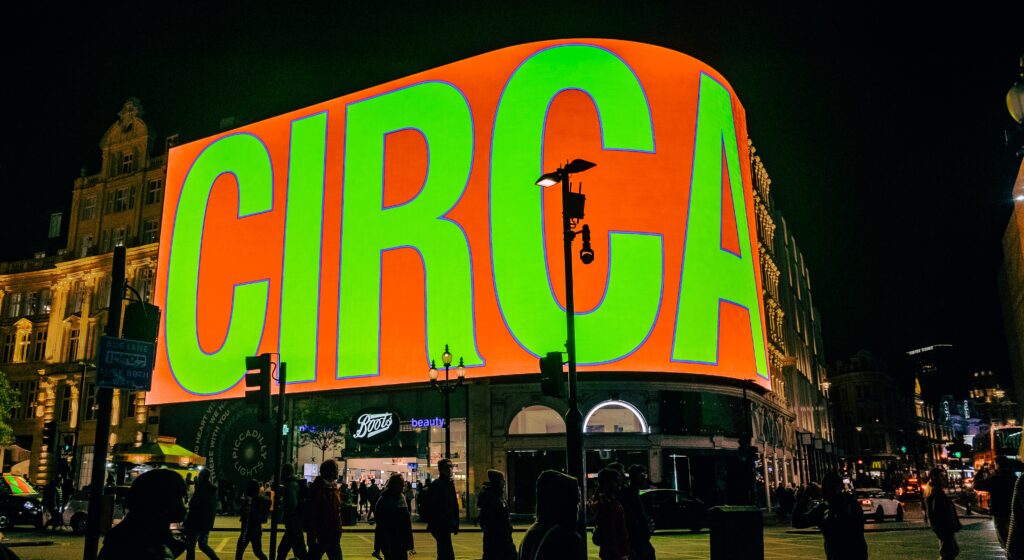
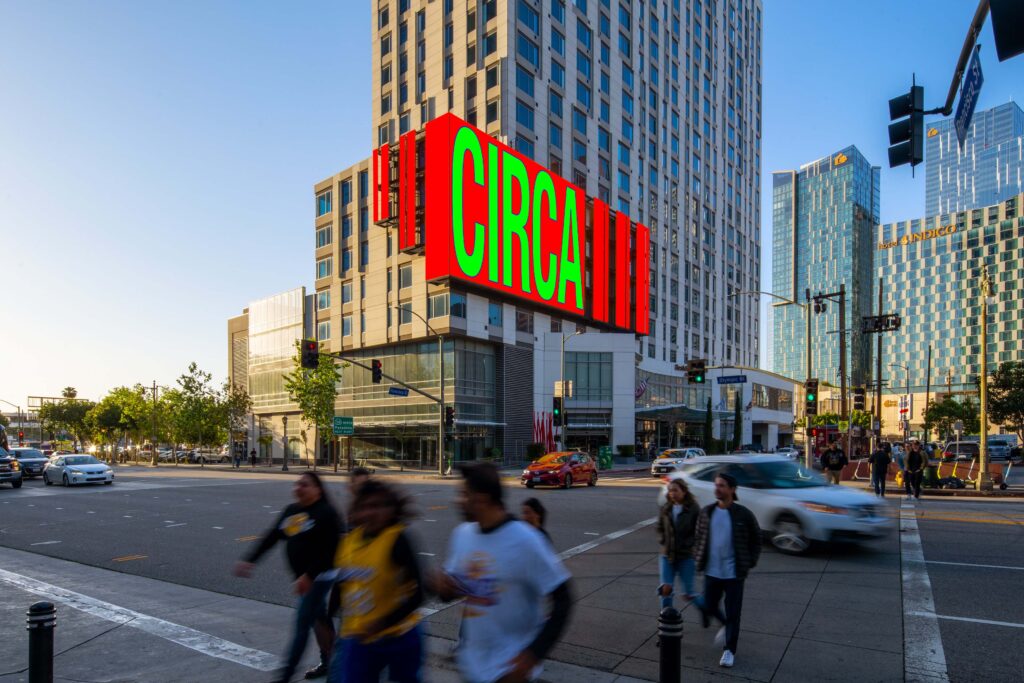
Experience A Tree by Ai Weiwei every evening at 20:26 (local time) across public billboard screens in London, Los Angeles and Seoul.

Play Pause

London

Screening: Every evening (9 July–9 September) at 20:26 BST/GMT

Address: Piccadilly Circus, London W1J 9HS, UK

Nearest Tube Station: Piccadilly Circus (Piccadilly and Bakerloo lines)

Bus Routes: 6, 14, 19, 38, 139, 159

Directions: Exit Piccadilly Circus Station and the screen is directly above Boots.

With thanks to Landsec

Plan your visit
Play Pause

Los Angeles

Screening: Every evening (9 July–9 September) at 20:26 PDT

Address: Standard Vision, 900 W Olympic Boulevard 

Nearest Station: Pico Station (A & E Lines) or 7th Street / Metro Center (B, D, A, E Lines)

Bus Routes: 28, 728, 30, 330, DASH Downtown routes

Directions: Exit Pico Station and walk northwest along Olympic Blvd for approx. 8 minutes toward L.A. LIVE (JW Marriot tower visible)

With thanks to Standard Vision


Plan your visit
Play Pause

Seoul

Screening: Every evening (9 July–9 September) at 20:26 KST

Address: 513 Yeongdong-daero, Gangnam-gu, Seoul, South Korea

Nearest Subway Station: Samseong Station (Line 2) – Exit 5 or 6

Bus Routes: Blue Bus – 146, 341, 360, 333, 740; Green Bus – 2415, 3412, 3217

Directions: Use the underground passage from Samseong Station to enter COEX Mall; the screen is located near the main entrance.

With thanks to CJ Powercast


Plan your visit

ESSAY

The Witness by Josef O'Connor
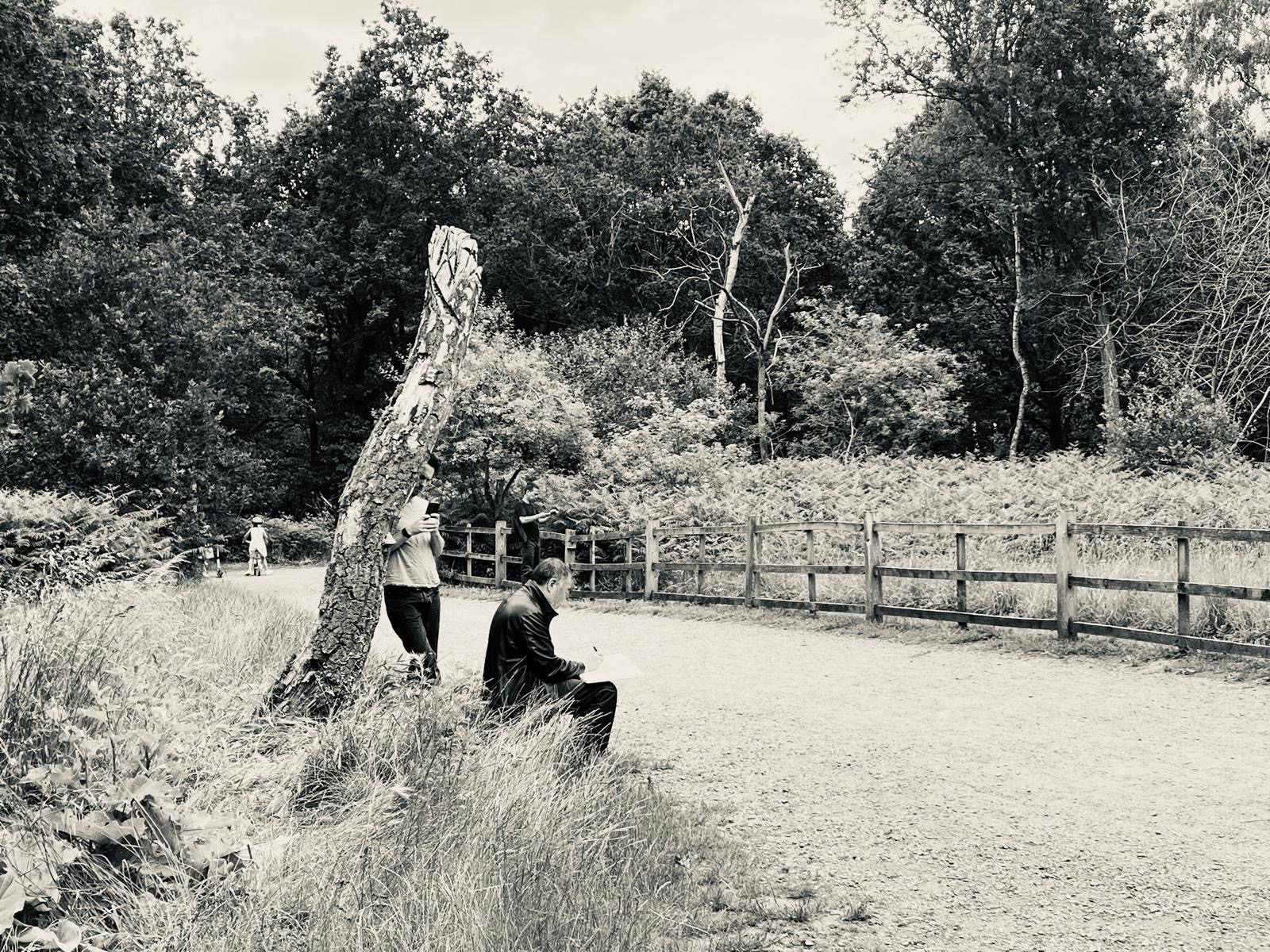
A few days before the Summer Solstice, I woke up to a series of screenshots from Ai Weiwei. The messages concerned the Major Oak in Sherwood Forest, a tree believed to be approximately 1,200 years old which had just been declared dead by the Royal Society for the Protection of Birds. There was no accompanying explanation and no direct request. After working with Weiwei for the better part of 5 years, however, I understood immediately what was being communicated. The tree had captured his attention and he wanted to see it. Two days later, after a hastily arranged visit, we were standing beneath its branches on the longest day of the year.

The Major Oak occupies a singular place within the British imagination. Long associated with the mythology of Robin Hood, although considerably older than the legend itself, the tree was already ancient when the Norman Conquest began. It has survived the rise and fall of kingdoms, religious reformations, plague, civil war, industrialisation and two world wars. During those twelve centuries, countless generations have passed beneath its canopy. The tree witnessed history not as a sequence of events recorded in books, but as lived experience unfolding around it. Standing before it, one becomes aware that its death represents more than the loss of a biological organism but the disappearance of a witness.

In the days leading up to the opening of Sewing a Button at Factory International, I found myself returning repeatedly to a similar idea. Although the exhibition initially presents itself through an extraordinary range of forms, materials and scales, a common thread gradually emerges. Everywhere there are objects that have somehow survived the worlds that produced them. The vast Wang Family Ancestral Hall, originally constructed during the late Ming Dynasty in Jiangxi Province, confronts visitors immediately upon entering the galleries. Built approximately 400 years ago as a communal space for gathering, worship and civic discussion, much of the structure was destroyed during the Cultural Revolution before the surviving section was acquired by Weiwei, dismantled and painstakingly reconstructed. What remains today is not simply an architectural achievement but a fragment of another world, carrying within it traces of social systems, beliefs and forms of craftsmanship that have largely disappeared.
 

Press

Ai Weiwei: Button Up! at Factory International
Press Release

Biography

Ai Weiwei

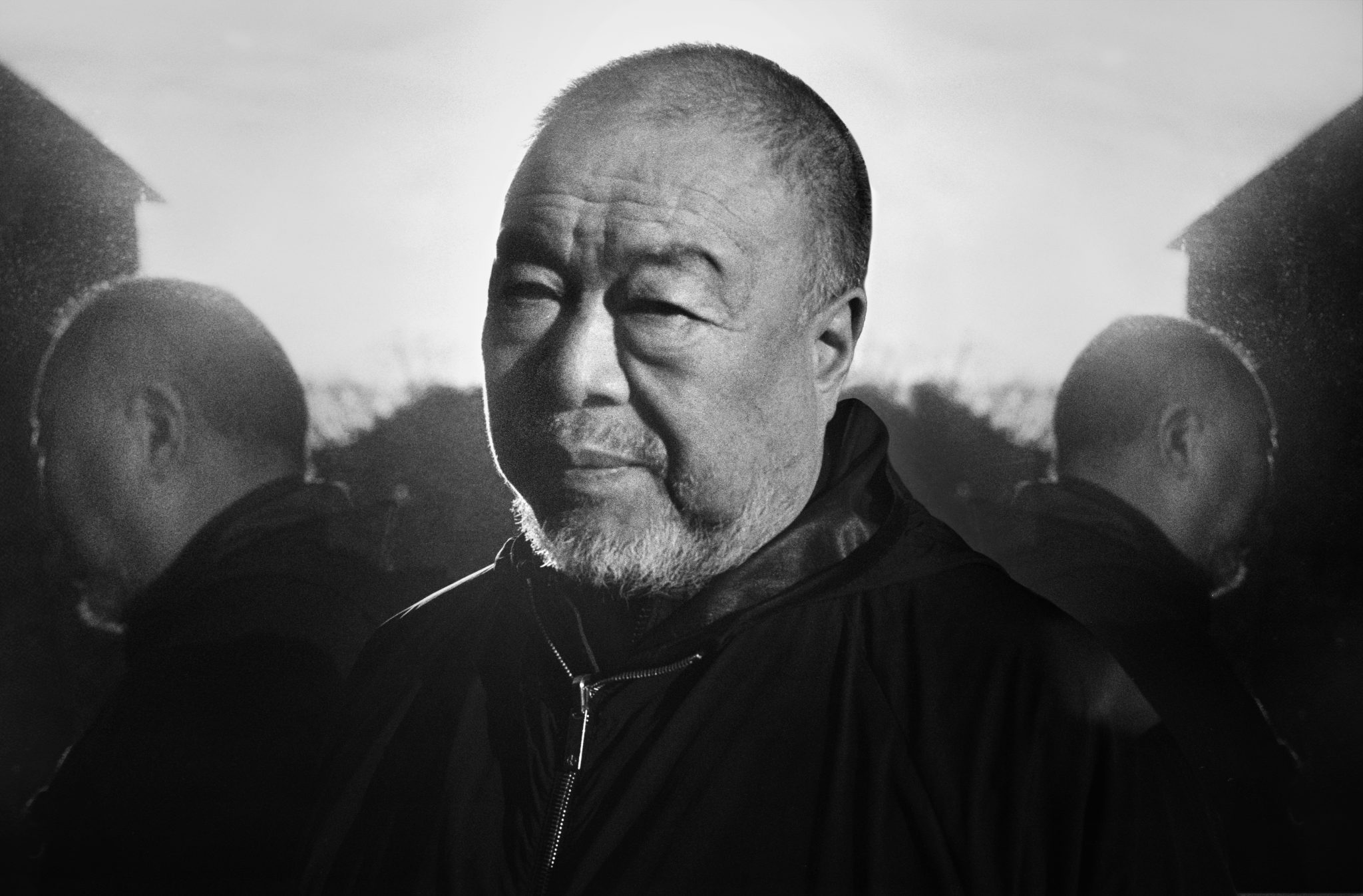
Ai Weiwei is one of the most influential artists and public intellectuals of the twenty-first century. Working across sculpture, architecture, film, installation, publishing and social activism, he has built a practice that examines the relationship between the individual and structures of power. Drawing upon conceptual art, Chinese history, craftsmanship and contemporary politics, his work transforms objects, images and public interventions into powerful reflections on freedom, authority, memory and human rights.

Over four decades, Weiwei has created some of the defining works of contemporary culture. From Dropping a Han Dynasty Urn (1995), which challenged accepted notions of cultural value and preservation, to Sunflower Seeds (2010), his monumental installation of millions of hand-crafted porcelain seeds at Tate Modern, his work repeatedly questions how histories are constructed and who controls them. Projects including Remembering (2009) and Straight (2008–12) emerged from his investigation into the Sichuan earthquake, combining artistic practice with civic activism to confront questions of accountability, truth and remembrance. More recently, films such as Human Flow (2017) have expanded his focus towards migration, displacement and the movement of people across borders, reflecting a sustained concern for the dignity and rights of individuals worldwide.

Ai Weiwei has been closely connected to CIRCA since its inception. In October 2020, he became the first artist to launch the platform, helping establish a new model for public art that places creativity, dialogue and participation at the centre of everyday life. Since then, he has remained a defining presence within CIRCA’s history, returning through multiple collaborations that have engaged global audiences in conversations about freedom, responsibility and the role of the artist in society.

In 2024, Weiwei returned to launch CIRCA 20:24 with Ai vs AI, an 81-day public enquiry into artificial intelligence, authority and the freedom to ask questions. Marking the first time he used artificial intelligence as a creative counterpart, the project transformed public space into a forum for philosophical dialogue, inviting audiences to submit questions while exploring the changing relationship between technology, knowledge and human agency. At its core was a principle that has guided his work throughout his career: that critical inquiry remains an essential expression of freedom.

Born in Beijing in 1957, Ai Weiwei lives and works internationally. Through a practice that bridges art, activism and public life, he continues to challenge assumptions, provoke debate and inspire audiences around the world to reconsider the systems that shape contemporary society.


Subscribe to our newsletter

Subscription successful

An error occurred