Michelangelo Pistoletto: On Three Mirrors, And Why This Collaboration Matters Now
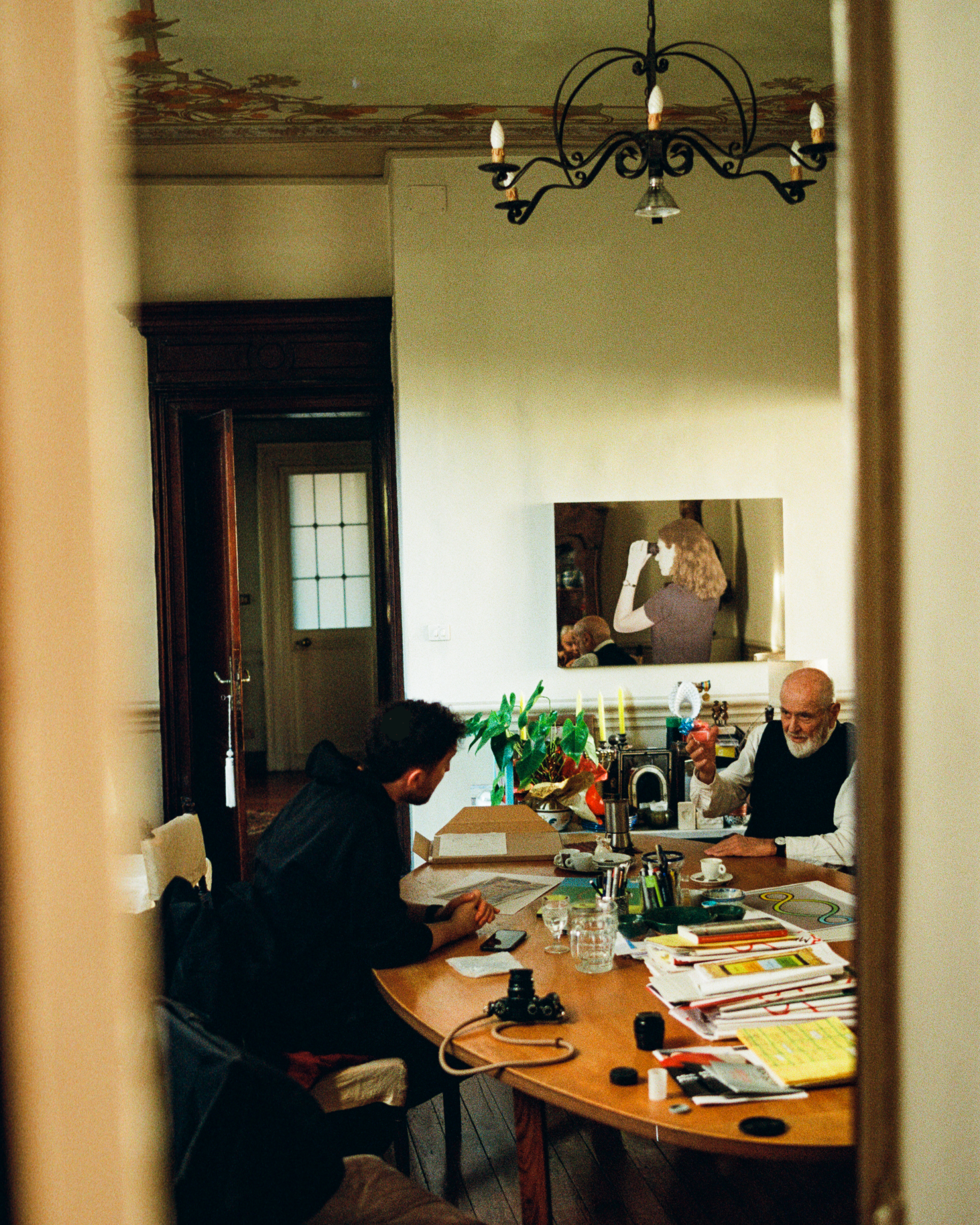
A conversation between Josef O’Connor and Michelangelo Pistoletto
1 April, 2026
There are some artists whose work belongs to history, and others whose work returns to the present with increasing force. Michelangelo Pistoletto is both. For more than six decades, he has asked art to do more than represent the world, insisting that it enter it, absorb it, implicate it, and ultimately help reorganise it. That proposition feels especially urgent now.
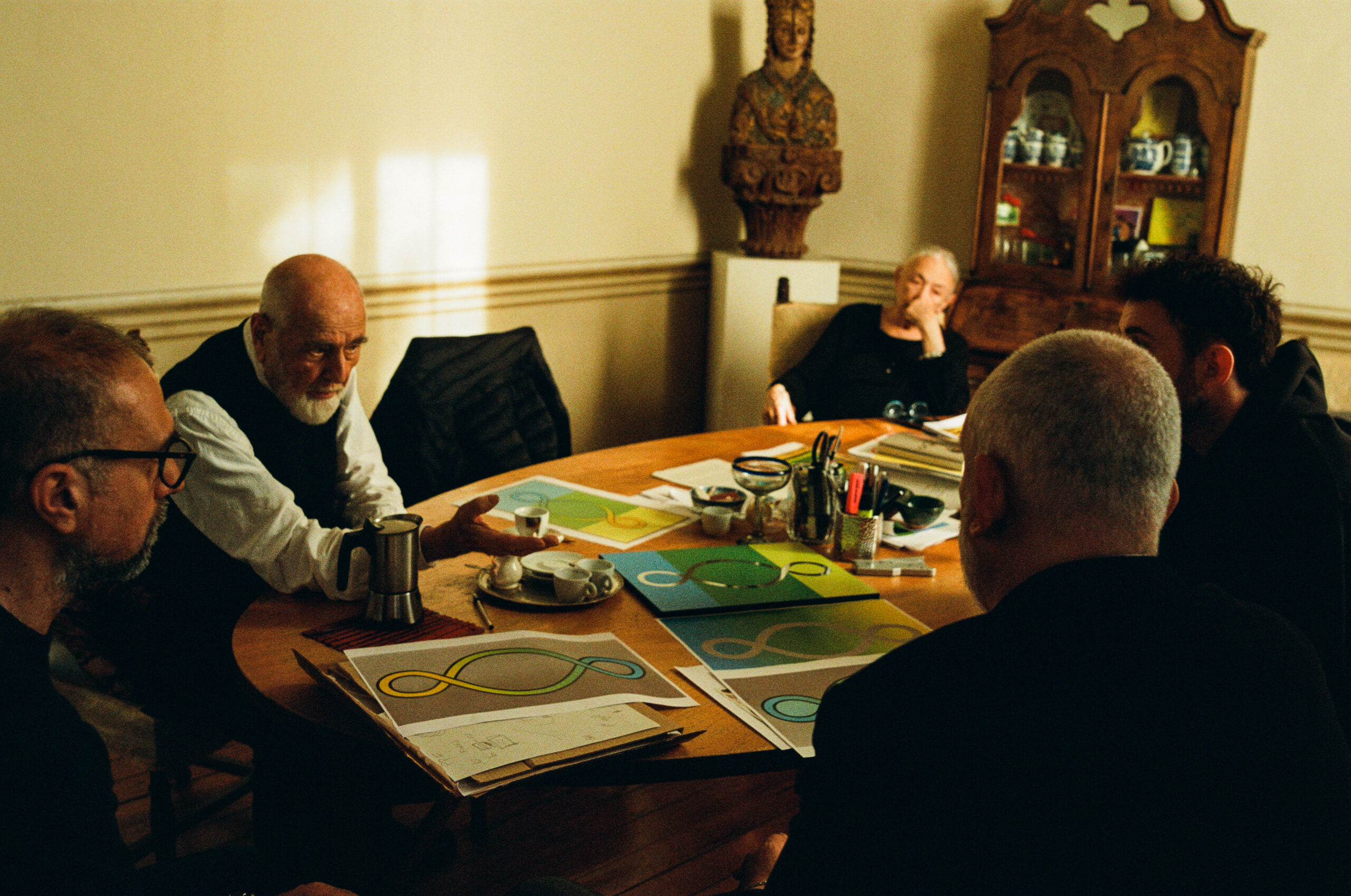
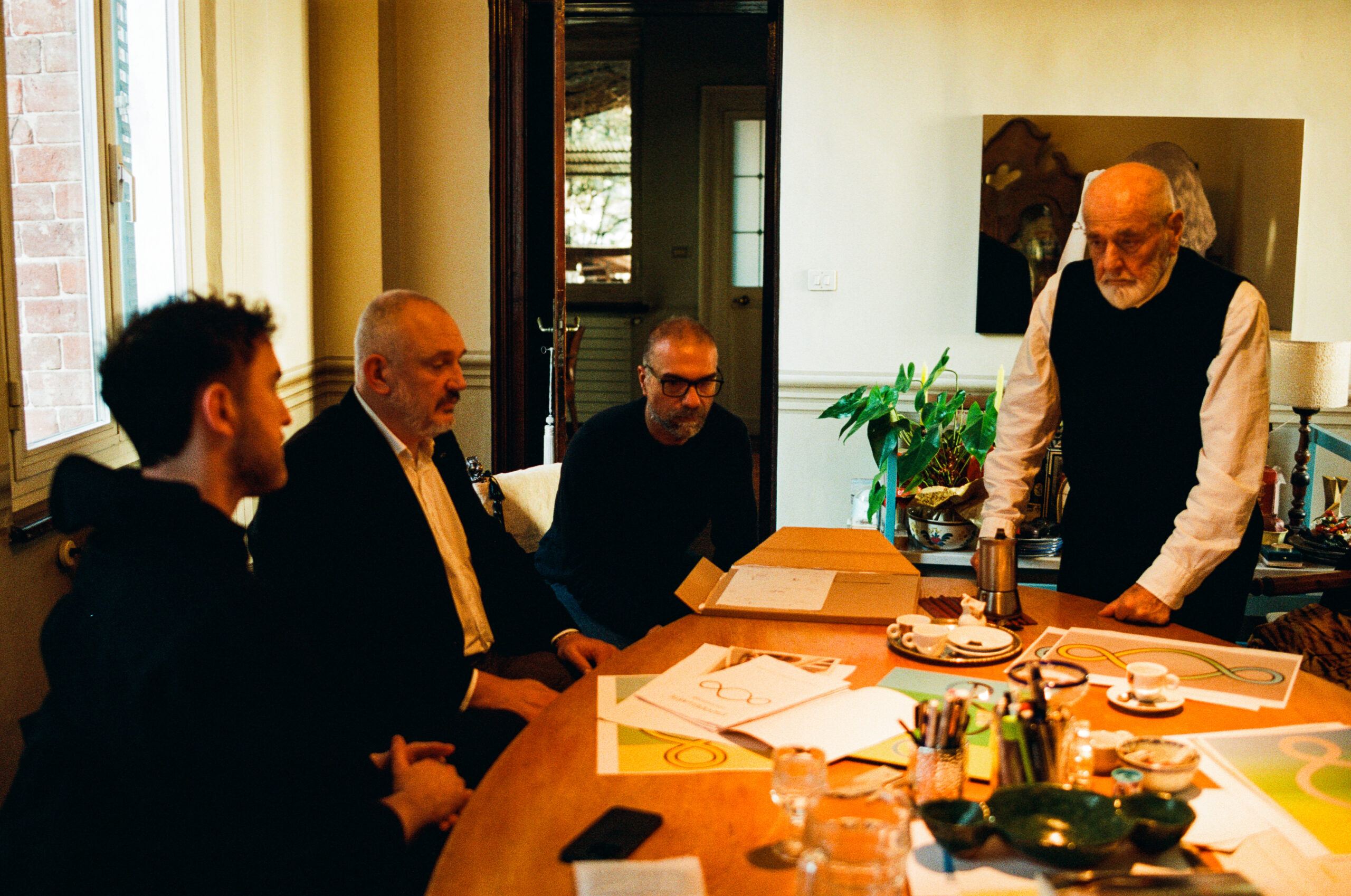
In 2026, as public life becomes increasingly shaped by screens, systems and escalating global tensions, CIRCA’s collaboration with Pistoletto does not arrive as a retrospective gesture, but as a necessary one. Three Mirrors is not simply a new commission. It is the result of a sustained dialogue between artist and curator, shaped across generations, between November 2025 and February 2026, at a moment when the world itself felt increasingly unstable, and made possible through the close collaboration and support of Pistoletto’s long-standing associate Francesco Saverio Teruzzi.
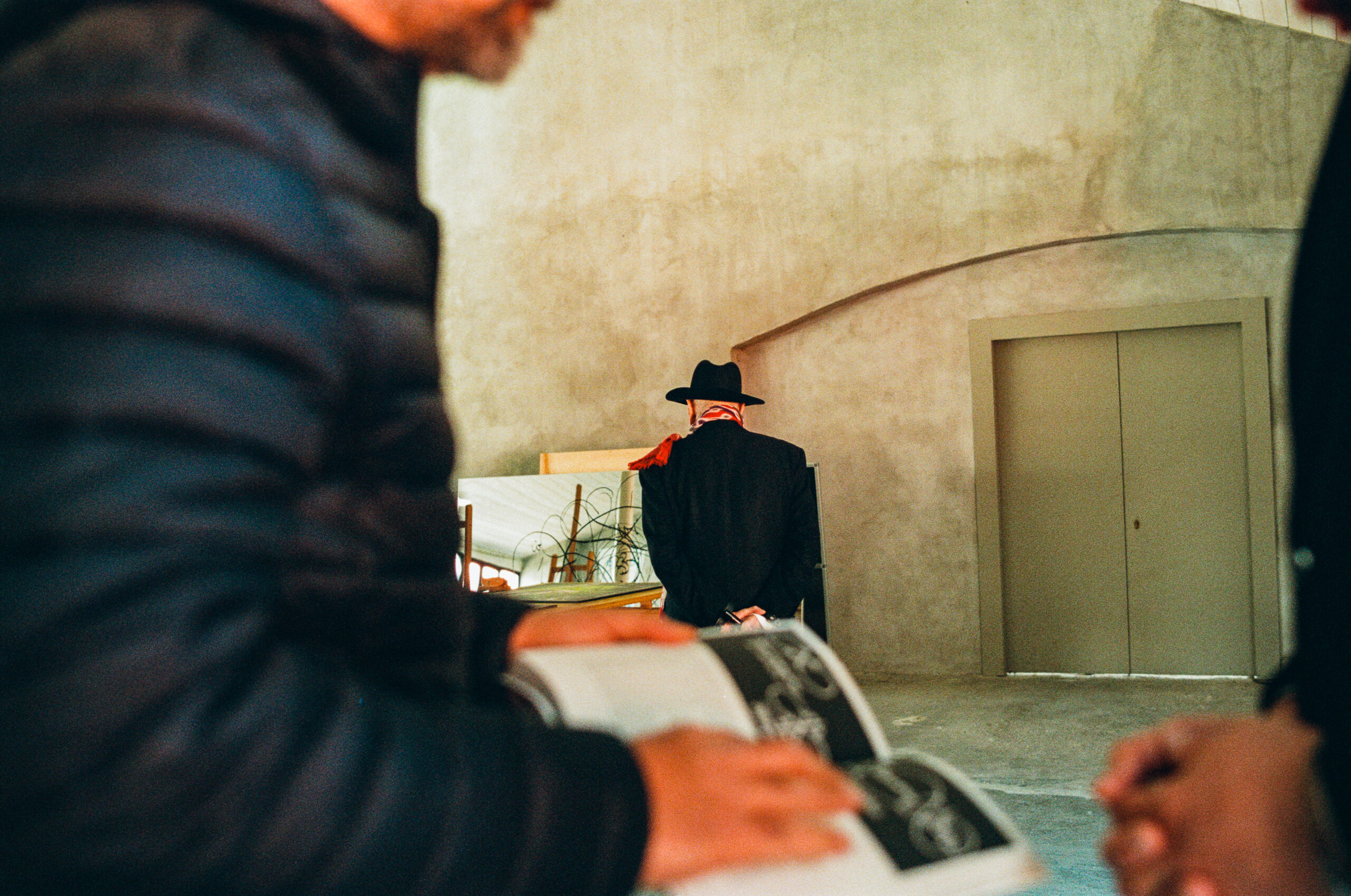
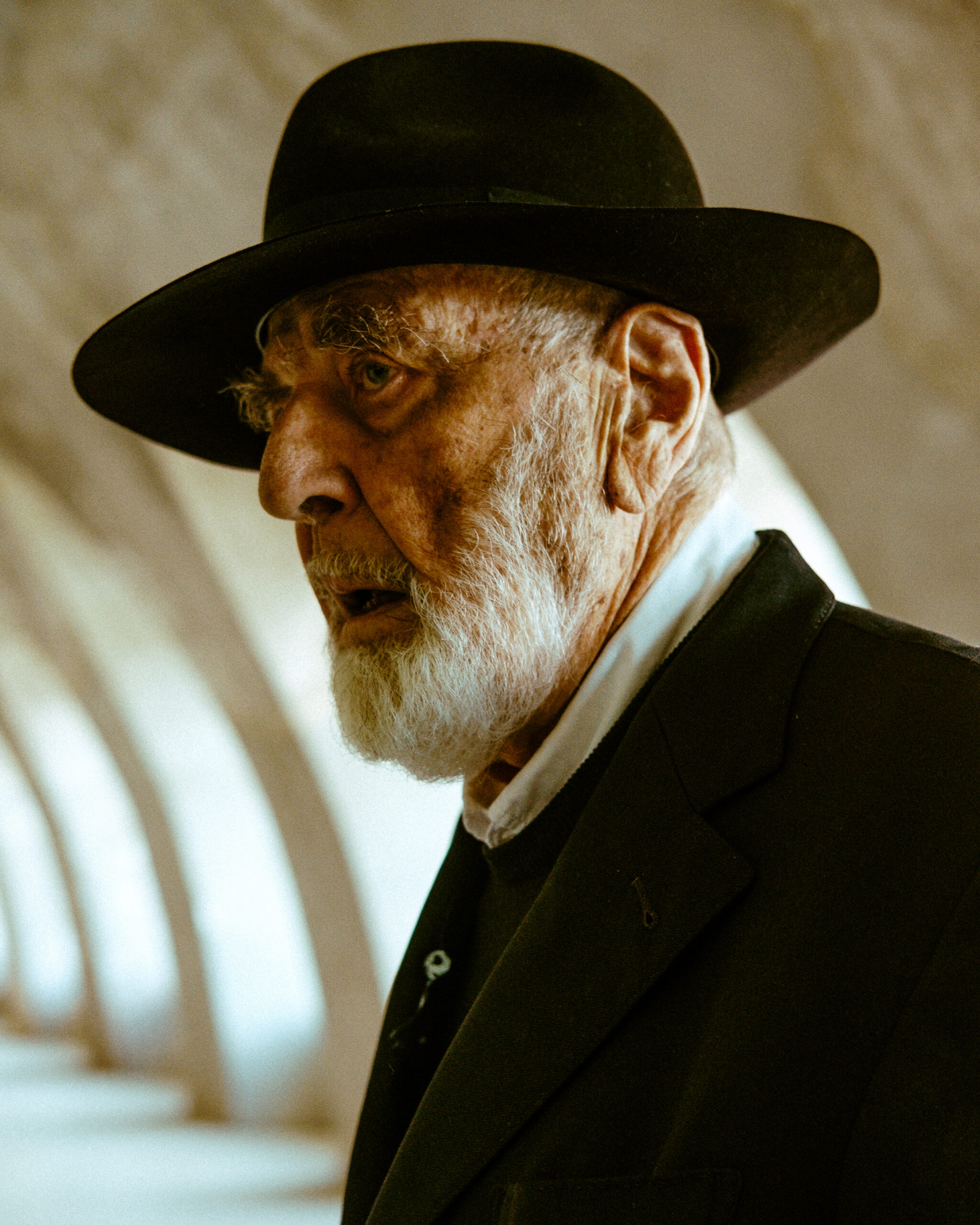
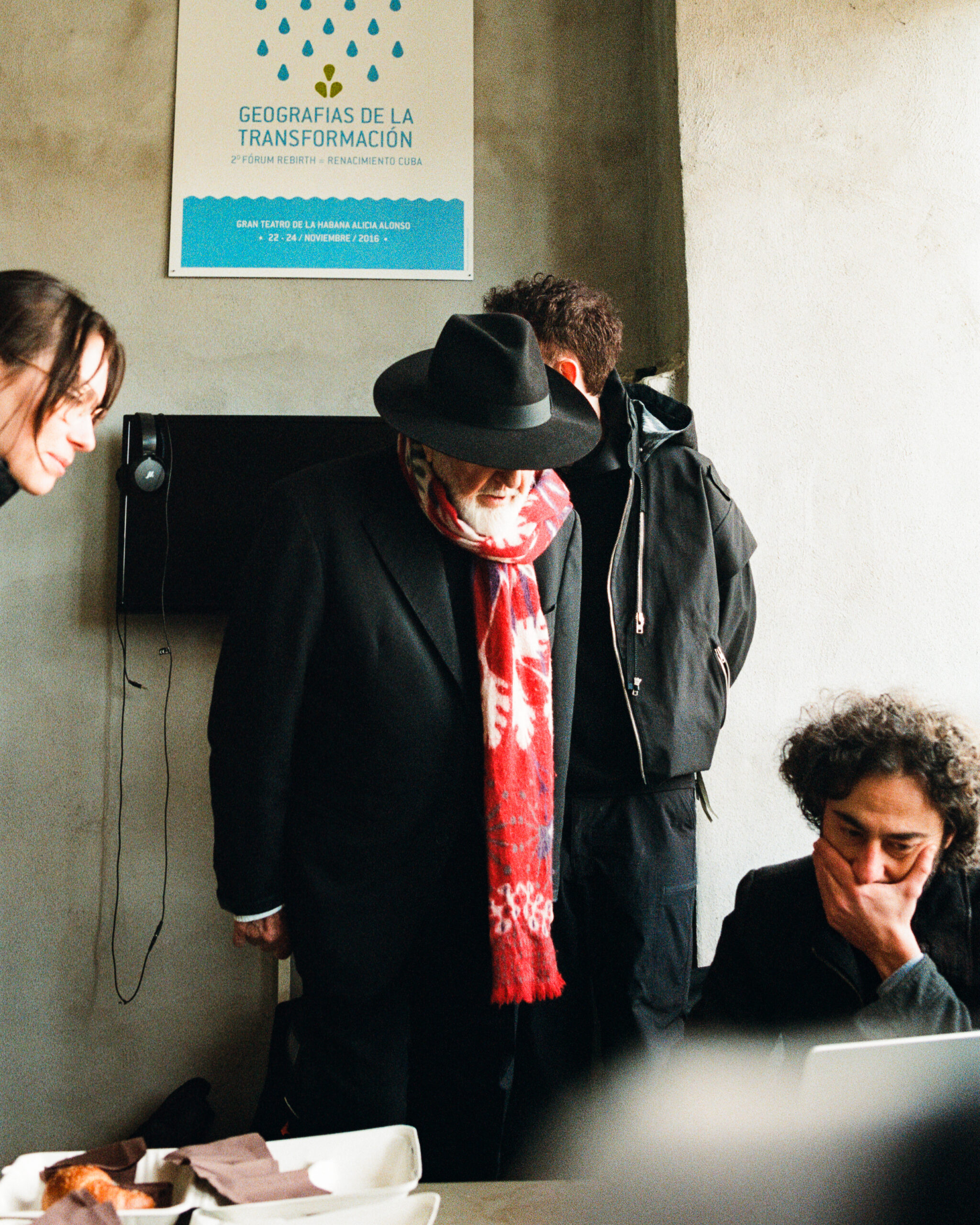
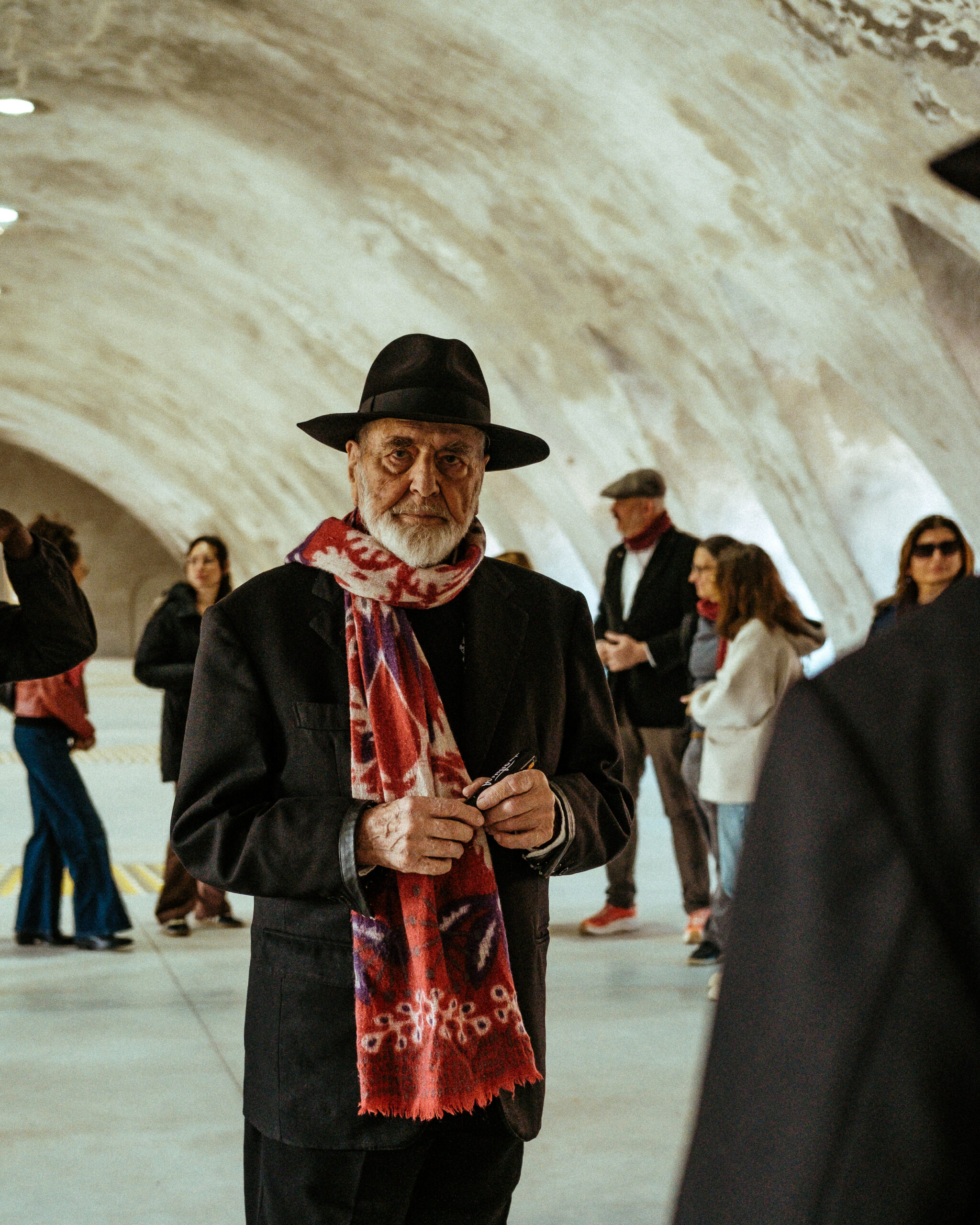
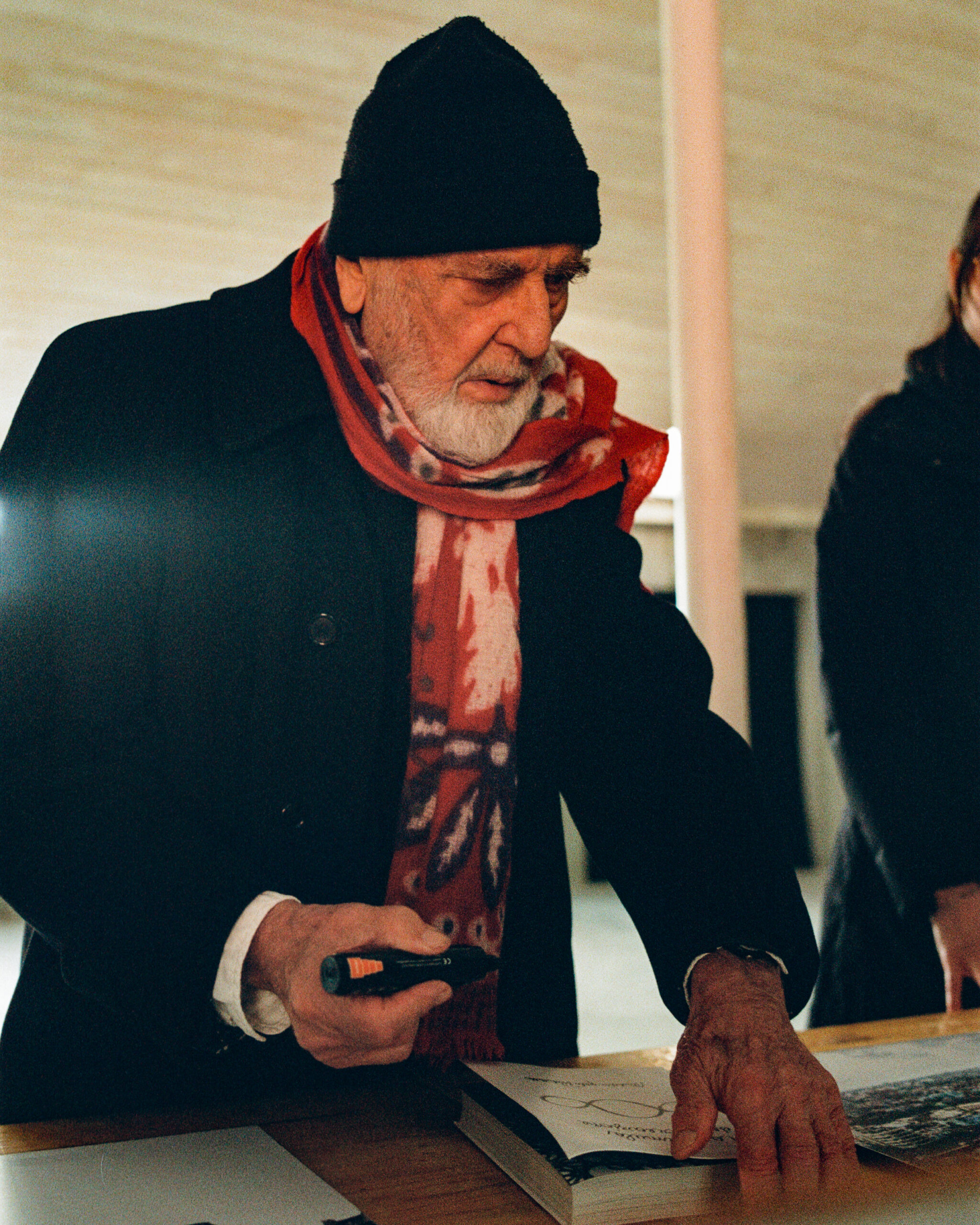
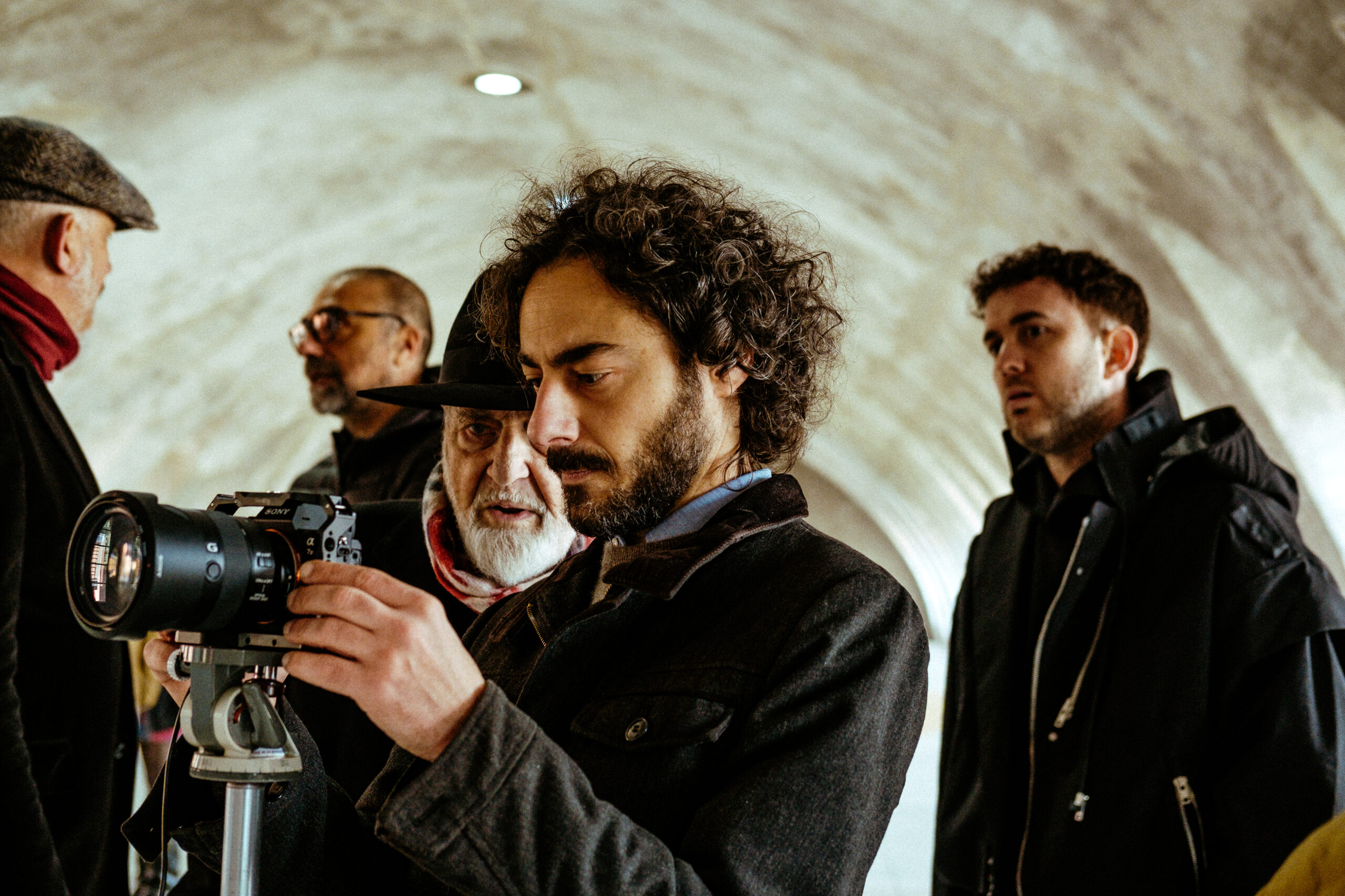
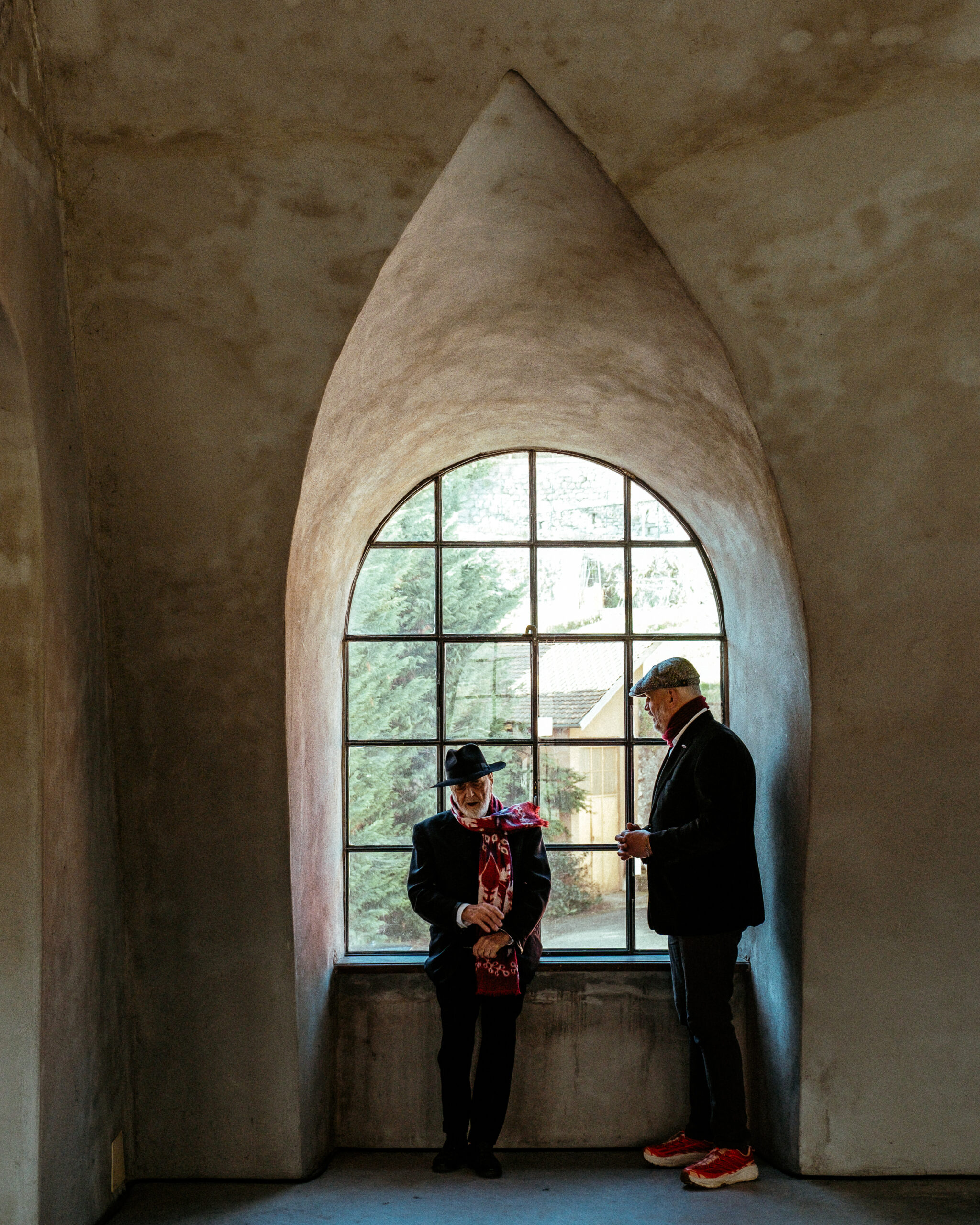
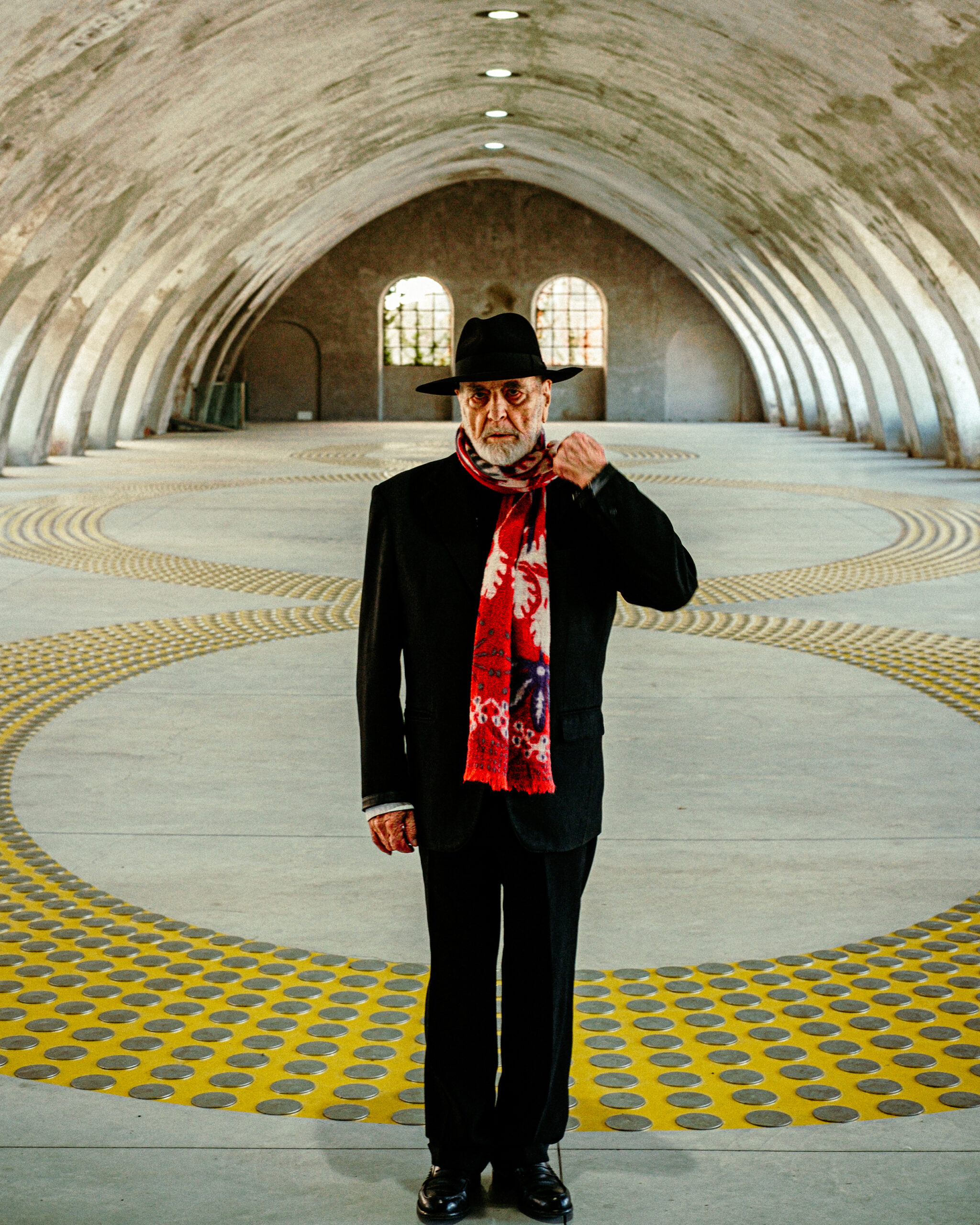
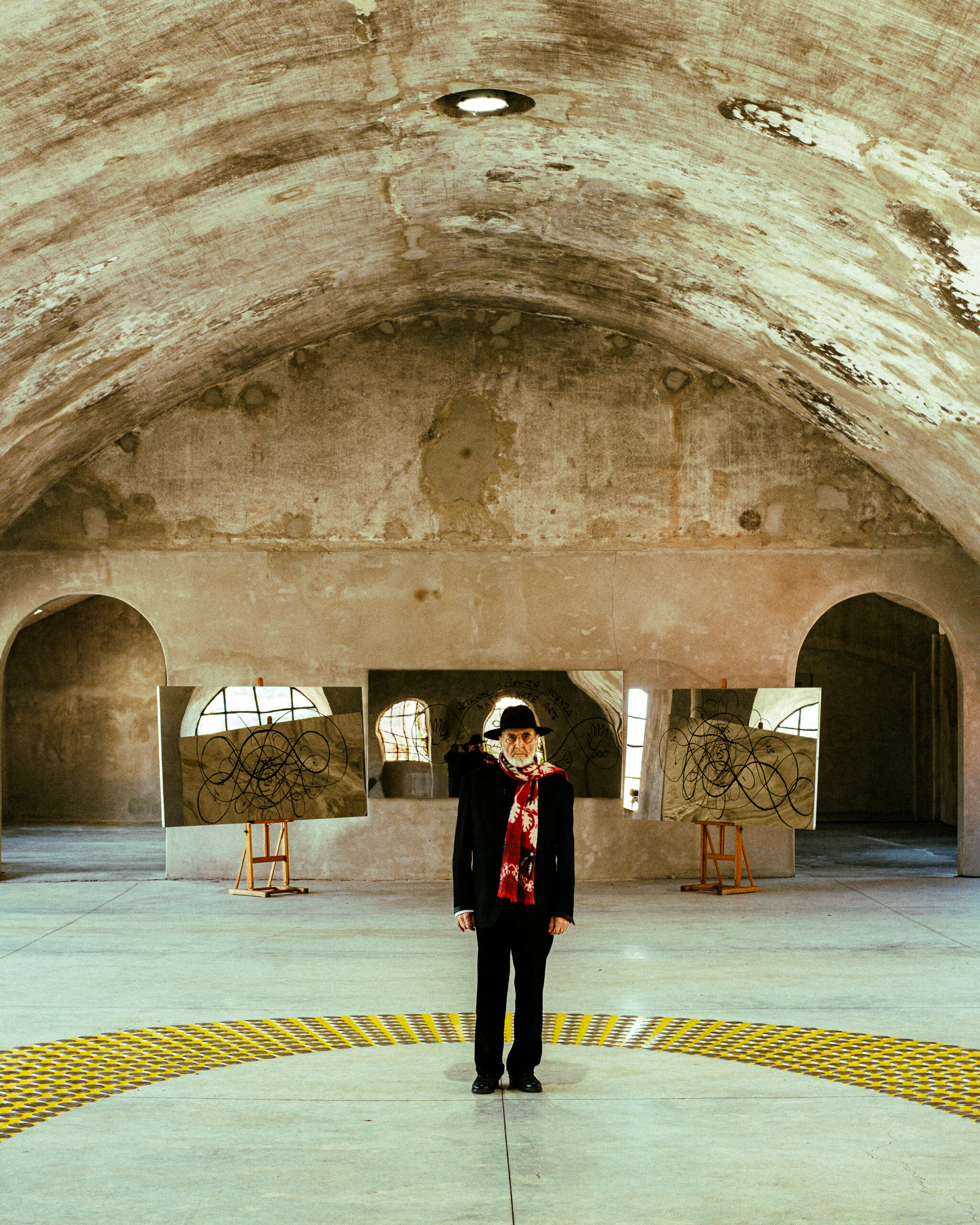
Filmed at Cittadellarte in Biella as a series of performative works created specifically for CIRCA, the project emerged through conversation. Not as a fixed idea imposed at the outset, but as something gradually shaped through exchange. Questions around responsibility, coexistence and the role of art in a time of fragmentation became the substance of the work itself. That process matters. It positions Three Mirrors not as a static artwork, but as a living proposition addressed directly to the present.
For CIRCA, a platform built on transforming spaces of advertising into spaces for reflection, Pistoletto is a foundational figure. Long before contemporary image culture collapsed the distance between viewer and image, he understood the artwork as a site of participation. Long before the language of civic responsibility entered mainstream discourse, he asked what it means to be implicated in what one sees.
In Three Mirrors, these questions become newly charged. What follows is a conversation about art, responsibility, peace and the role of public imagination now.
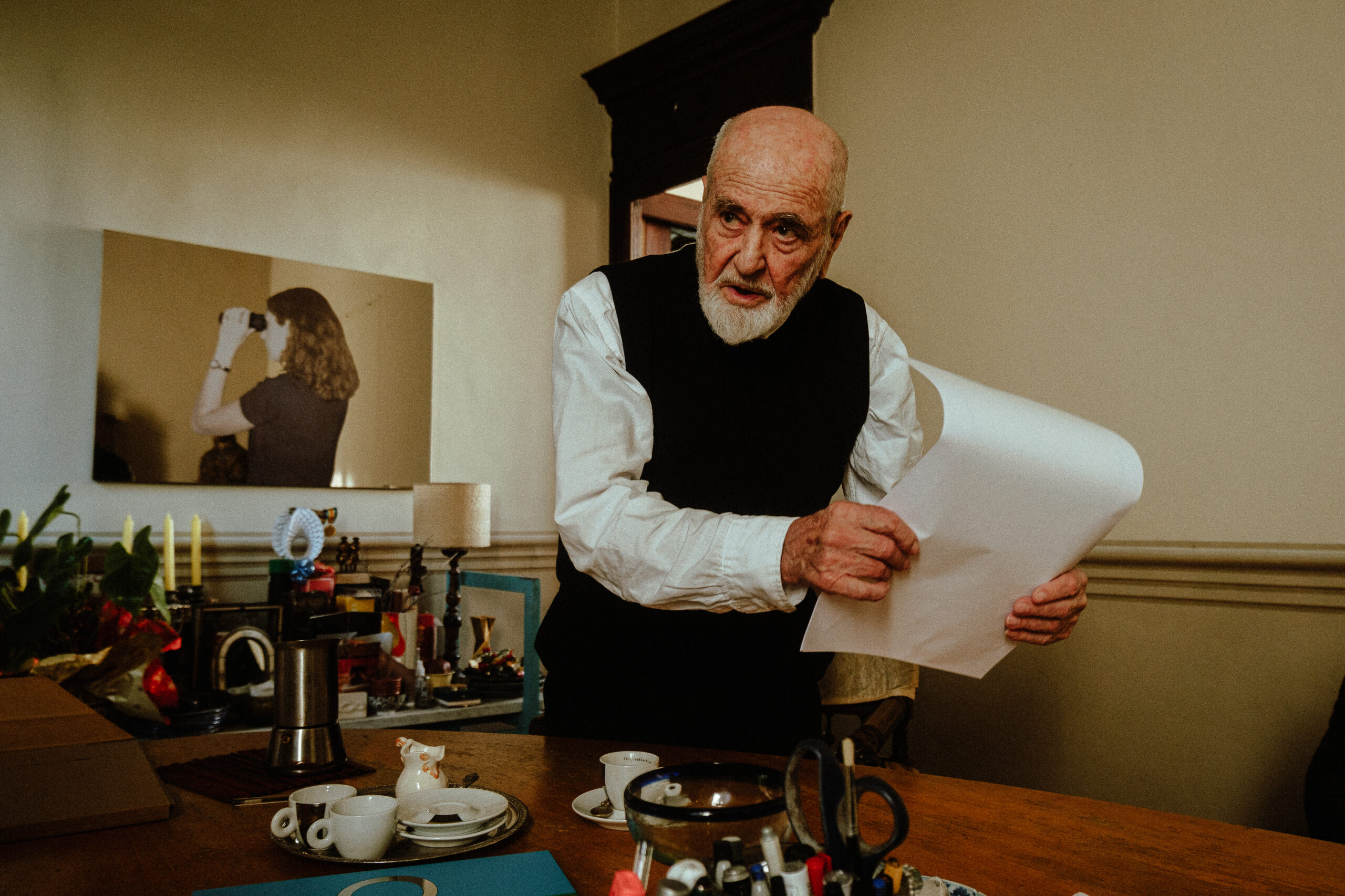
Josef O’Connor: Michelangelo, for someone encountering your work for the first time, who are you? What has your life’s work been about?
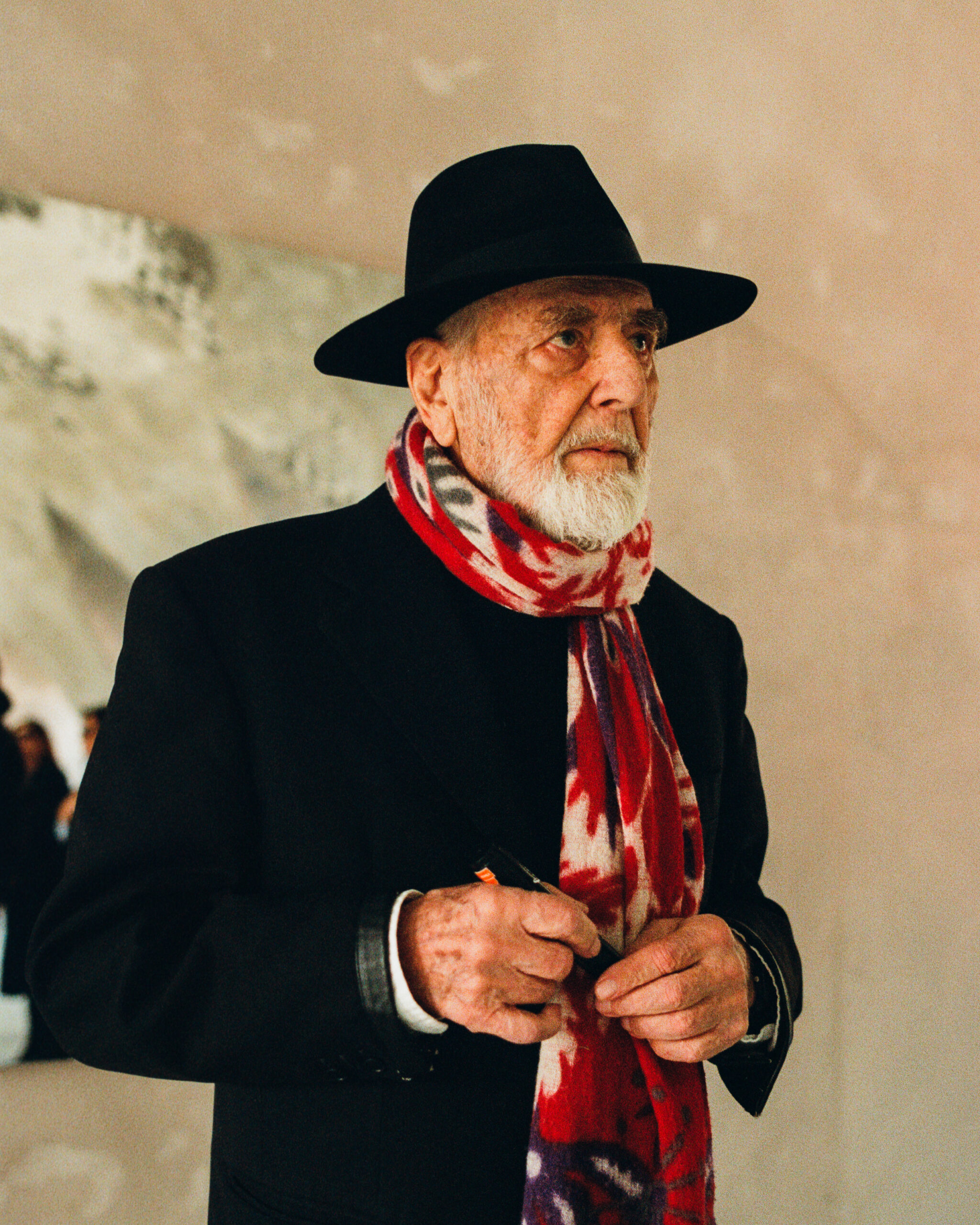
Michelangelo Pistoletto: I am Michelangelo Pistoletto. I am an artist. I began with painting, but gradually I understood that painting could not remain separate from life. I wanted to take reality inside the work. I wanted the work to contain existence itself, so that everybody could enter into it and become part of it.
JO: That movement, from painting as image to painting as encounter, feels central to everything you have done. In the 1960s, you began making the Mirror Paintings, which brought the viewer into the work. Why the mirror?
MP: From the beginning, my work was connected to a question of existence. Why do I exist? Who am I? To begin that research, I needed to make self-portraits, and to make a self-portrait you need a mirror. But I did not want the mirror to remain beside the canvas. I wanted to bring the mirror into the canvas itself.
When I did that, I saw not only myself, but everything around me. The canvas, the room, the world, all of it entered the painting. So the universe came inside the work.
JO: That is one of the reasons this collaboration feels so important for CIRCA now. The mirror is not simply reflective. It is ethical. It asks the viewer to recognise that they are implicated. They do not stand outside history. They are already inside it.
When someone sees themselves reflected in your work, what responsibility do they inherit?
MP: The viewer becomes part of the work. In that moment, they also become its author with me. They share the same responsibility I have in the world. We are together in life, and together we must create life.
JO: That idea feels especially powerful in 2026. We are living through a moment in which people are constantly addressed as consumers, as users, as audiences, as data, but much less often as citizens. What your work does is return responsibility to the act of looking. It says: you are here, therefore you are accountable.
That is also why Three Mirrors feels so right for CIRCA. The platform exists in places usually reserved for commercial persuasion. City screens tell us what to buy, what to desire, who to become. But this project asks something else of public space. It asks whether the screen can also become a civic surface, whether visibility can carry meaning, whether public attention can still be turned towards conscience.
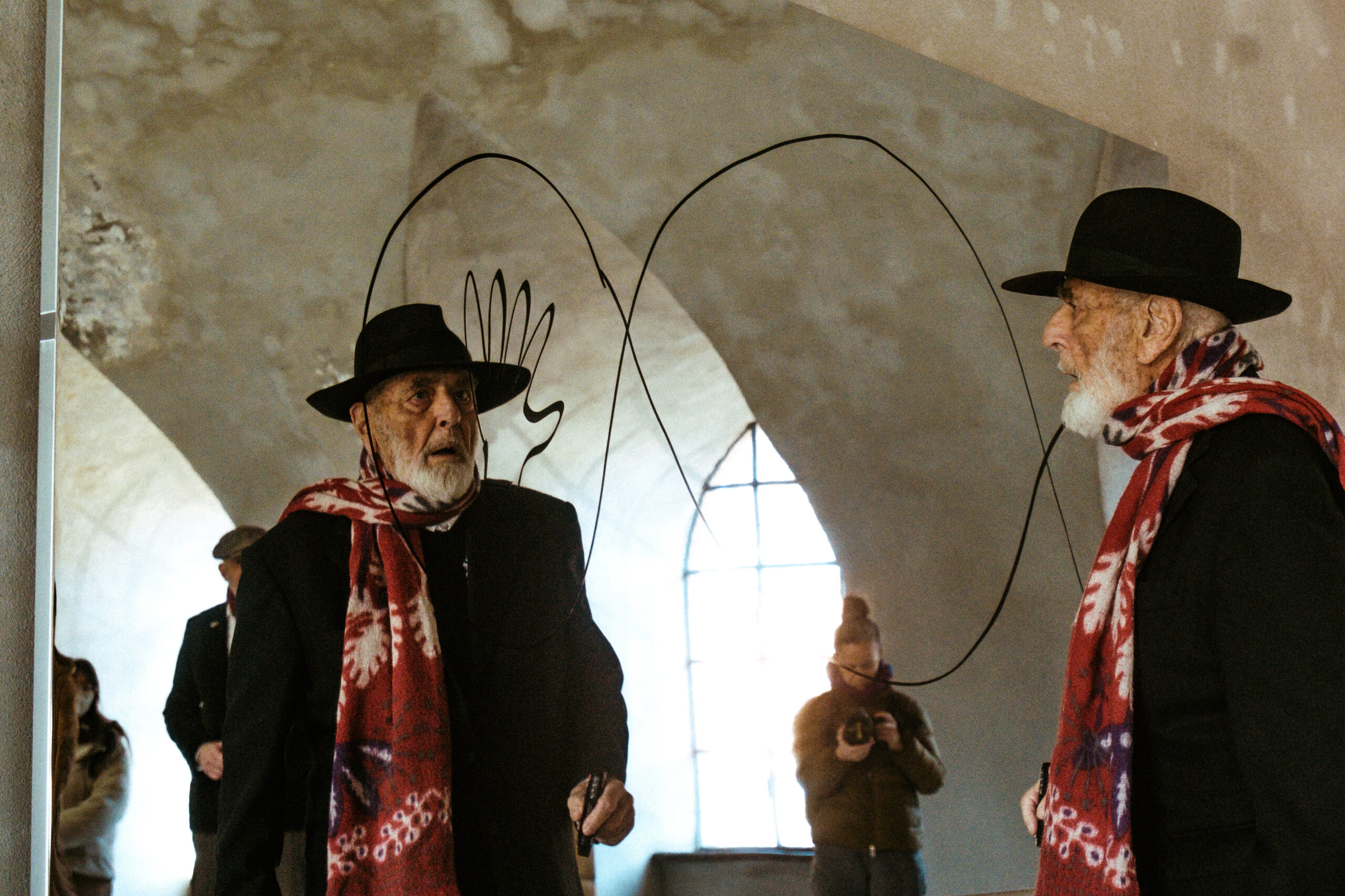
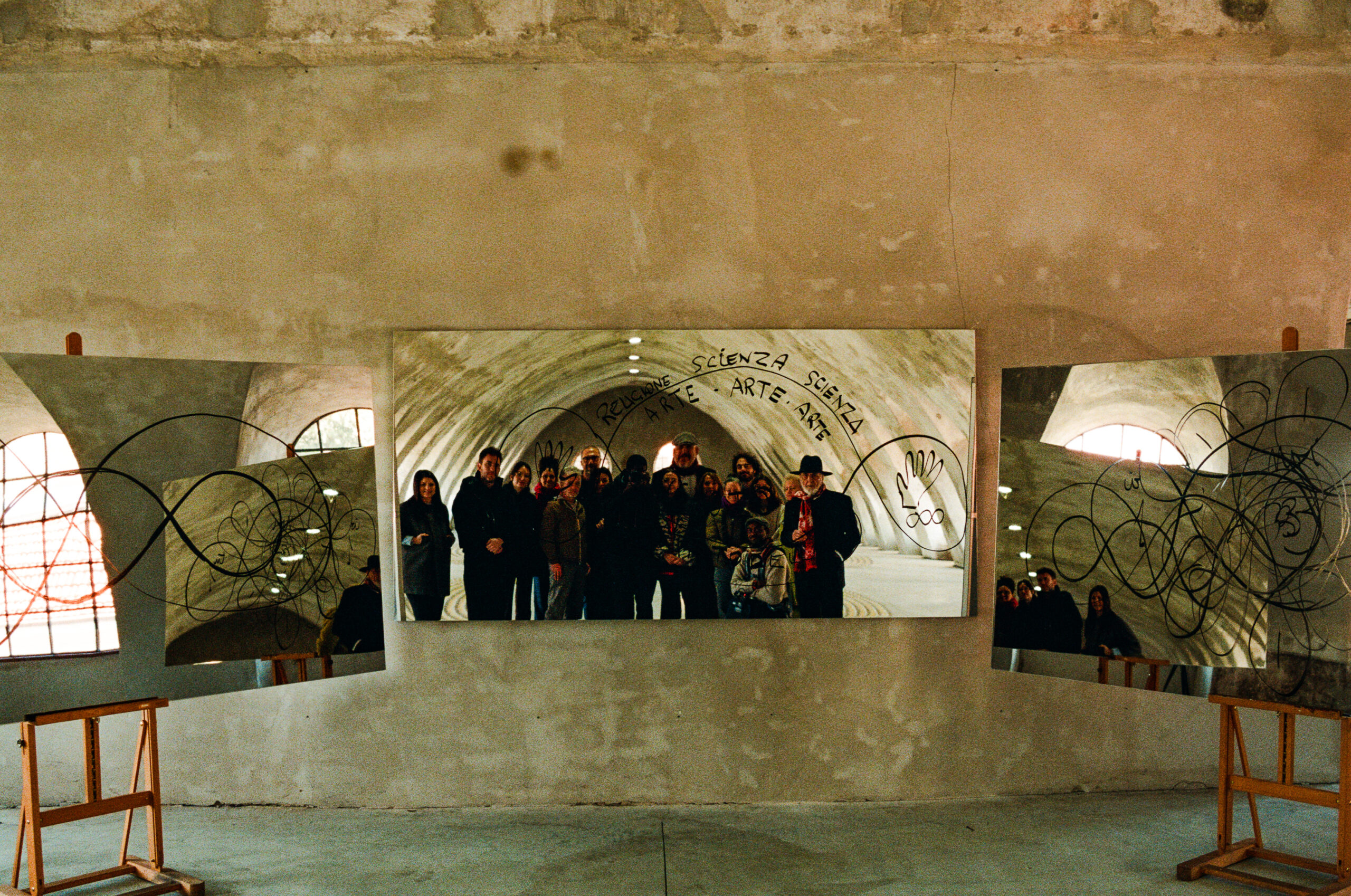
Tomorrow you will draw onto three mirrors while an audience is reflected in the work. Can you describe what you are making?
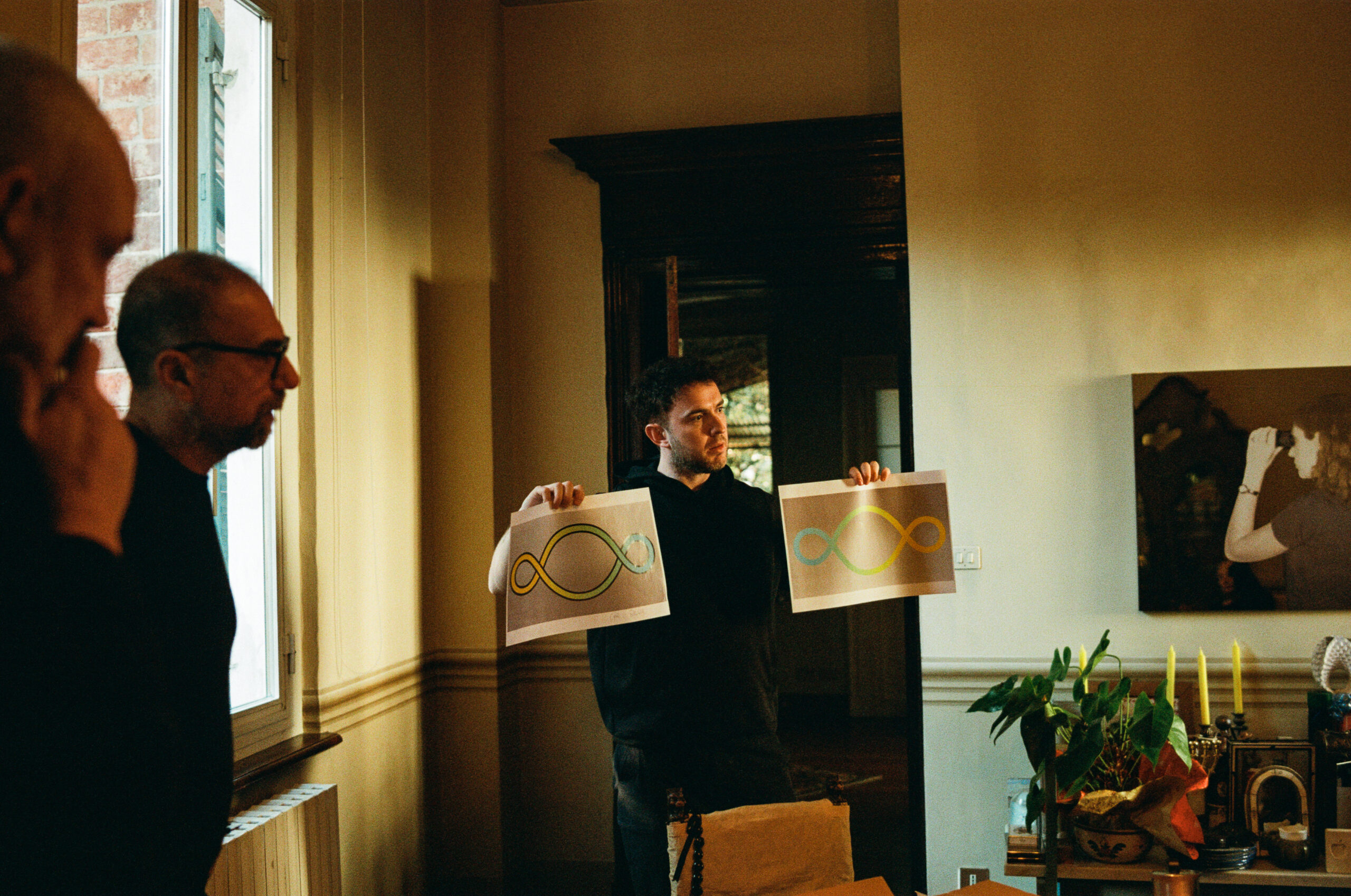
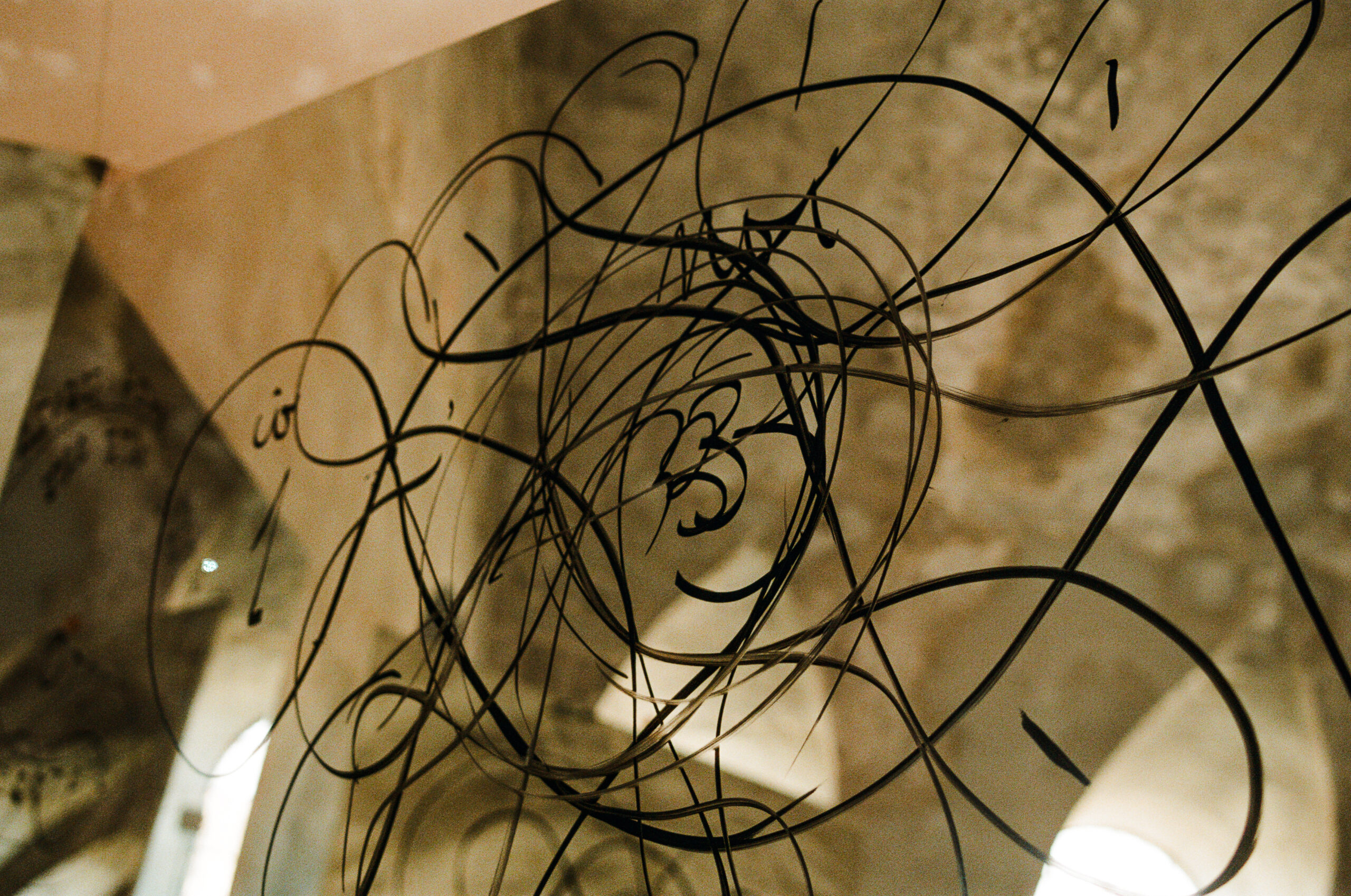
MP: I am drawing the symbol of infinity, but transforming it. When the line crosses itself twice, a third circle appears between the two others. That third circle is essential. It is the formula of creation.
One circle is nature. The other is the artificial world. In the centre, between them, something new is generated. That is the third element. That is where existence is produced. That is where balance can happen.
JO: The three mirrors in this sense are not only artworks. They are diagrams for living. They visualise a relationship between opposites and insist that neither side can survive without a new synthesis.
The works are described as public lectures. Why use the lecture as a medium rather than simply making an artwork and leaving it open to interpretation?
MP: Because in this case it is necessary to explain the formula. The art is becoming the formula of existence, the formula of creation. It is important that people understand it, because once they understand it, they can use it. They can take responsibility for helping each other in life.
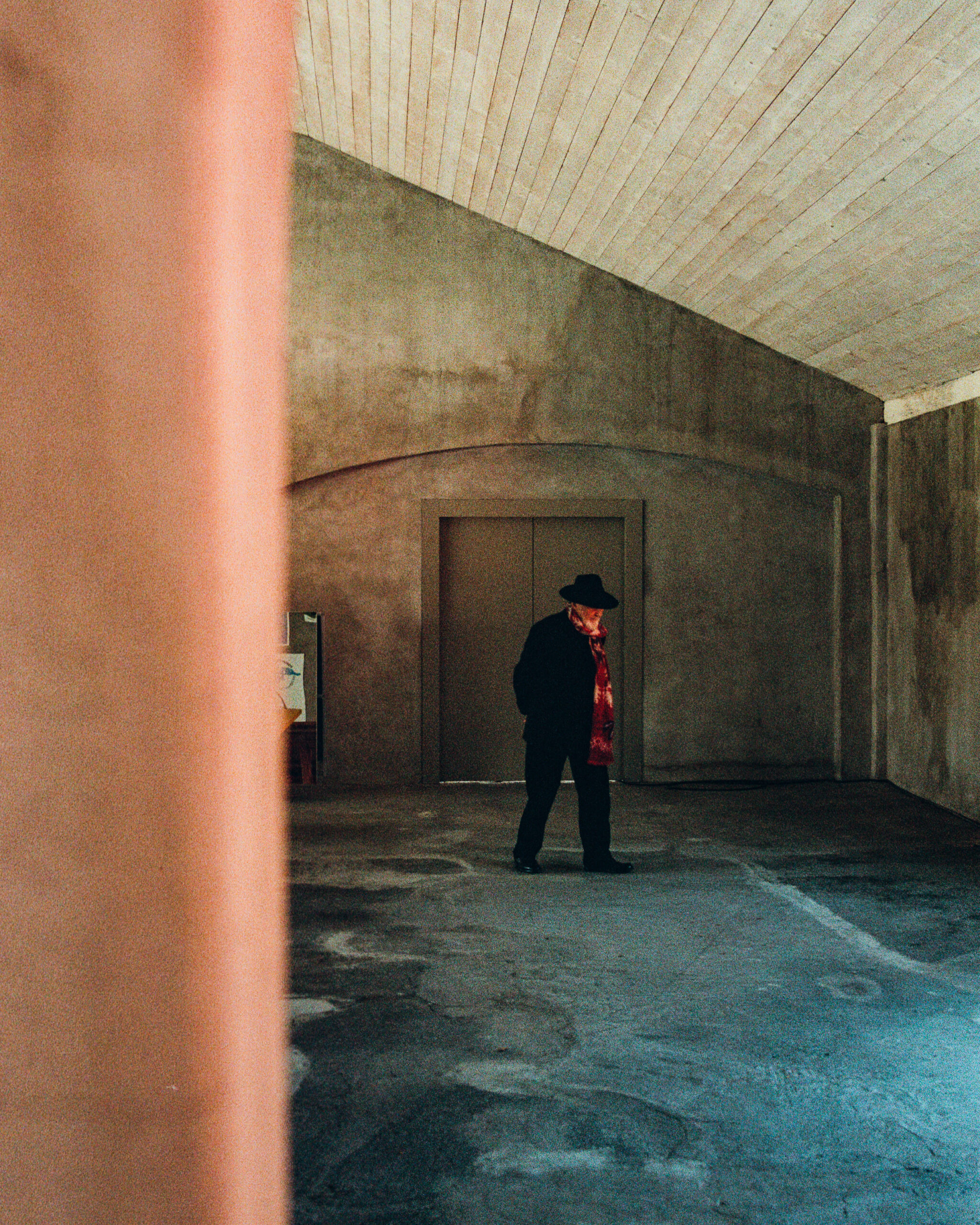
JO: There is something very moving in that. You are not interested in mystery for its own sake. You are interested in transmission. In making a language that people can carry with them.
MP: Yes. I can be a teacher in that sense, but I do not want only to teach pupils. I want to create teachers. We need many people capable of carrying this understanding forward.
JO: That reminds me of Joseph Beuys, and his sense that art could operate as social sculpture, that it could enter society not as decoration but as a structuring force. Your work feels in dialogue with that lineage, but it also pushes it somewhere more explicit, more architectural, more civic.
MP: I admired Beuys because he brought art into society. He said everybody is an artist. What I try to do is offer not only the idea, but the grammar. A system people can understand. Not only to say that everybody is creative, but to show that creation has a structure, and that structure can be used.
We have nature on one side and the artificial world on the other. Between them, we must create balance. That is our responsibility. This is what I mean when I speak about preventive peace.
JO: Preventive peace is one of the most important ideas in this project. It is also one of the reasons this collaboration feels so urgent. Too often peace is treated as the aftermath of destruction, as something negotiated only once catastrophe has already occurred. But you propose peace as a design principle, as something to be made before conflict hardens into war.
MP: Yes. We must realise peace before war. We need a formula that allows opposites to exist together without exploding into destruction. Competition is part of life, but competition does not need to mean annihilation.
JO: At one point in our conversation you turned to sport as an example, which I found unexpectedly precise.
MP: In sport, people compete with maximum intensity, but there is one essential law: you cannot kill. That is already a practical form of preventive peace. You can do everything, but not kill. We need this law in society. The other is not someone to eliminate. The other is necessary, because through the other you give your best.
JO: That distinction matters. It shifts the terms entirely. The opponent is not the enemy. Difference is not a threat to be erased, but a condition of growth. That feels like one of the central lessons of Three Mirrors and of this wider collaboration with CIRCA.
There is also something striking about placing these ideas on monumental public screens, in spaces usually dominated by advertising. Billboards are symbols of capitalism, persuasion and desire. What does it mean to place the Third Paradise there?
MP: I do not think in terms of replacing one system with another, or making a post-capitalist symbol. I am proposing the formula of existence. Not a consumer product, but a phenomenological reality. It concerns everything: politics, economy, spirituality, religion, the entire structure of life. The point is not to reject one side or the other, but to take what exists and create a new balance.
JO: That is where this collaboration feels especially significant for CIRCA. The platform has always worked through tension. It does not escape systems of capital. It interrupts them. It borrows their infrastructure and turns it towards another kind of proposition. In that sense, Pistoletto is the ideal artist for CIRCA, because his work does not pretend the world can be purified. It asks how art can operate inside contradiction without surrendering to it.
This project is presented in partnership with the United Nations OCHA, and this year marks 80 years since the founding of the United Nations. Why is it important for art to work alongside institutions like the UN?
MP: It is important for me to work with institutions like the United Nations, even if I know they do not have all the power to change reality directly. The great powers of economy and politics still dominate the world. But culture can slowly transform the way people think and act. Institutions can become places where this transformation begins.
What matters is not only to work with institutions, but to offer them a practical formula, something that can slowly enter culture and become shared.
JO: That slowness is important. This is not propaganda. It is not a slogan. It is a proposition carried by art, by culture, by repetition and by encounter. It asks what kind of symbolic language a society needs if it is to reorganise itself.
You speak often about the State of Art. What do you mean by that?
Michelangelo Pistoletto: The State of Art is not simply art in a museum. It is art as an organising principle for life. At Cittadellarte, we work across politics, religion, production, education, sport. Art becomes both intellectual and practical. It becomes a way to formulate a new state, not divided by nations, but guided by responsibility and creation.
JO: It is a radical proposition, but also a remarkably grounded one. You are not speaking about utopia as fantasy. You are speaking about structures, laws, habits, symbols, forms of organisation. In that way, your work keeps moving between the poetic and the practical. Between the mirror and the institution. Between the symbol and the system.
That also brings us to younger artists and why this collaboration extends beyond the screen works themselves. This year, the CIRCA PRIZE is being shaped not as a competition for finished artworks, but as a platform for collaborative proposals and ideas for peace. Why does that matter to you?
Michelangelo Pistoletto: Because all my work has never been done by myself alone. Art is always the result of many connections. It is never only individual. Two is the minimum to make a society. From two, then three, then more. What matters is the combination.
So it is very good to invite artists not only to present something already complete, but to formulate ideas together. It is important to stimulate them to produce their best expression, but also to understand that the best can emerge through relation.
JO: That idea is deeply aligned with CIRCA in 2026. The platform is no longer simply commissioning singular gestures. It is trying to create conditions for relation, exchange and continuity. This year-long collaboration with Pistoletto represents that shift very clearly. It is not only a broadcast. It is a framework. A festival of ideas. A public pedagogy. A distributed conversation about what peace, responsibility and civic imagination might mean now.
What would you hope to see from younger artists responding to this call?
Michelangelo Pistoletto: I do not know what they will do, and that is good. I want to be surprised. What matters is not that they repeat what I say today, but that they extend it in ways I cannot predict. The artist should not be alone. The artist can become a champion for society, someone who brings their best in relation to others.
JO: There is generosity in that answer. It refuses control. It leaves room for the future to speak back.
I want to end with something that sits at the heart of CIRCA’s wider model. Alongside this public commission, we are also releasing a limited edition. Can collecting art become a civic act? Why is it important to live with art?
Michelangelo Pistoletto: Art stimulates imagination, desire and emotion. Human beings have always needed to place something on the wall, from the caves until today. In the caves, there were handprints. The hand remained after the person. That is already a kind of virtuality. The physical hand dies, but the image remains. Art is a way of surviving beyond practical life. It answers a spiritual need, and from that spiritual need, political and social life also emerge.
JO: That feels essential to this collaboration too. For CIRCA, the edition is never separate from the public work. It is part of the same ecosystem. The work on the wall funds the work in the world. Private collecting can participate in public consequence. In that sense, living with art can also mean living with a reminder of one’s place within a larger civic imagination.
My final question: if humanity fails to find a balance between nature and artificial systems, what happens?
Michelangelo Pistoletto: I am sure that we will find the balance. We can destroy, or we can build. I believe in building. That is why I am sure.
JO: And the Third Paradise will exist when?
Michelangelo Pistoletto: The Third Paradise already exists in many places. It exists wherever people gather with the desire to understand each other and create another way of living. But now we need to organise it practically, little by little, in the world.
What began as a conversation in Biella has become something larger than a commission. It is a proposition carried across cities, across screens, across publics who may never meet but find themselves briefly held within the same reflection.
In this sense, Three Mirrors is not only a work about seeing, but about recognising one’s place within a shared condition. Not as a spectator, but as a participant.
For CIRCA, it affirms a belief that these spaces, built for attention, can still hold meaning. That images can do more than persuade. That they can ask something of us.
And that perhaps, even now, the possibility of balance is not something to wait for, but something to make.
Josef O’Connor is the Founder and Artistic Director of CIRCA, a cultural platform for the 21st century that commissions and broadcasts public art across global city screens. His curatorial practice focuses on creating new contexts for how art can be experienced collectively, transforming spaces of advertising into moments of reflection. Working with leading artists across disciplines, he develops projects that connect public space, publishing and civic life, with a circular model where artist editions fund commissions, grants and public programmes.