fbpx Laurie Anderson, Notebook | CIRCA

CIRCA 20:23

Laurie Anderson, Notebook

6 - 30 April, 2023

Some artists spend their lives refining a single language. Laurie Anderson has spent more than five decades inventing new ones. Moving between music, performance, drawing, film, technology, storytelling and poetry, she has built a body of work that continually expands the possibilities of what art can be while remaining rooted in a simple but enduring fascination: how ideas take shape, how stories are formed, and how imagination allows us to move beyond the limits of the world as it appears before us.


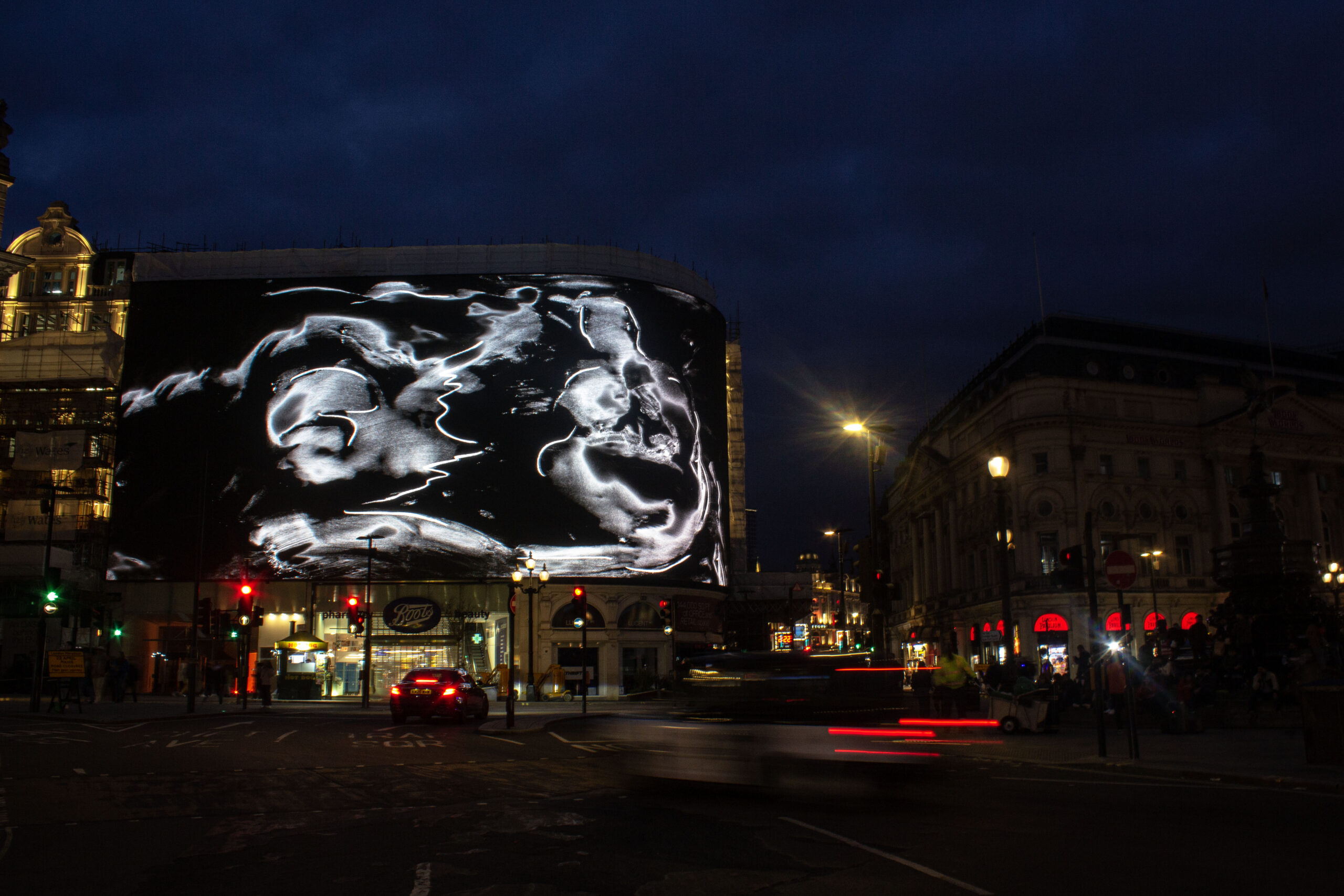
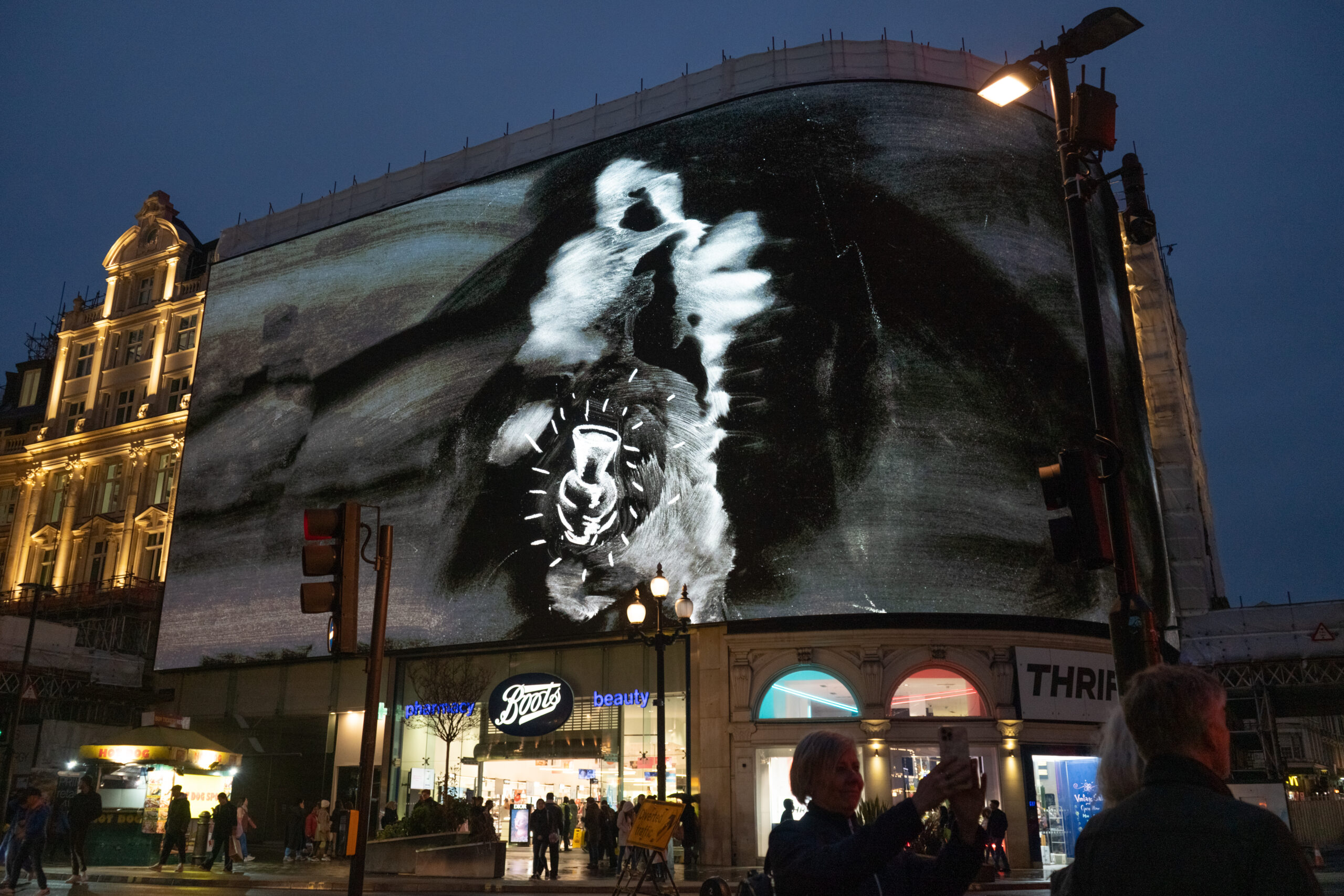
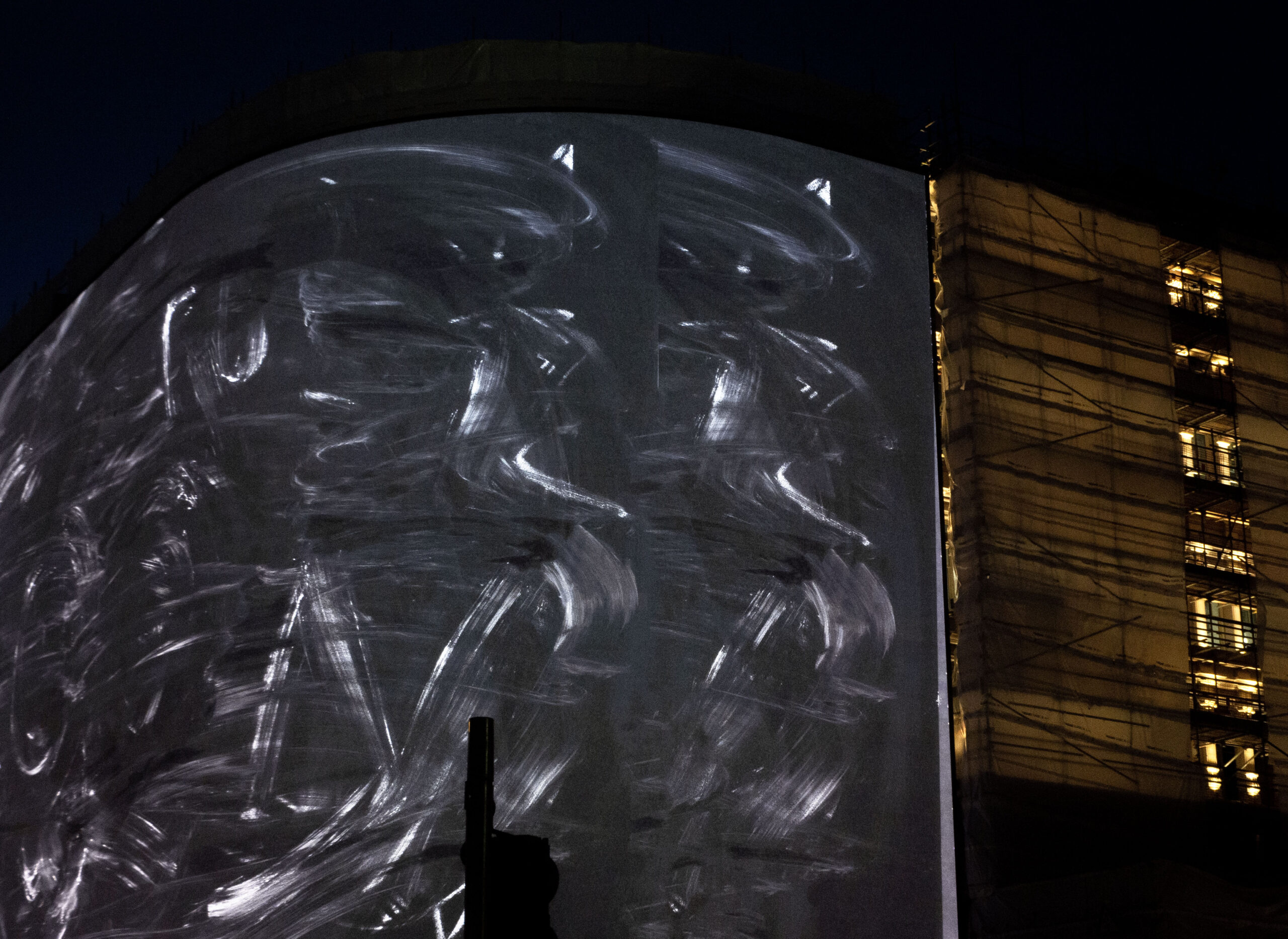
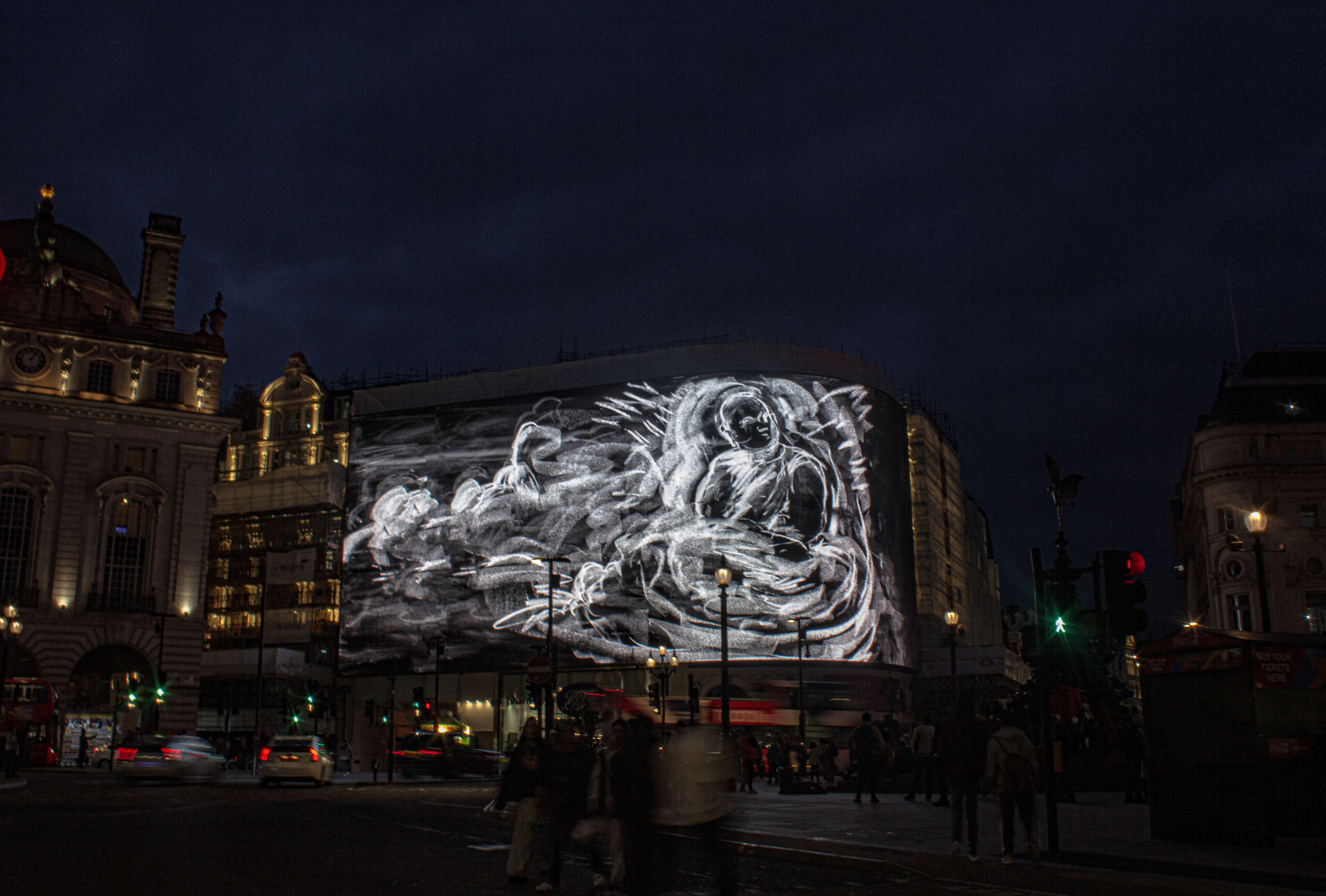
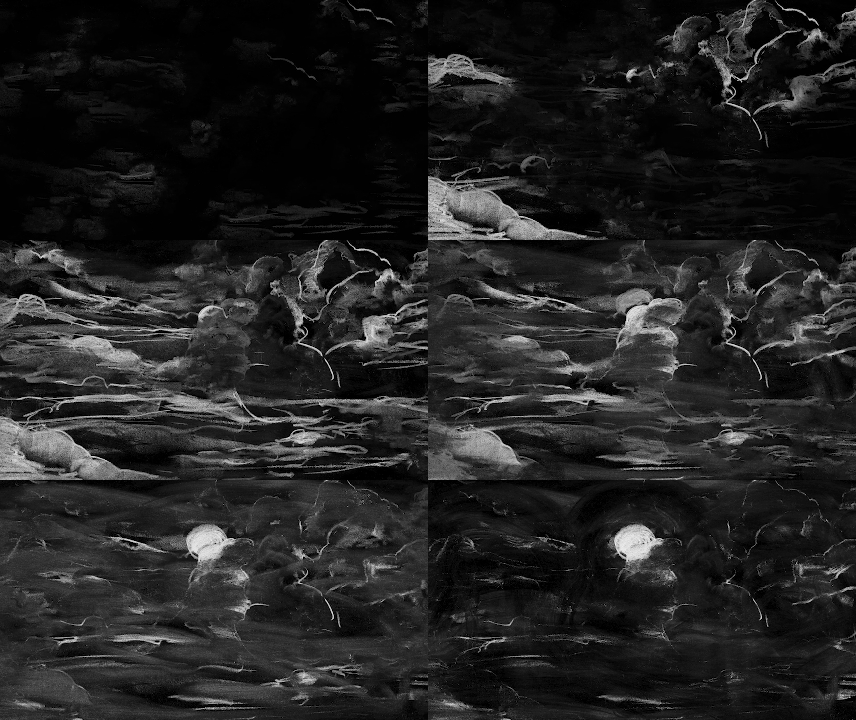
For CIRCA 20:23, Anderson turns to one of the most intimate spaces within her practice: the notebook. Not the notebook as archive or sketchbook, but as a site of possibility. A place where images arrive before explanation, where thoughts emerge before they become arguments, and where meaning remains fluid rather than fixed. Drawn from more than 135 chalk drawings made across the pages of her personal notebooks, Notebook unfolds over twenty-five days as a sequence of animated works that reveal themselves gradually across CIRCA’s global network of public screens.

Created in response to CIRCA’s 2023 manifesto, Hope: The Art of Reading What Is Not Yet Written, the project approaches hope not as a political slogan or philosophical proposition, but as an act of imagination. Throughout her career, Anderson has resisted the demand that art provide answers. Instead, she has consistently opened spaces in which uncertainty, curiosity and speculation can flourish. The drawings that populate Notebook inhabit precisely this territory. Figures appear and disappear. Landscapes drift into view. Fragments of language hover momentarily before dissolving back into darkness. The works refuse to settle into a single narrative, inviting viewers instead to construct their own relationships between image, memory and meaning.

The result is a public artwork that unfolds less like an exhibition than a conversation. Each evening introduces a new page, a new thought, a new possibility. Together, these fragments form a constellation of ideas that resist conclusion. Rather than directing audiences toward a particular interpretation, Anderson offers something increasingly rare within contemporary culture: the freedom to look without instruction and to imagine without limitation.

This freedom lies at the heart of Anderson’s understanding of hope. When asked what gives her hope, she does not speak of certainty, progress or prediction. Instead, she points to imagination itself. The ability of people to think beyond inherited assumptions, to envision realities that do not yet exist, and to create meanings that cannot be prescribed in advance. In this sense, Notebook becomes an invitation to inhabit a space of openness at a moment when so much of contemporary life feels increasingly defined by explanation, categorisation and control.

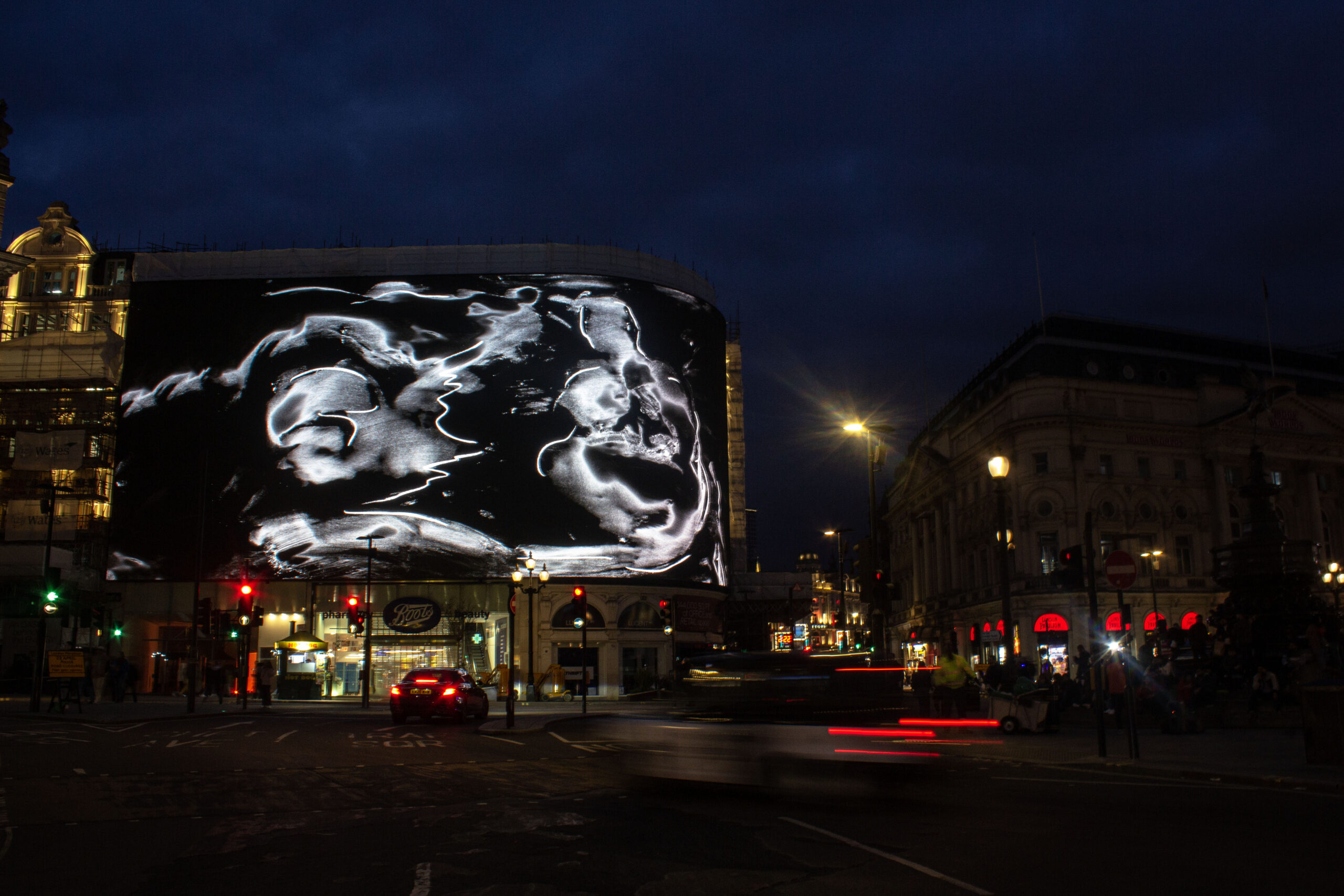
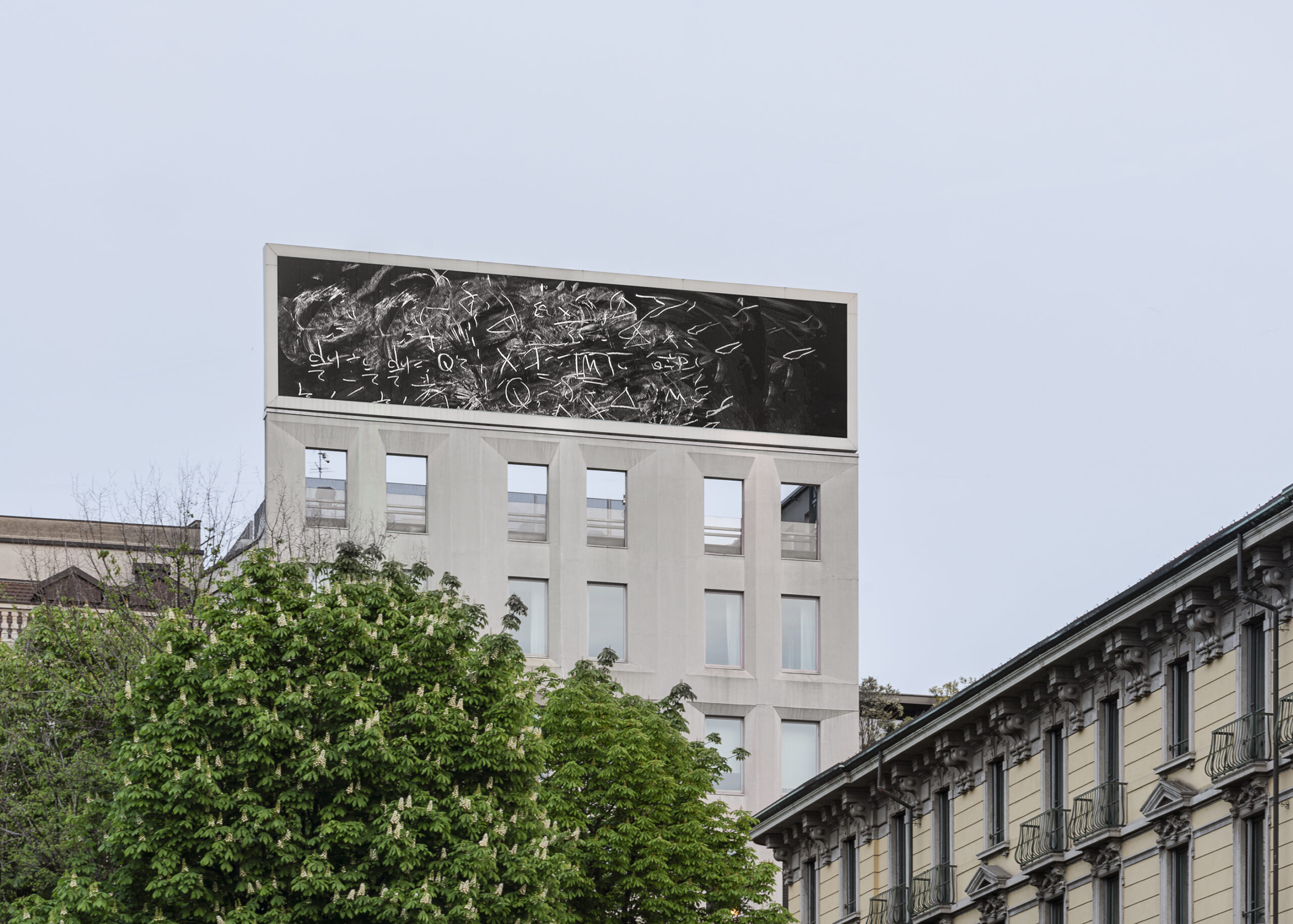

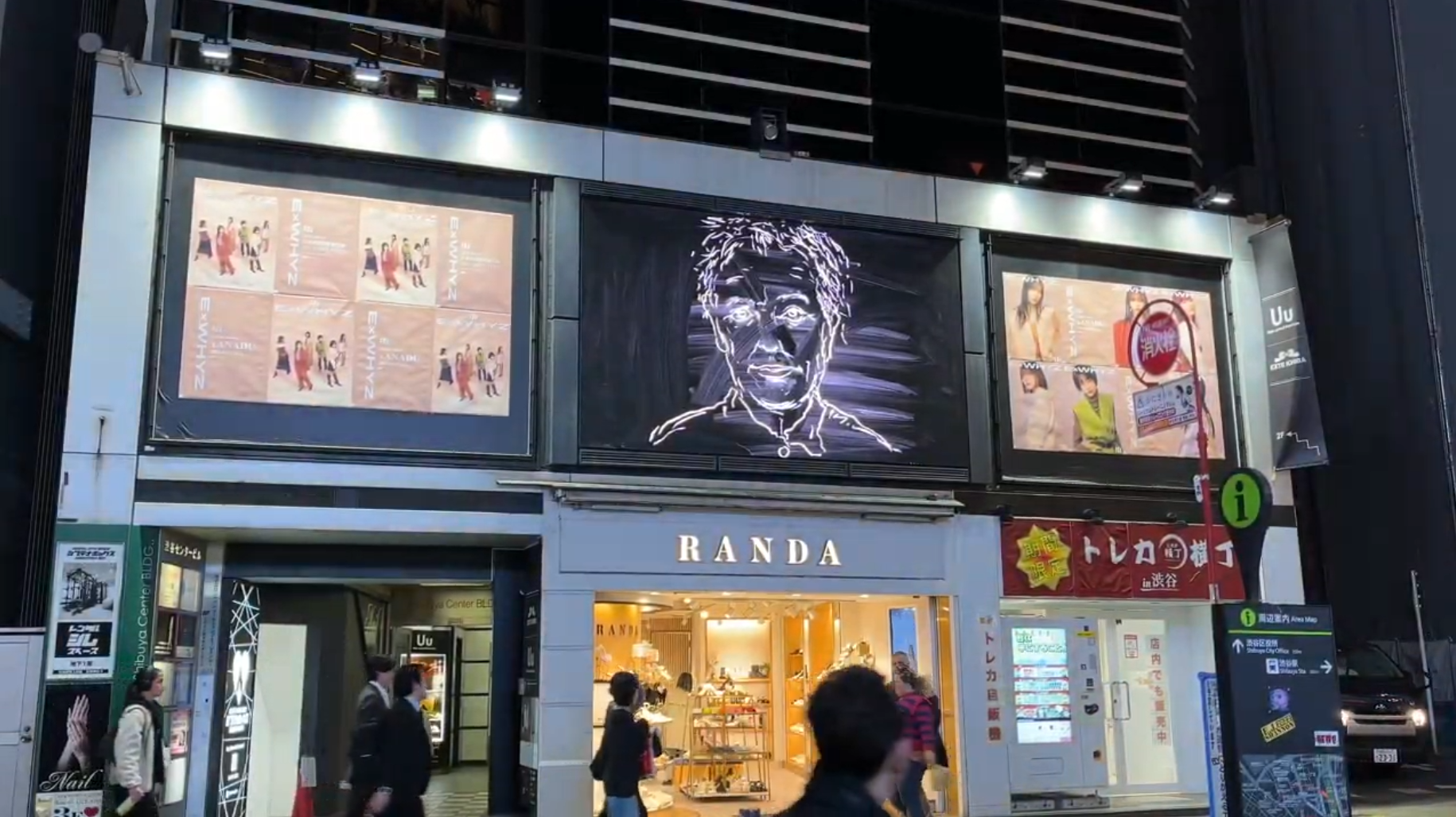
Presented nightly across some of the world’s busiest urban environments, Anderson’s drawings appear as brief interruptions within the visual noise of the contemporary city. Hovering above traffic, commerce and daily routine, they offer moments of reflection that are at once deeply personal and unexpectedly collective. The notebook, traditionally a private object, is transformed into a public commons. Thoughts that once existed only on a page become shared encounters experienced simultaneously across London, Berlin, Milan, Seoul and Tokyo.

Launching on the full moon, Notebook also recalls an older relationship between humanity and the unknown. Long before information could be summoned instantly, people looked outward toward distant horizons and night skies as places of wonder, mystery and possibility. Anderson’s animations recover something of that sensibility. They remind us that not everything needs to be explained in order to be meaningful, and that imagination remains one of the most powerful tools through which we navigate an uncertain world.

As the pages of Notebook unfold throughout the month, Anderson offers no destination and no final resolution. Instead, she presents a series of openings. Small acts of poetic freedom that encourage us to look differently, think differently and perhaps imagine differently. In doing so, she suggests that hope is not something we discover fully formed, but something we create together through the ongoing exercise of imagination itself.


Shop

Loading variants...

Films

Michelangelo Pistoletto’s Three Mirrors is presented daily across CIRCA’s global network of public screens. Each evening at 20:26 (local time), the work appears simultaneously across the following locations, entering the flow of the city and inviting a shared moment of reflection. Select a location below to view directions and find your nearest screen on Google Maps.

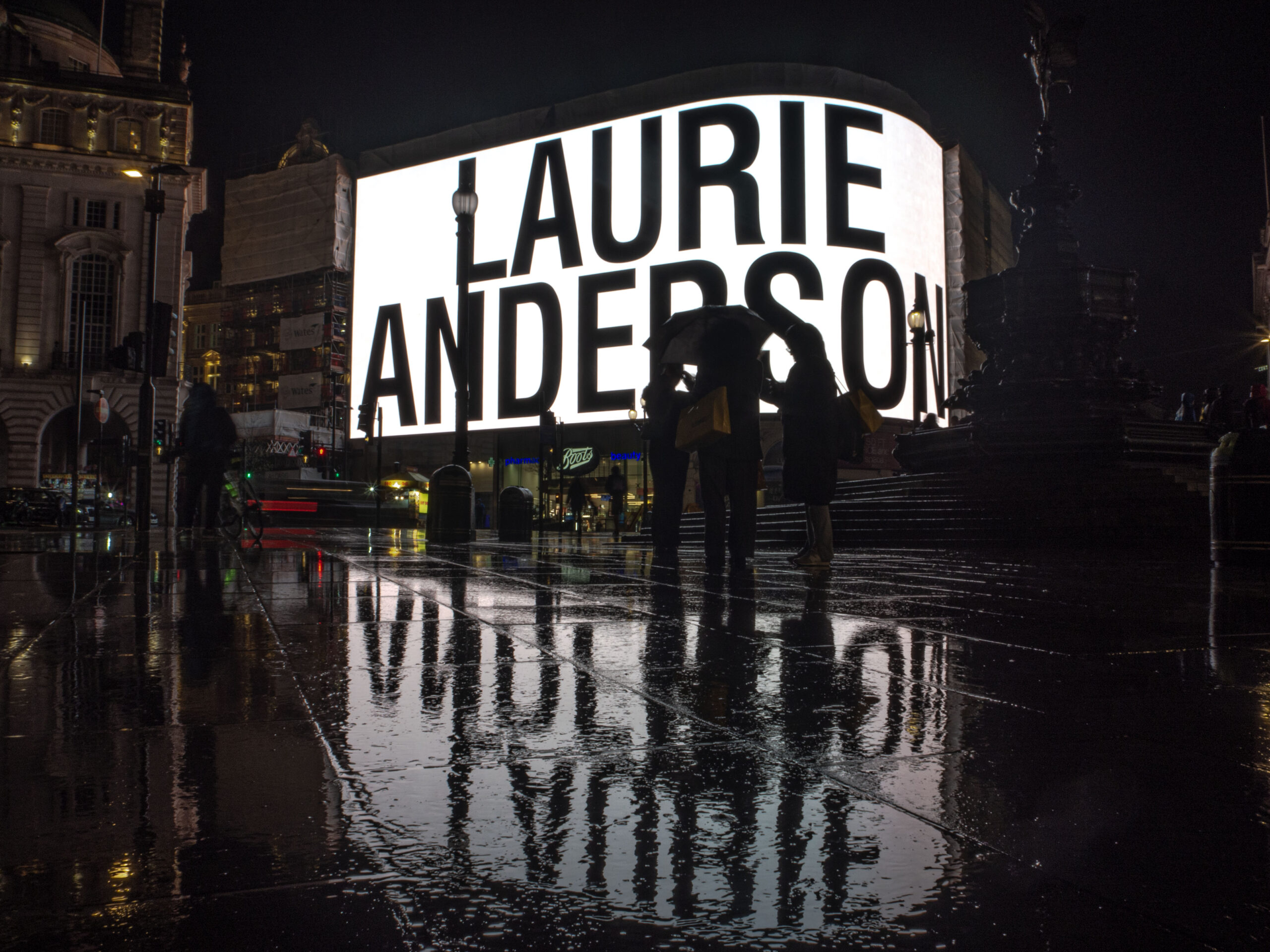
London, Piccadilly Lights

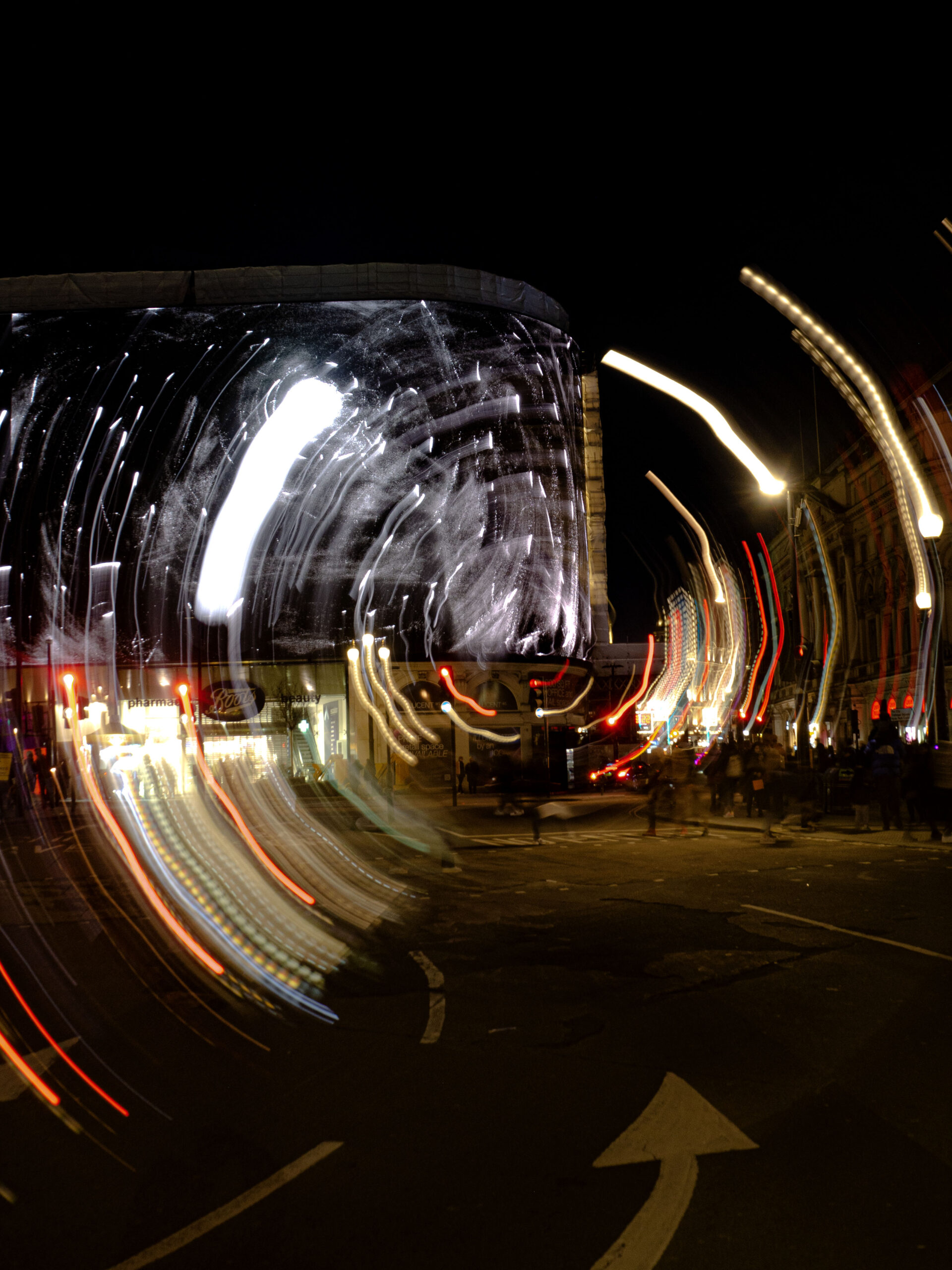
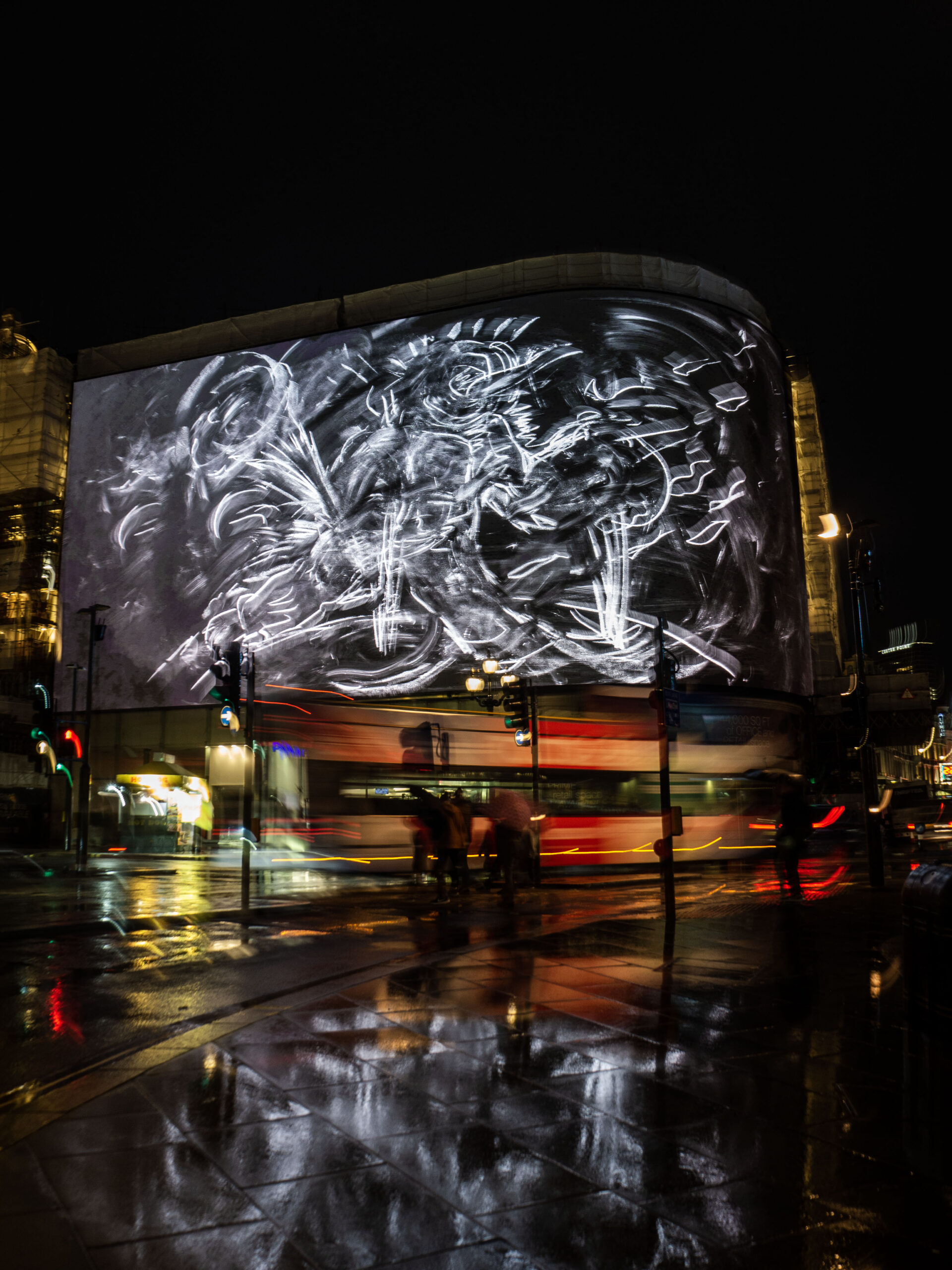

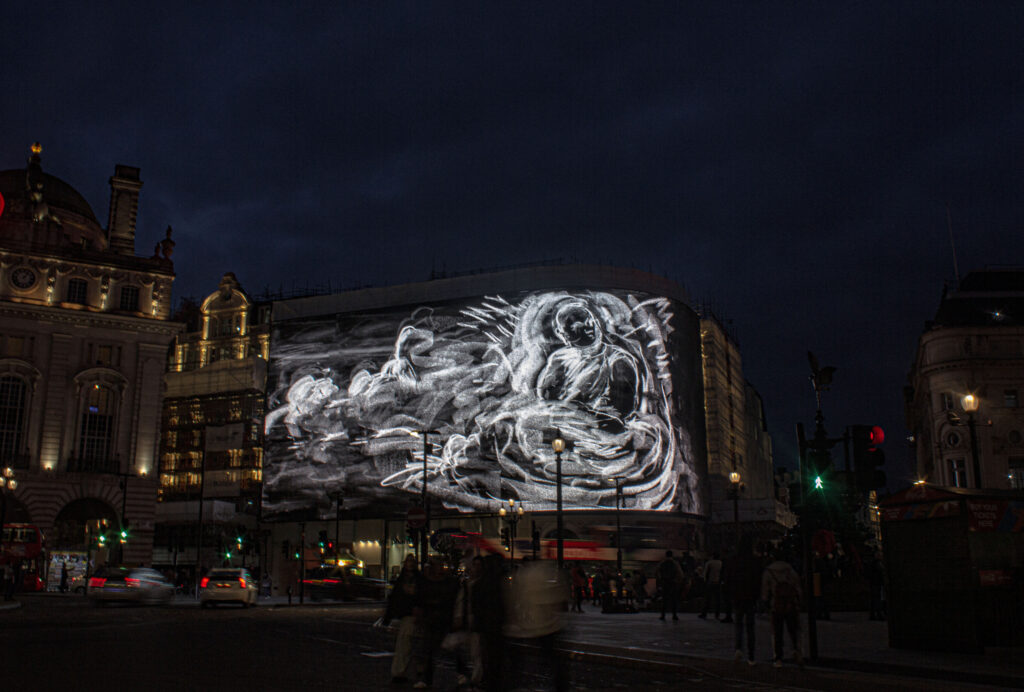
Experience  Notebook by Laurie Anderson every evening at 20:23 BST (6-30 April 2023) on the iconic Piccadilly Lights screen.

View screen locations

Berlin, Kurfürstendamm

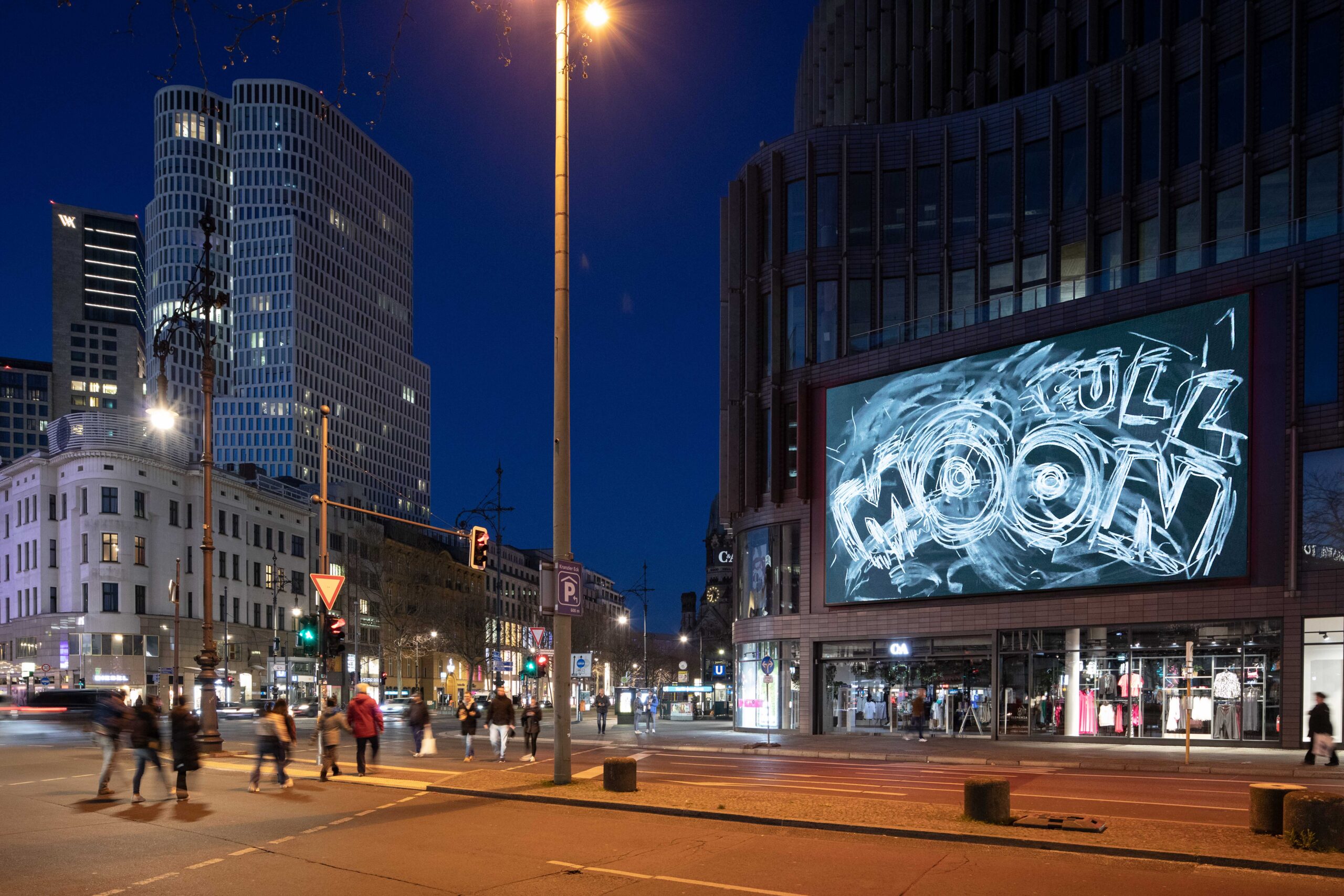
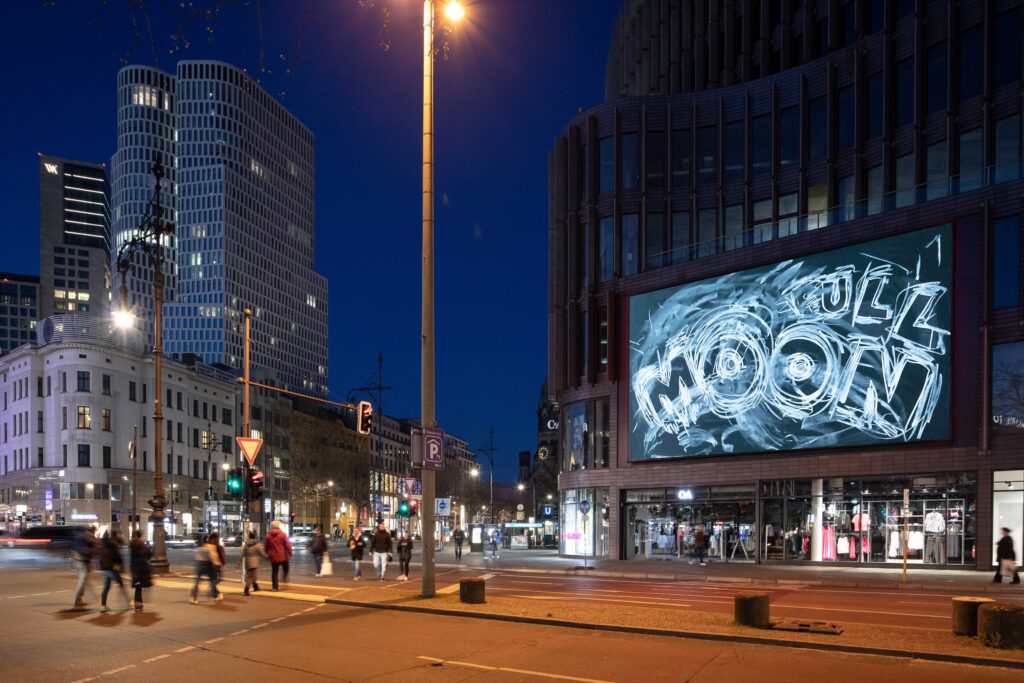
Experience  Notebook by Laurie Anderson every evening at 20:23 CET (6-30 April 2023) on Berlin’s Limes Kurfürstendamm screen.

View screen locations

Milan, Cadorna Square

Experience  Notebook by Laurie Anderson every evening at 20:23 CET (6-30 April 2023) on Milan’s EssilorLuxottica screen.

View screen locations

Seoul, COEX K-Pop Square

Experience  Notebook by Laurie Anderson every evening at 20:23 KST (6-30 April 2023) on Seoul’s COEX K-Pop Square screen.

View screen locations

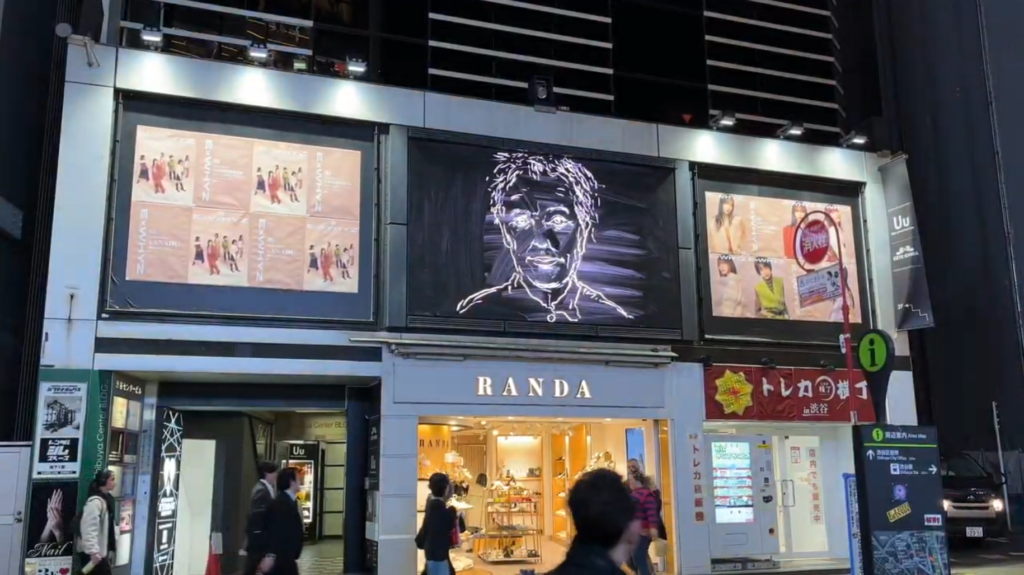
Tokyo, Neo Shibuya TV

Experience  Notebook by Laurie Anderson hourly throughout the day (6-30 April 2023) on the NeoShibuya screens in Shibuya Crossing.

View screen locations

ESSAY

Laurie Anderson: A Fantasy Notebook for Freedom by Vittoria de Franchis
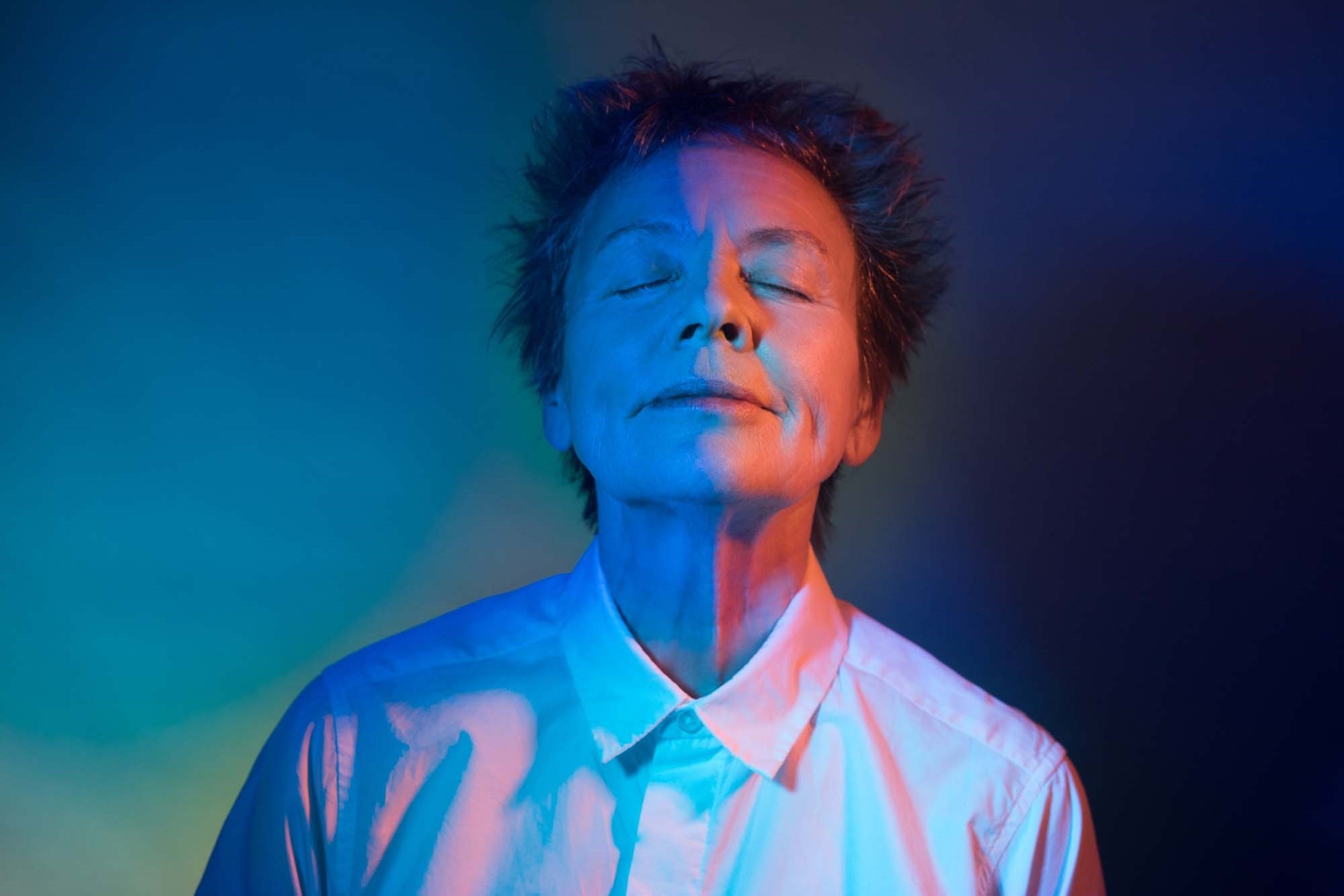
“As a child, I was a kind of a sky worshipper. This was the Midwest and the sky was so vast. It was most of the world. I knew I had come from there. And that someday, I would go back.” (Heart of a Dog, 2015) Is Laurie Anderson an alien? Or a “strange form of life”, as Pitchfork suggested in 1982 when reviewing her debut album “Big Science”? Laurie Anderson’s relentless contributions over the past four decades have often been reminders that our imagination makes us all aliens. Through fantasy, we can expand the sense of what is possible. “Speak my language” (Speak My Language, 1994). A call from the underwater inviting the brainy Ulysses to put aside his goal and intuitively plunge into the unknown. “I’m lost in your words. I’m swimming.” (Freefall, 1994).

Laurie Anderson can hardly be labelled; she is a total artist, a spatial innovator. Operating from New York since the late Sixties, her practice suggests a diversity that should be maintained unrestricted, something translatable through an onomatopoeia, a free-spirited idiom, “Yodellayheeh” (Big Science, 1982). Laurie Anderson’s work is rarely frontal, rather multi-sensorial and four-dimensional, be it a standing performance with an ‘augmented’ violin that ends when the ice blocks holding her melt (Duets on Ice, 1974-5), a Virtual Reality piece that brings us to the moon (To The Moon, Laurie Anderson and Hsin-Chien Huang, 2018), a Grammy-awarded album recounting the experienced catastrophe and magic of a destructive hurricane (Landfall, with Kronos Quartet, 2018), or a room whose surfaces are so full of stories and images we can lose ourselves in it (Laurie Anderson: The Weather, Hirshhorn Museum, 2021).
Press

Apollo Magazine
Wallpaper*
The Resident
Press release

Biography

Laurie Anderson

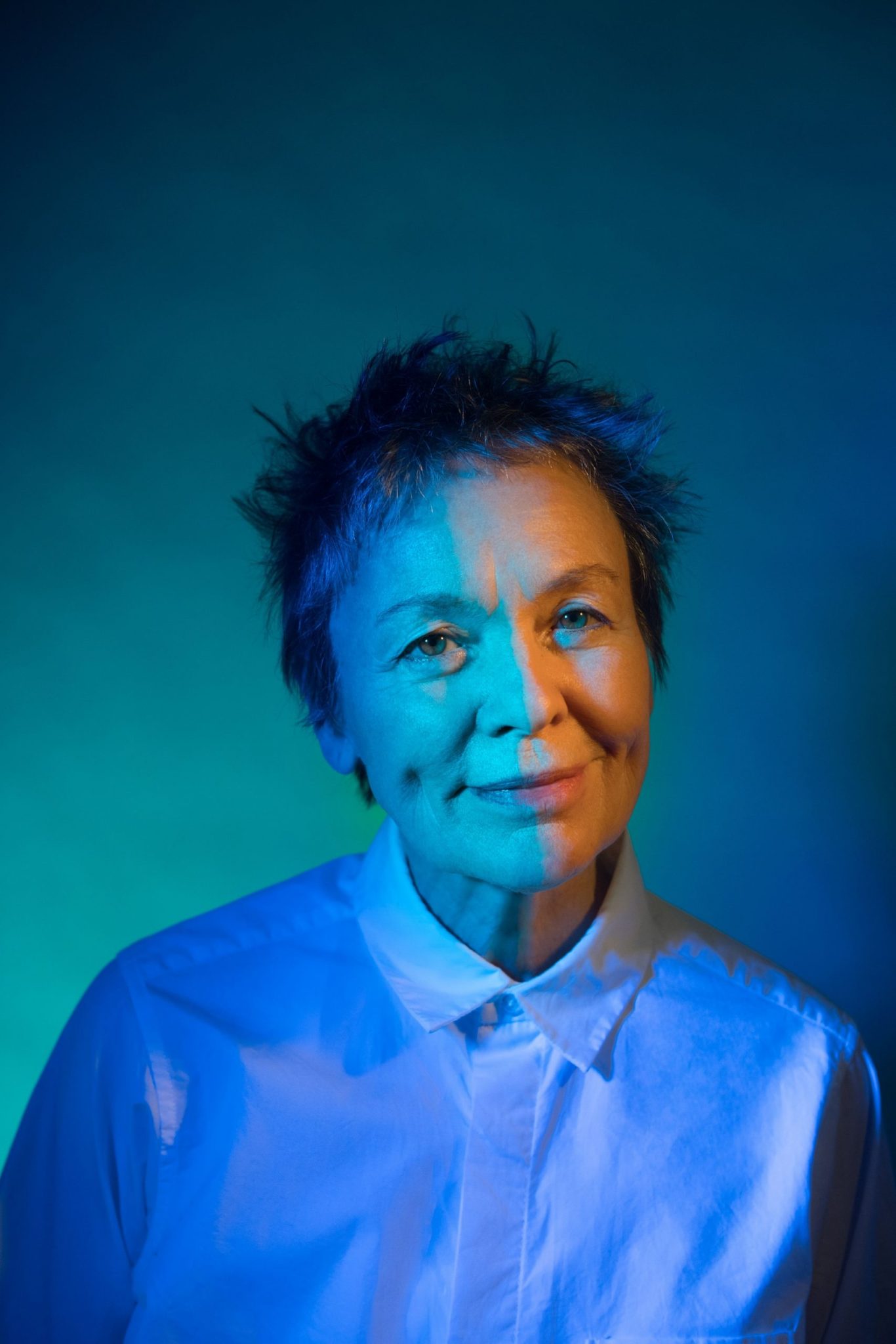
Laurie Anderson is one of America’s most reknowned – and daring – creative pioneers. Known primarily for her multimedia presentations, she has cast herself in roles as varied as visual artist, composer, poet, photographer, filmmaker, electronics whiz, vocalist, and instrumentalist.

O Superman launched Anderson’s recording career in 1980, rising to number two on the British pop charts and subsequently appearing on Big Science, the first of her seven albums on the Warner Brothers label. Other record releases include Mister Heartbreak, United States Live, Strange Angels, Bright Red, and the soundtrack to her feature film Home of the Brave. A deluxe box set of her Warner Brothers output, Talk Normal, was released in the fall of 2000 on Rhino/Warner Archives. In 2001, Anderson released her first record for Nonesuch Records, entitled Life on a String, which was followed by Live in New York, recorded at Town Hall in New York City in September 2001, and released in May 2002.

Anderson has toured the United States and internationally numerous times with shows ranging from simple spoken word performances to elaborate multimedia events. Major works include United States I-V (1983), Empty Places (1990), The Nerve Bible (1995), and Songs and Stories for Moby Dick, a multimedia stage performance based on the novel by Herman Melville. Songs and Stories for Moby Dick toured internationally throughout 1999 and 2000. In the fall of 2001, Anderson toured the United States and Europe with a band, performing music from Life on a String. She has also presented many solo works, including Happiness, which premiered in 2001 and toured internationally through Spring 2003.

Subscribe to our newsletter

Subscription successful

An error occurred