fbpx David Hockney, Remember you cannot look at the sun or death for very long | CIRCA 20:21

CIRCA 2021

David Hockney, Remember you cannot look at the sun or death for very long

1-31 May, 2021

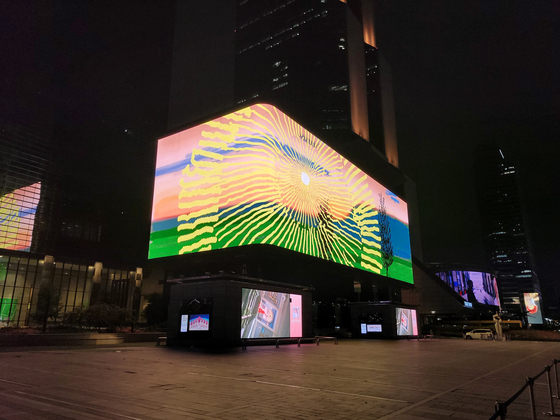
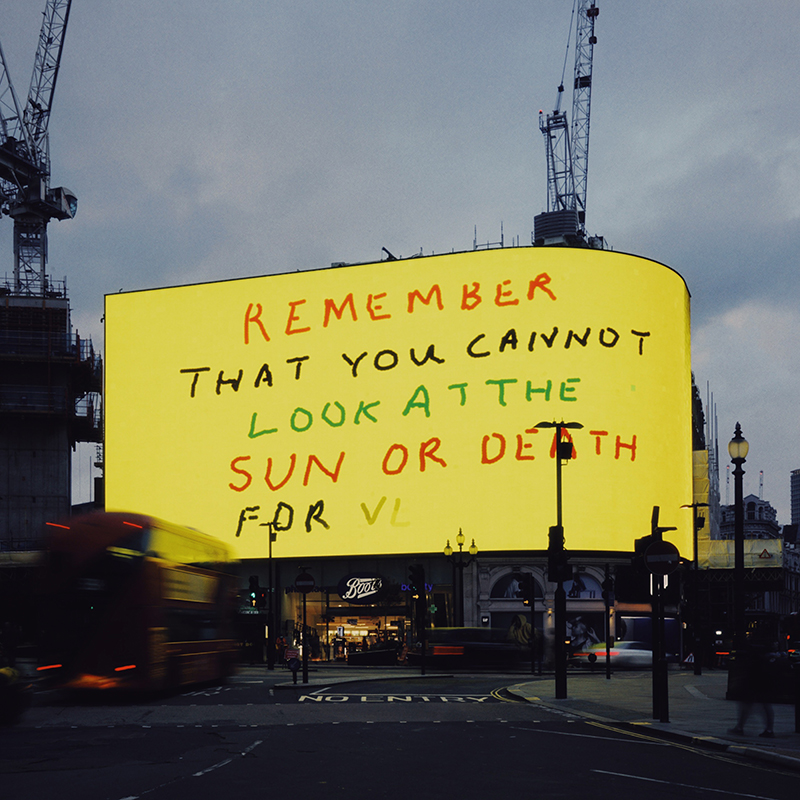
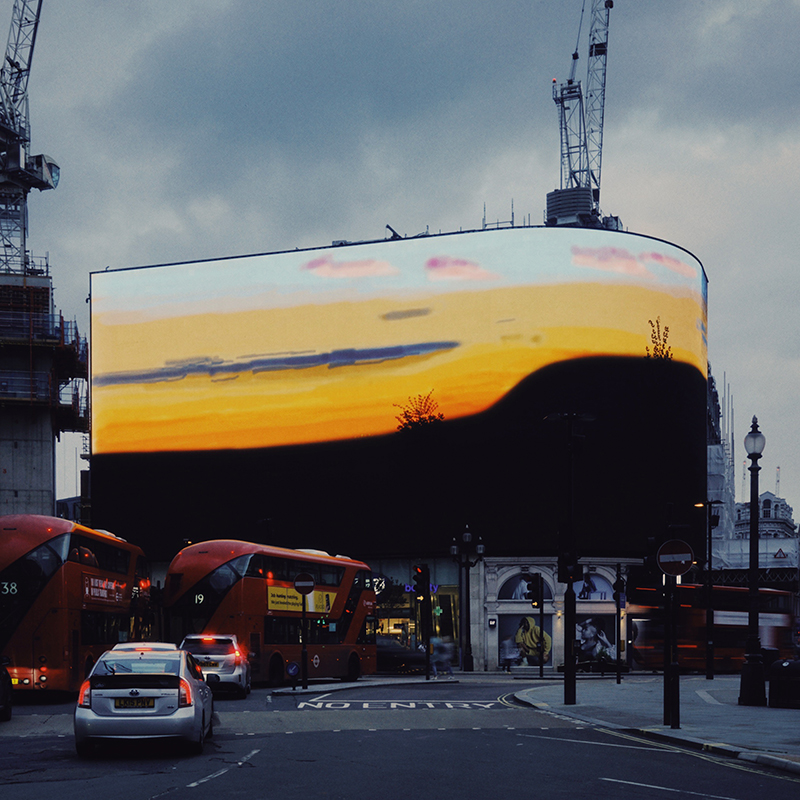
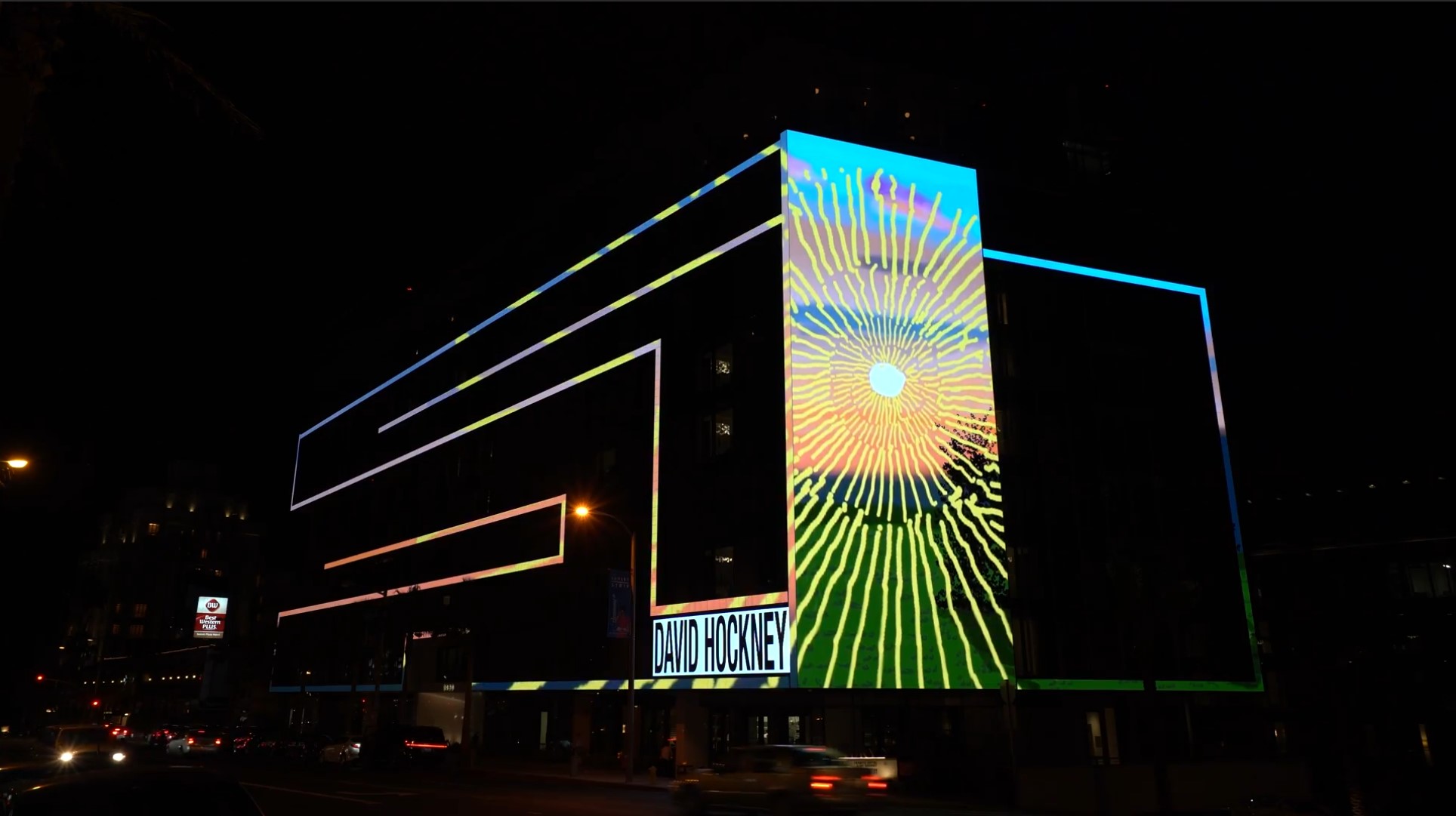
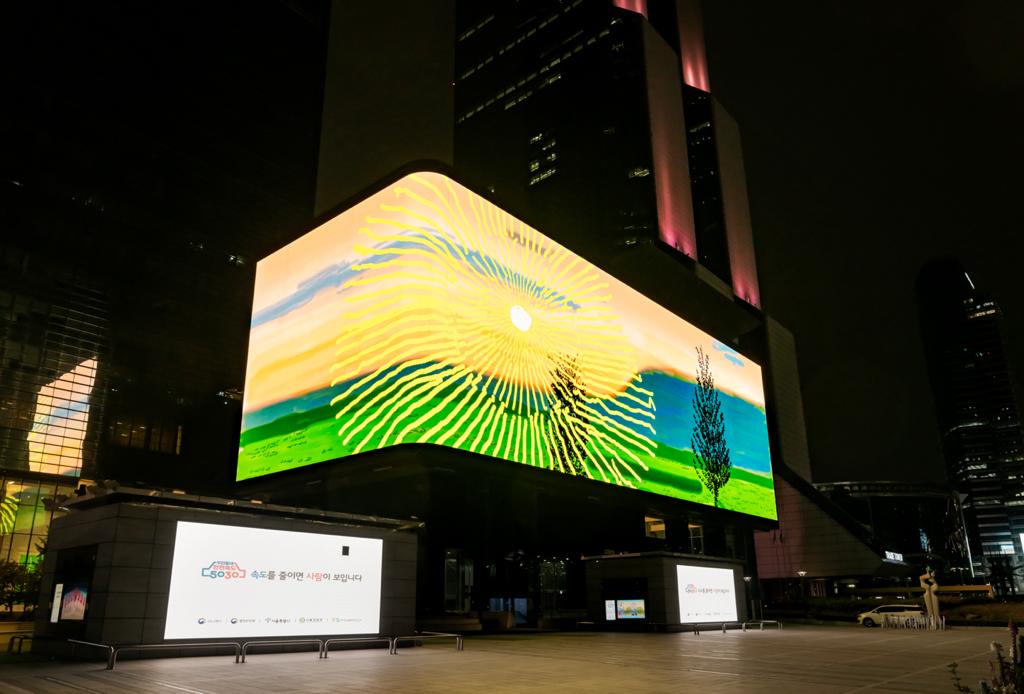
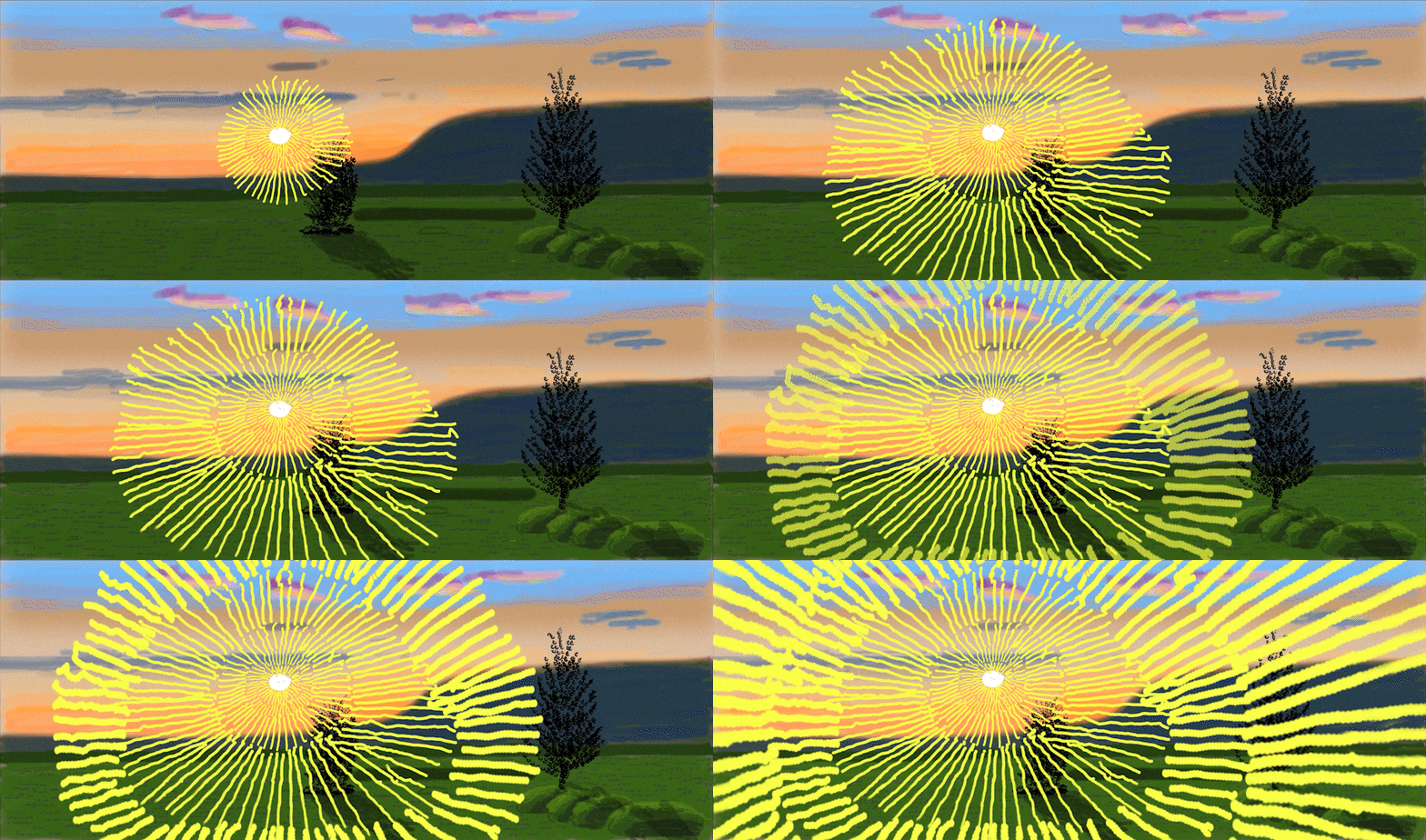
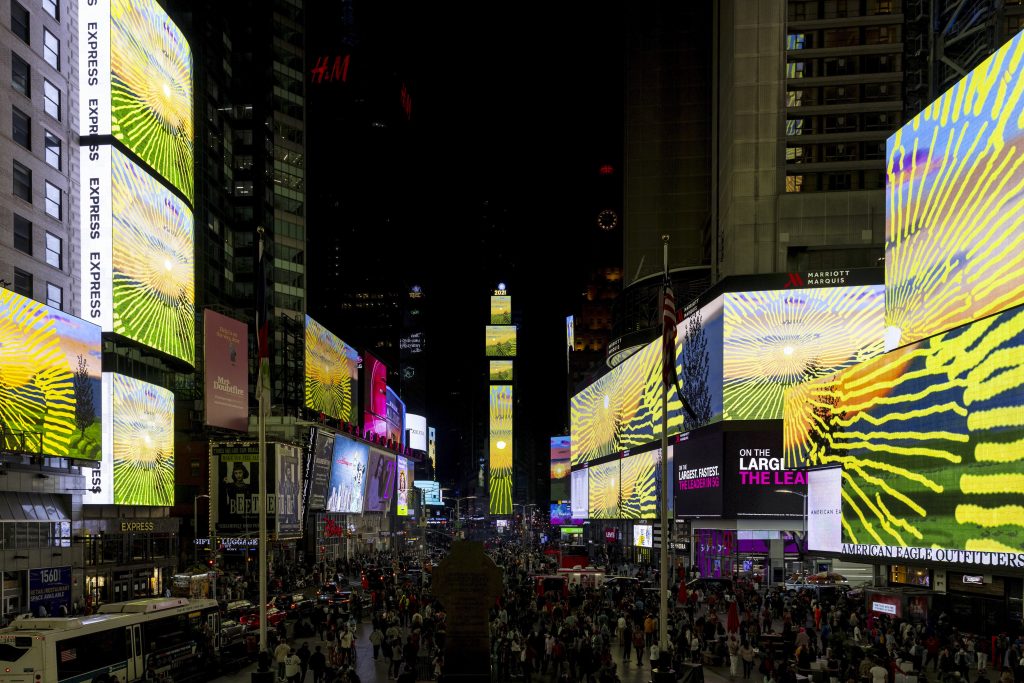
For CIRCA’s May 2021 commission, David Hockney presents Remember You Cannot Look at the Sun or Death for Very Long, a new animated work that transforms one of art history’s oldest and most enduring subjects into a global public encounter. Created on an iPad from the artist’s studio in Normandy, the animation follows the gradual emergence of dawn as a radiant sun rises above the horizon, its expanding rays eventually engulfing the entire image before revealing the work’s title in Hockney’s distinctive hand.

The sunrise occupies a singular place in the history of art. From the idealised landscapes of Claude Lorrain and the atmospheric luminosity of J.M.W. Turner to Claude Monet’s Impression, Sunrise (1872), artists have repeatedly returned to dawn as a means of exploring time, perception and the sublime. In the work of Japanese masters Hokusai and Hiroshige, the rising sun became a recurring motif capable of reaching audiences far beyond traditional centres of artistic patronage through the democratising medium of the woodblock print. Hockney enters this lineage while extending it into the digital age. Created on a tablet and presented across a network of public screens, his sunrise is both ancient in subject and contemporary in form.

The commission reflects concerns that have defined Hockney’s practice for more than six decades. Throughout his career, the artist has remained fascinated by the act of seeing itself, questioning how images are constructed, how technology shapes perception and how attention alters our understanding of the world. Whether through painting, photography, stage design or digital drawing, Hockney has consistently challenged the assumption that vision is fixed or objective.

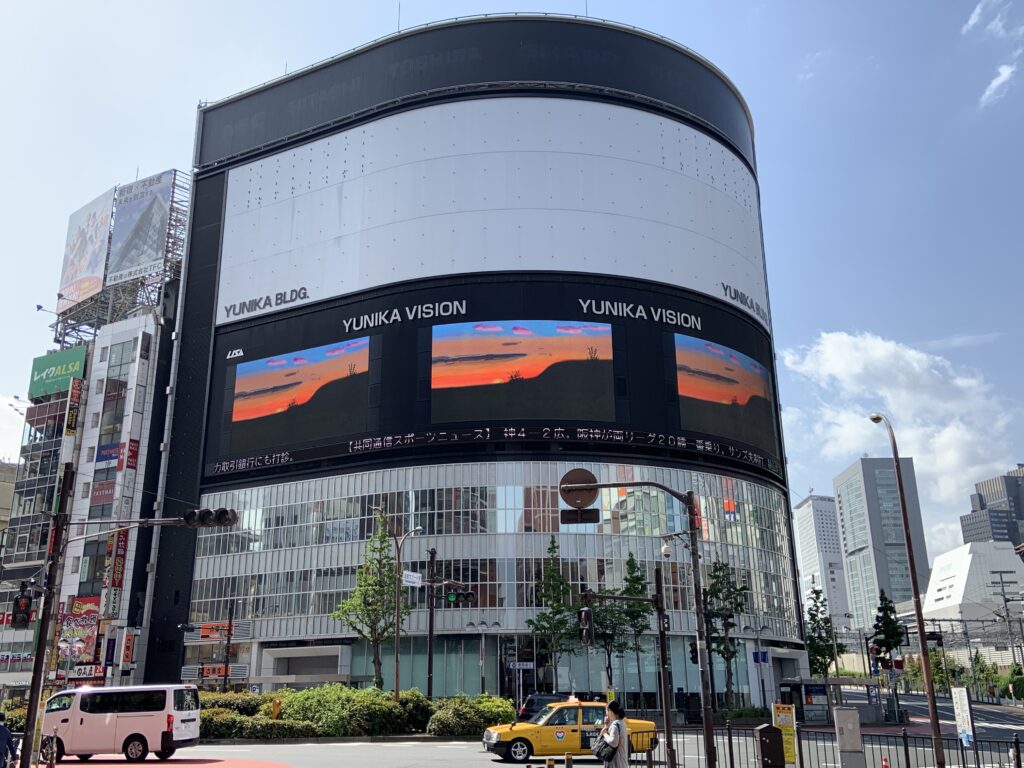
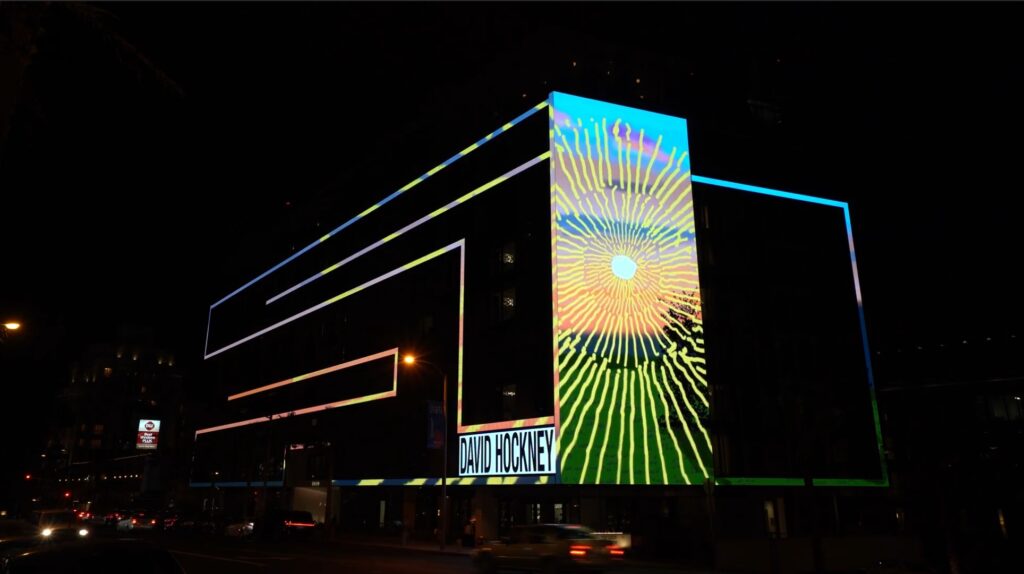
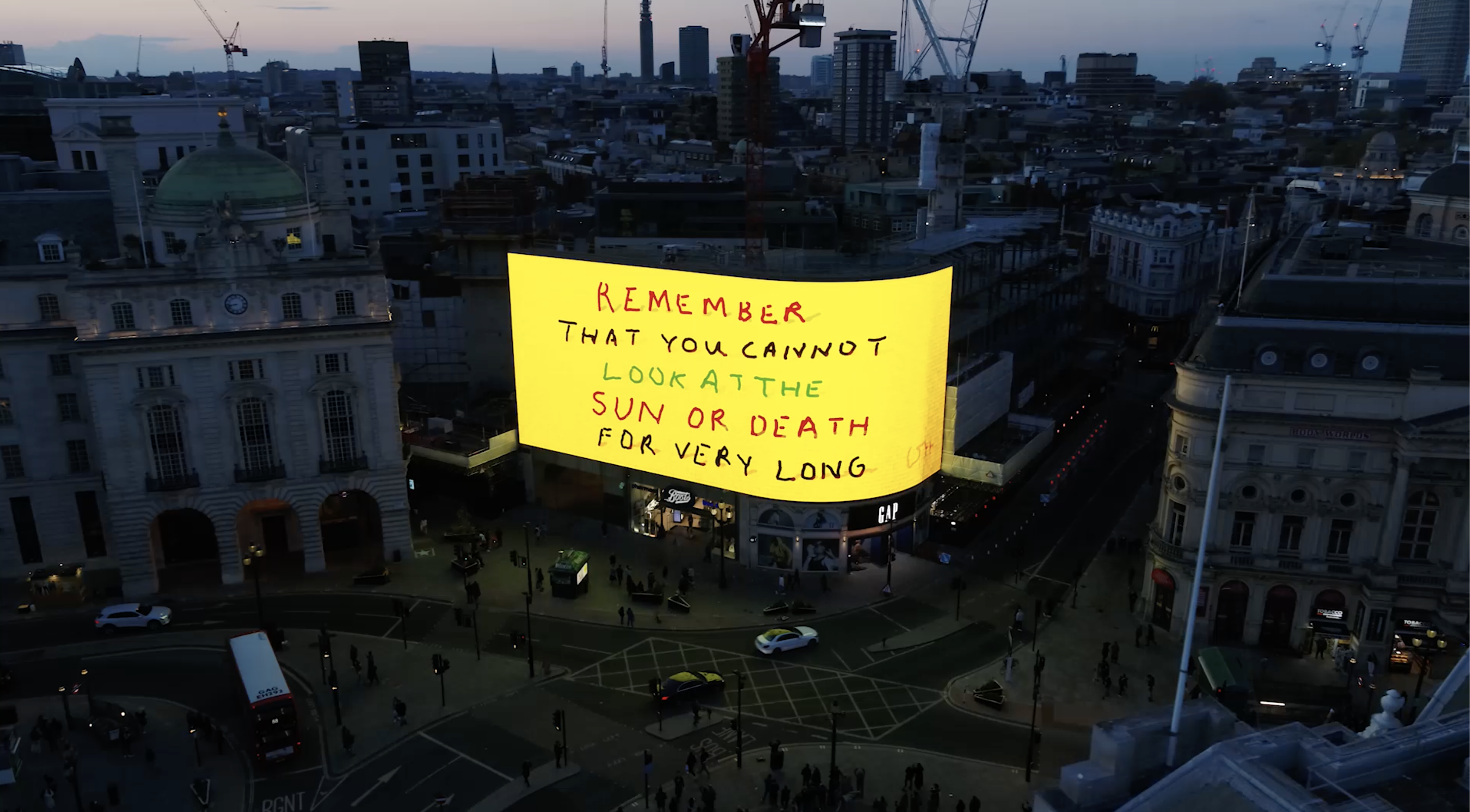
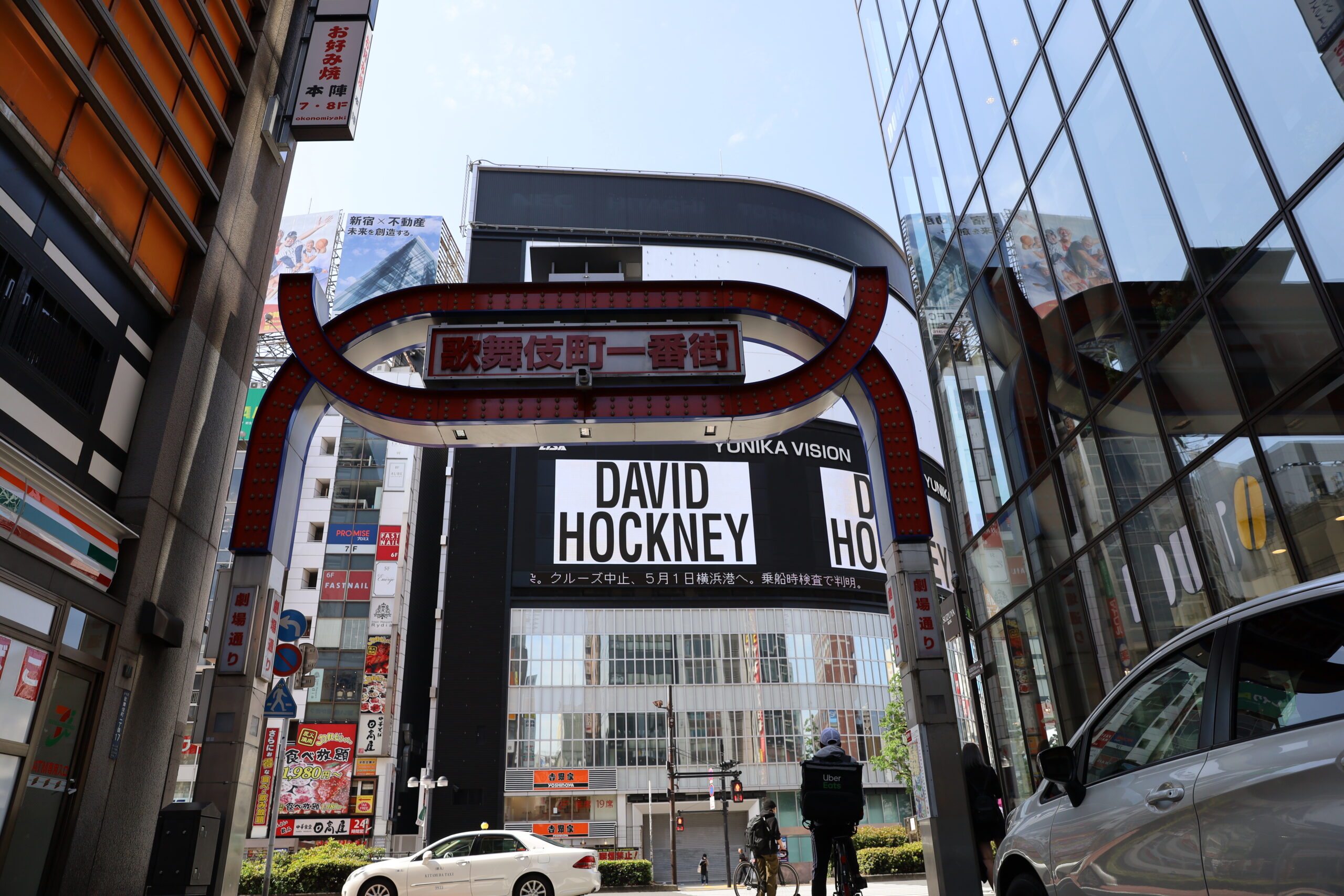
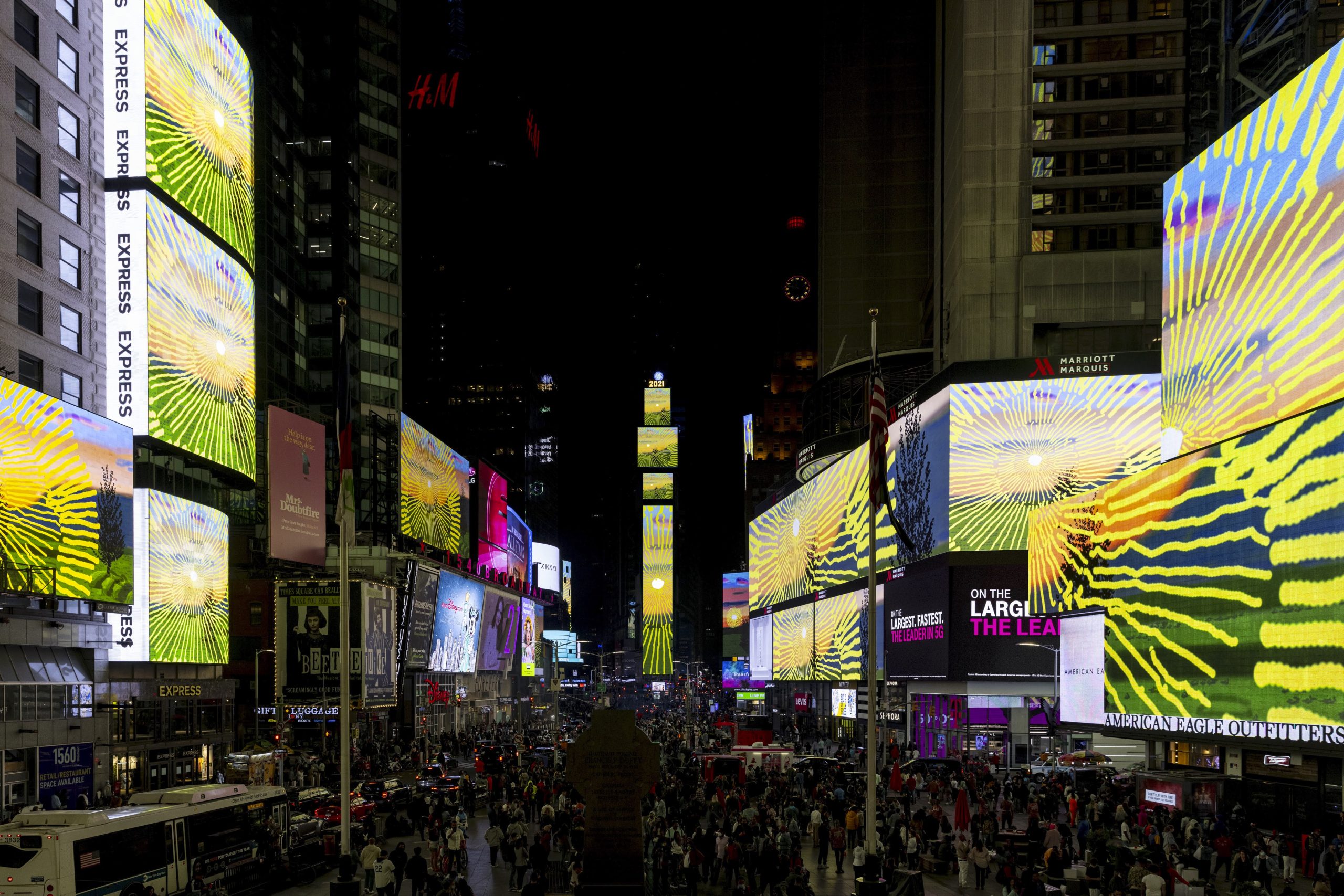
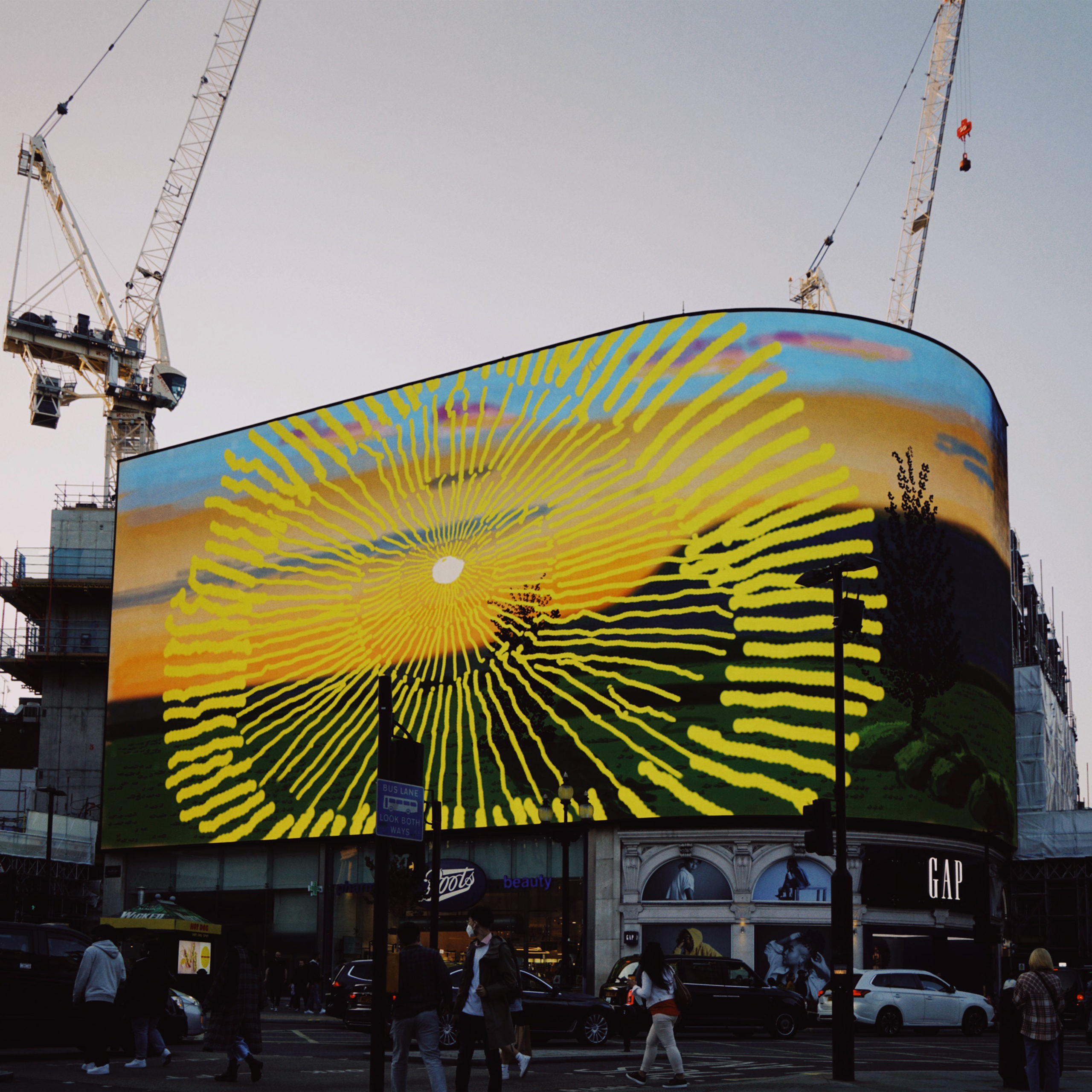
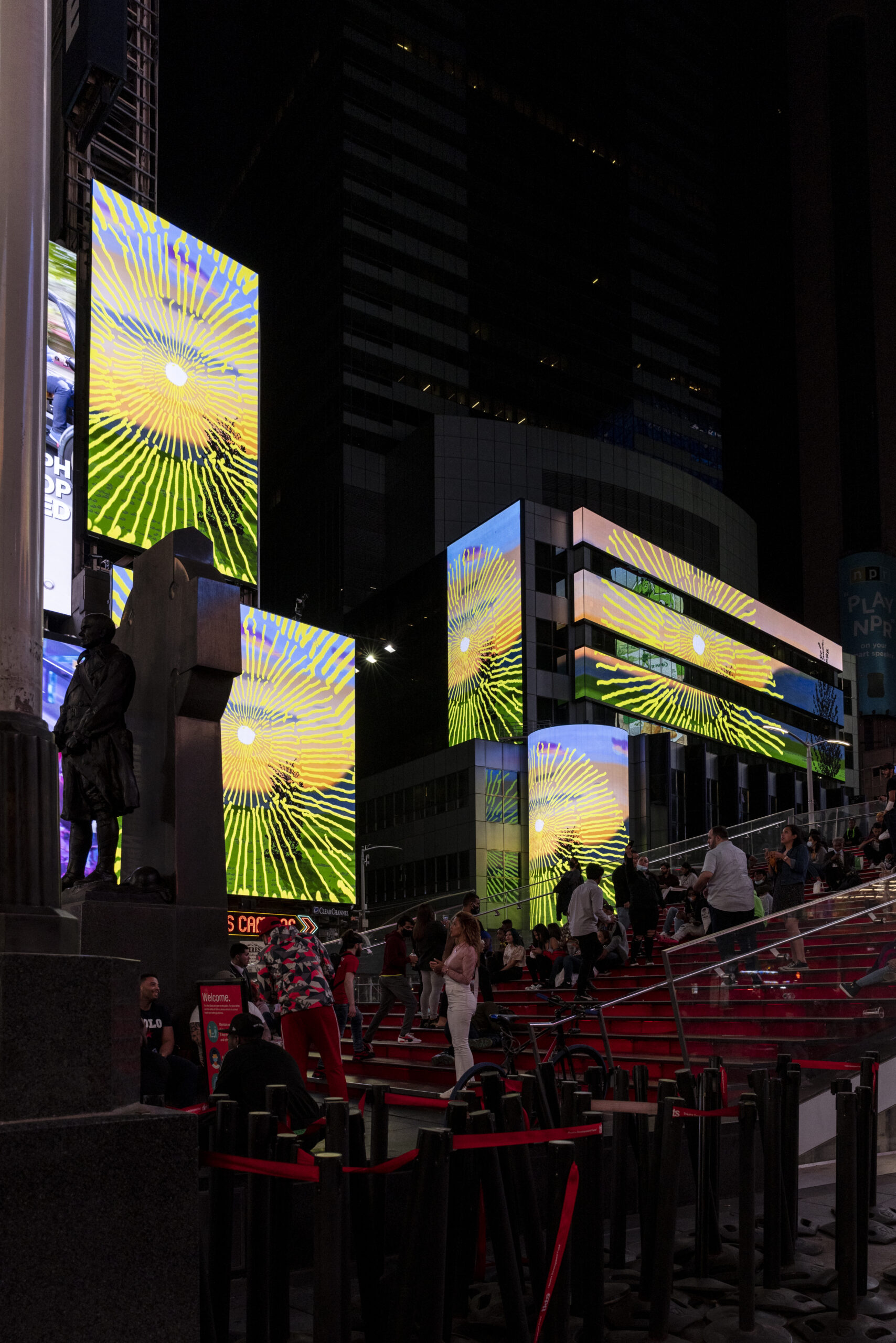
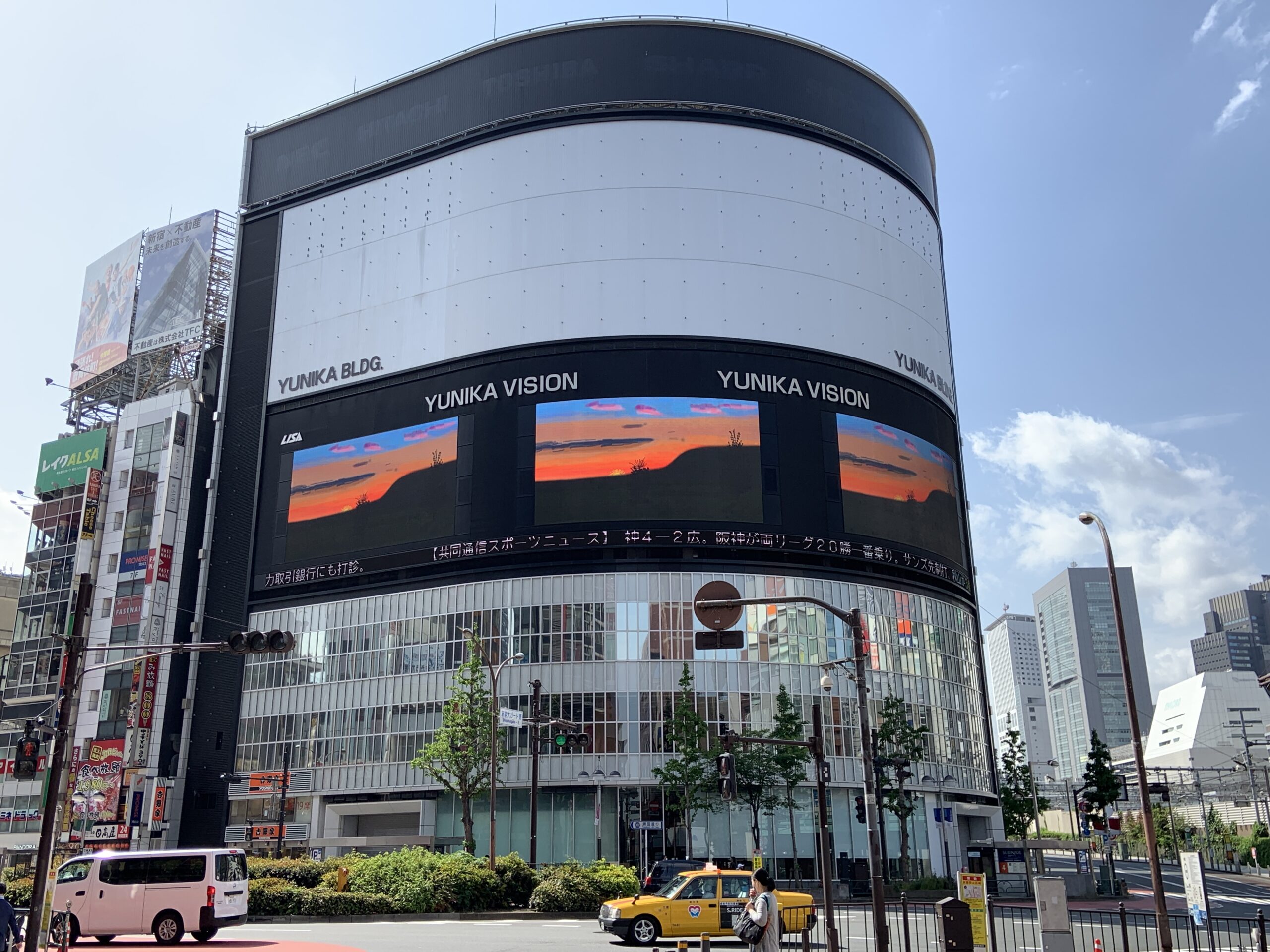
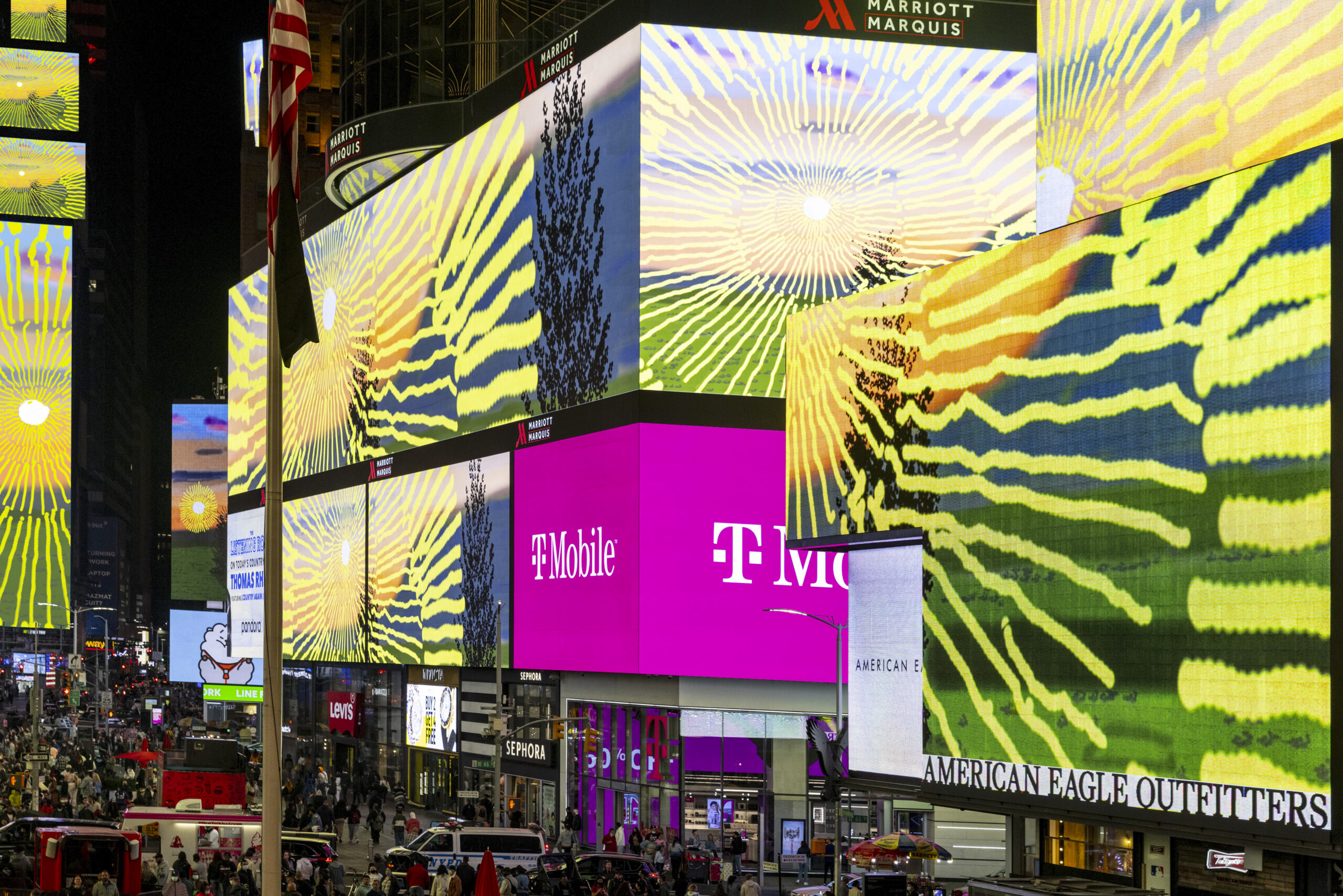
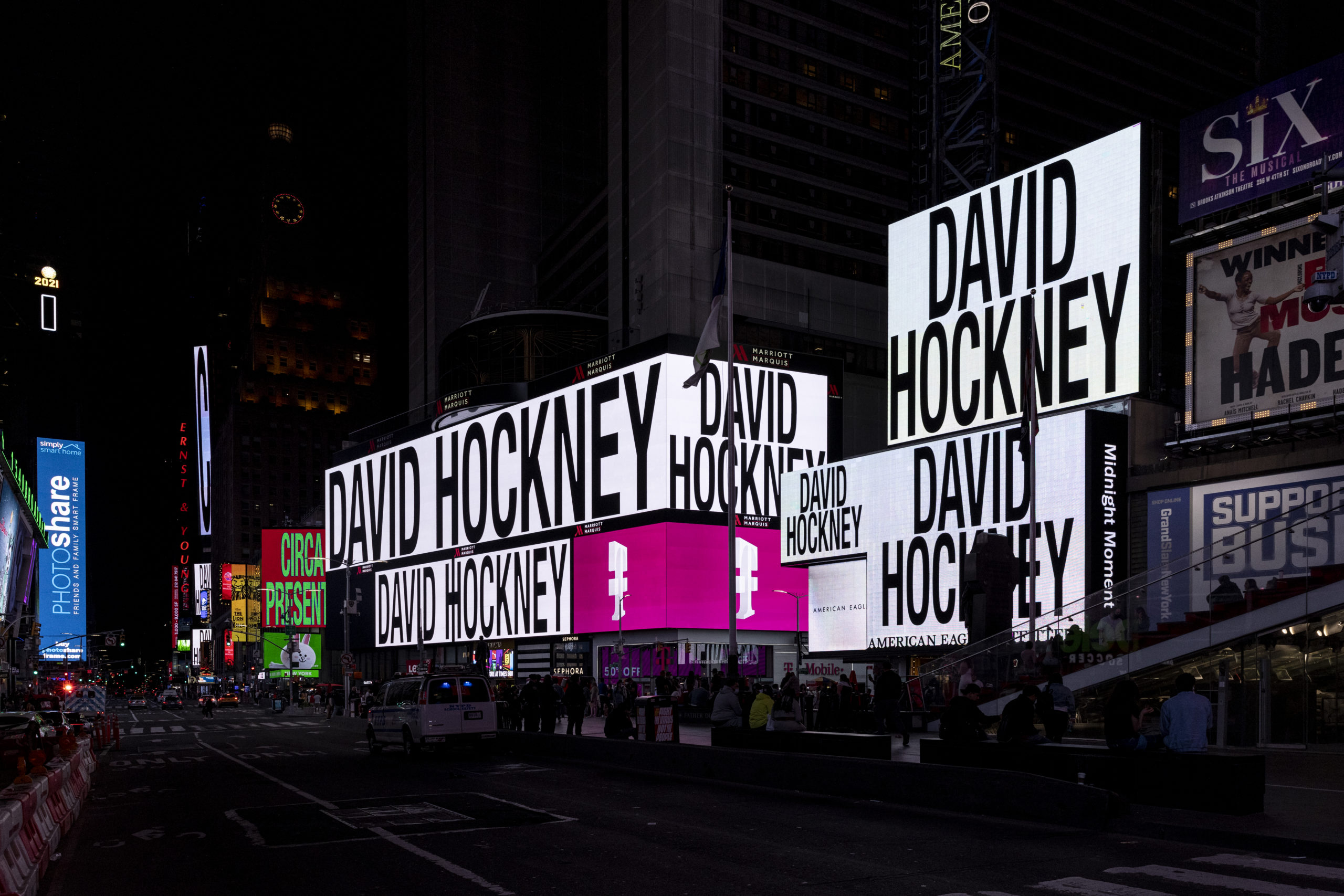
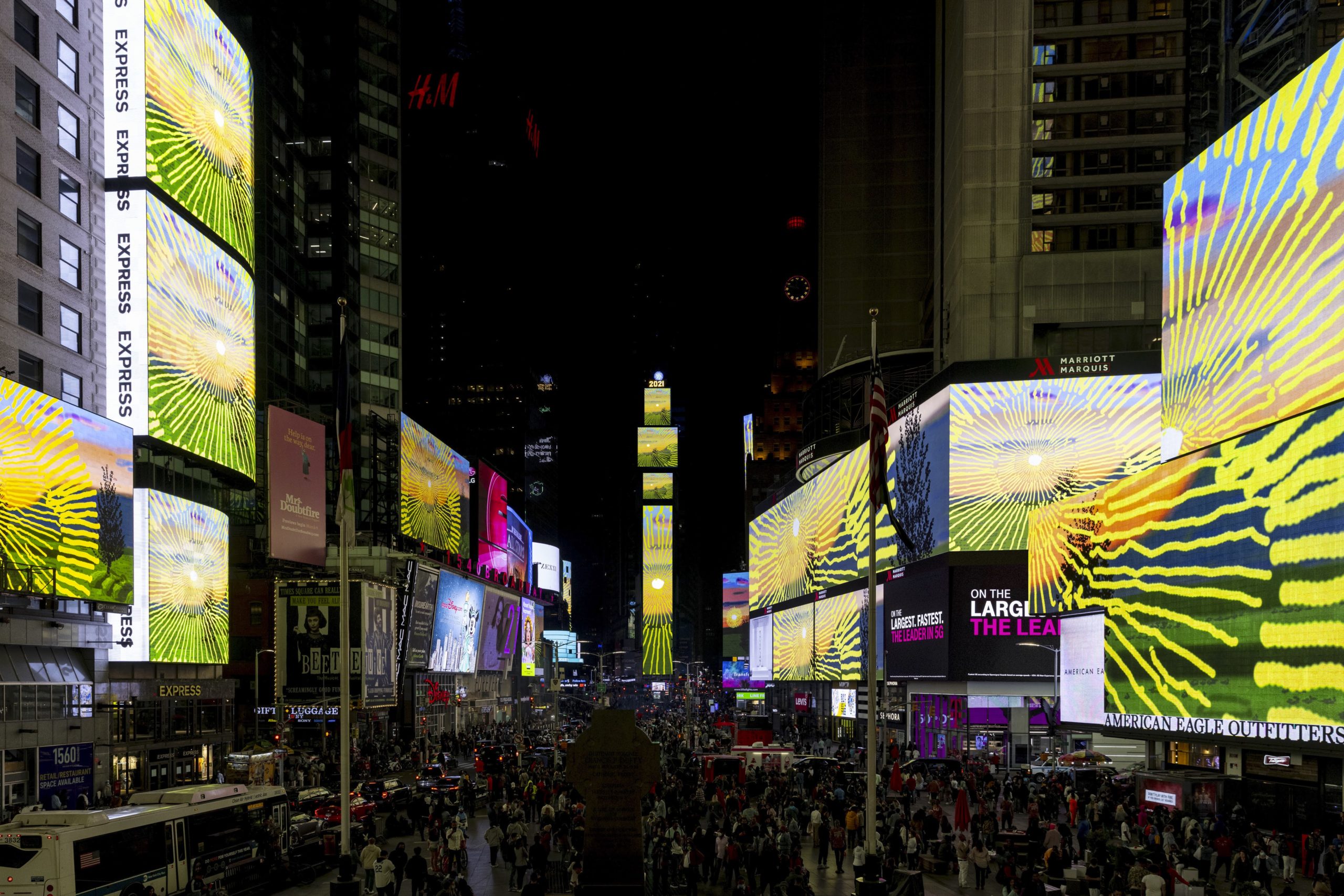
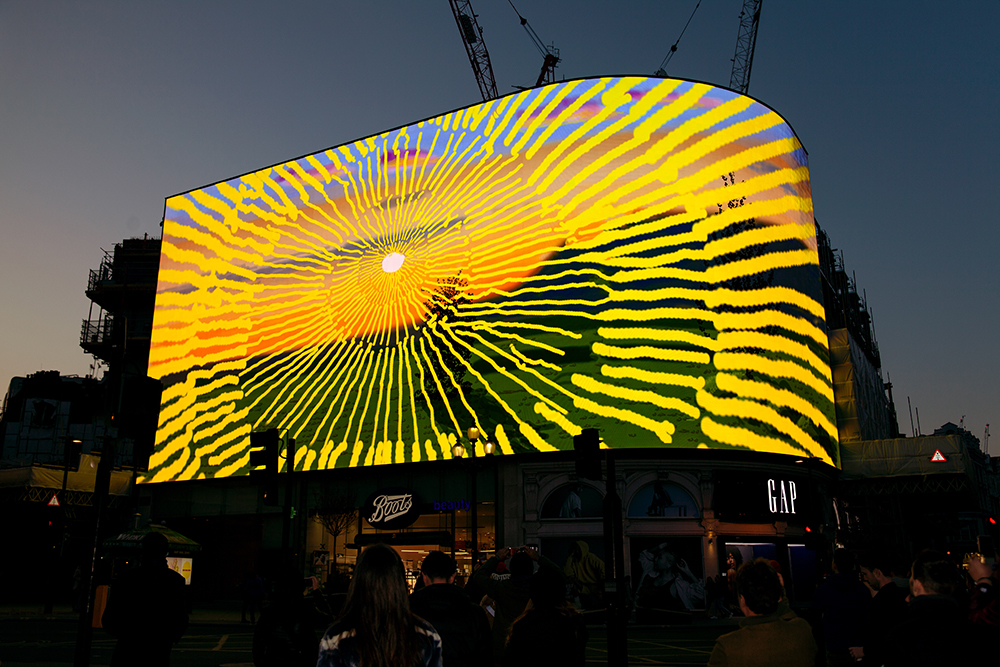
These questions find a natural parallel in the writings of John Berger, whose landmark text Ways of Seeing argued that images are never encountered in isolation. Meaning is shaped by context, circumstance and the relationship between the artwork and its audience. Drawing upon this proposition, curator Josef O’Connor conceived the commission not as a single public artwork but as a shared global experience. In a historic first, Hockney’s sunrise appears simultaneously across London’s Piccadilly Lights, the entirety of Times Square’s Midnight Moment programme in New York, alongside major public screens in Los Angeles, Seoul and Tokyo. Together, these sites form a distributed exhibition spanning multiple continents and time zones.

The significance of this gesture extends beyond scale. A sunrise is among the few experiences shared by all humanity, witnessed daily yet always from a particular place. By presenting the work across some of the world’s most iconic urban screens, CIRCA transforms an image of dawn into a collective act of seeing. Audiences separated by geography, language and culture encounter the same work within different contexts, fulfilling Berger’s proposition that meaning emerges through the interaction between image, place and viewer.

Appearing as many parts of the world cautiously emerge from the isolation of the COVID-19 pandemic, the work carries an additional resonance. Hockney’s sunrise offers a symbol of renewal, yet its title resists simple optimism. Remember You Cannot Look at the Sun or Death for Very Long introduces a meditation on mortality that sits alongside the promise of a new day. Beauty and impermanence become inseparable. Hope exists alongside loss. The rising sun serves not only as an image of rebirth but as a reminder of life’s fragility and the limits of human perception.

Presented across a global constellation of screens, Hockney’s commission transforms public space into a site of reflection and connection. More than an image, it becomes an event. More than a sunrise, it becomes a shared encounter with time itself. As dawn follows dusk across the circumference of the globe, Remember You Cannot Look at the Sun or Death for Very Long invites us to pause, look closely and consider the world we are re-entering together.

Shop

Loading products...

Films

Michelangelo Pistoletto’s Three Mirrors is presented daily across CIRCA’s global network of public screens. Each evening at 20:26 (local time), the work appears simultaneously across the following locations, entering the flow of the city and inviting a shared moment of reflection. Select a location below to view directions and find your nearest screen on Google Maps.

London, Piccadilly Lights

Experience  Remember you cannot look at the sun or death for very long by David Hockney every evening at 20:21 BST/GMT (1-31 May 2021) on the iconic Piccadilly Lights screen.

View screen locations

New York, Times Square Arts

Experience  Remember you cannot look at the sun or death for very long by David Hockney every evening at 23:57EST (1-31 May 2021) on the iconic Times Square screens.

View screen locations

Seoul, K-Pop Square

Experience  Remember you cannot look at the sun or death for very long by David Hockney every evening at 20:21 KST (1-31 May 2021) on Seoul’s COEX K-Pop Square screen.

View screen locations

Tokyo, Yunika Vision

Experience  Remember you cannot look at the sun or death for very long by David Hockney every evening at 09:00J ST (1-31 May 2021) on Tokyo’s Yunika Vision screen.


View screen locations

Los Angeles, Pendry West Hollywood

Experience  Remember you cannot look at the sun or death for very long by David Hockney every evening at 20:21 PST (1-31 May 2021) on the Pendry West Hollywood screen.


View screen locations

ESSAY

David Hockney: Let The Sunshine In, Written by Henry Little
Dawn. A blue sky shot with red. Silhouettes of sleeping shrubs. A single bird traverses the full width of the horizon. A child-like sun, wobbly arms for rays, rises in the distance. Higher the sun rises, a second corona of wobbly rays appear. Higher and whiter the disc rises, until a third corona of longer fingers extend out towards the viewer, licking the foreground. A fourth spiral of yellow rays now fills the thin band of the horizontal composition, on the cusp of enveloping the entire scene. Thicker, heavier lines appear, ray upon ray. The scene fades to vivid, bright saturated yellow. The yellow of cartoon lemons and street lamps. The work’s title is etched in shaky letters across this final backdrop: Remember you cannot look at the sun or death for very long.

David Hockney’s new work for CIRCA will play for the month of May across the world on giant screens in London, Seoul, Tokyo, Los Angeles and New York. Spanning the full circumference of the globe, Hockney’s animated dawn will follow real dawn thirty-one times. Screened in the evenings, viewers will see the sun rise once again, not long after it dipped below the horizon. Coinciding in London with the opening of the Royal Academy’s new exhibition, David Hockney: The Arrival of Spring, Normandy, 2020, the project further marks a moment of renewal for the country’s battered museums and the city’s dormant but fast rousing arts scene.
 

Press

Press Release
The Observer
iNews
The New York Times
Harpeers Bazaar
Soho House

Biography

David Hockney

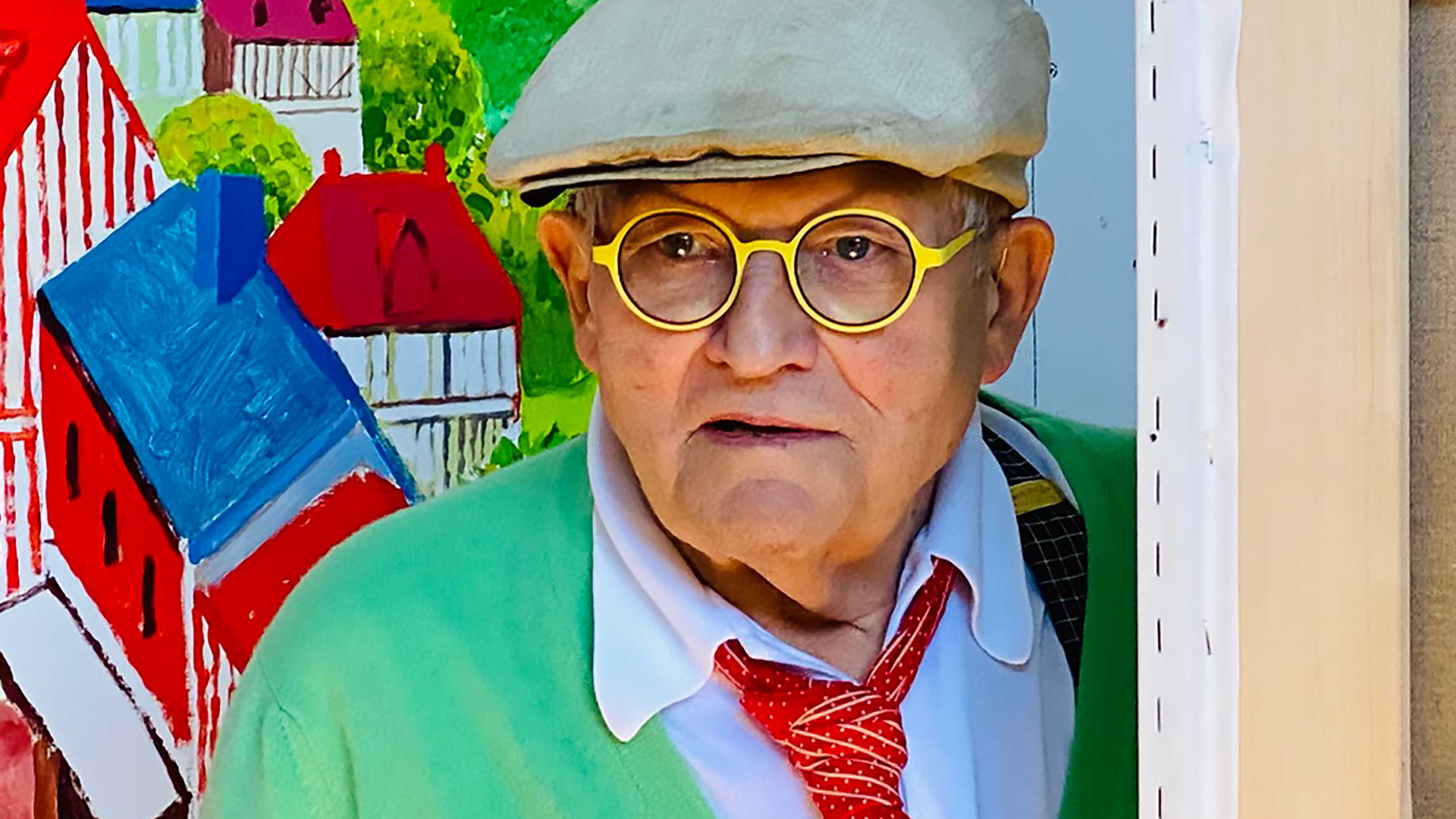
David Hockney was one of the most influential and beloved artists of our time. Across painting, drawing, printmaking, photography, stage design and digital media, he spent more than six decades expanding the possibilities of image-making while remaining devoted to the simple but profound act of looking. His work celebrated the experience of seeing, transforming everyday observations into extraordinary meditations on light, colour, space and time.

Emerging from Britain’s post-war art scene in the early 1960s, Hockney quickly established himself as a defining voice in contemporary art. From the swimming pools of Los Angeles and double portraits of friends and family to vast landscapes of Yorkshire and Normandy, his work was characterised by a restless curiosity and a continual willingness to experiment. Throughout his career, he embraced new technologies and methods of making, becoming one of the first major artists to fully integrate photography, video and digital drawing into an established artistic practice.

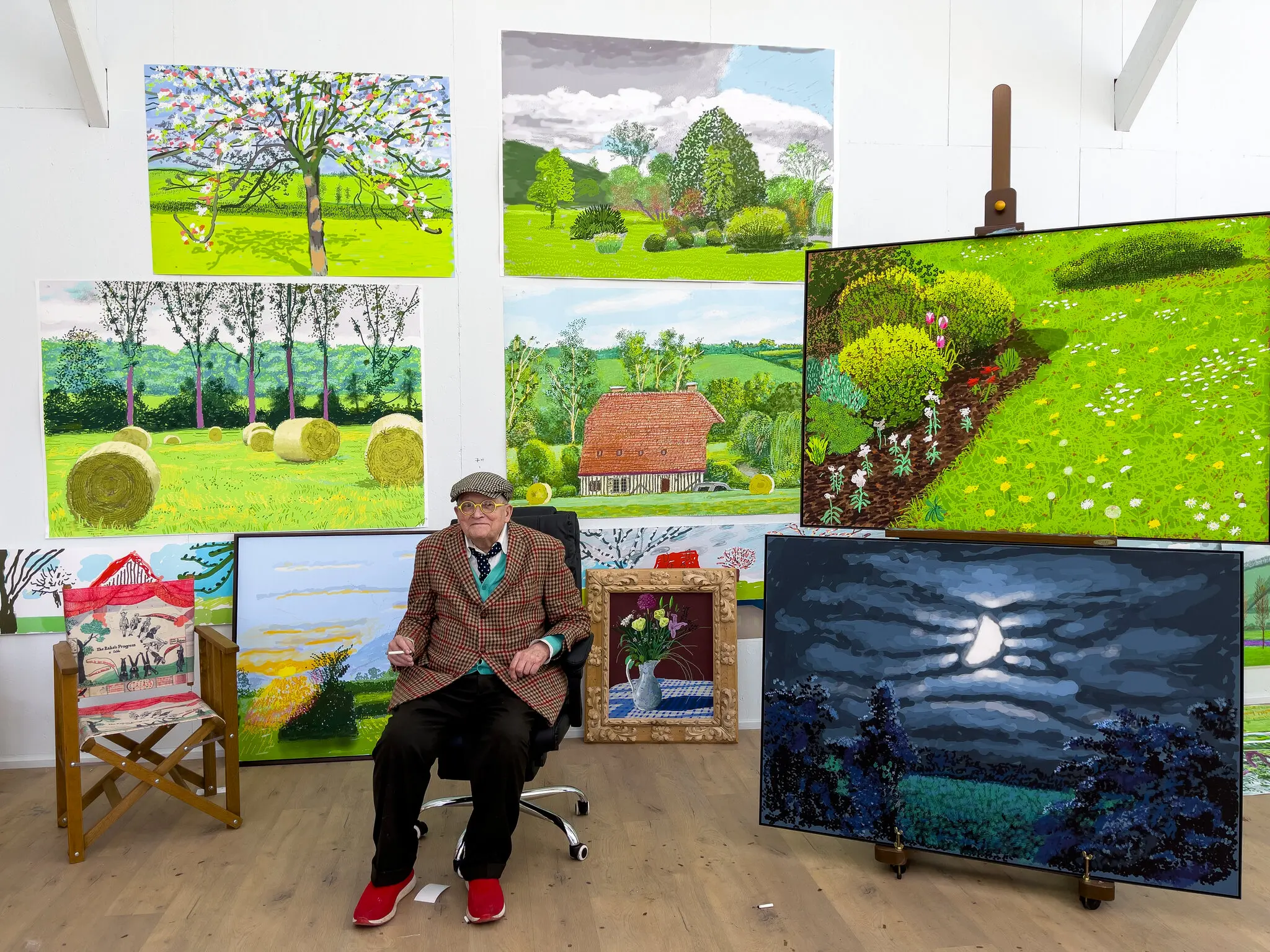
Hockney’s relationship with CIRCA reflected his lifelong commitment to bringing art into public life. In 2021, he collaborated with CIRCA on Remember That You Cannot Look At The Sun Or Death For Very Long, a landmark public commission curated by Josef O’Connor that united public screens across London, New York, Los Angeles, Seoul and Tokyo in a shared global broadcast. Created from a sequence of iPad drawings made in Normandy during the COVID-19 pandemic, the animated sunrise transformed some of the world’s most iconic advertising screens into a collective moment of hope and reflection, connecting audiences across multiple continents through a single artwork. In 2024, CIRCA collaborated once again with Hockney to bring his work to Glastonbury Festival, extending his vision to one of the world’s most celebrated cultural gatherings and introducing new audiences to his enduring fascination with the natural world.

Long recognised as one of the great innovators of contemporary art, Hockney consistently challenged assumptions about how images are made and experienced. Yet beneath the technical experimentation lied a profound humanism and optimism: a belief that paying attention to the world is both an artistic act and a way of being fully alive. Through works that continue to inspire wonder, David Hockney reminded us that beauty, observation and imagination remain among our most valuable resources.

His work is held in major collections worldwide and has been the subject of landmark exhibitions at Tate, the Royal Academy of Arts, Centre Pompidou, The Metropolitan Museum of Art and countless institutions across the globe. Few living artists have had such a lasting impact on how we see, understand and experience the world through images.


Subscribe to our newsletter

Subscription successful

An error occurred