fbpx Cassandra Press, A Monument A Ruin | CIRCA

CIRCA 20:22

Cassandra Press, A Monument A Ruin

1-28 February, 2022

What remains when a civilisation disappears? For centuries, monuments have been understood as instruments of permanence. They are erected to commemorate victories, preserve histories and project authority into the future. Yet history repeatedly demonstrates that monuments are never fixed. They are reinterpreted, contested, vandalised, removed and rebuilt. Their meanings shift as societies change around them. Every monument contains the possibility of becoming a ruin. Every ruin contains the possibility of becoming a monument once again.


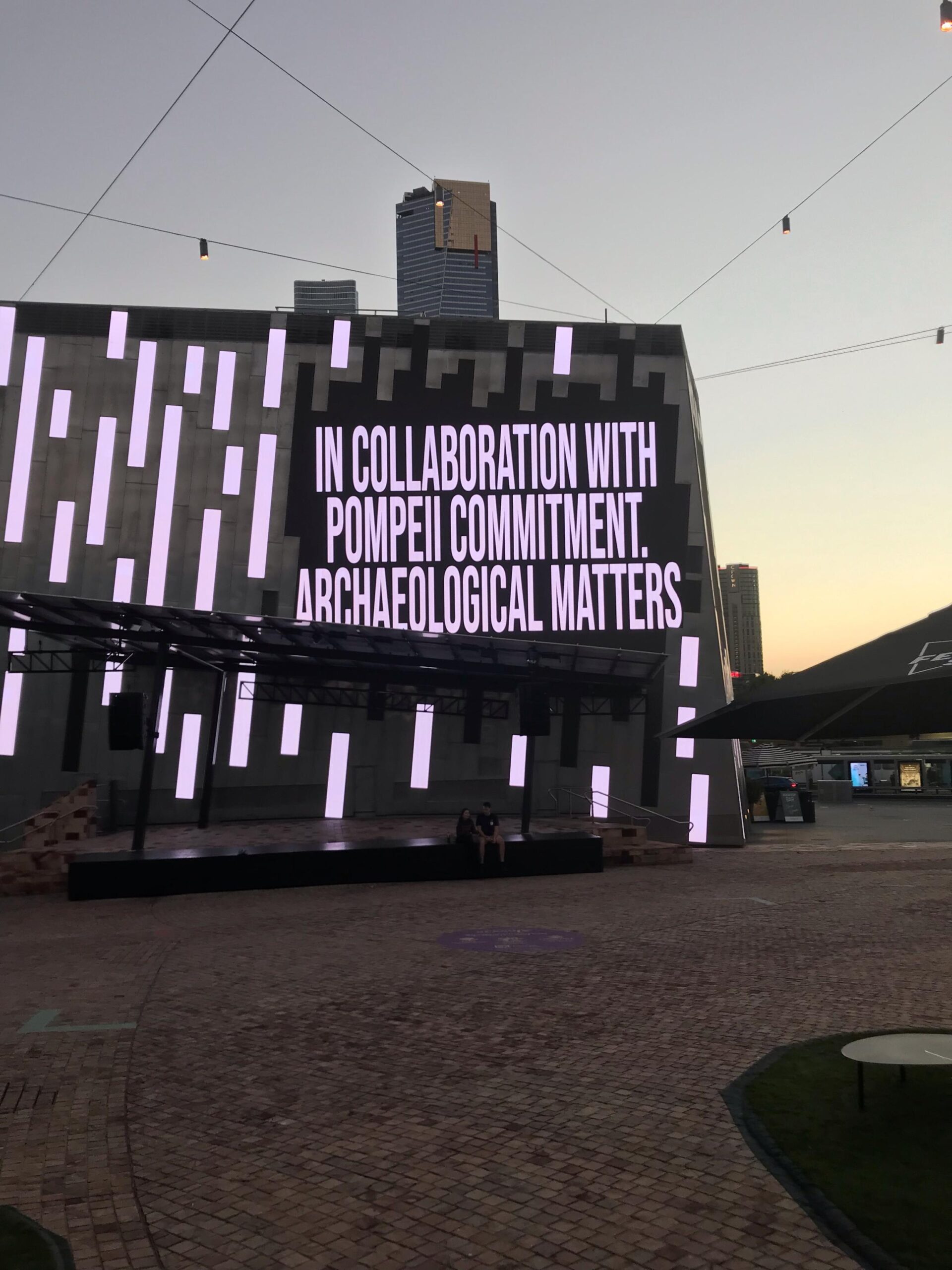
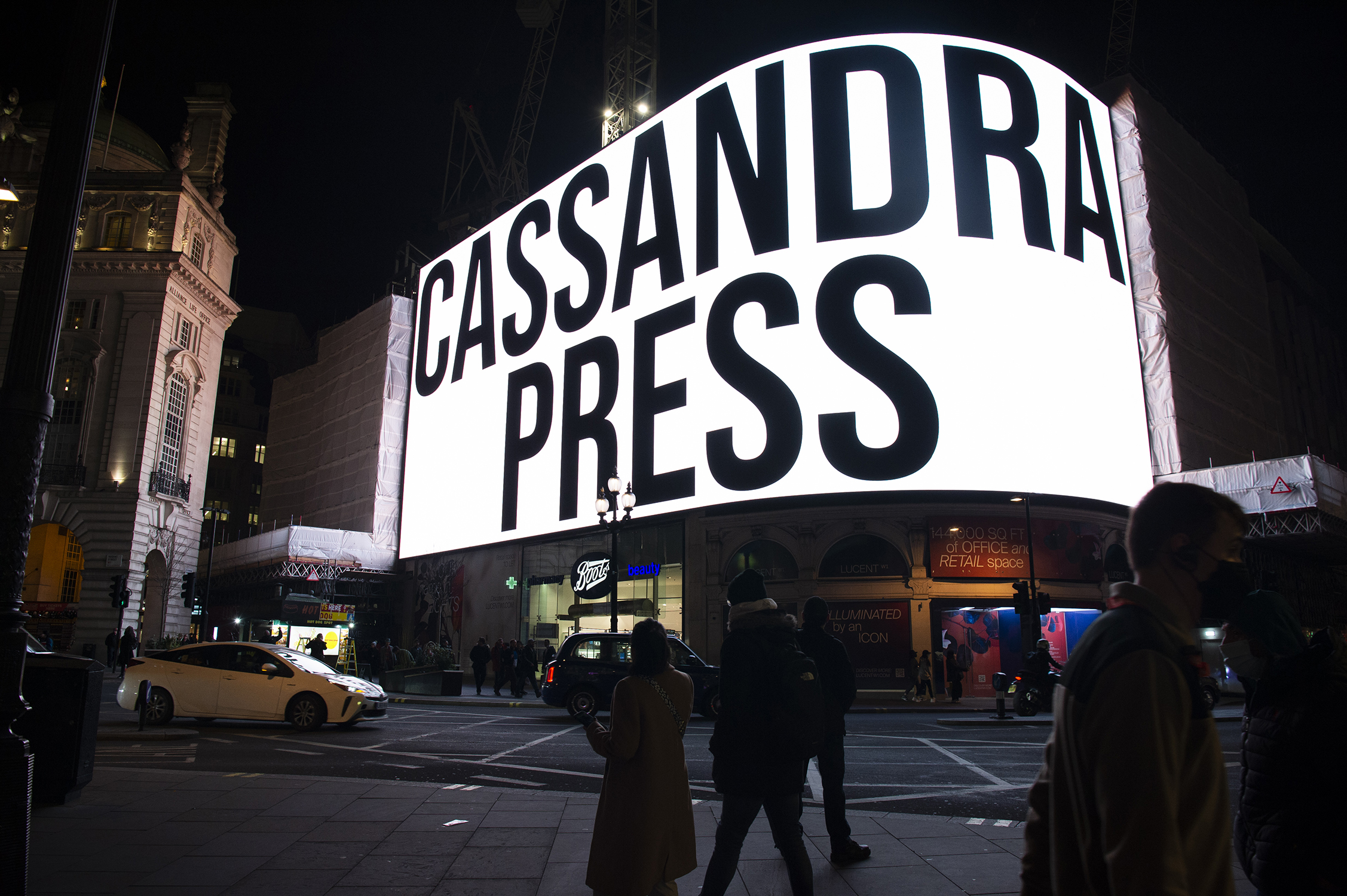
These questions sit at the heart of A Monument A Ruin, a new commission by Cassandra Press, the publishing and educational platform founded by artist Kandis Williams. Developed in collaboration with Pompeii Commitment. Archaeological Matters and presented across CIRCA’s global network of public screens, the work traces unexpected connections between the ancient streets of Pompeii and the contemporary politics of public space.

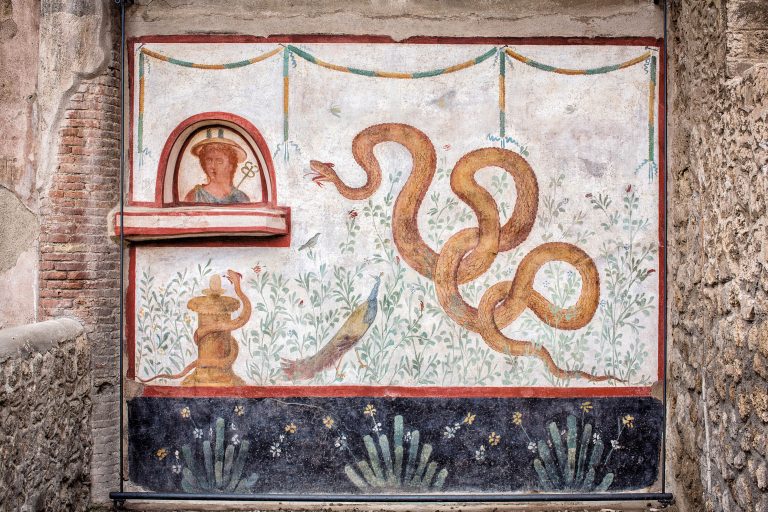
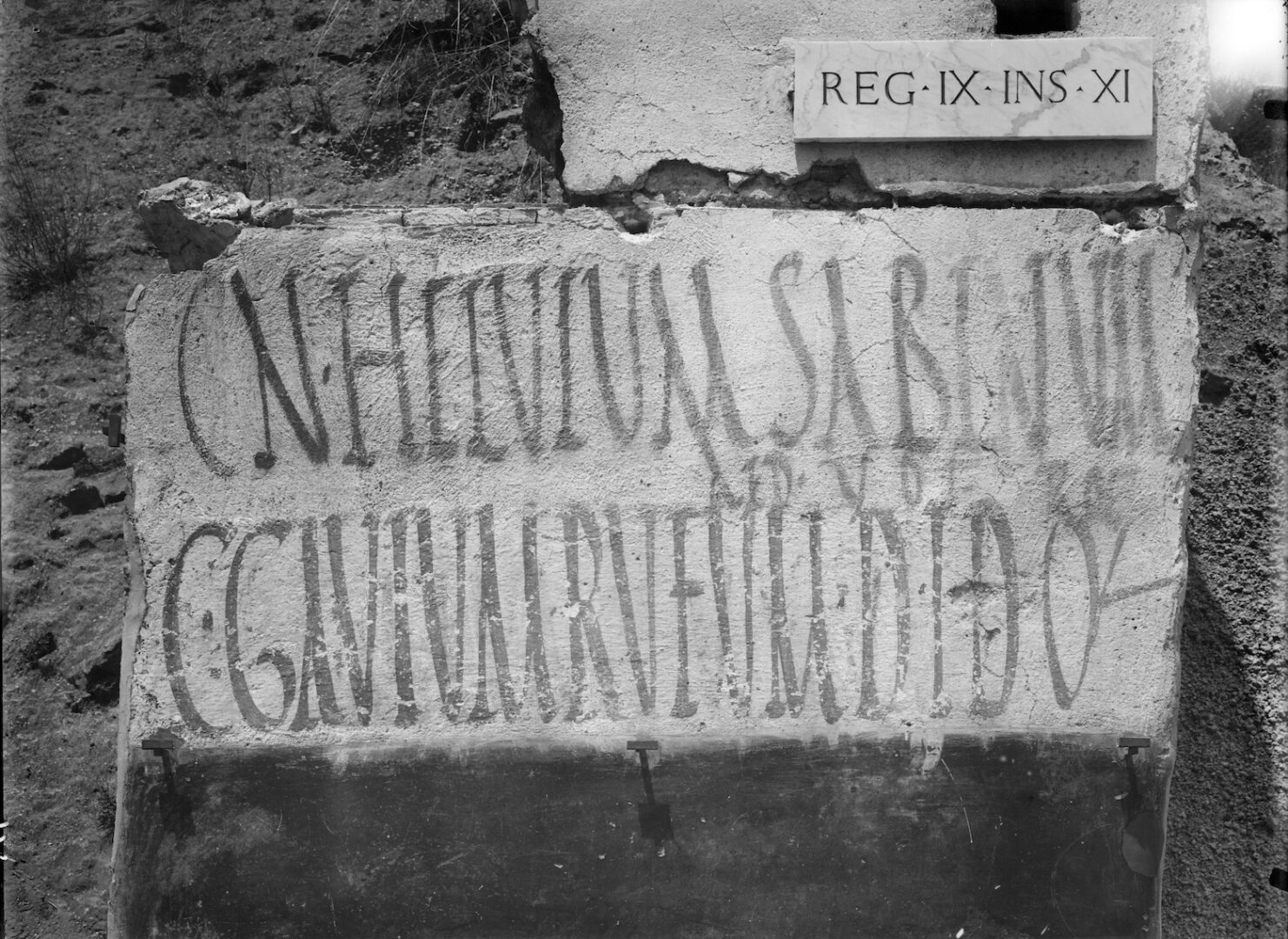
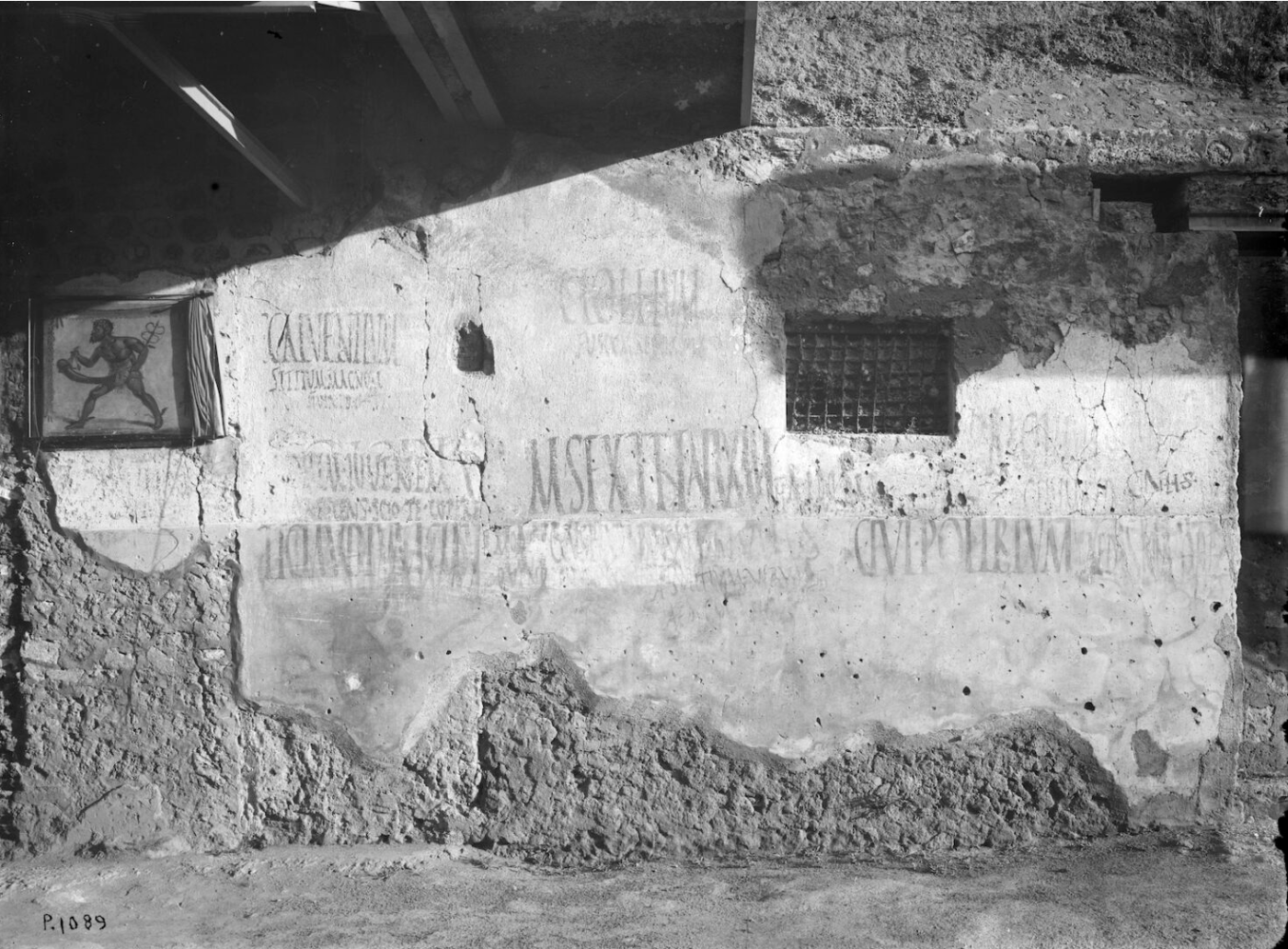
Pompeii is often imagined as a city frozen in time. Preserved beneath volcanic ash following the eruption of Mount Vesuvius in 79 CE, it offers an extraordinary archaeological record of daily life in the Roman world. Yet among its most revealing remnants are not temples, villas or monuments, but inscriptions. Scattered throughout the city are thousands of painted messages, electoral endorsements, announcements, jokes, declarations of affection and expressions of support. Known as tituli picti and programmata, these markings transformed walls into spaces of public communication.

Unlike contemporary assumptions that often associate graffiti with disorder or transgression, these inscriptions occupied a recognised place within civic life. They allowed individuals and communities to participate in public discourse, creating a visual landscape of competing voices and political desires. Significantly, many of these inscriptions reveal forms of agency exercised by those excluded from formal structures of power, including women, enslaved people and members of marginalised communities. Their words survive where official histories often remain silent.

For Williams, these traces of ancient speech resonate powerfully with the present.

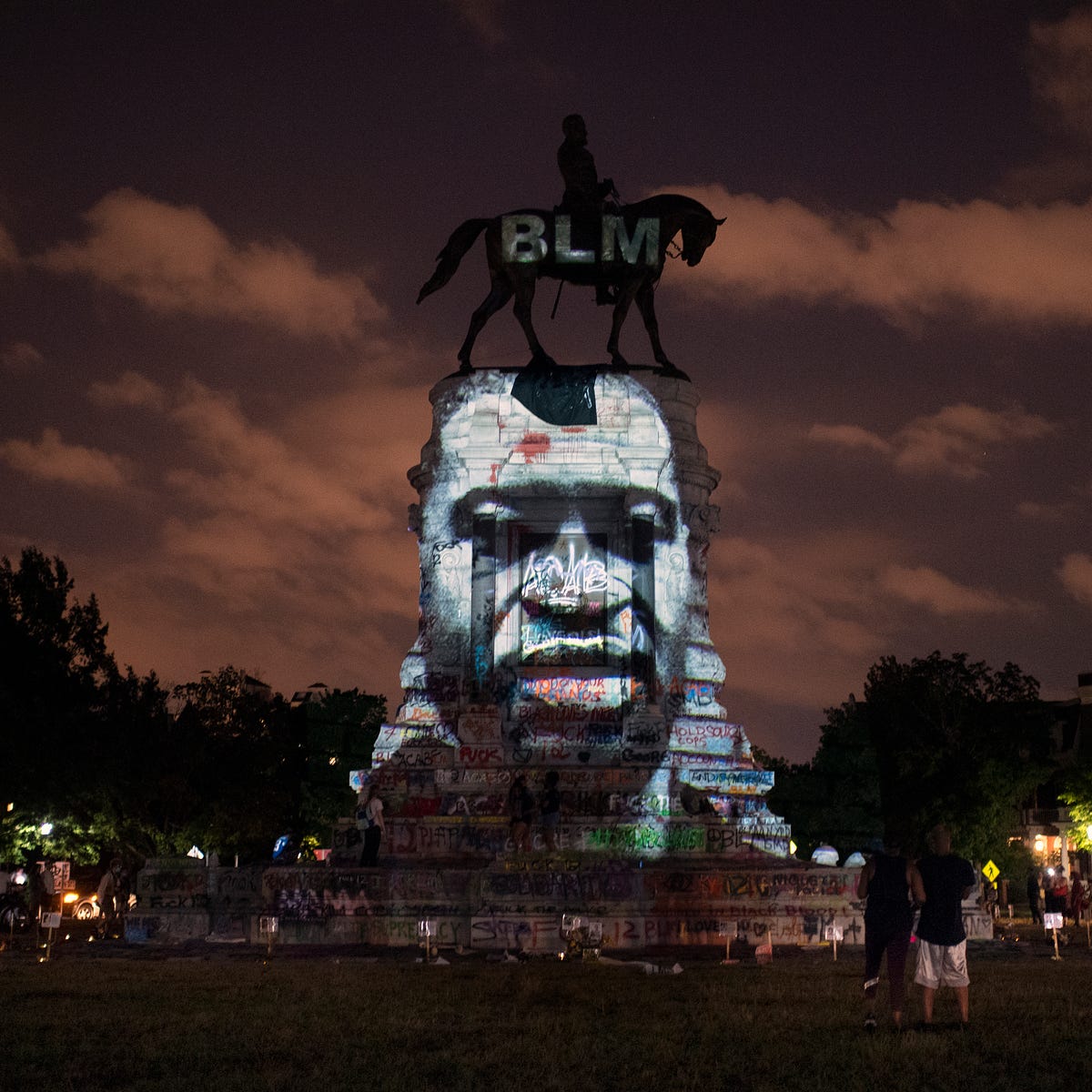
The global uprisings that followed the murder of George Floyd in 2020 renewed attention to the politics of public memory. Across cities in the United States, Europe and beyond, monuments associated with slavery, colonialism and racial violence became sites of confrontation. Statues were covered in graffiti, transformed through acts of protest, removed from public view or left standing as contested symbols. Walls once again became spaces through which alternative histories could be written into public consciousness.

Rather than treating these events as separate historical moments, A Monument A Ruin places them into direct conversation.

Developed through Williams’ research at the Archaeological Park of Pompeii, the work combines ancient inscriptions, archival material, contemporary protest imagery, photography and spoken text into a densely layered visual essay. Collaborating with photographer Brandon English, whose images document abolitionist protests and assemblies in New York during 2020, Williams projects contemporary struggles for visibility and justice onto the surfaces of an ancient city. The result is neither reconstruction nor comparison, but a collapse of historical distance. Past and present occupy the same frame.

What emerges is a meditation on the relationship between memory and power. Who is permitted to leave a mark on history? Which voices are preserved and which are erased? How do societies determine what deserves commemoration? And what happens when those decisions are challenged?

These questions feel particularly urgent within today’s digital environment, where visibility itself has become a contested resource. The walls of Pompeii find unexpected parallels in contemporary social media platforms, both functioning as arenas in which public identities are performed, negotiated and regulated. Just as certain voices were amplified or suppressed in the ancient city, today’s systems of communication continue to shape who is seen, heard and remembered.

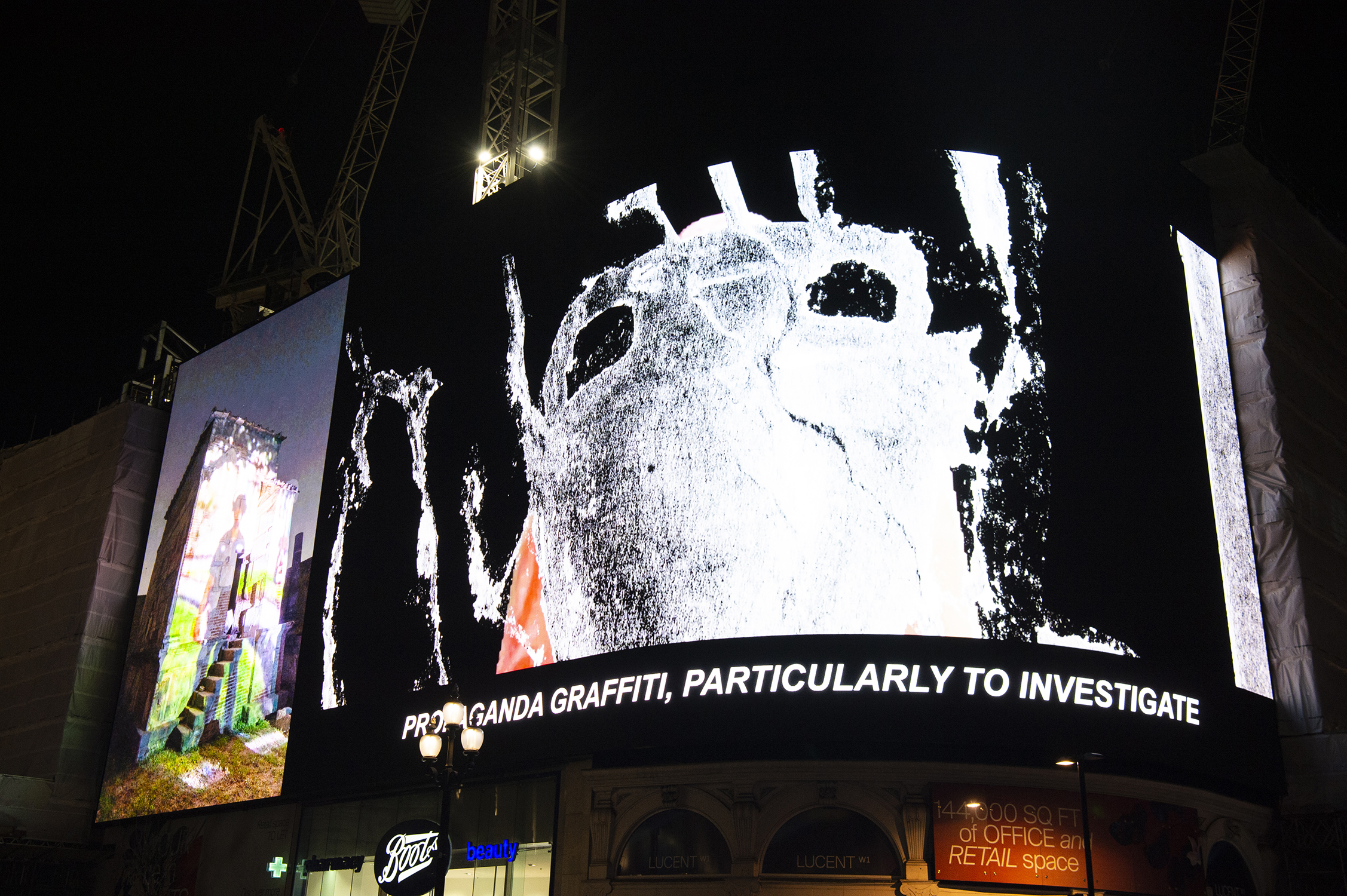
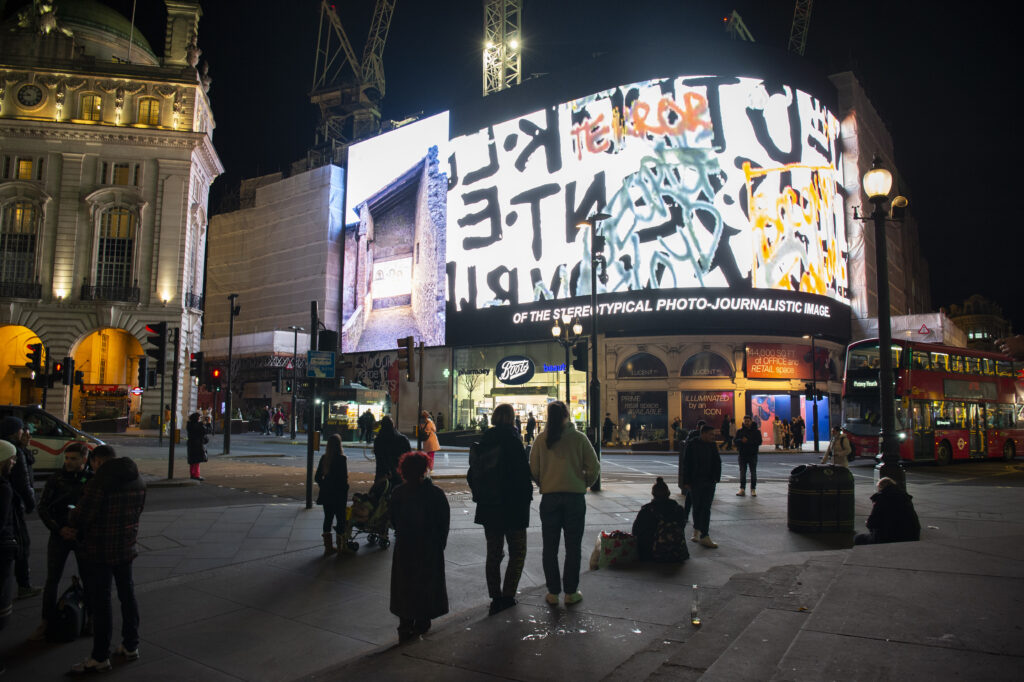
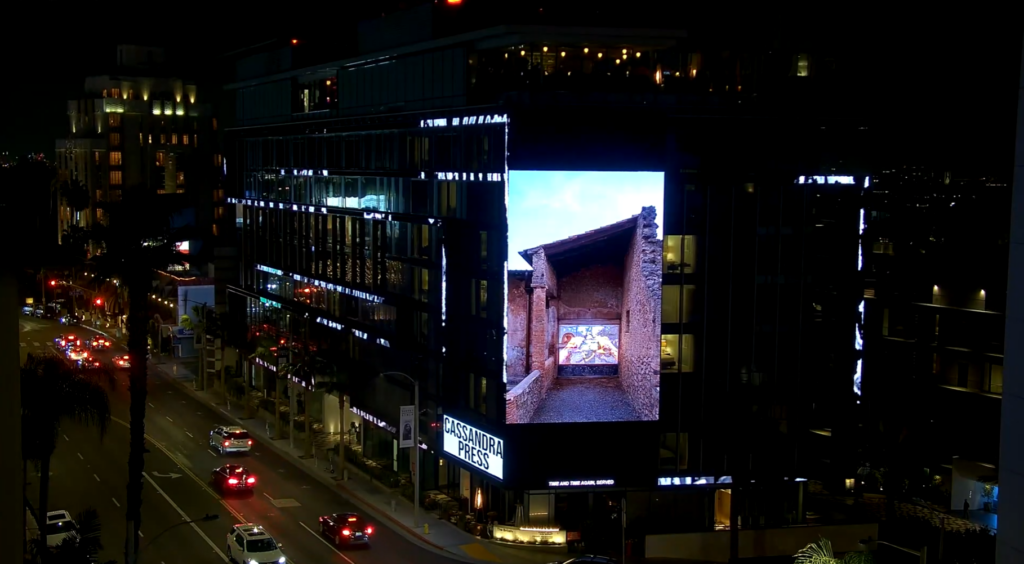
Broadcast across some of the world’s most prominent advertising screens, A Monument A Ruin introduces these questions directly into the public realm. The work occupies spaces ordinarily dedicated to commerce and consumption, transforming them into temporary sites of reflection. In doing so, it extends a lineage of public mark-making that stretches from the painted walls of Pompeii to the protest slogans of the present day.

Rather than offering definitive answers, Williams invites us to consider monumentality itself as a process rather than a condition. Monuments are not permanent. Ruins are not inert. Both remain active participants in the construction of collective memory.

Shop

Loading products...

Films

Michelangelo Pistoletto’s Three Mirrors is presented daily across CIRCA’s global network of public screens. Each evening at 20:26 (local time), the work appears simultaneously across the following locations, entering the flow of the city and inviting a shared moment of reflection. Select a location below to view directions and find your nearest screen on Google Maps.

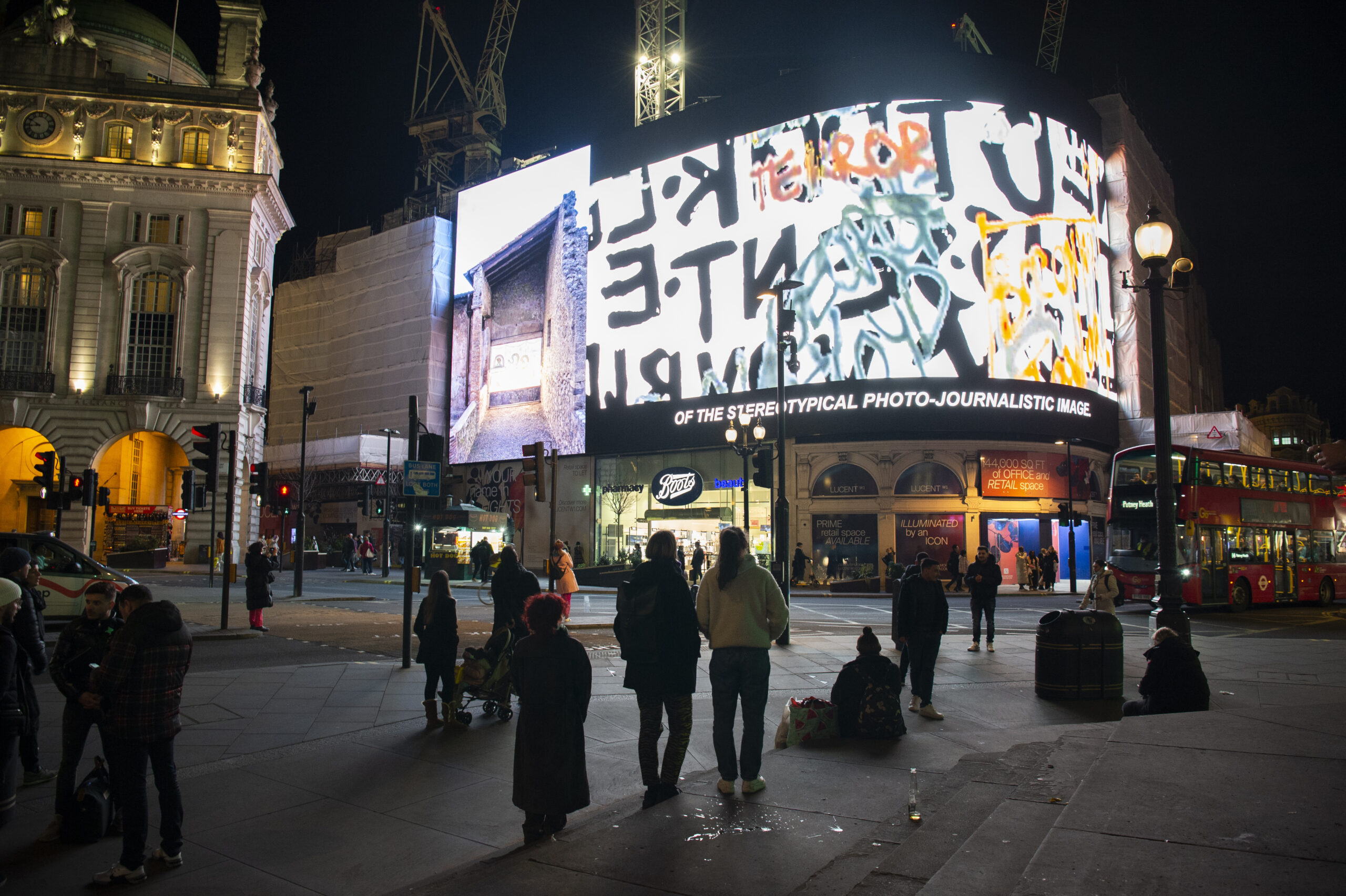
London, Piccadilly Lights

Experience  A Monument A Ruin by Cassandra Press every evening at 20:22 GMT (1-28 February 2022) on the iconic Piccadilly Lights screen.

View screen locations

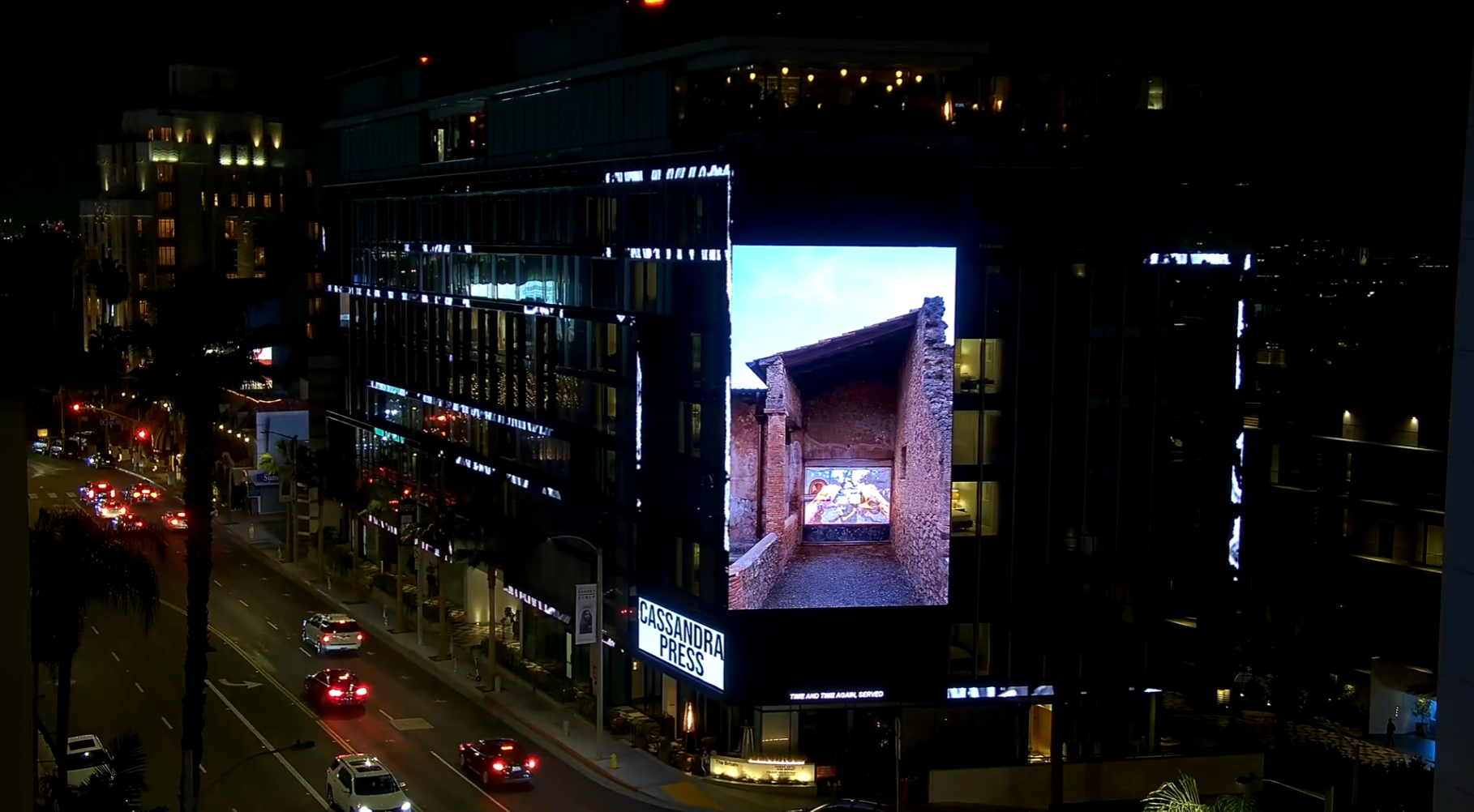
Los Angeles, Pendry West Hollywood

Experience  A Monument A Ruin by Cassandra Press every evening at 20:22 PST (1-28 February 2022) on Los Angeles’ Pendry West Hollywood screen.

View screen locations

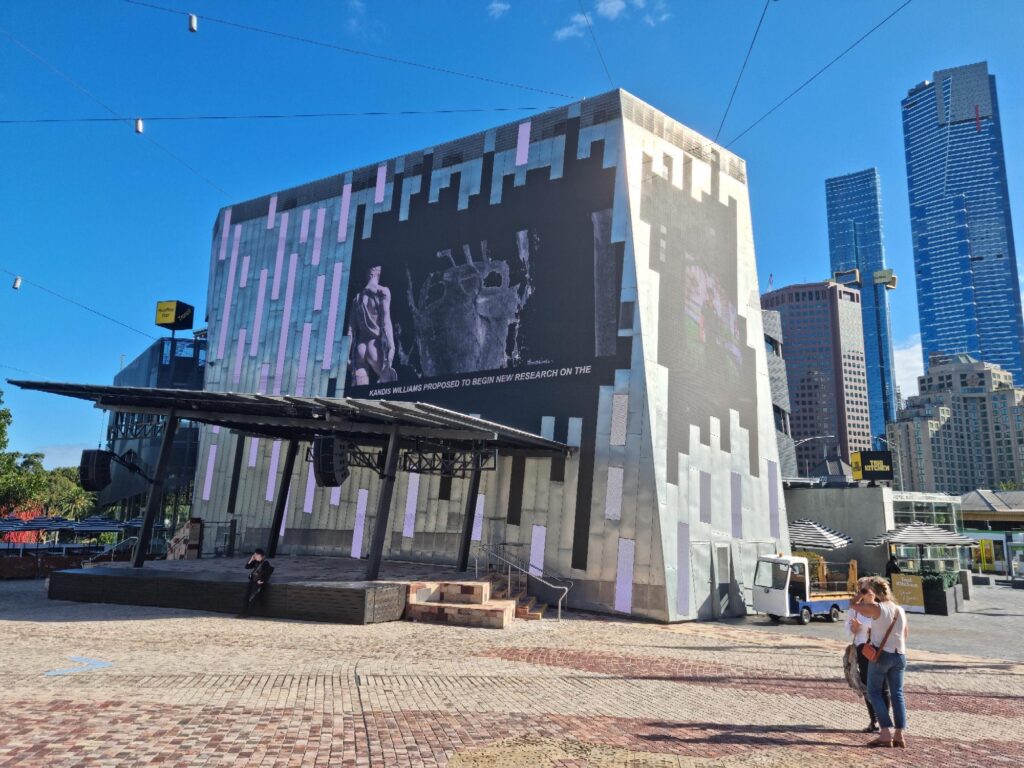
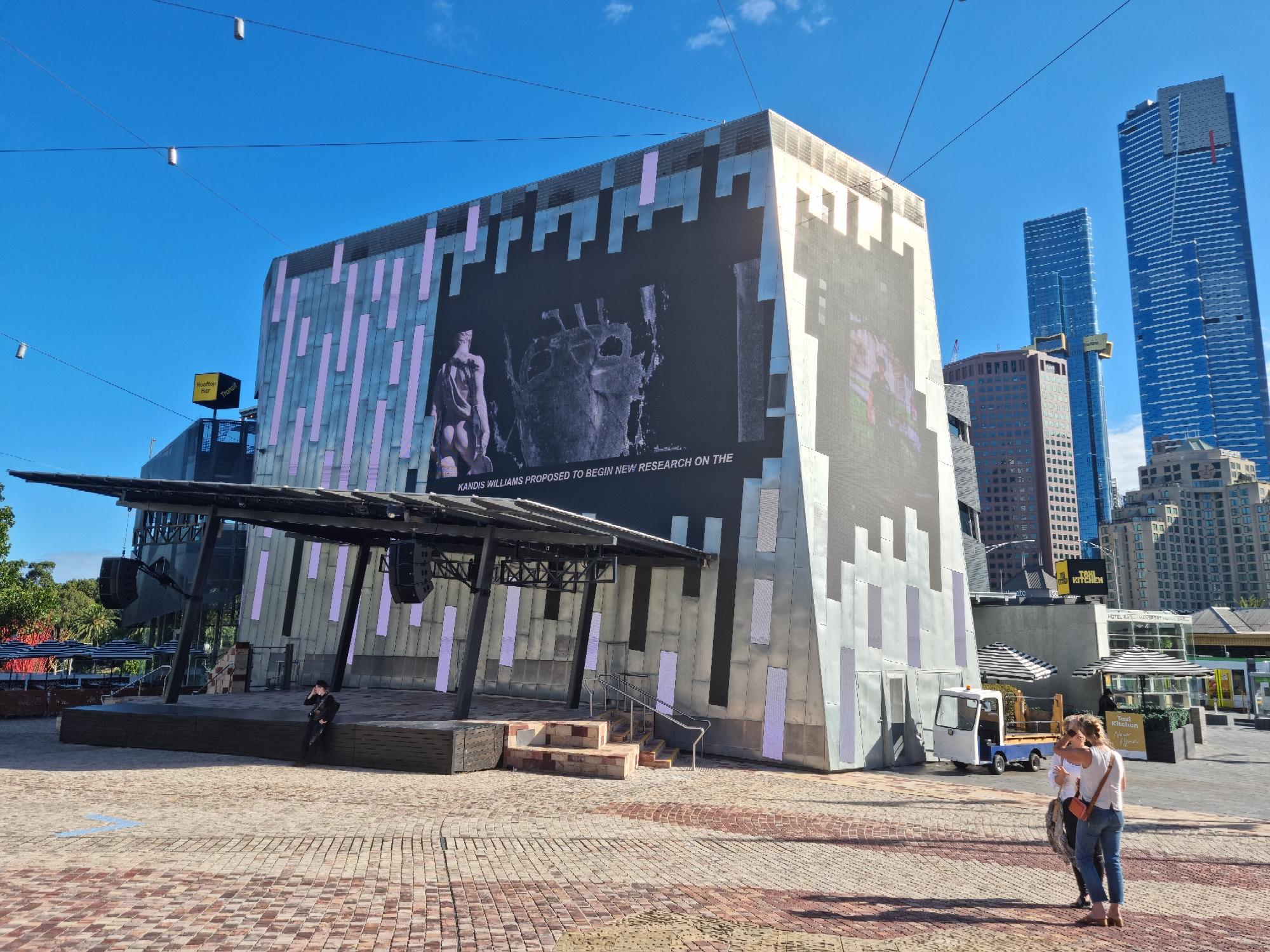
Melbourne, FedSquare

Experience  A Monument A Ruin by Cassandra Press every evening at 20:22 ACT (2nd-4th, 7th-11th, 15th-16th, 21st-25th, 27th-28th February 2022) on Melbourne’s FedSquare screen.

View screen locations

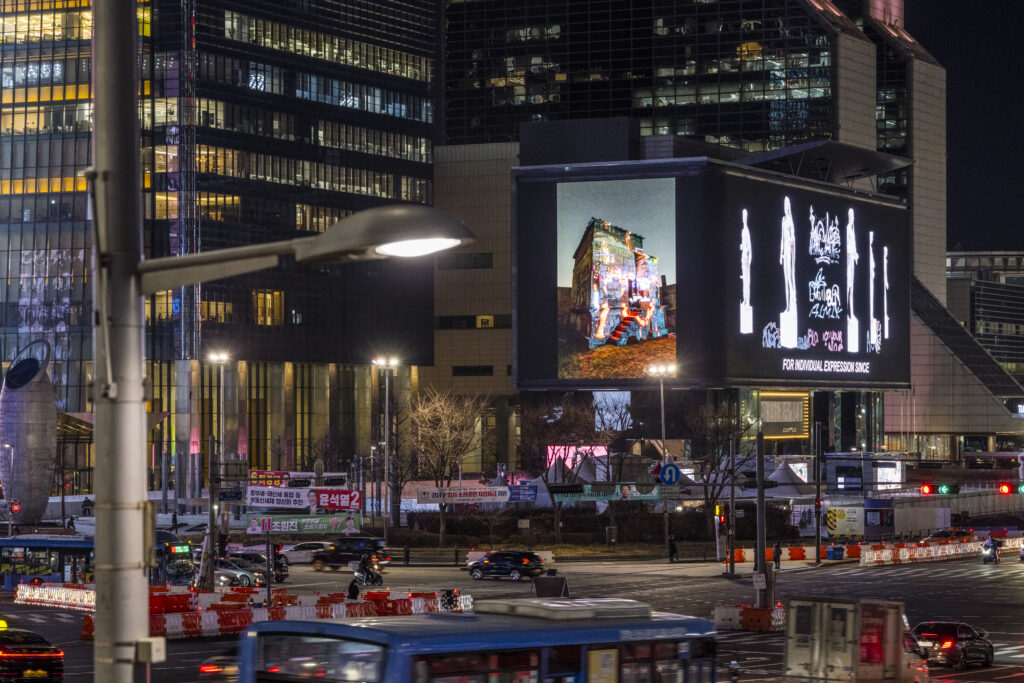
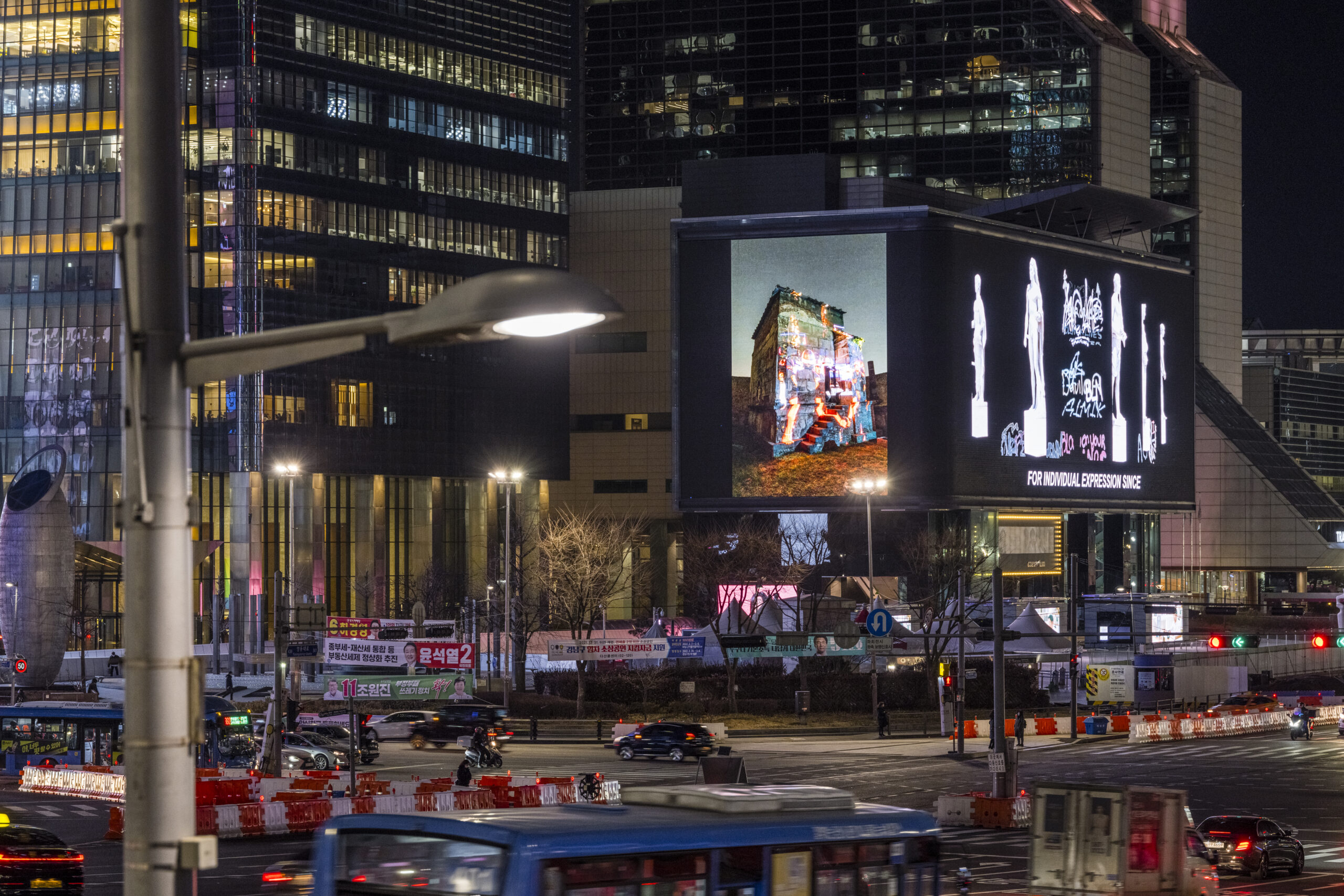
Seoul, COEX K-Pop Square

Experience  A Monument A Ruin by Cassandra Press every evening at 20:22 KST (1-28 February 2022) on Seoul’s COEX K-Pop Square screen.

View screen locations

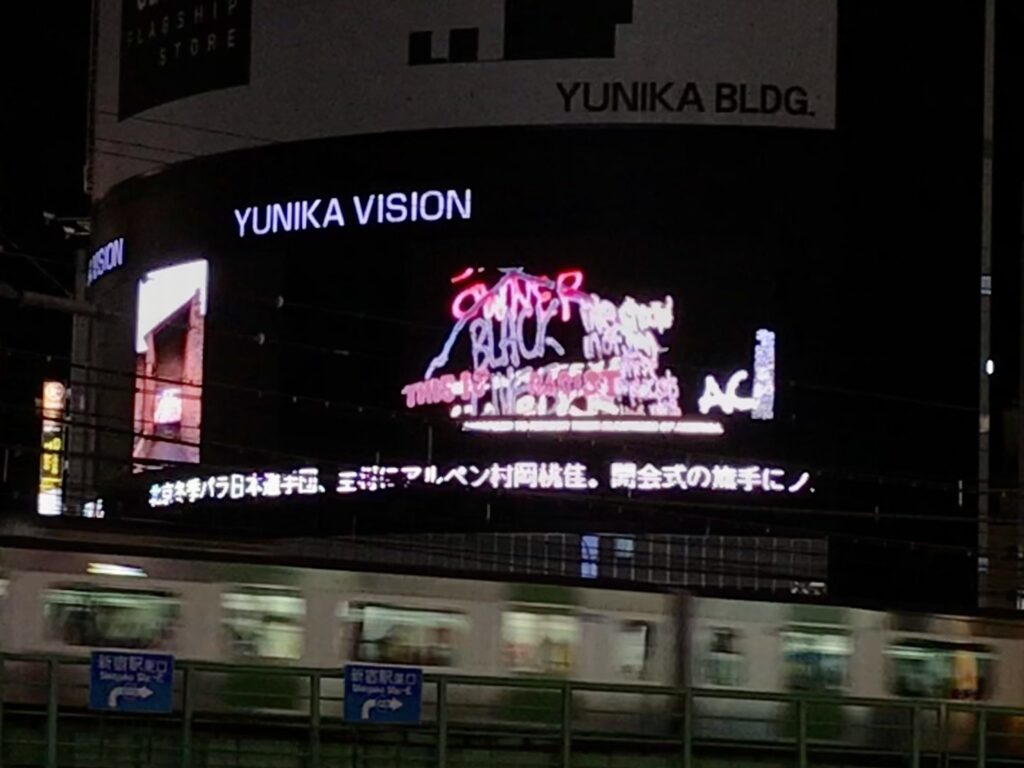
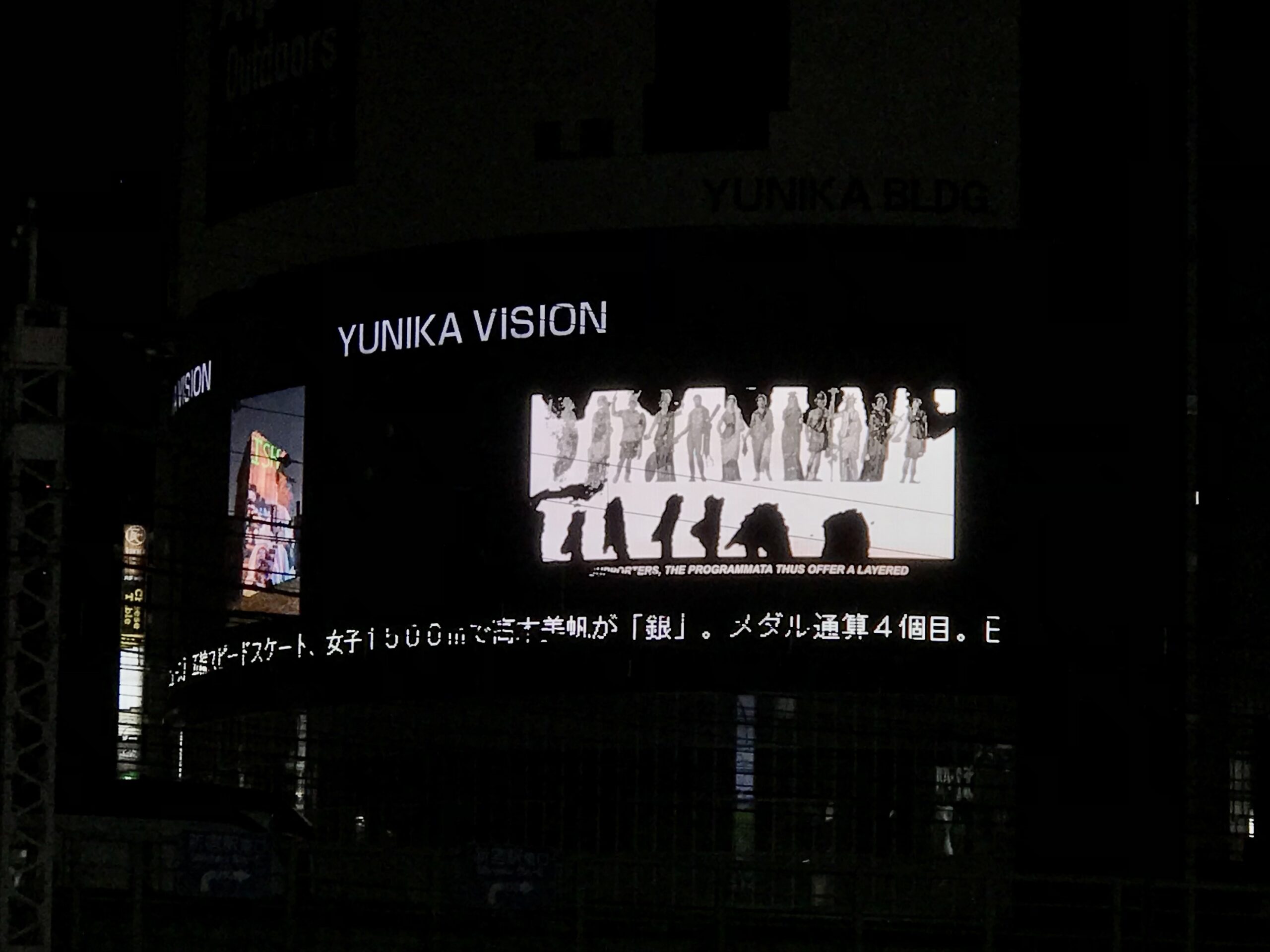
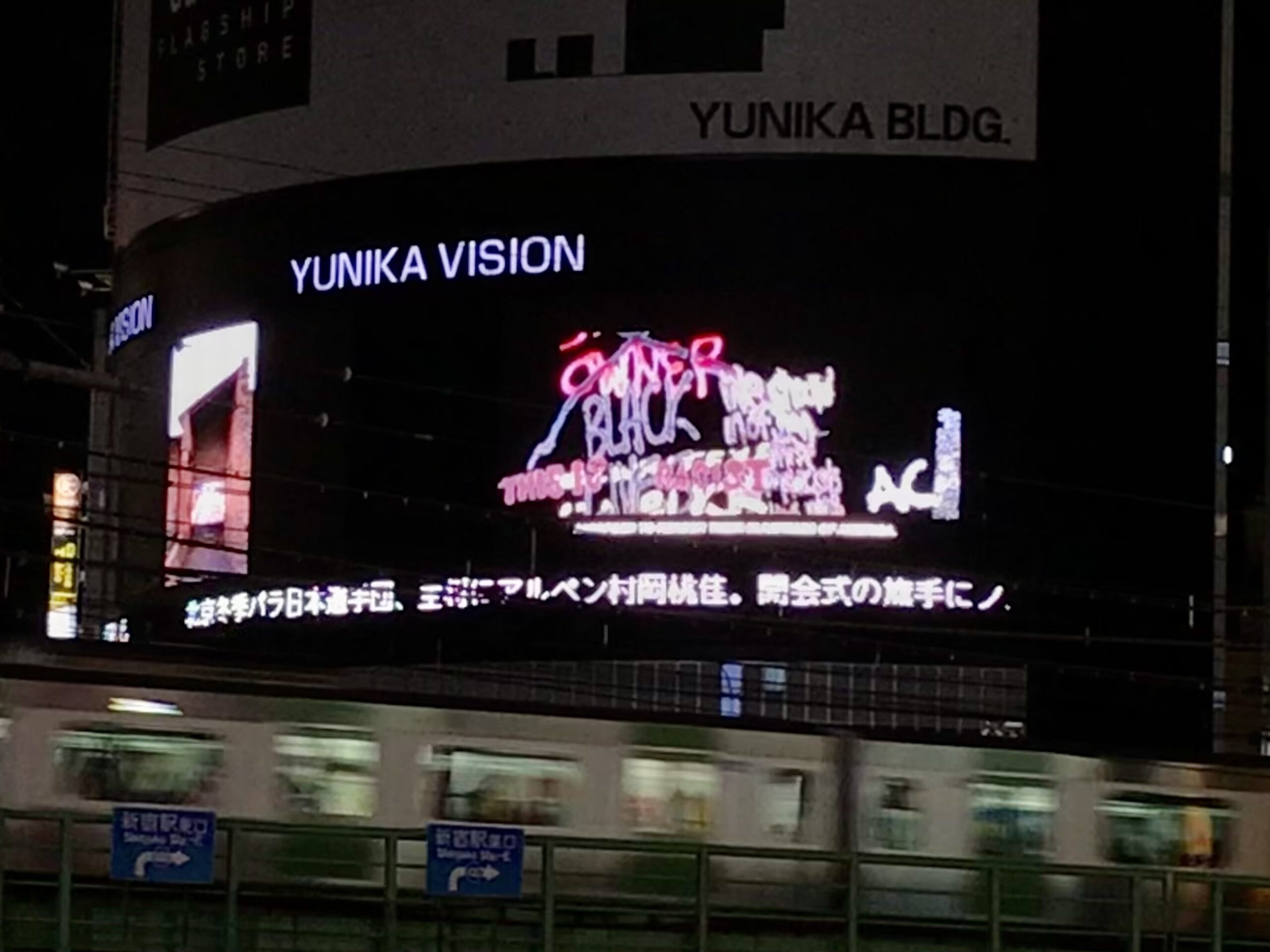
Tokyo, Yunika Vision

Experience  A Monument A Ruin by Cassandra Press every evening at 21:30 JST (1-28 February 2022) on Tokyo’s Yunika Vision screen.

View screen locations

ESSAY

Cassandra Press: A Monument A Ruin by Stella Bottai
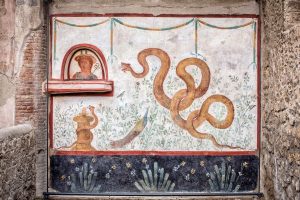
In 2021, artist Kandis Williams – founder and editor-at-large of Cassandra Press, an artist-run publishing and educational platform producing lo-fi printed matter, classrooms, projects, artist books, and exhibitions – was invited to participate in Pompeii CommitmentArchaeological Matters, the first contemporary art programme commissioned by the Archaeological Park of Pompeii in Italy. Williams proposed to begin new research on the theme of Pompeian programmata – the political propaganda graffiti –, particularly to investigate possible parallels with the politics of representation and strategies of social resistance at stake within contemporary democracies, in particular in the United States.

As part of her research, Williams met with Pompeii’s former Director and archaeologist Prof. Antonio Varone, responsible for the indexation and study of all of the Pompeian painted inscriptions, to address questions around Pompeii’s localised history as a provincial town and Roman colony, and how its electoral propaganda through the use of graffiti may possibly speak to more universal questions relating to the political agency, voice and representation of socially oppressed categories in today’s Western societies.
Press

Vogue Italia
La Repubblica
Artribune
Flash Art
Press Release

Biography

Cassandra Press

Kandis Williams is an American artist, writer, publisher and educator whose practice examines the intersections of race, power, history and representation. Working across collage, film, performance, publishing and research, she creates frameworks that bring together critical theory, lived experience and visual culture, exploring how social, political and historical narratives are constructed, transmitted and challenged.

Central to Williams’ practice is Cassandra Press, the artist-run publishing and educational platform she founded in 2016. Originally conceived as a space for disseminating texts on race, feminism, aesthetics and Black scholarship, Cassandra Press has since evolved into an influential multidisciplinary platform encompassing publishing, exhibitions, classrooms, workshops and collaborative research. Through its activities, Cassandra Press has become an important site for critical dialogue, collective learning and the circulation of ideas across contemporary culture.

In 2022, Williams collaborated with CIRCA and Pompeii Commitment. Archaeological Matters on A Monument A Ruin, a landmark public commission that connected ancient inscriptions discovered in Pompeii with contemporary protest graffiti and questions of political agency in public space. Appearing across public screens in London, Melbourne, Seoul and Tokyo, the project transformed years of archaeological research into a global conversation about monuments, memory and the voices that endure through history. The commission reflected a shared commitment between Williams and CIRCA to using public space as a platform for critical reflection, collective inquiry and new forms of cultural exchange.

Williams has exhibited internationally and participated in major institutional exhibitions including The Whitney Biennial, the Hammer Museum, Institute of Contemporary Art Philadelphia, and Kunsthalle Basel, among others. Through her work as both artist and educator, she continues to challenge conventional structures of knowledge while creating new spaces for dialogue, learning and social transformation.


Subscribe to our newsletter

Subscription successful

An error occurred