fbpx Tony Cokes, 4 Voices/4 Weeks | CIRCA

CIRCA 2021

Tony Cokes, 4 Voices/4 Weeks

1-28 February, 2021

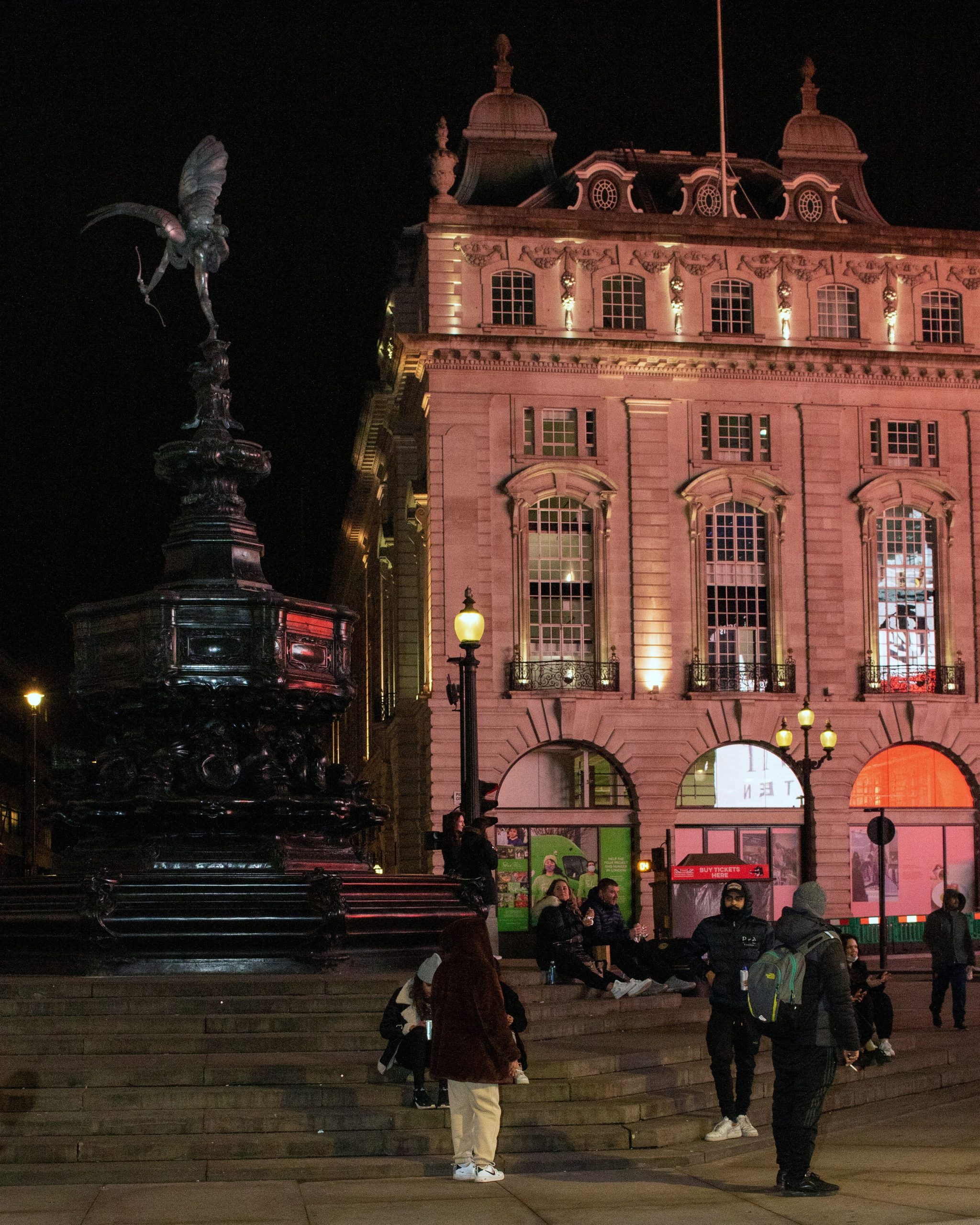
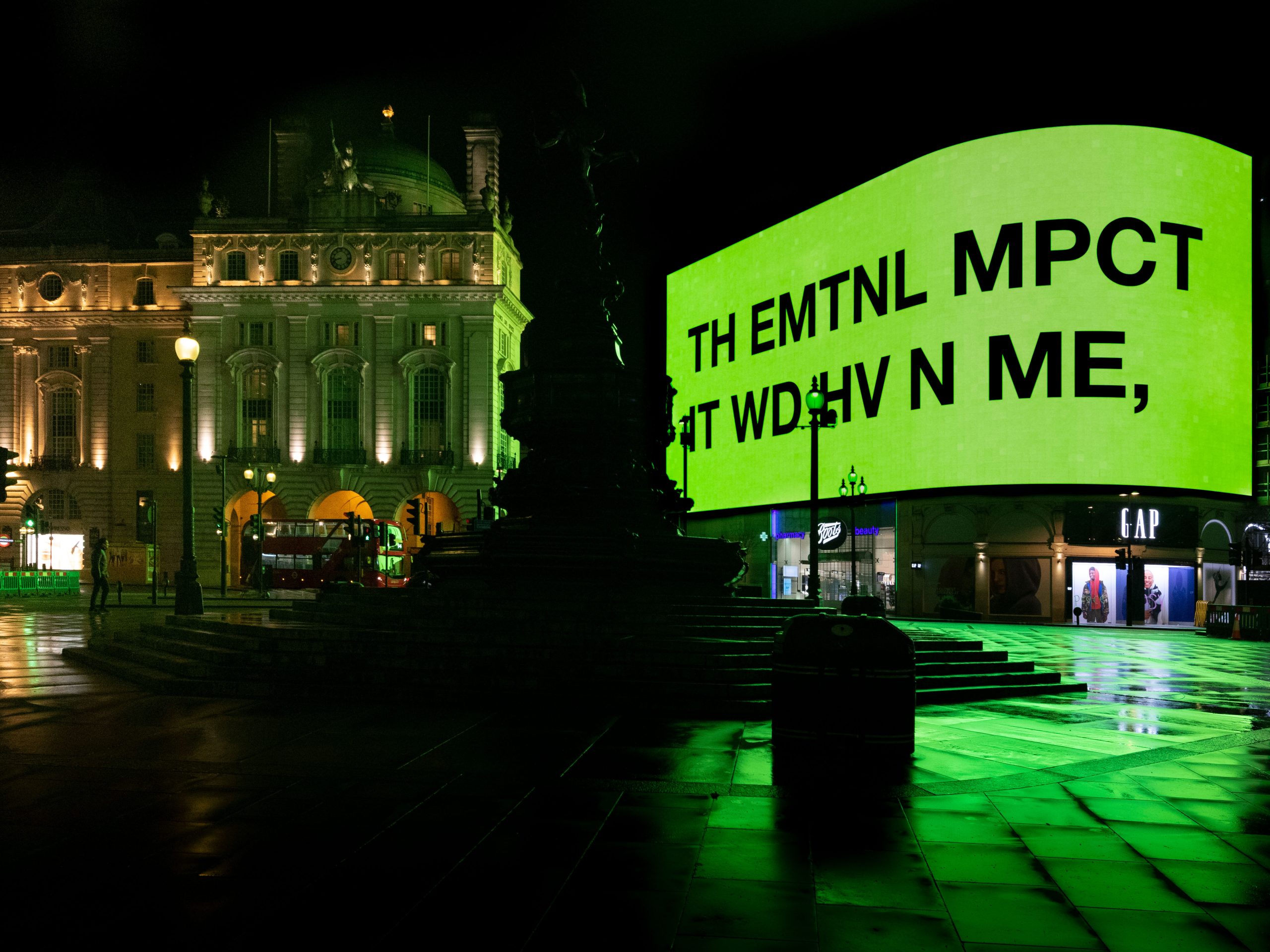
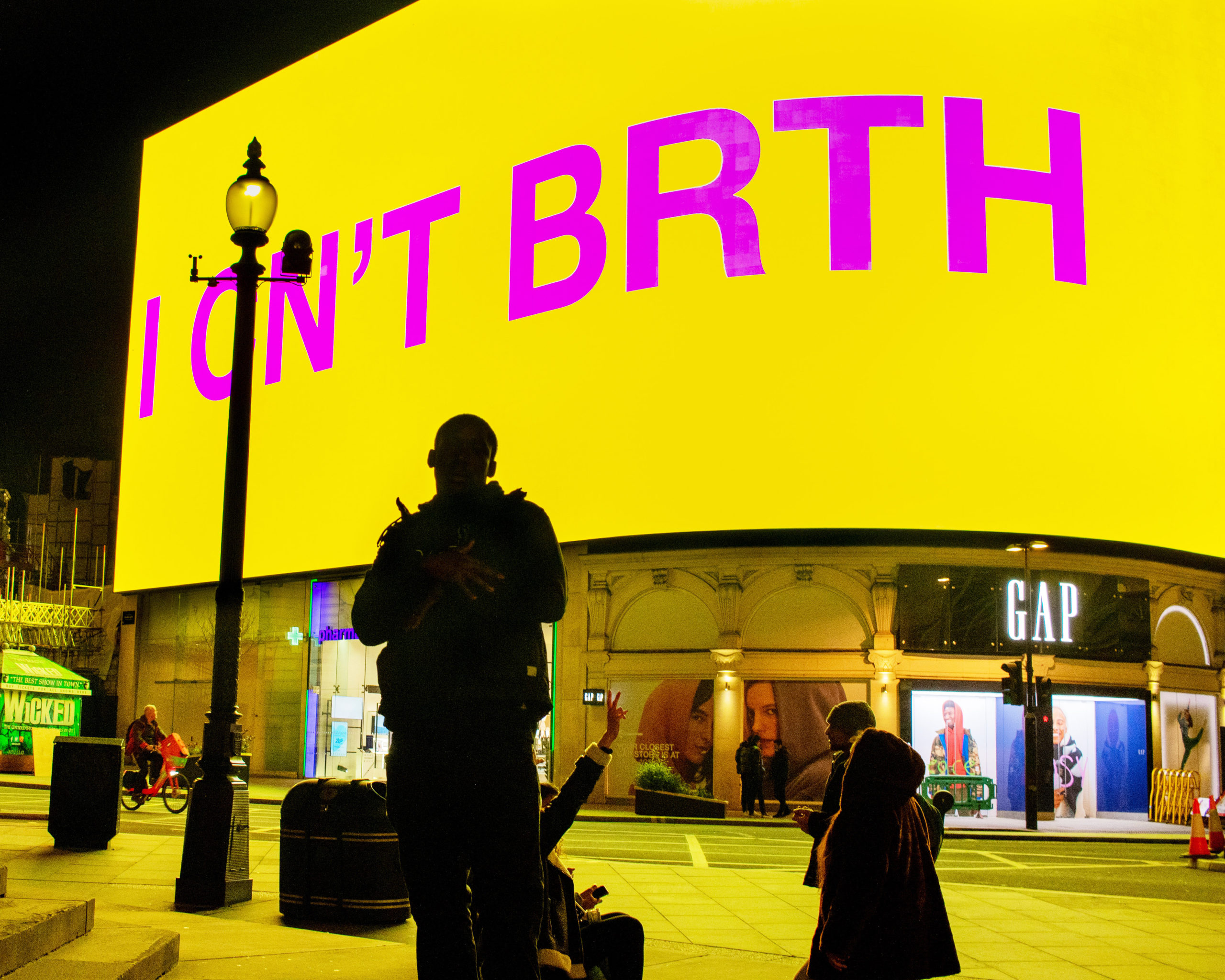
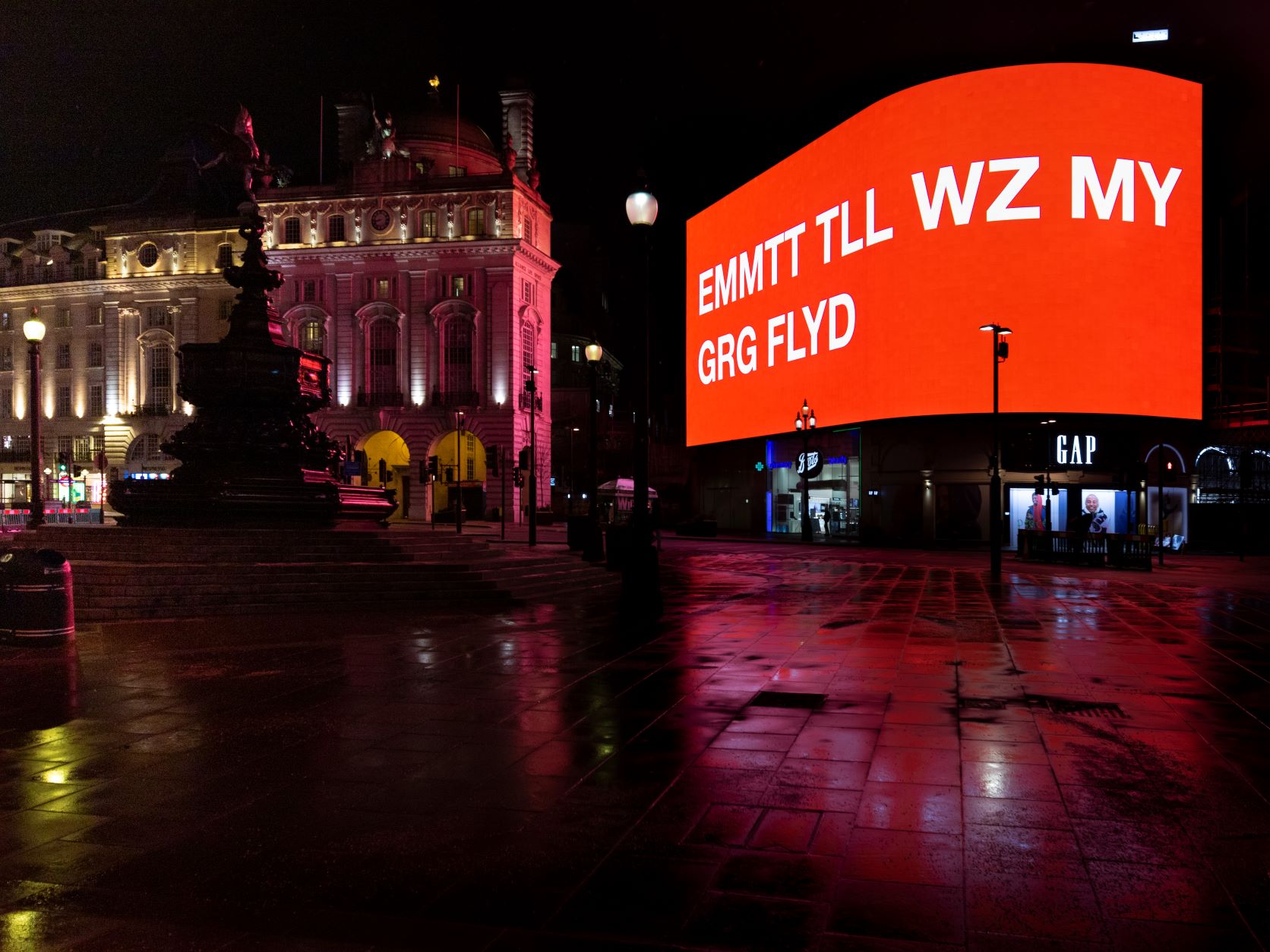
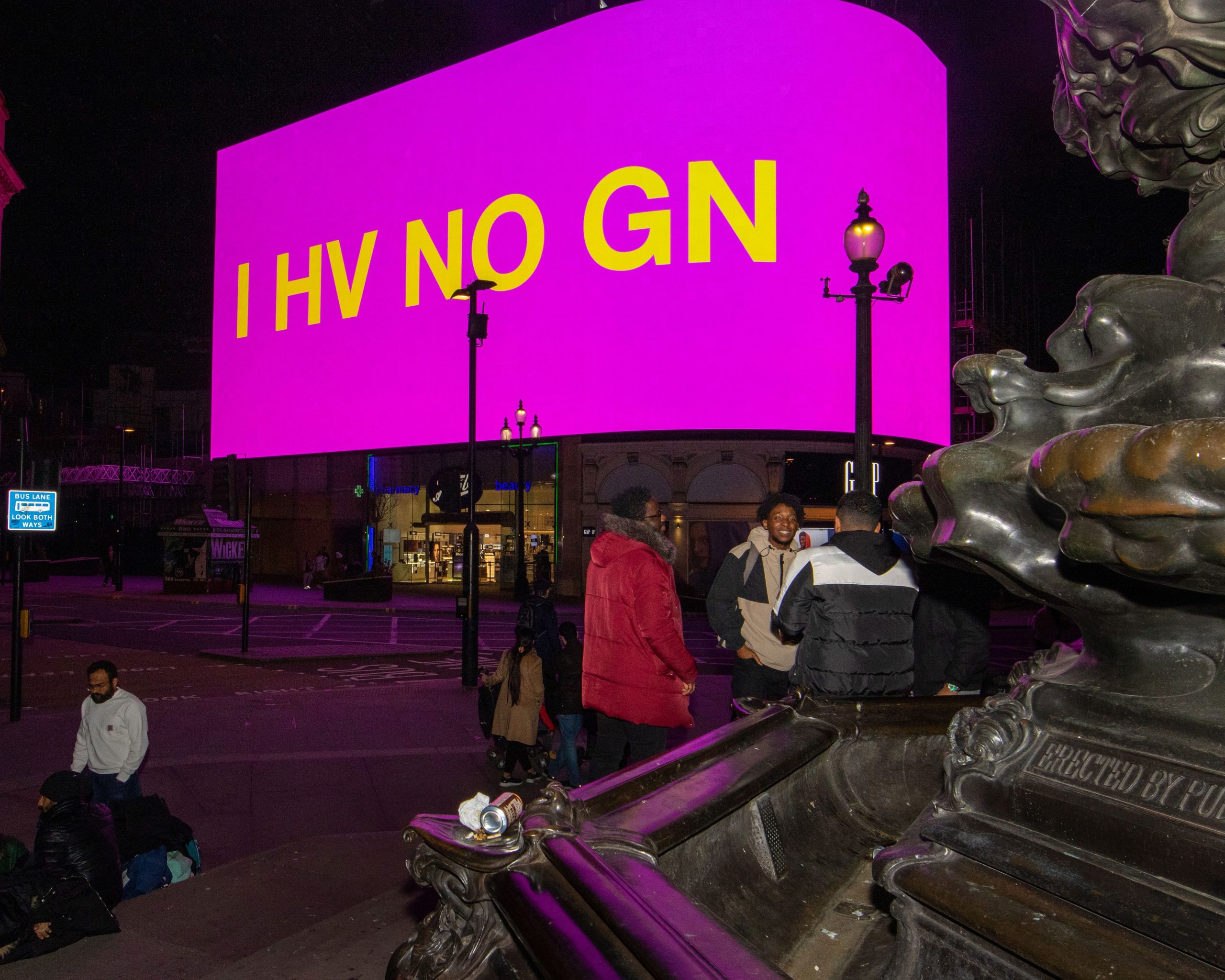
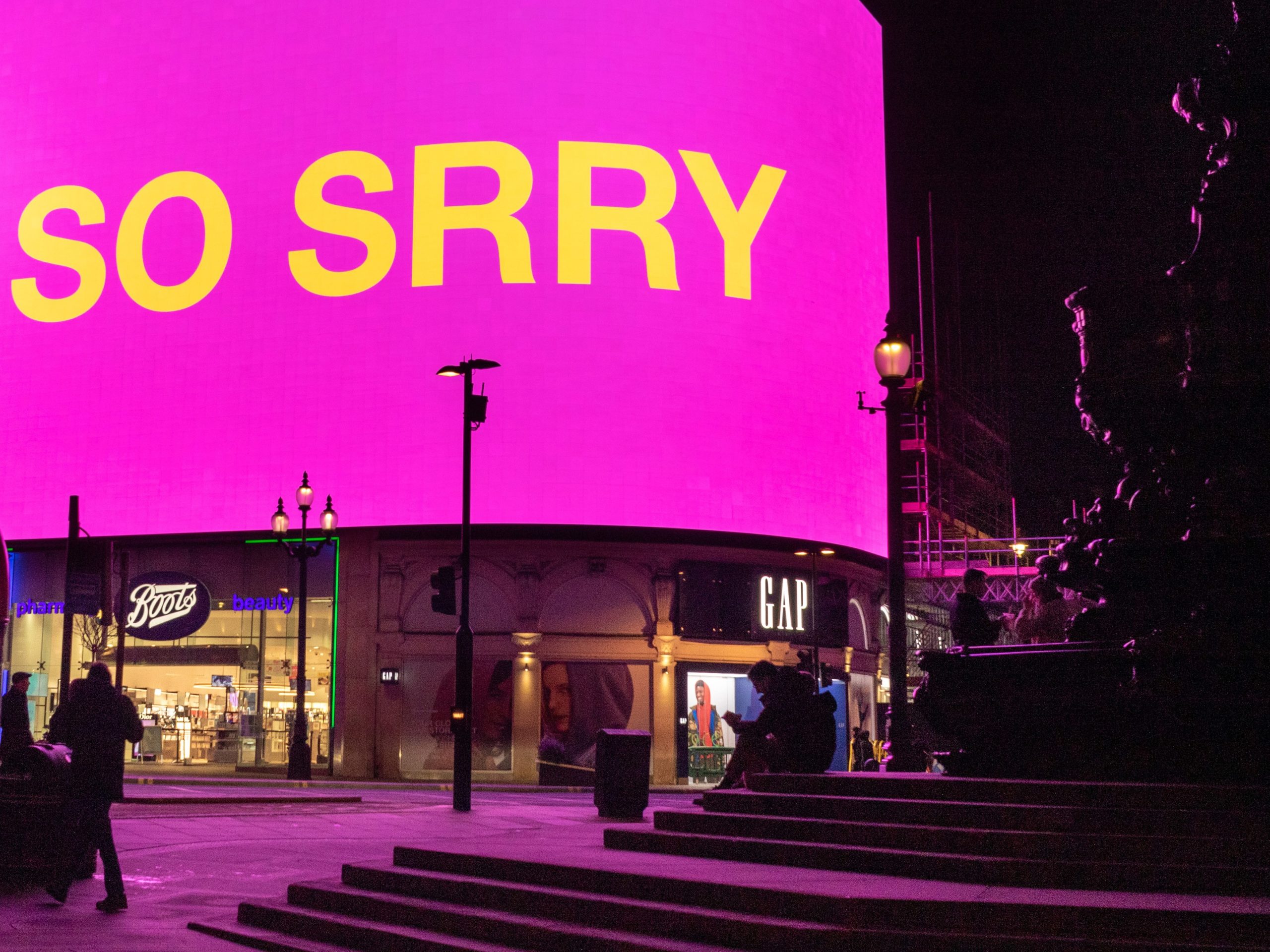
There are few months that divide so neatly. In February 2021, four exact weeks provide the structure for Tony Cokes’ commission 4 Voices / 4 Weeks, a work that unfolds across Piccadilly Lights through a sequence of texts, sounds and ideas drawn from four distinct voices. Each occupies the screen for seven days before giving way to the next. Together they form a meditation on language, power and public life at a moment when all three appear increasingly contested.

The commission arrives during a period of extraordinary political and social reckoning. Nearly a year into the COVID-19 pandemic, public attention remains fixed upon questions of vulnerability, inequality and collective responsibility. Simultaneously, the global protests that followed the murder of George Floyd continue to expose the enduring structures of racial violence embedded within contemporary society. Against this backdrop, Cokes turns not towards images of crisis but towards language itself, examining the words through which political realities are articulated, contested and remembered.

For more than three decades, Cokes has developed one of the most influential practices in contemporary moving image. Working with appropriated texts, colour fields and music, he approaches language as a material capable of revealing the hidden operations of power. His work belongs to a broader intellectual tradition shaped by thinkers such as Stuart Hall, bell hooks and Michel Foucault, all of whom recognised that power is exercised not only through institutions and laws but through the stories societies tell about themselves. Meaning is never neutral. Language is never innocent. The words that circulate through media, politics and culture shape how reality itself is understood.

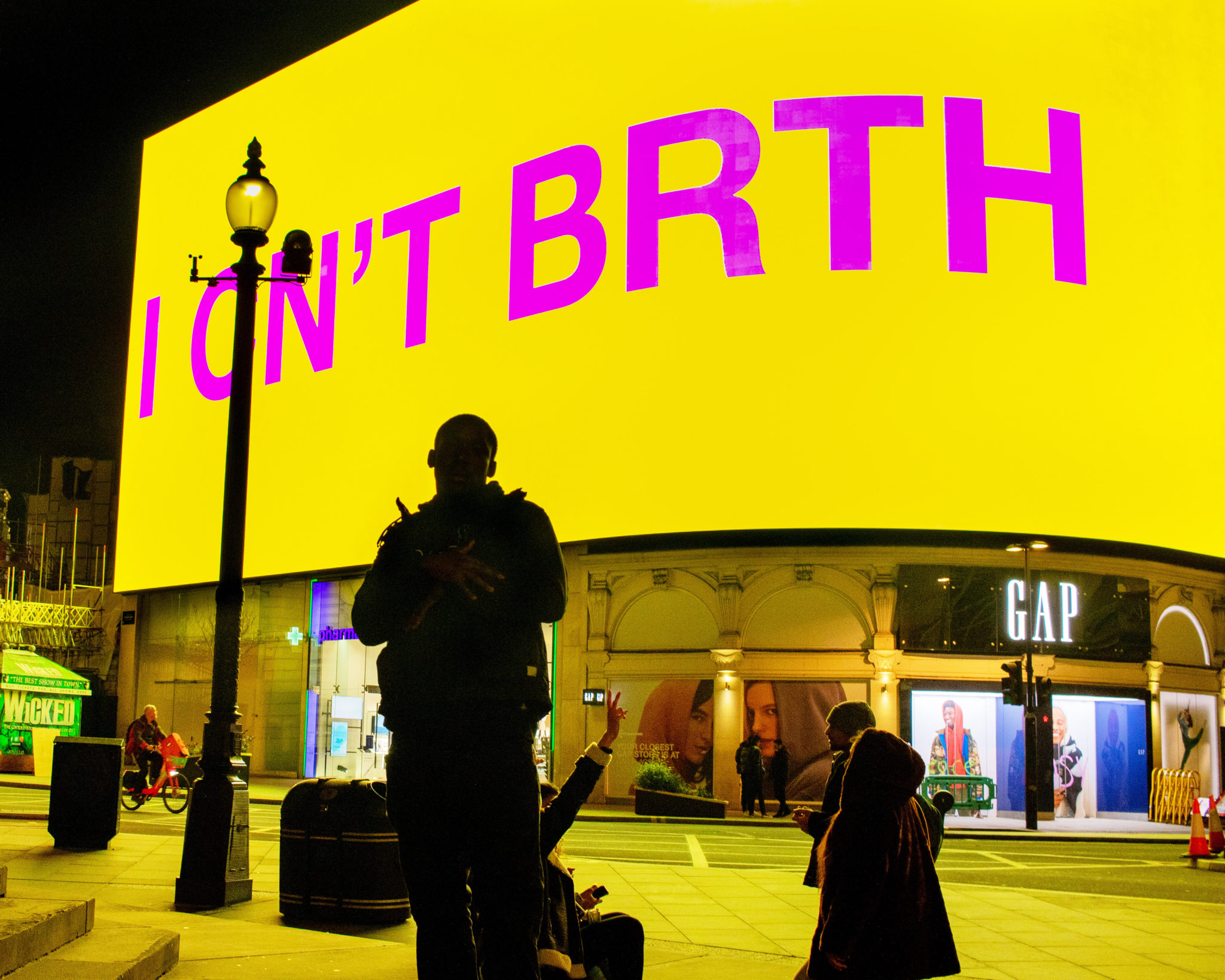
This proposition becomes especially potent within the context of Piccadilly Circus. Few spaces embody the contemporary economy of attention more completely. Designed to capture the eye through spectacle, seduction and repetition, the giant screens surrounding the square operate as instruments of persuasion, transforming public space into a marketplace of images. Cokes interrupts this machinery by replacing advertising with language. At a scale usually reserved for luxury brands and corporate messaging, he asks audiences to read.

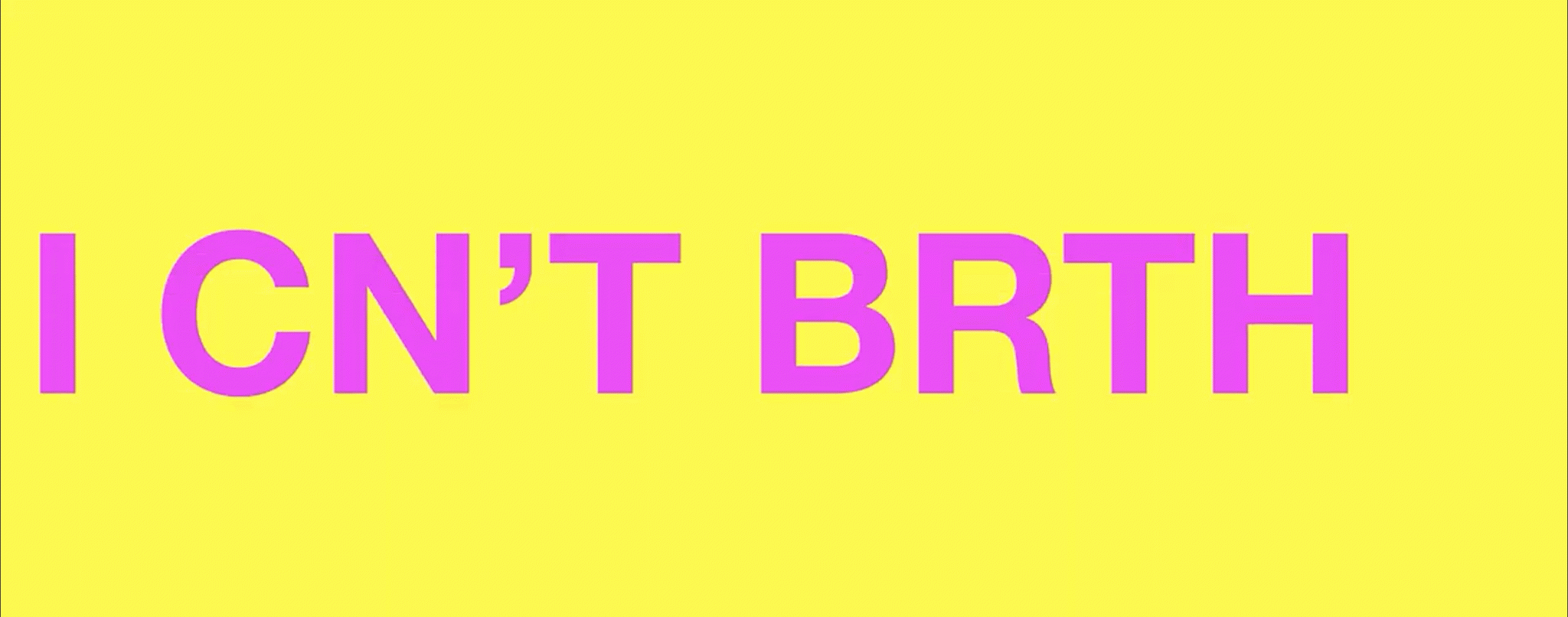
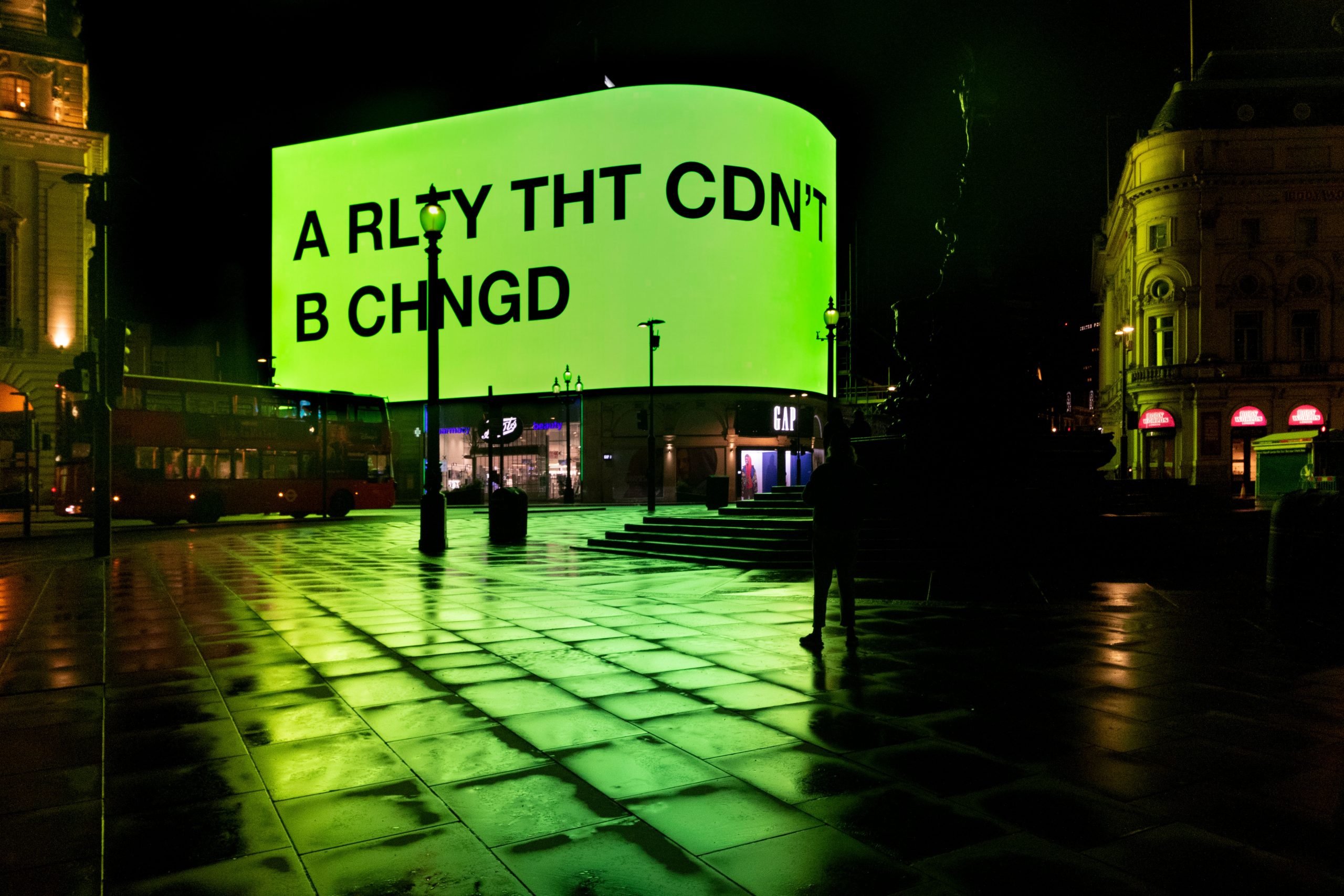
Yet reading here is not straightforward. Throughout the commission, Cokes subjects many of the texts to a process of translation and compression, removing vowels, abbreviating words and introducing symbols that render familiar language momentarily strange. This strategy resists the hyper-legibility expected of both advertising and digital culture. Viewers are required to slow down, decode and actively participate in the construction of meaning. Understanding becomes a form of labour.

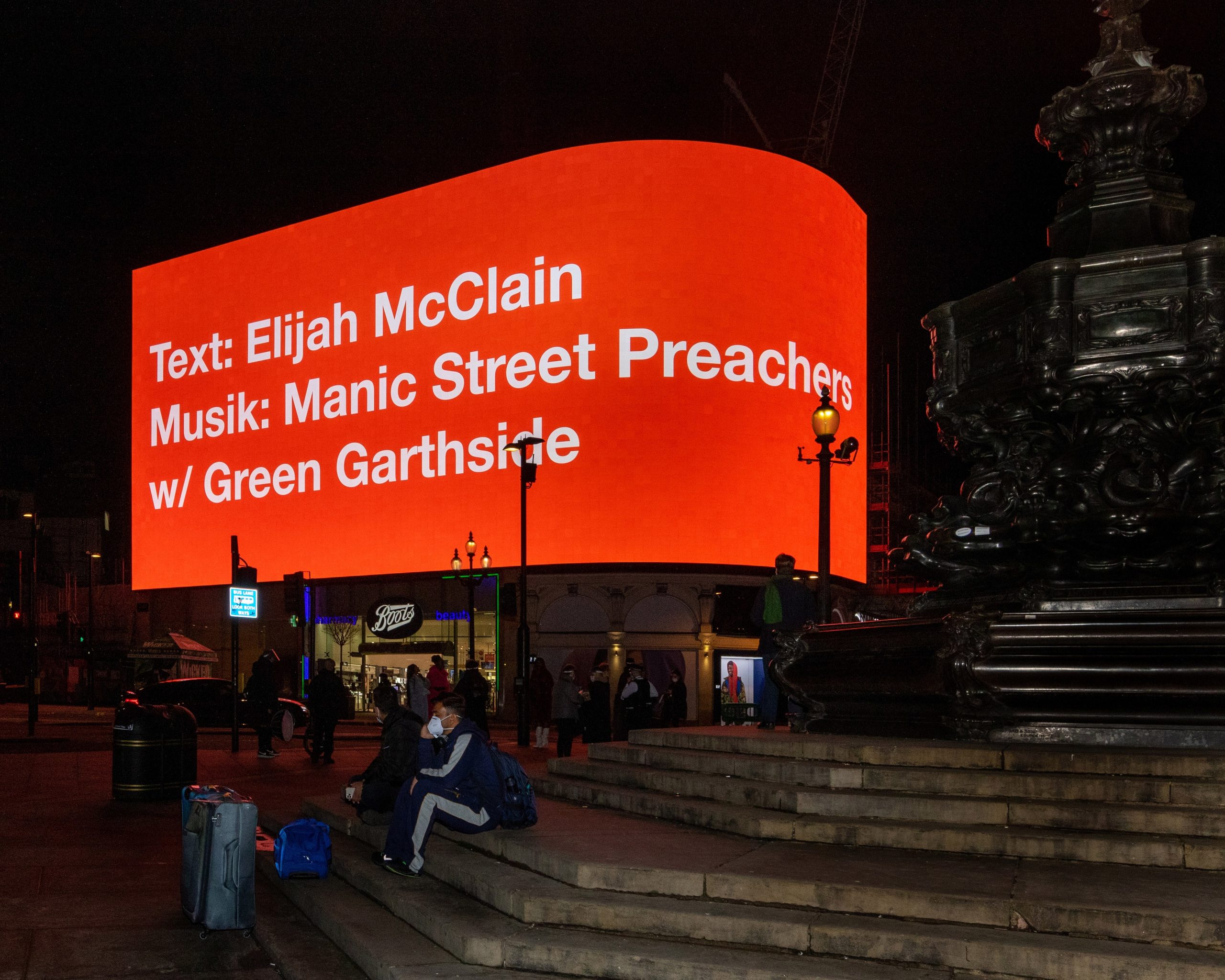
The four voices selected by Cokes map a remarkable trajectory through the political and emotional landscape of the present. Beginning with John Lydon’s declaration that “anger is an energy,” the commission acknowledges the force of outrage as a catalyst for action. The words of civil rights leader John Lewis follow, carrying forward a lifetime dedicated to the struggle for justice and democratic participation. The work then turns towards the final words of Elijah McClain, the twenty-three-year-old African American killed after being placed in a chokehold by police in Colorado in 2019. McClain’s words are not presented as evidence or spectacle. Instead, they emerge as an intimate reminder of the human cost concealed behind systems of violence. The commission concludes with Judith Butler’s reflections on mourning during the pandemic, a text that expands grief beyond private experience and into the realm of politics itself.

Together these voices describe an arc that moves from anger to mourning, from resistance to responsibility. The progression recalls the structure of a classical lament or political oration, yet Cokes refuses any sense of resolution. What emerges instead is a portrait of a society confronting its own contradictions. The work asks how communities respond to injustice, how lives are publicly valued or neglected, and how collective memory is formed in the aftermath of loss.

The final chapter is particularly significant. Butler’s writing argues that grief is never distributed equally. The lives that are publicly mourned, protected or deemed worthy of remembrance reveal the underlying values of a society. In the context of a pandemic that has disproportionately affected marginalised communities around the world, mourning becomes a political act. To grieve publicly is also to recognise interdependence, vulnerability and shared responsibility.

Throughout 4 Voices / 4 Weeks, Cokes transforms public space into a forum for precisely these questions. The work does not offer answers, nor does it seek consensus. Instead, it insists upon the continued importance of listening, reading and thinking critically within a culture increasingly defined by speed, distraction and ideological certainty. In doing so, it reclaims one of the world’s most visible advertising screens as a space for democratic reflection.

Presented in four movements across four weeks, the commission proposes that public art can function not simply as spectacle but as discourse. At a moment when the language of politics, media and technology is under unprecedented scrutiny, Cokes reminds us that the struggle over words is also a struggle over how we imagine ourselves, one another and the world we hope to build.

Shop

Loading products...

Films

Michelangelo Pistoletto’s Three Mirrors is presented daily across CIRCA’s global network of public screens. Each evening at 20:26 (local time), the work appears simultaneously across the following locations, entering the flow of the city and inviting a shared moment of reflection. Select a location below to view directions and find your nearest screen on Google Maps.

London, Piccadilly Lights

Experience  4 Voices/ 4 Weeks by Tony Cokes every evening at 20:21 BST/GMT (1-28 February 2021) on the iconic Piccadilly Lights screen.

View screen locations

ESSAY

Lynton Talbot In Conversation With Tony Cokes
Prior to this meeting I spent time with the 4 works for the Piccadilly site and built some reflections around each one individually. Each one leads to a set of questions that I offered Tony Cokes in advance of our conversation. I wanted to be responsive to the work itself, watching, listening, reading and writing at once, processing things and articulating my thoughts immediately and instinctively. These notes and questions, that I sent to Tony Cokes, became a point of departure for the conversation transcribed below. We spoke for almost 2 hours using Zoom on the 18th of January, 2021.

Lynton Talbot Hi, Tony. How are you? How’s things where you are?

Tony Cokes All right. How are you? It’s probably not the worst, but probably not the best either. I mean, the situation with Covid is just a disaster of non-planning. It’s not even really considered. The government think it’s going to go away on its own. No real strategies in place. Its’s just chaotic. You would want to impute a kind of will to this disaster in a certain sense, but even in terms of the discourse, there doesn’t seem to be that kind of desire. There’s no thinking about what the actual ramifications are, the government are not prepared for the obvious problems that existed before, that are now thrown into hyperbole. Nobody seems to have an address to them. So, it’s really, really frustrating.

Press

Fad Magazine
Brown University
Press Release

Biography

Tony Cokes

Tony Cokes is a pioneering American artist whose work explores the relationship between language, power, politics and popular culture. For more than four decades, he has developed a distinctive practice that combines text, colour, sound and moving image to examine how ideology is produced, circulated and absorbed through contemporary media. Working across film, installation and public space, Cokes transforms reading into an active experience, inviting audiences to question the systems that shape perception, memory and collective understanding.

Since the 1980s, Cokes has created a unique visual language built from appropriated texts, music, historical documents and cultural references. Drawing on sources that range from critical theory and political speeches to punk lyrics and popular music, his works reveal the hidden structures underpinning race, identity, capitalism and mass communication. Characterised by bold fields of colour and carefully choreographed text, his practice rejects conventional image-making in favour of a form of visual thinking that is at once analytical, poetic and politically charged.

In 2021, Cokes collaborated with CIRCA on 4 Voices / 4 Weeks, a landmark public commission that transformed London’s Piccadilly Lights into a platform for critical reflection. Across four chapters, the artist brought together the words of John Lydon, John Lewis, Elijah McClain and Judith Butler, tracing an emotional and political journey through anger, resistance, grief and collective responsibility. Presented at a moment shaped by the COVID-19 pandemic and renewed global demands for racial and social justice, the commission demonstrated Cokes’ unique ability to transform language, colour and sound into urgent acts of public engagement. The project was later exhibited as part of the 2022 Whitney Biennial, extending its reach from one of the world’s most visible public screens into one of contemporary art’s most significant international exhibitions.

Cokes has been the subject of major exhibitions at institutions including the Whitney Museum of American Art, MoMA, the New Museum, MACBA, Haus der Kunst and Goldsmiths Centre for Contemporary Art. Through a practice that remains as urgent as it is formally innovative, he continues to challenge how culture is consumed, how histories are constructed and how public consciousness is shaped in the twenty-first century.


Subscribe to our newsletter

Subscription successful

An error occurred