fbpx Michèle Lamy, Limbo | CIRCA

CIRCA 2022

Michèle Lamy, Limbo

7-30 November, 2022

The history of the reclining figure in Western art is, in many respects, a history of looking. Across centuries, bodies have been arranged horizontally before us, stretched across landscapes, sofas, silks and beds, transformed into ideal forms through which successive generations projected fantasies of beauty, power, desire and possession. From Giorgione’s Sleeping Venus to Titian, from Velázquez to Manet, the reclining woman became one of art history’s most durable inventions, not simply because she represented the body, but because she established a relationship between the body and the gaze. To recline was to become visible. To become visible was to enter a structure of looking organised largely by others. Michèle Lamy enters this lineage only to disturb it.



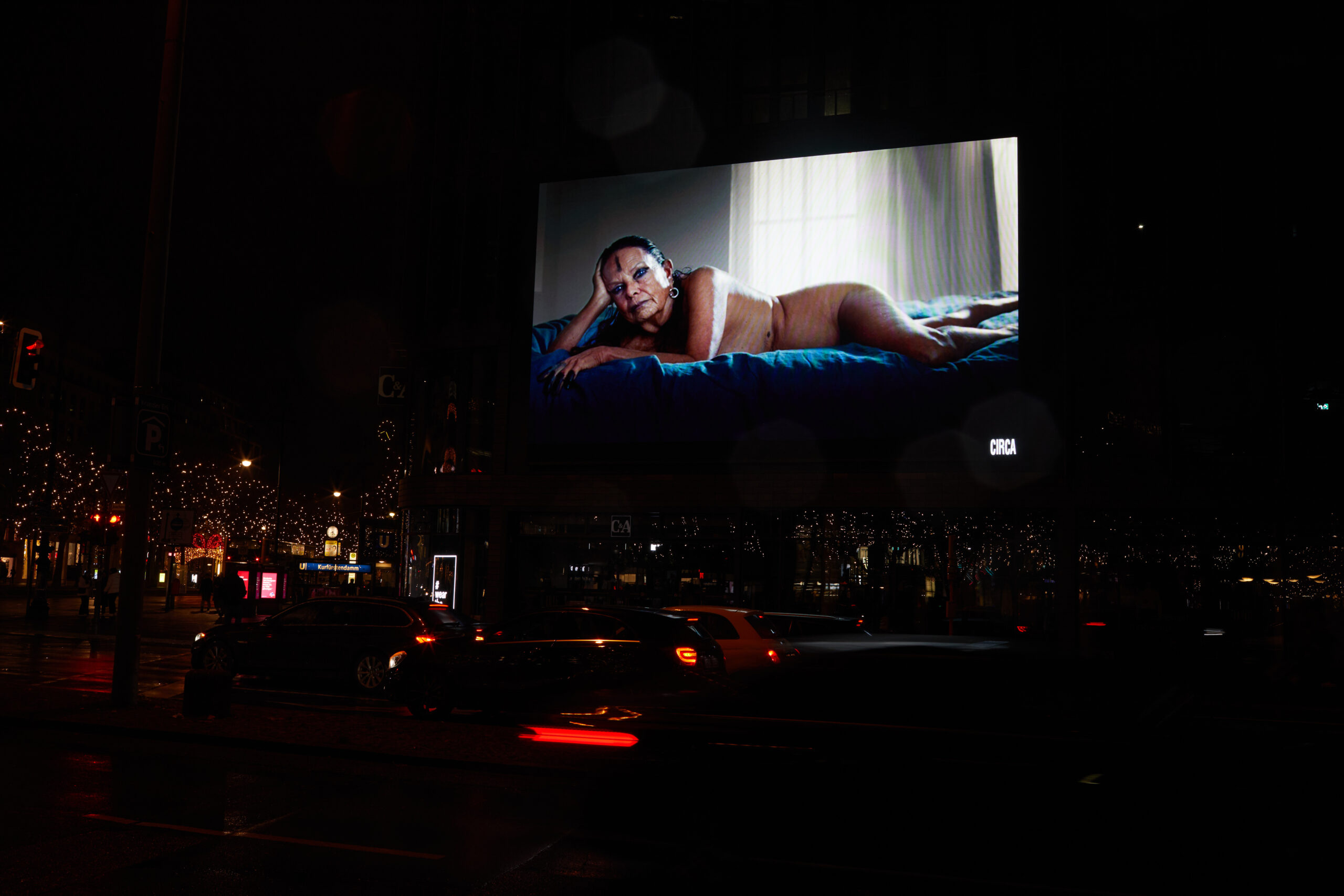
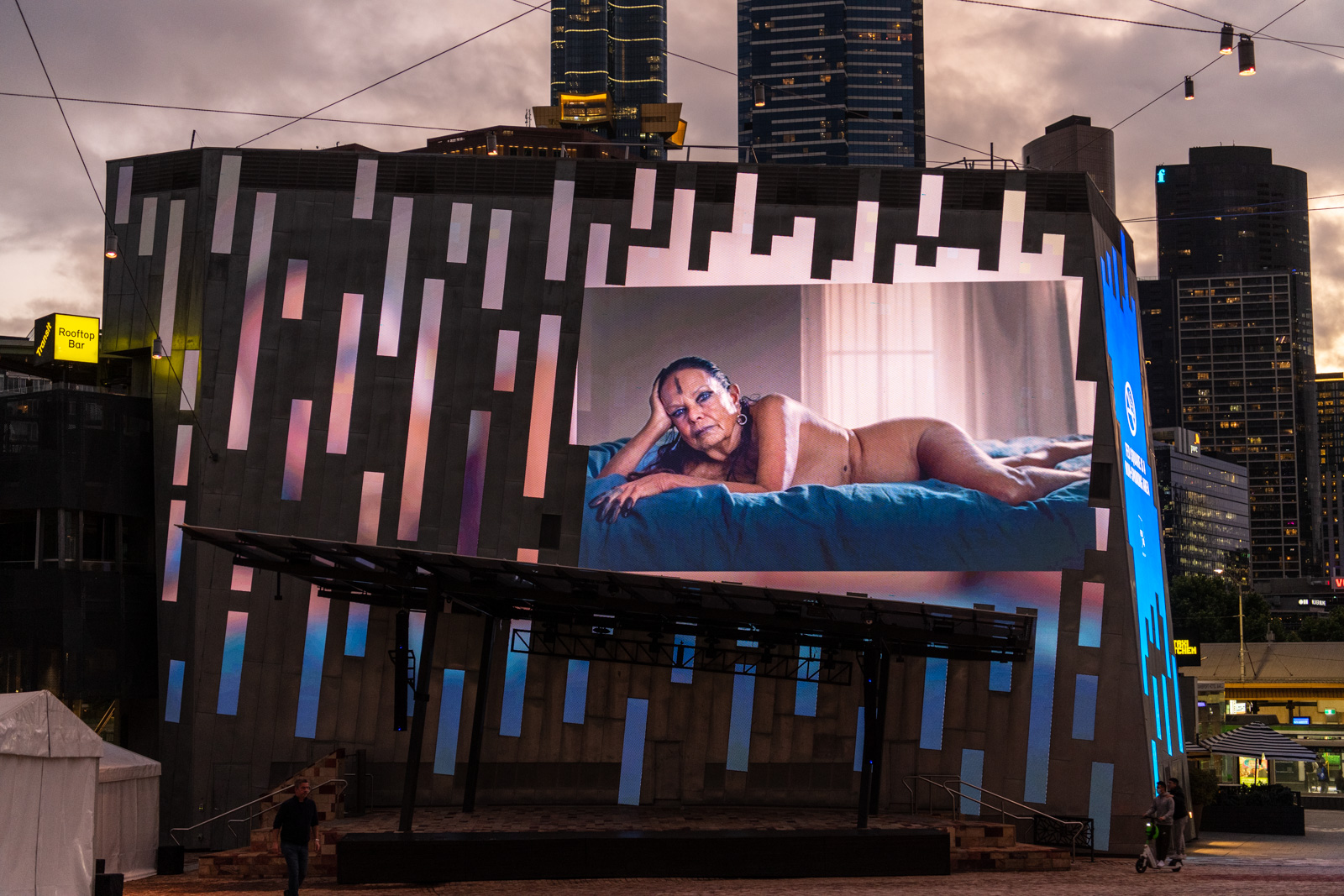
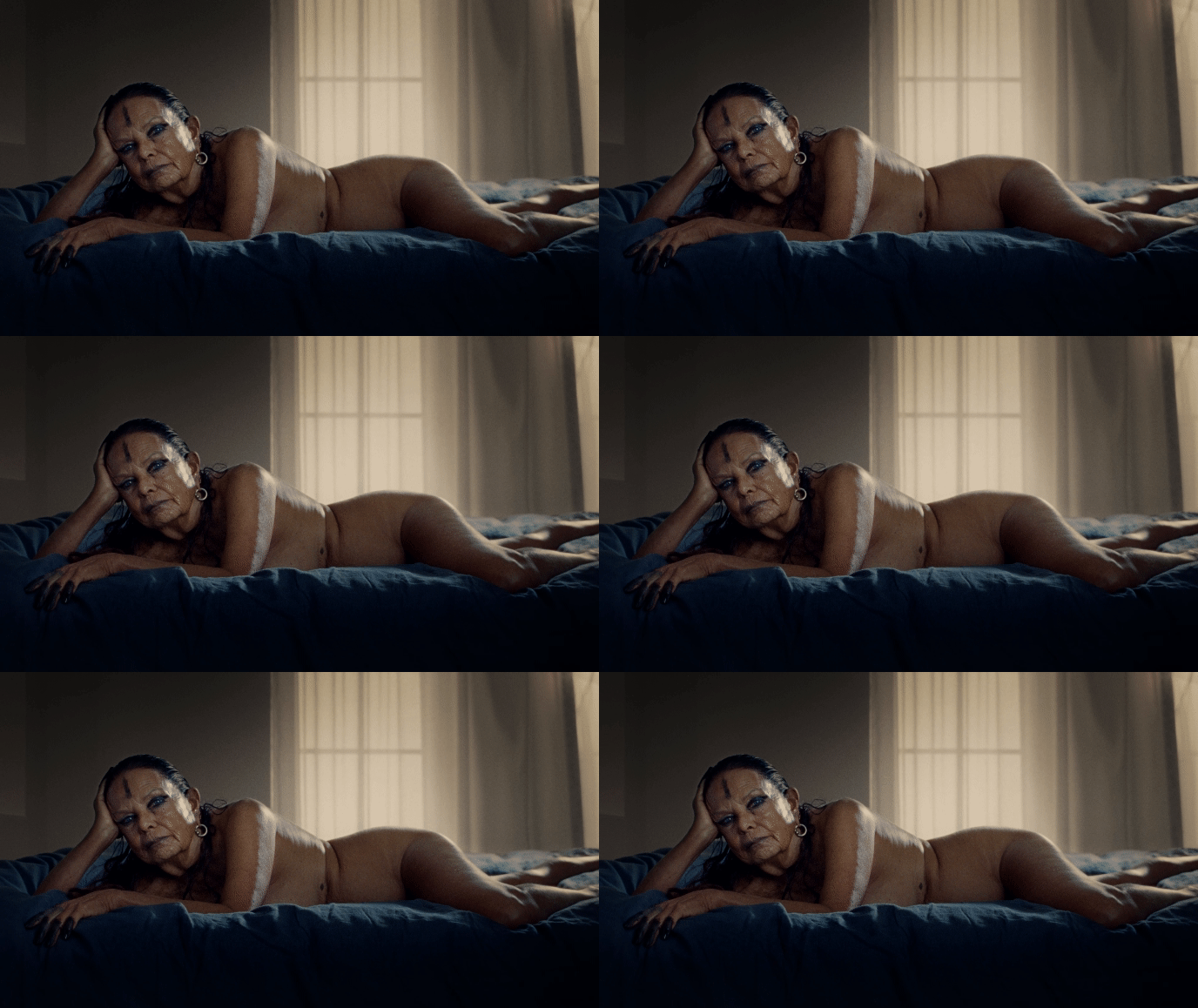
Appearing naked upon a bed, filmed in an unbroken and unretouched shot by Amanda Demme and Mollie Mills, Limbo borrows the formal language of the reclining nude while refusing almost everything historically attached to it. There is no narrative, no mythology, no allegory through which the body can be translated into something more acceptable than itself. Neither Venus nor odalisque, neither muse nor martyr, Lamy appears before us as a body that has accumulated time. Her skin is not offered as an ideal but as a record, carrying the traces of movement, experience, friendship, grief, labour and pleasure. If the classical nude often sought to suspend the body outside history, Limbo insists upon history’s presence within the body itself.

This insistence feels especially resonant in relation to Lamy’s own trajectory, which has unfolded less as a career than as a continual process of transformation. Lawyer, boxer, performer, restaurateur, producer, collaborator, student of Gilles Deleuze, participant in the political and cultural upheavals of post-war Europe, she has long occupied a space resistant to fixed categorisation. What emerges across these different lives is not a coherent identity but a commitment to becoming. One is reminded of Deleuze’s refusal of stable forms and fixed subjects, his understanding of life as a field of continuous variation in which identities are never completed but remain perpetually in motion. In this sense, Limbo is not a portrait of a person so much as a portrait of duration itself.

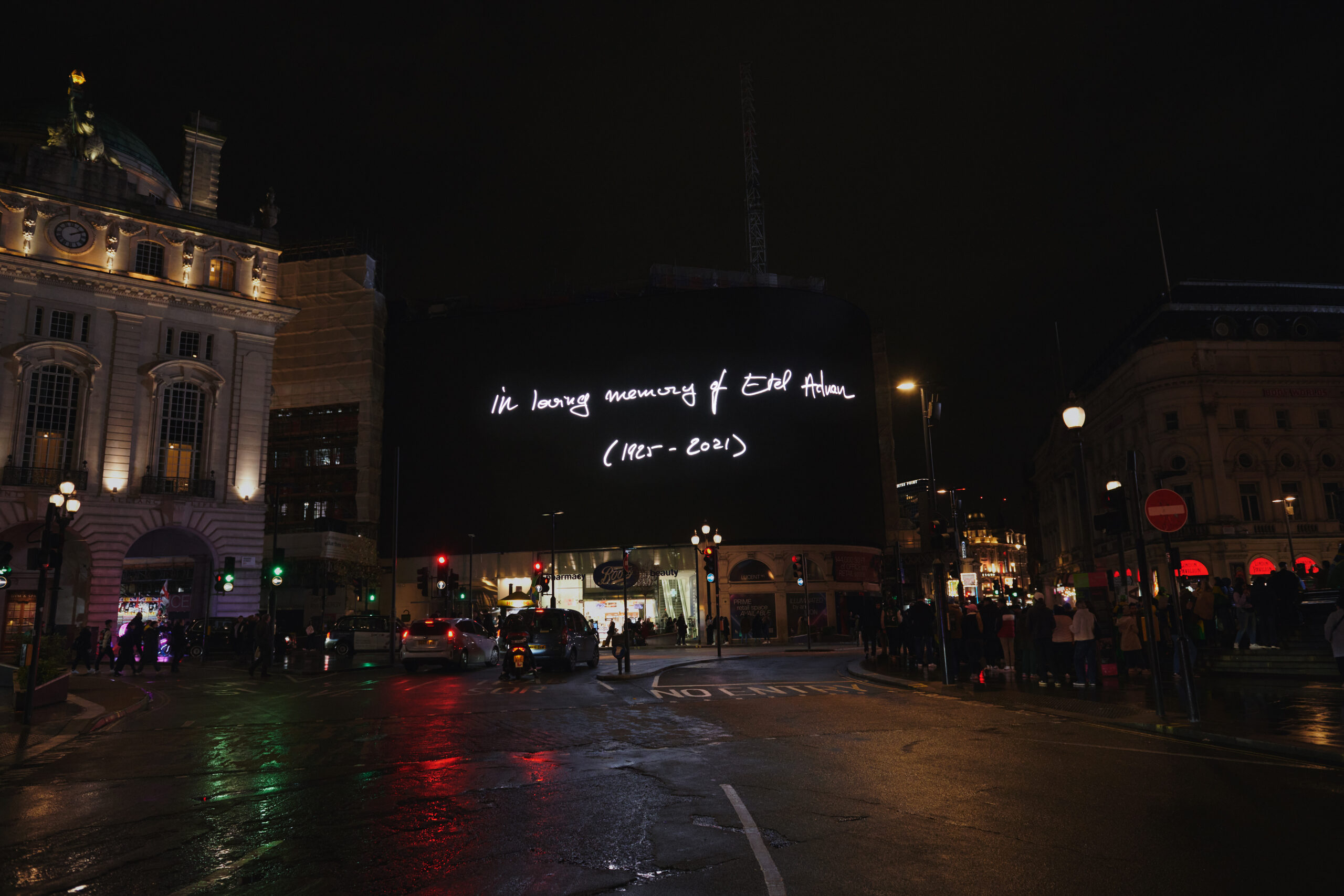
The title arrives through another important figure in Lamy’s constellation: the poet and artist Etel Adnan. The word “limbo”, written on a note passed through Hans Ulrich Obrist, becomes less a destination than a condition. A threshold. A suspended state between worlds. Neither arrival nor departure, neither certainty nor collapse, but a prolonged encounter with the instability that defines contemporary existence. In Adnan’s writing, as in Lamy’s life, the political and the intimate are never entirely separable. Questions of war, love, displacement, ageing, friendship and survival continually fold into one another. Limbo inhabits a similar territory.

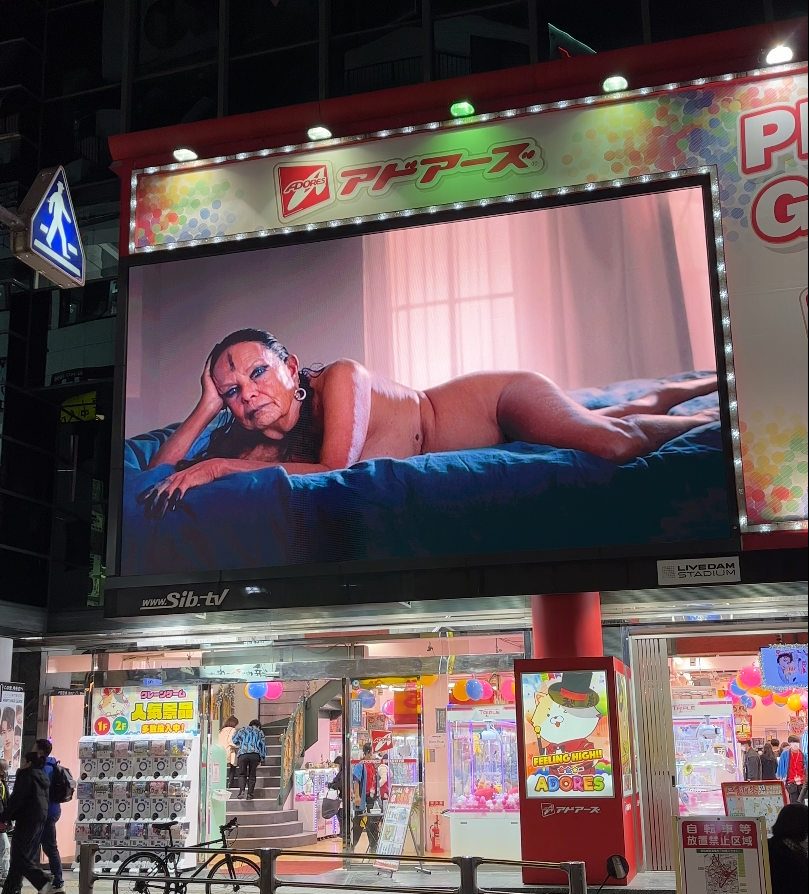
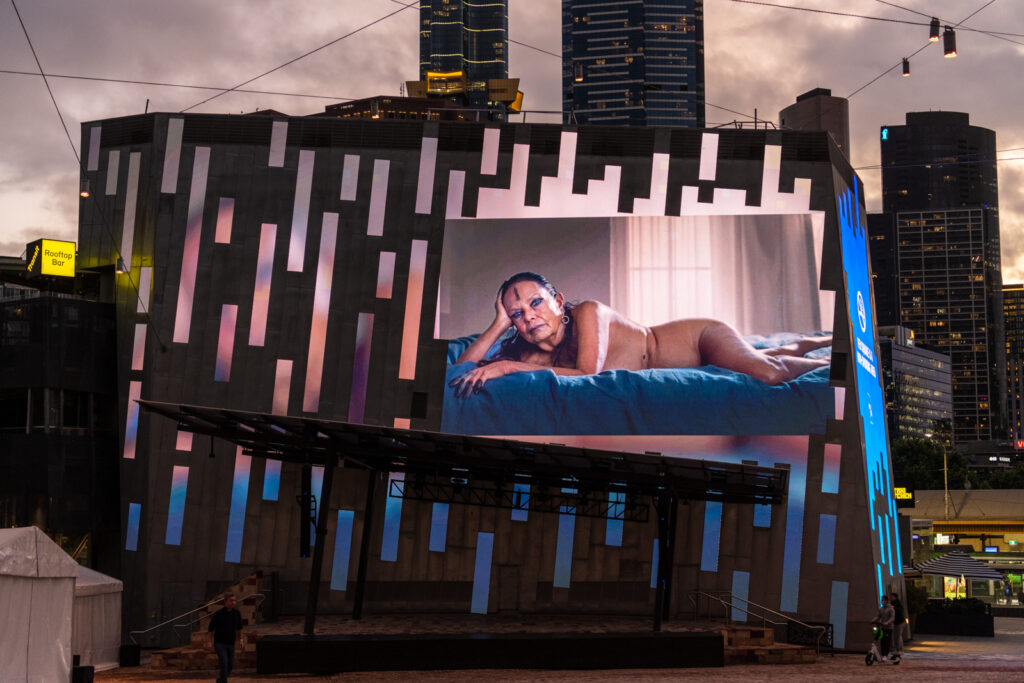
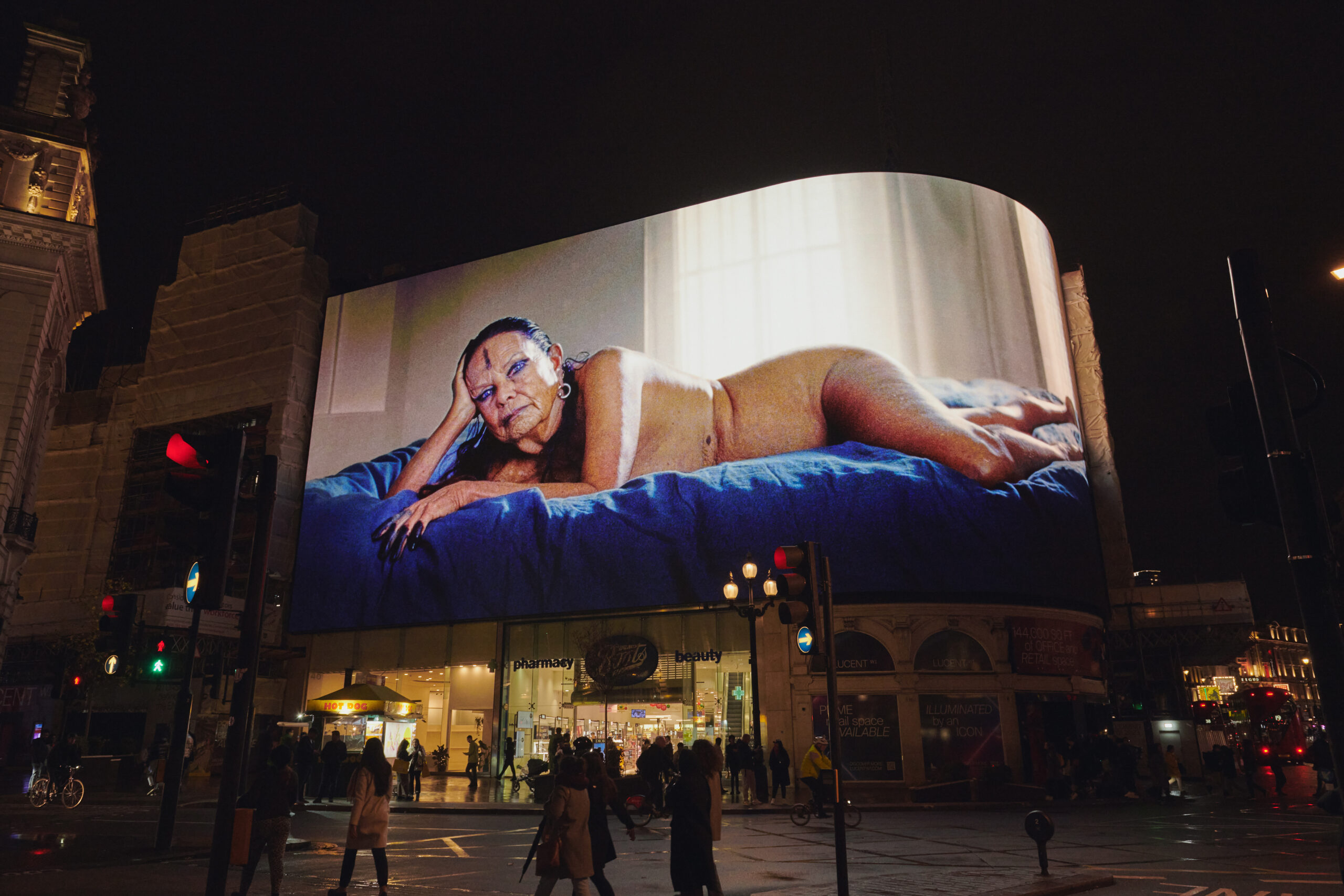
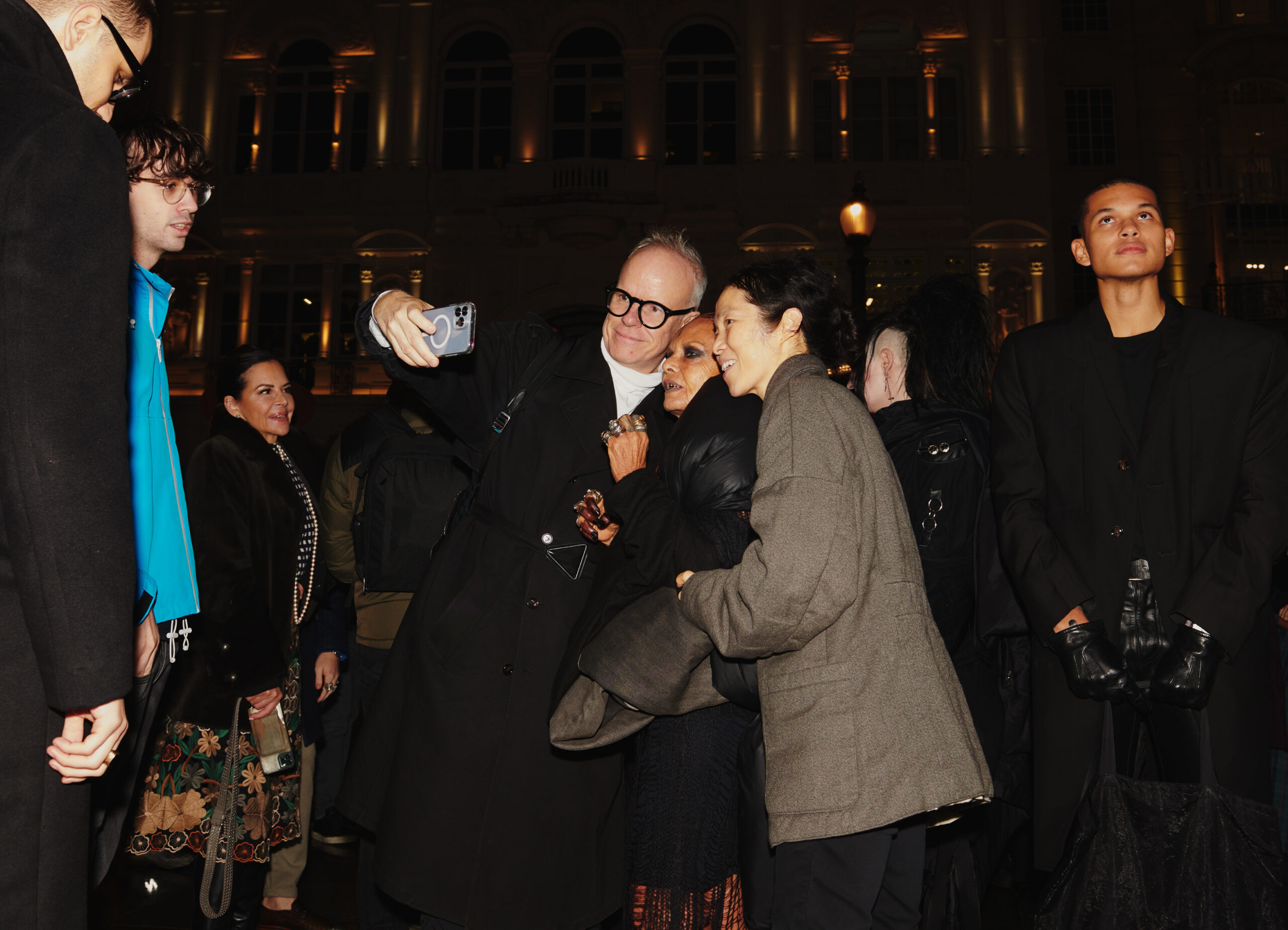
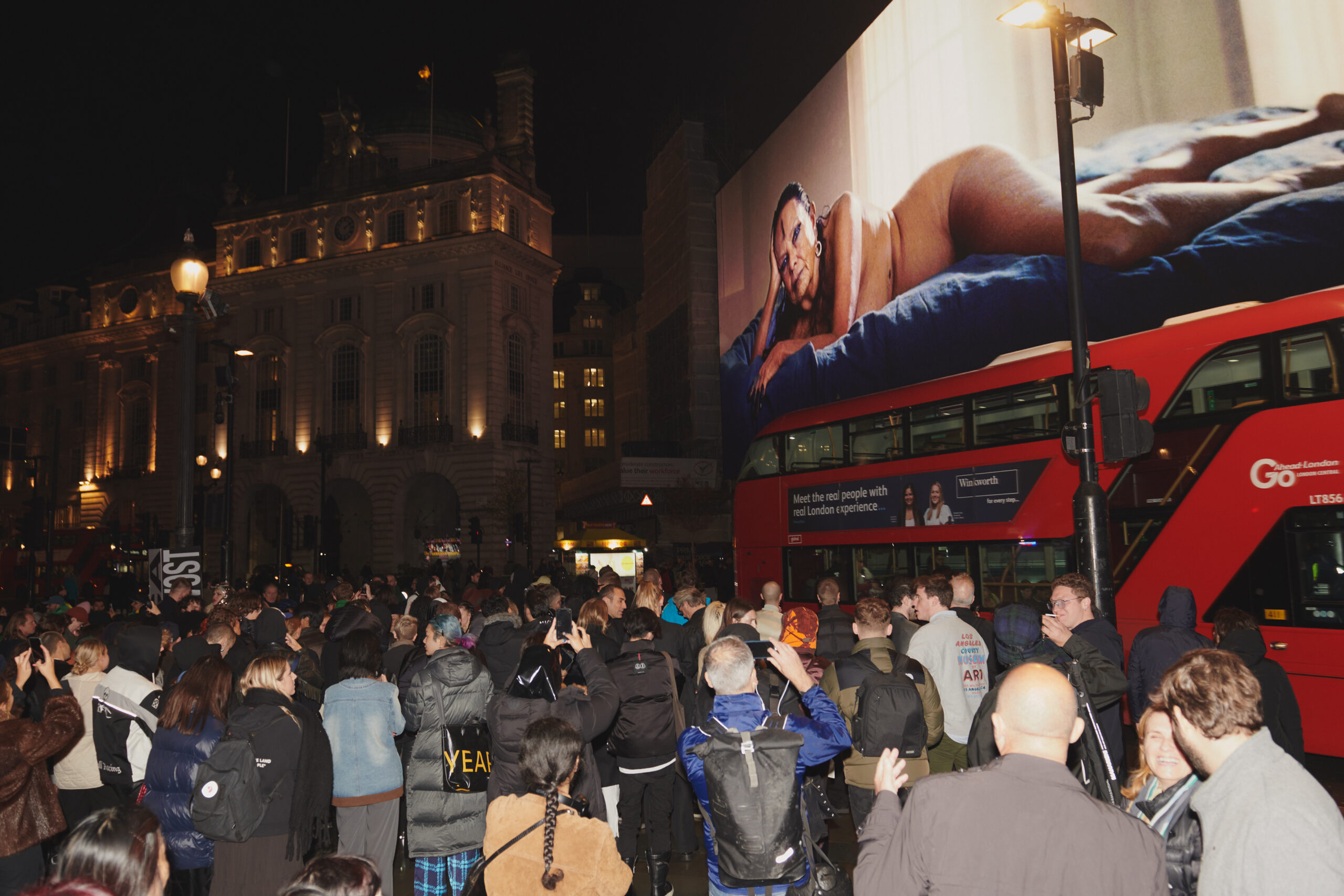
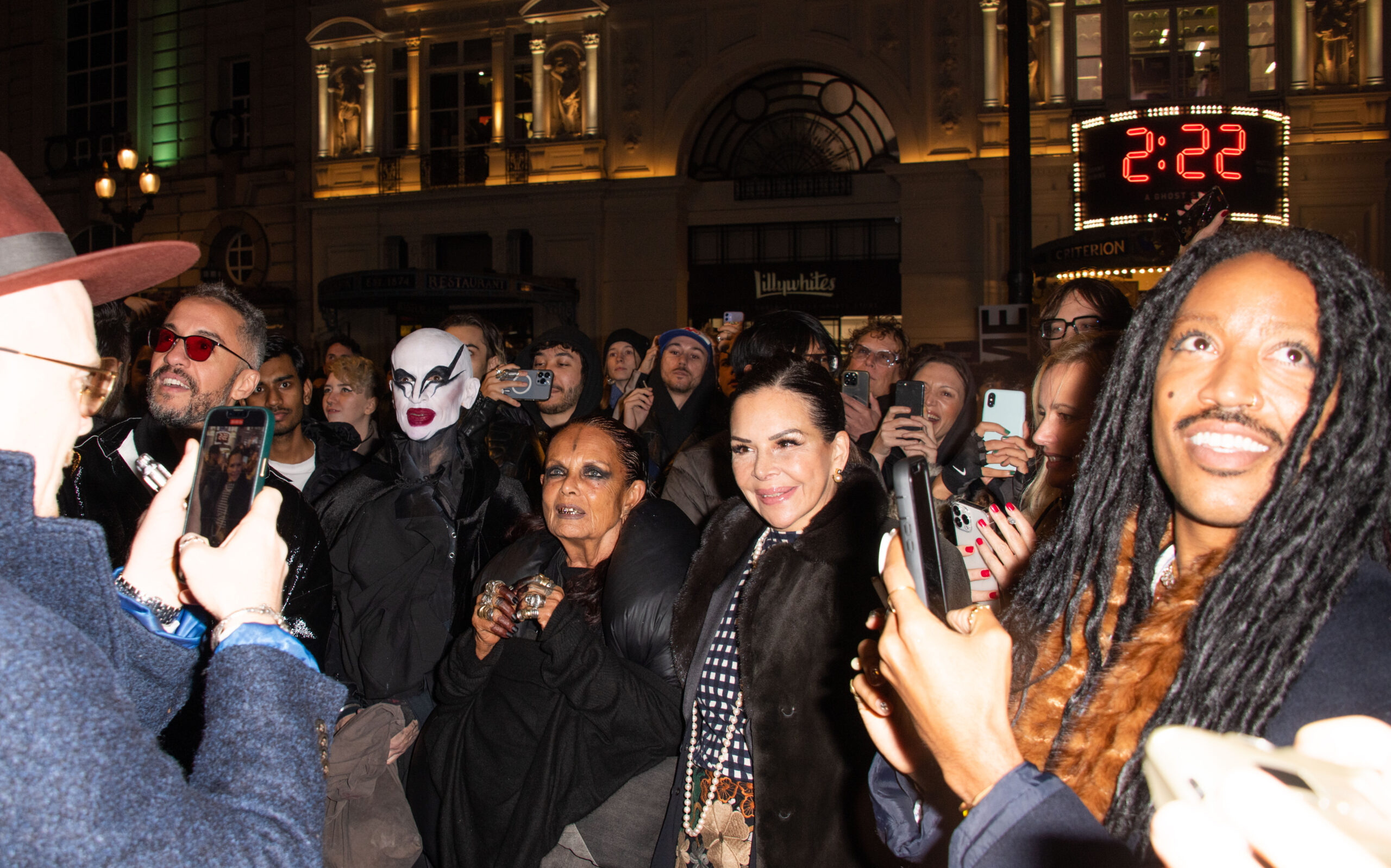
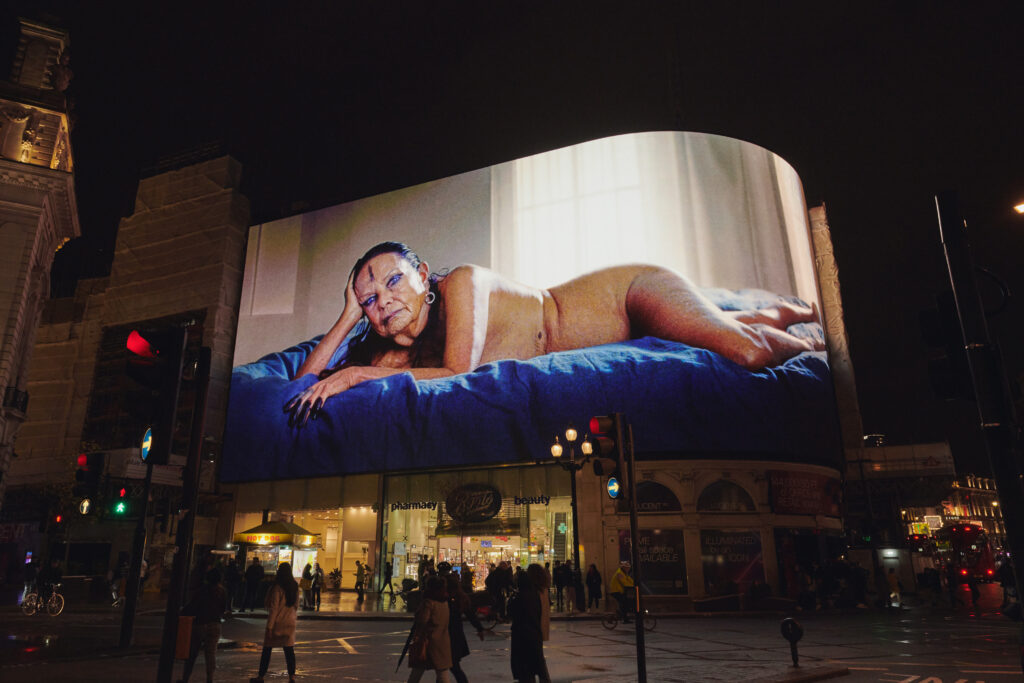
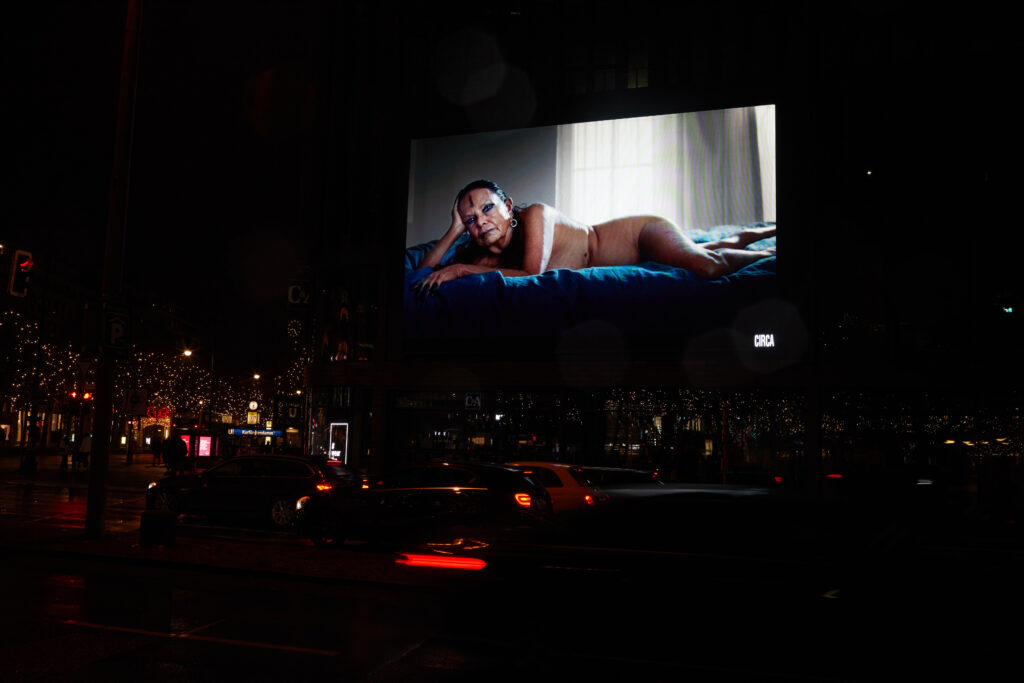
Projected across Piccadilly Circus, Berlin, Melbourne and Tokyo, the work acquires another layer of meaning. These are spaces constructed around circulation: of images, commodities, desires and attention. The giant screen is designed to accelerate looking, to convert glances into transactions. Lamy interrupts this economy not through spectacle but through stillness. The apparent absence of action gradually reveals itself as a different form of intensity. A blink acquires weight. The rise and fall of breath becomes monumental. Time slows sufficiently for the viewer to become conscious not only of the image but of their own act of looking.

What begins to emerge is not vulnerability in the conventional sense, but a profound form of autonomy. The body here neither performs nor apologises. It does not seek validation. It remains stubbornly itself. One thinks of Louise Bourgeois, Alice Neel, Maria Lassnig and Etel Adnan, artists for whom ageing was never experienced as a retreat from visibility but as a deepening of it. Their works resist the cultural demand that women disappear as they grow older. Instead they propose another possibility: that the accumulation of time might itself become a source of presence.

Perhaps this is what makes Limbo so quietly radical. In a culture devoted to speed, optimisation and perpetual self-reinvention, Lamy offers neither improvement nor transformation. She offers duration. She offers attention. She offers the possibility that existence, observed carefully enough, already contains more mystery than any fiction we might invent around it.

The work does not ask us to admire, desire or even understand. It asks something far stranger. It asks us to remain with another human being for a moment longer than we are accustomed to, until looking gives way to recognition and recognition gives way to something that might, in the broadest sense of the word, be called love.

Shop

Loading products...

Films

Michelangelo Pistoletto’s Three Mirrors is presented daily across CIRCA’s global network of public screens. Each evening at 20:26 (local time), the work appears simultaneously across the following locations, entering the flow of the city and inviting a shared moment of reflection. Select a location below to view directions and find your nearest screen on Google Maps.

London, Piccadilly Lights

Experience  LIMBO by Michèle Lamy every evening at 20:22 GMT (7-30 November 2022) on the iconic Piccadilly Lights screen.

View screen locations

Berlin, Kurfürstendamm

Experience  LIMBO by Michèle Lamy every evening at 20:22 CET (7-30 November 2022) on Berlin’s Limes Kurfürstendamm screen.

View screen locations

Tokyo, NEO Shibuya TV

Experience  LIMBO by Michèle Lamy every evening at 20:22 JPY (14-20 November 2022) on the NeoShibuya screens in Shibuya Crossing.

View screen locations

Melbourne, FedSquare

Experience  LIMBO by Michèle Lamy every evening at 20:22 AEDT (7-30 November 2022) on Melbourne’s FedSquare screen.

View screen locations

ESSAY

Michèle Lamy: Suddenly, A Shoulder Movement… Written by Élisabeth Lebovici
Suddenly, a shoulder movement…
But wait!  For something came before.

You have been observed now for a while whilst time is suspended by this stare – hers. For it is she who looks at you and you who notices her. Let me explain this nuance, which has to do with time-stopping and with you who are watching, as witnesses, this gaze gleaming from beneath her charcoal eyelids. So fixed, her stare does not express any recognisable emotion, and besides – the paradox is apparent – she does not see you since you have to be there for her to look at you.

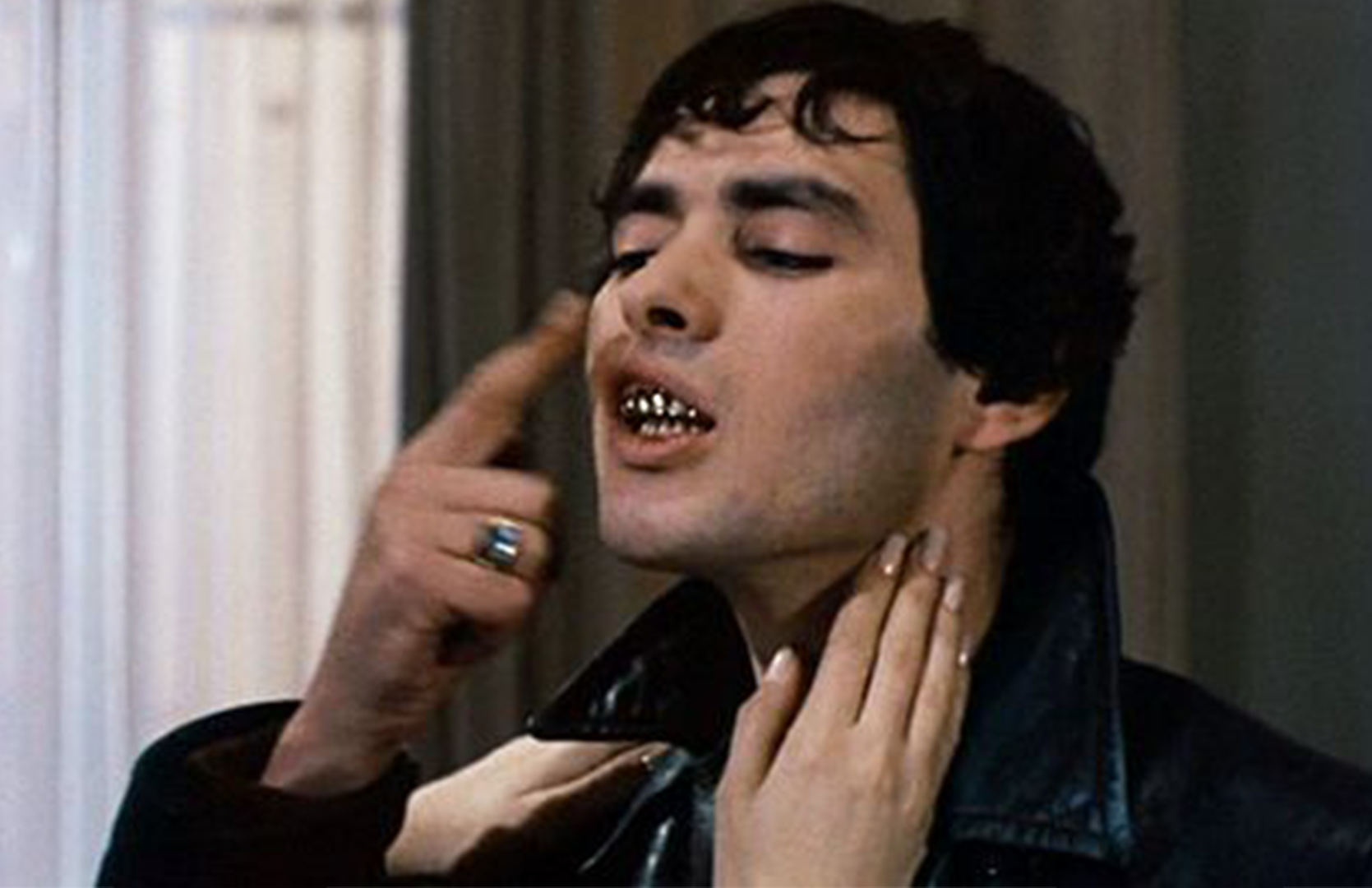
She is lying on her stomach, leaning on a relatively soft bed covered with dark sheets, in an interior that I read as opulent, with these curtains filtering out the light and surrounding sounds from outside. It is silent. She is absolutely naked, her genitalia covered only by her pose but not her skin, exalted and multiplied tenfold by what constitutes the big screen. She is leaning on one elbow, holding her head with the other, whilst lounging on the bed. Contrary to the Orientalist genre of the Odalisque, where the undressed and horizontal posture of the models strongly expresses the ideal of domination (colonial, masculine) which presides over their portrayal. For she has nothing of the offered and submissive victim that each of the pictorial representations of the 19th century provides us, which in return appears all the more disjointed by the patriarchal gaze. Look at Google images; it is edifying. If she has a Belle de Jour (Luis Bunuel, 1967) look, naked on the bed, she is not at all Catherine Deneuve, bourgeois in the morning and a sex worker every afternoon. I see her more as Pierre Clémenti, entirely at ease in the role of the bad boy always on the verge of an unpredictable explosion. Pierre Clémenti, who arrived for the shooting in black leather, smiled wide open to show all of his gold teeth (Bunuel adored). Perhaps because she, Michèle Lamy, the one who is lying there on the bed, naked, is also covered in gold teeth and Berber tattoos, I imagine her at ease in this situation.
 

Press

SHOWstudio
Purple
Hypebae
Press Release

Biography

Michèle Lamy

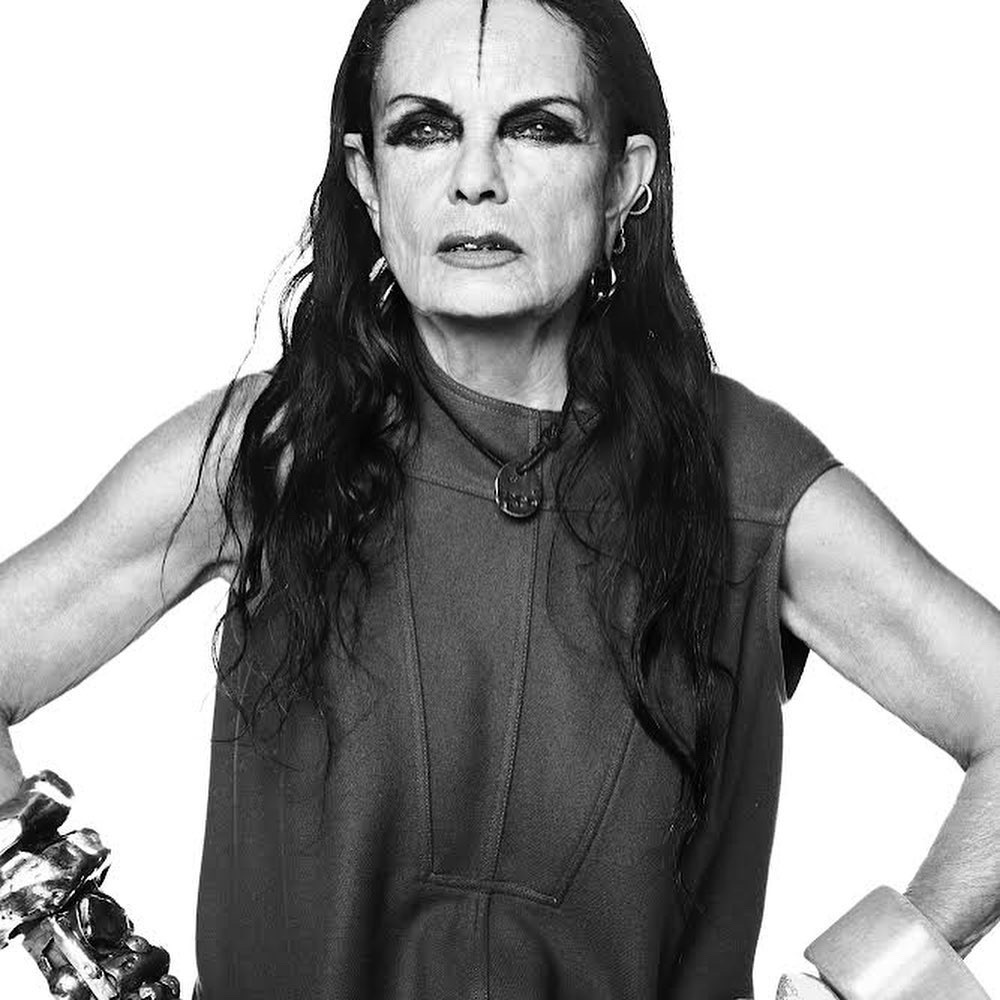
Michèle Lamy is one of contemporary culture’s most enigmatic and influential figures. Working across art, design, performance, film, fashion and hospitality, she has spent decades cultivating a practice that defies categorisation, bringing together diverse disciplines through a singular vision shaped by experimentation, intuition and collaboration. More than an artist, Lamy has become a cultural force whose presence and ideas continue to inspire generations of creatives around the world.

Born in France, Lamy studied law before participating in the social upheavals of May 1968 and later studying with philosopher Gilles Deleuze. Over the following decades she moved fluidly between roles as a lawyer, cabaret performer, restaurateur, designer, producer and entrepreneur, ultimately becoming Co-Founder of Owenscorp alongside Rick Owens. Throughout her life, she has cultivated spaces where art, music, fashion, architecture and philosophy intersect, building a practice rooted in community, dialogue and creative exchange.

In 2022, Lamy collaborated with CIRCA on LIMBO, a contemporary still-life film broadcast across public screens in London, Berlin, Melbourne and Tokyo. Directed by Amanda Demme and Mollie Mills, the work presented an intimate and unretouched portrait of Lamy filmed on 35mm, transforming some of the world’s busiest urban environments into spaces of contemplation and stillness. Positioned between performance, portraiture and moving image, the commission explored ideas of vulnerability, autonomy and presence, offering audiences a rare encounter with an artist whose work has long challenged conventional ideas of identity, ageing and representation.

Lamy’s influence extends far beyond any single discipline. Whether through performance, design, art-making or the communities she has helped foster, her work is characterised by a refusal to accept fixed definitions or established hierarchies. Through a life dedicated to creative freedom and cultural experimentation, Michèle Lamy continues to demonstrate how art can be lived as much as it can be made.


Subscribe to our newsletter

Subscription successful

An error occurred